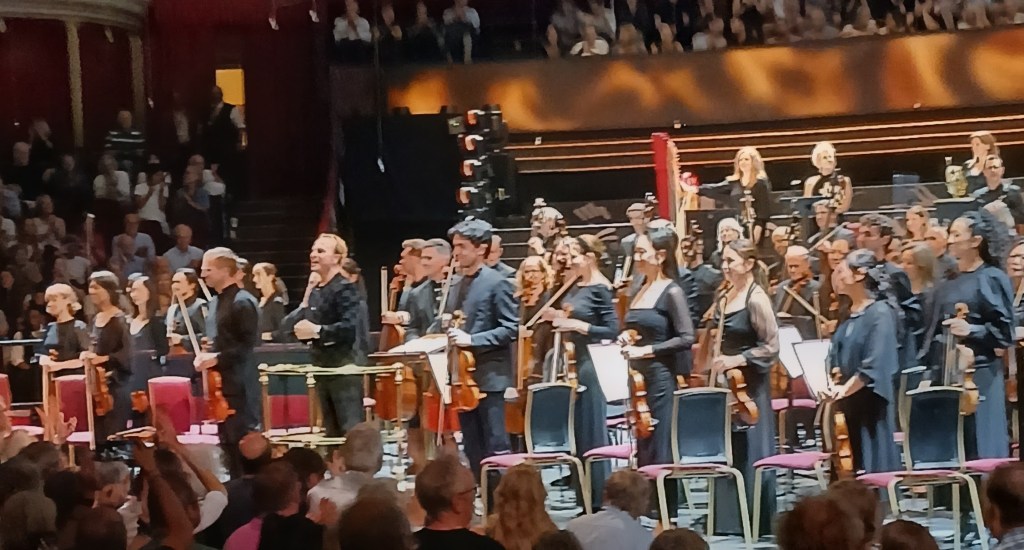
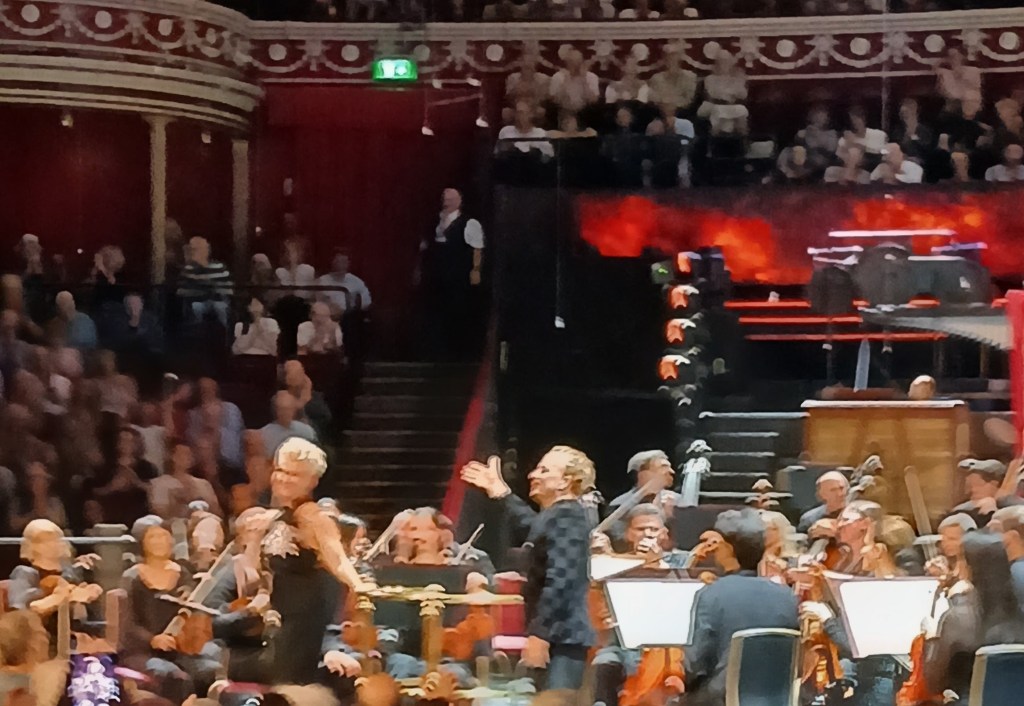
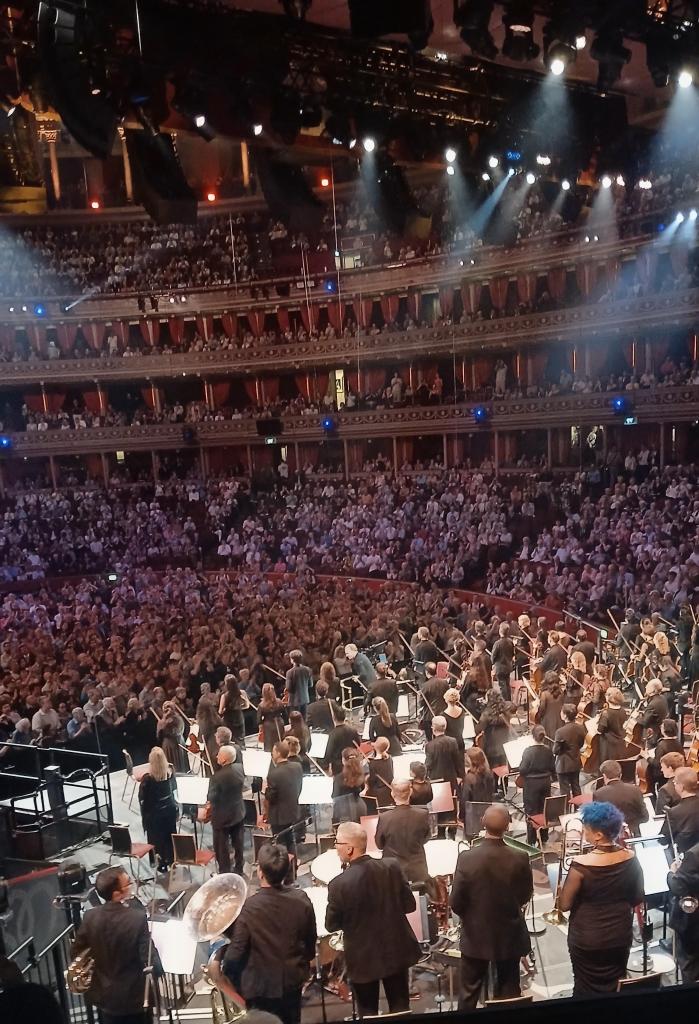
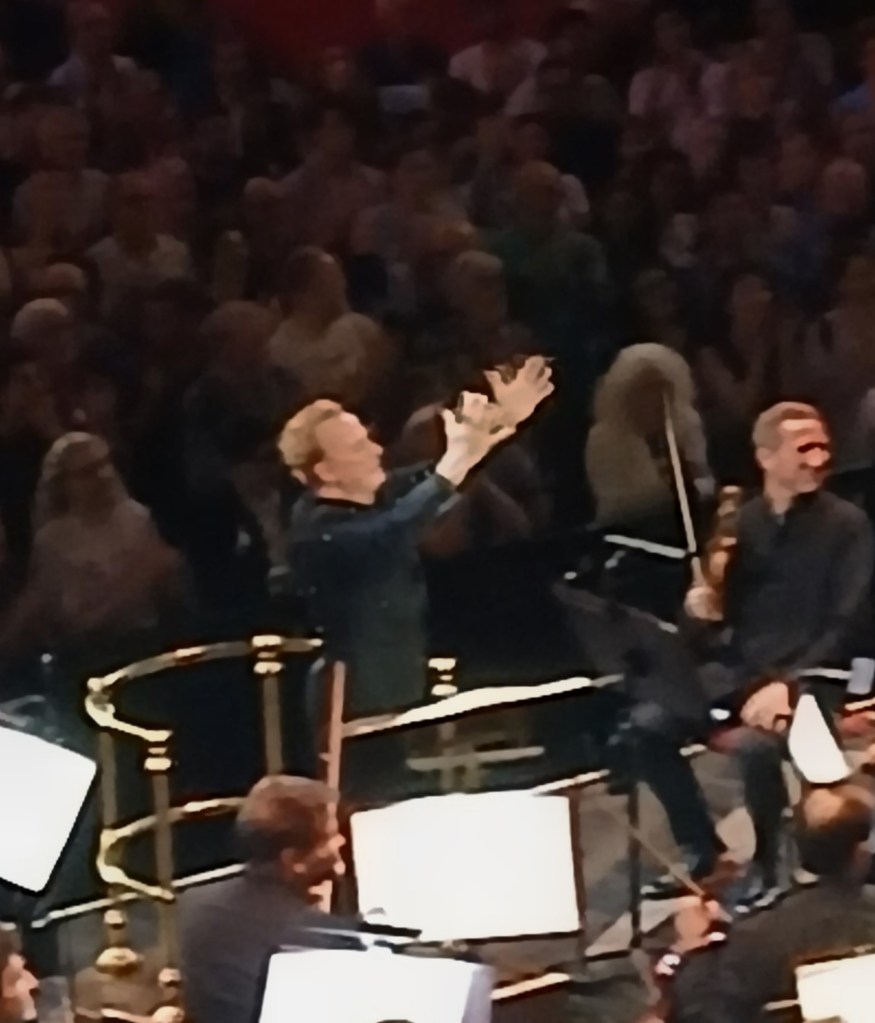
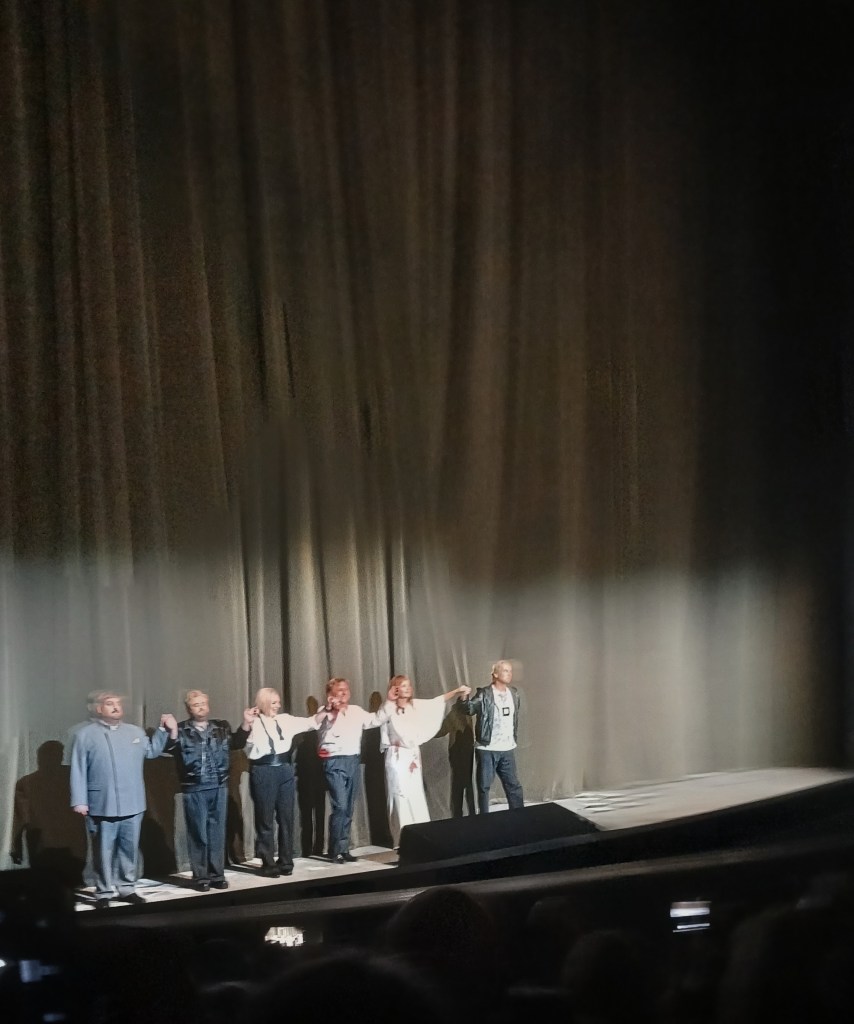
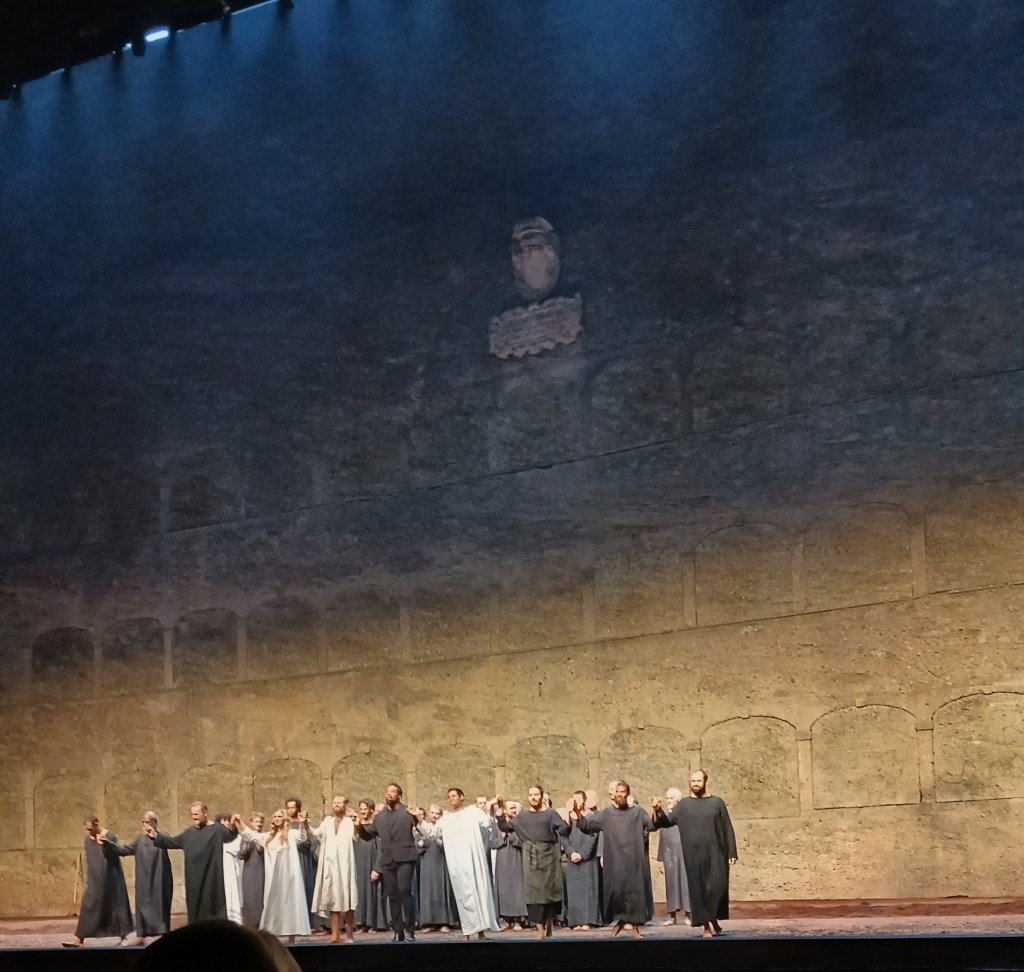
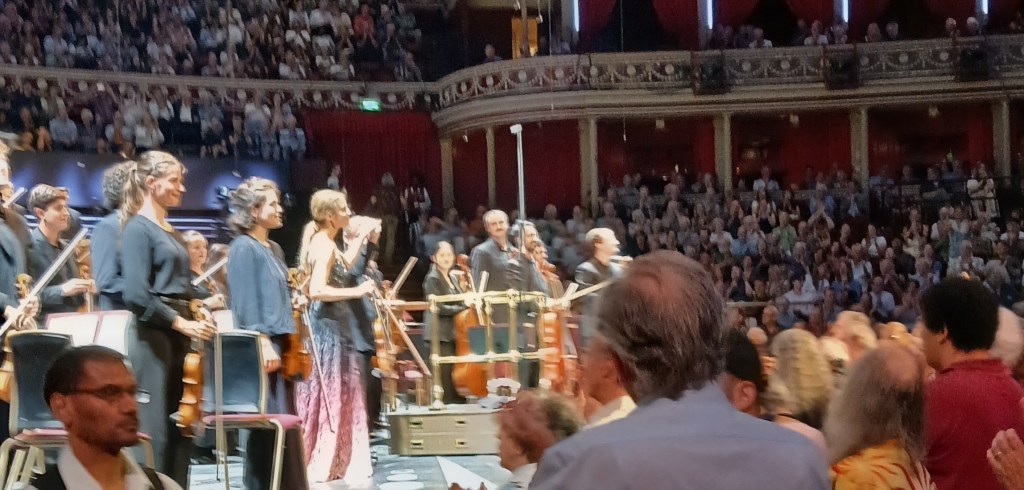
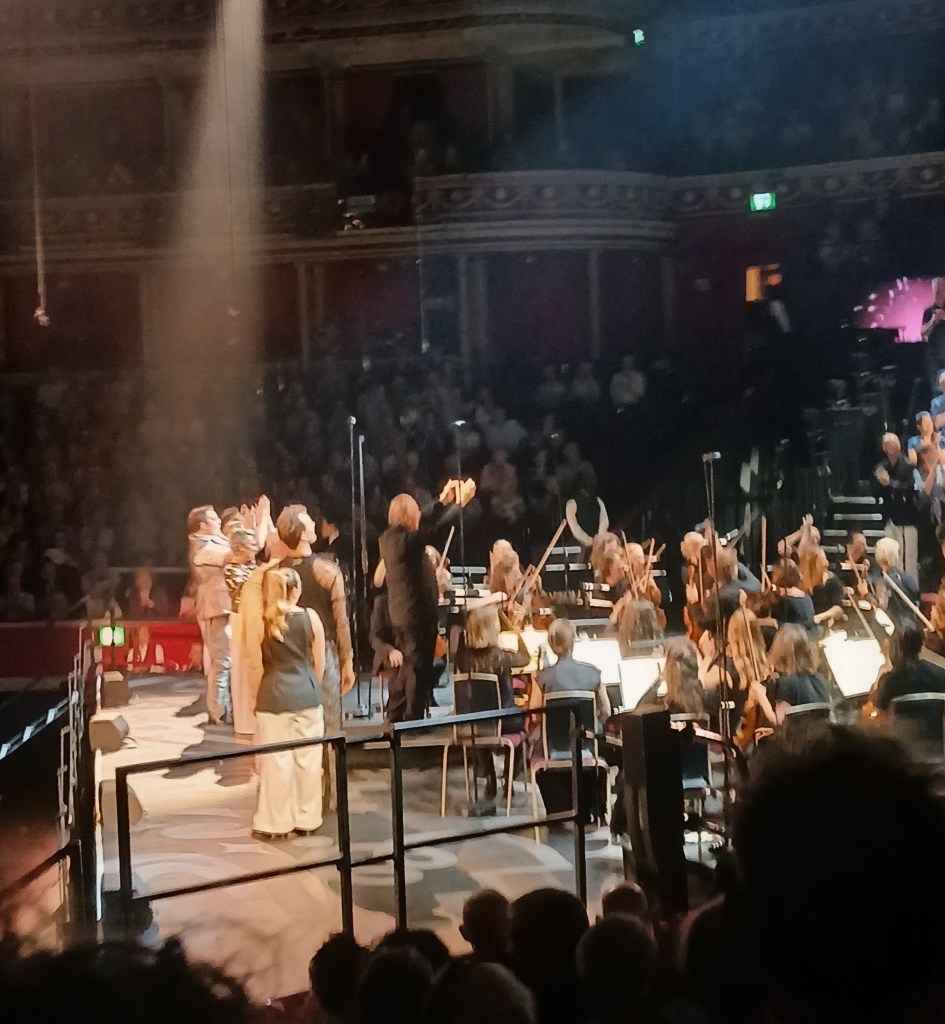
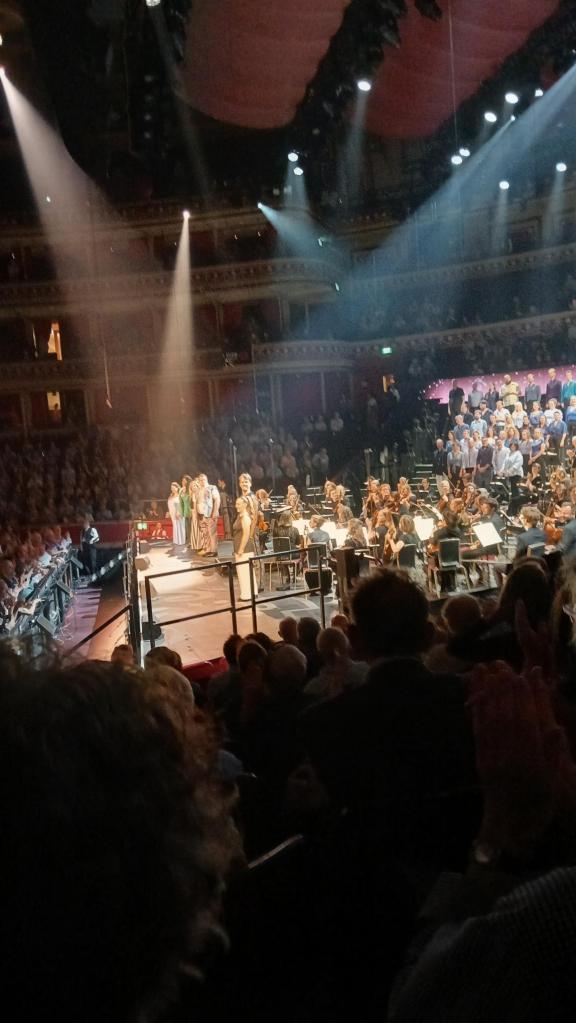
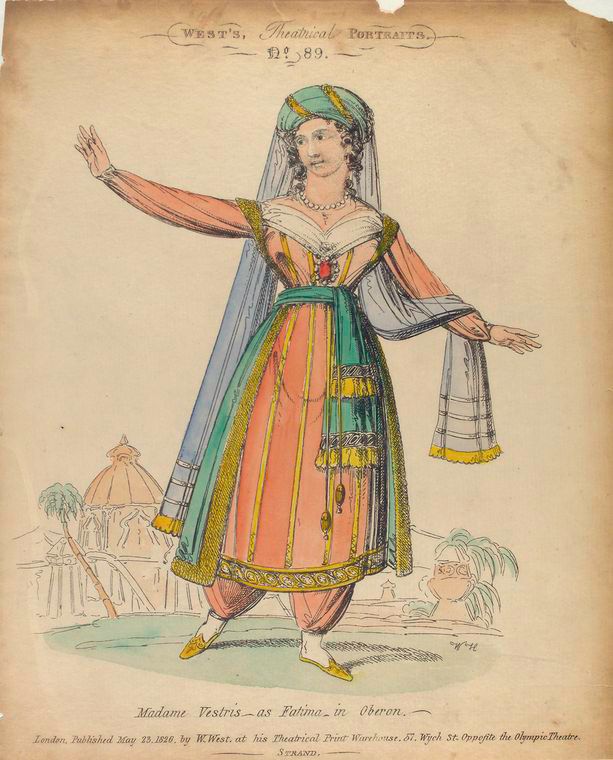
Weber, Oberon (semi-staged).  RAH BBC Proms 6/8/26

Nicky Spence, Oberon; Jennifer Davis, Reiza; John Findon, Sir Huon of Bordeaux; Yannick Debus, Sherasmin; Rachael Wilson, Fatima; J’Nai Bridges, Puck; Charlotte Bowden, Mermaid; Jessica Cale, Mermaid. Monteverdi Choir, Orchestre Révolutionnaire et Romantique; Sir Mark Elder, conductor

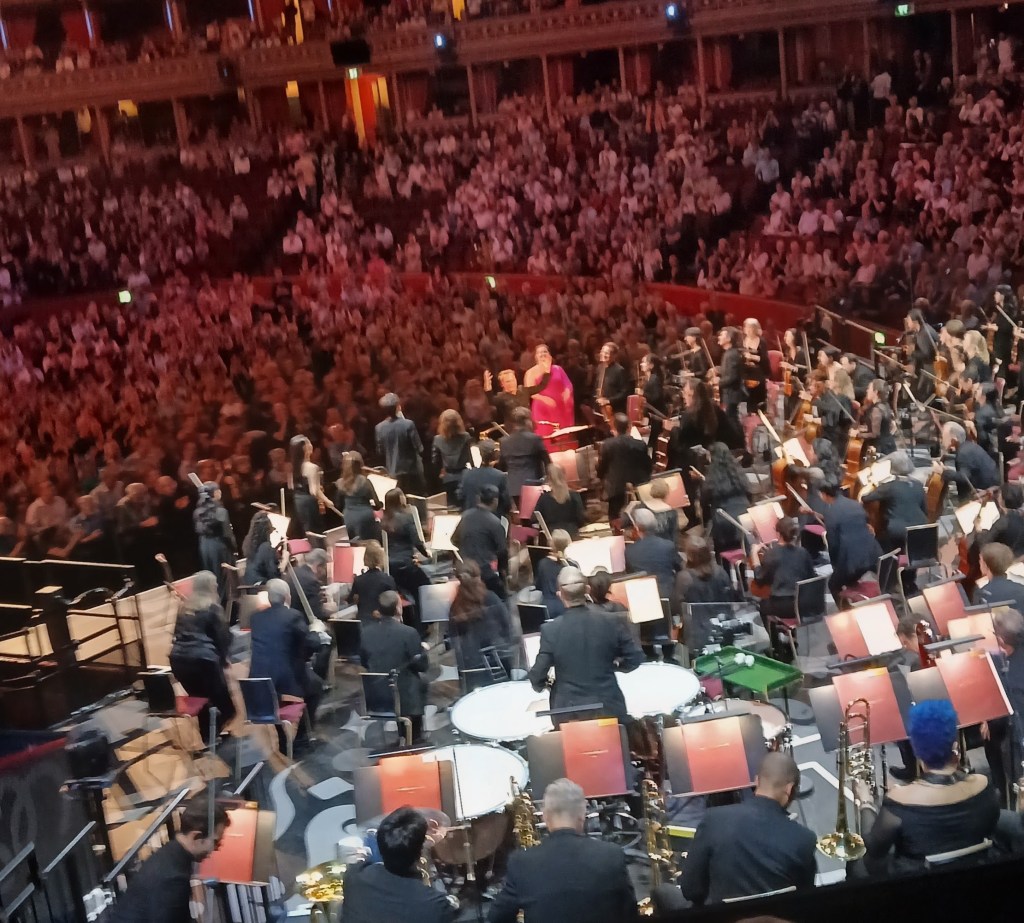
This was a great Prom in prospect – two strong tenors, a major soprano, Elder, and a brilliant period instrument orchestra, plus an opera I have never heard a note of before, apart from, of course, the overture. Oberon was Weber’s final work, and his third opera – written for Covent Garden 200 years ago. Oberon’s libretto was written by James Robinson Planché, a popular dramatist whose spoken text has not aged well (allegedly, since we didn’t hear it) involving fairyland, desert islands, Baghdad, pirates, and crusaders. Mark Elder wrote in the Guardian, in relation to this concert, that “to stage, or even semi-stage Oberon, its text needs to be rewritten, and for our Proms performance, author Timothy Knapman has created a new single narrative that respects the original but blows the dust off it. His witty version, narrated by Tamsin Greig, will entertain today’s audiences just as Londoners were entertained in 1826”. I assume here that Planche’s original text was retained for the sung element – certainly it sounded dire enough…The story is scarcely worth summarising but derives from a row between Oberon and Titania about who are more faithful – men or women. Oberon chooses Sir Huon and the Baghdad princess Reiza to fall in love with each other, and he then puts them in situations to test their love for each other.

This is a curious work. I am of course glad to have heard it for the bucket list but won’t be desperate if it never crosses my path again. If operas are declared to be masterpieces, but are hardly ever staged, this is usually because either they are too expensive to be put on very often or because, actually, the wider opera-going public has got the measure of the work and it isn’t all that it is cracked up to be. Oberon is a singspiel, like the Magic Flute and Fidelio, but with Planche at hand, there’s also an English pantomimic quality to it. Though the circumstances the characters find themselves in are certainly not funny, the reworked text (i.e. the story less the sung elements) read by a narrator as written up by Knapman often tended to be tongue-in-cheek, knowingly going for laughs through silly rhymes or the sudden juxtaposition of incongruous elements. The audience (quite a full one, though some empty seats in the Balcony) enjoyed this, but the spoken text made it harder for the singers to really shape their characters into flesh-and-blood creatures rather than cartoon-ish ciphers. The music, frankly, didn’t seem to be that distinguished, though it is always attractive to listen to and I was never bored (the best tunes are culled for the Overture). There are some interesting orchestral effects – rippling woodwind, ‘Turkish’ cymbals – and the numbers are very varied in pace and type. The music to me hovered between Donizetti (but without the energy and the lyrical grace) and the Mozart of the Magic Flute and Die Entfuhrung (but without the genius). There is in fact quite a lot of the Flute in the story – two couples, tests and trials for faithfulness and this must have been part of the attraction for Weber in setting this to music (incidentally, I hadn’t realised before reading the programme booklet that Weber’s father was the uncle of Constanze, Mozart’s wife, which must make Weber and Constanze cousins, I think). Wagner must have heard the work as a teenager, and was of course a considerable fan of Weber’s – it is possible that Reiza’s aria ‘Ocean Thou might monster’ with its declamatory style and absence of any standard aria format might have influenced him, and occasionally in some of the female vocal lines I thought I heard distant precursors of Lohengrin. Also. there are occasional brass passages associated with Oberon which reminded me of Telramund and King Henry in the same opera. The programme booklet asserts that the tune for Oberon’s magic horn is a sort of ur-leitmotif, akin say to the Ring sword motif – I am not sure about that……But the chorus of Tunisian dancing girls intent on carrying off Huon has some resonance with the Flowermaidens in Parsifal, I suppose

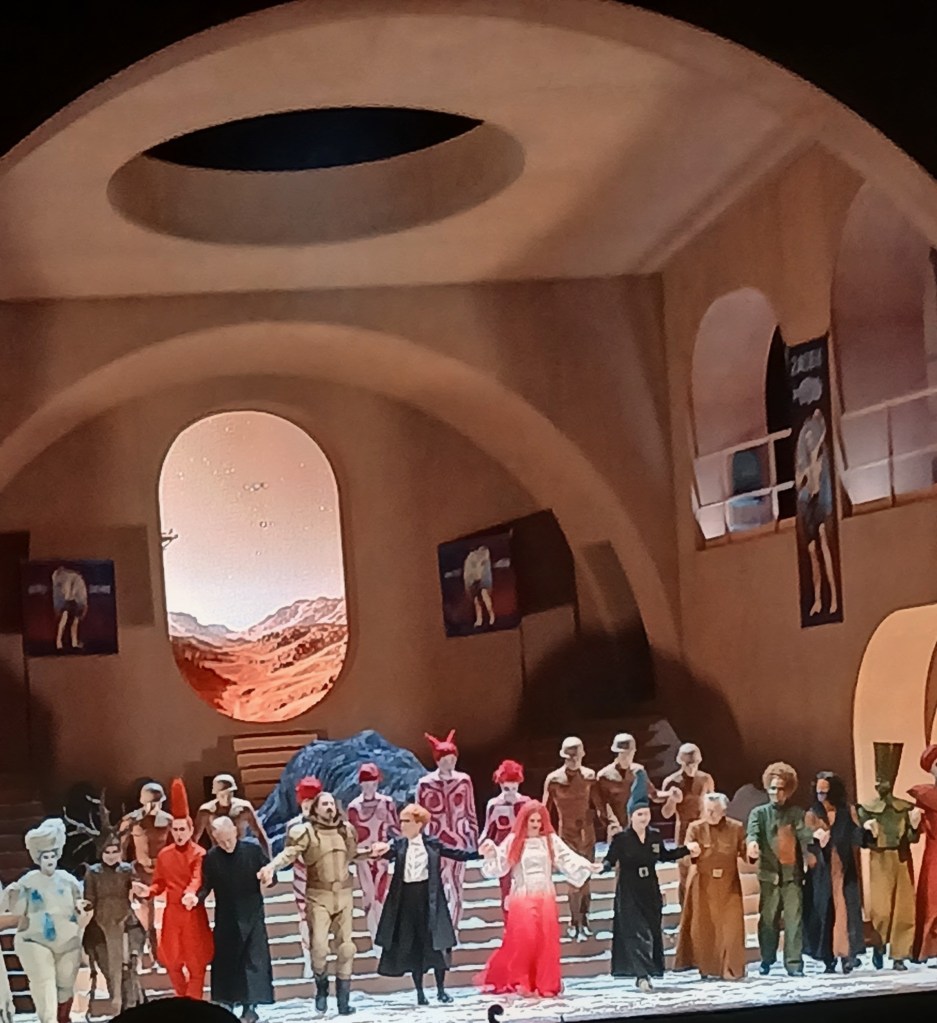
This was billed as a semi-staged performance, and there was a credited stage director – Emma Doherty – with very effective use of the whole stage and indeed wider Arena space (including Sir Huon and his sidekick Sherasmin going into the audience in their quest for Reiza). The area by the organ console, the back of the platform, the front, the sides of the platform – all were used and the singers and chorus were encouraged to respond to each other and act credibly. Dress was modern but credible. No noses in the scores here………Apart from the yearly Glyndebourne offerings, this was one of the most effective Proms concert stagings I have seen.

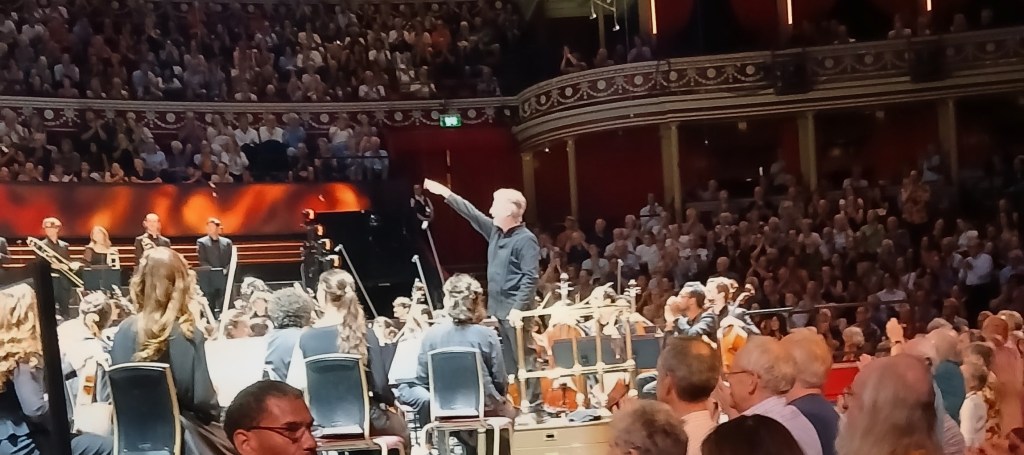
The standout singer for me was the young American singer Rachael Wilson, making her career in Europe, as Fatima (Sherasmin’s partner) who has a most beautiful voice and who thrillingly sung two of the most attractive arias in the work  – the Act 2 aria “A lonely Arab maid” and the Act 3 aria “O Araby!”. Jennifer Davis sung ‘Ocean, thou mighty monster’ with the power it needs, and was also moving in her other big aria, “Mourn thou, poor heart” (Act 3) – she has considerable gifts as an actor, and engages well with audiences, but I have to say I find her singing lacks colour somehow. It was good to see and hear John Findon, who I interviewed 3 years ago for the Manchester Wagner Society when he was playing Mime in the ENO Valkyrie – his career is developing (at least in the UK) well (he was singing in Gerontius last week at the 3 Choirs Festival) and he was appropriately heroic, actually quite a good actor in this impossible role, and handled the florid elements of his arias capably. At one or two moments where he was singing softly, his voice cracked a little, which I have heard happen to him before. Nicky Spence did all that was required of him as Oberon to sound noble and authoritative, though he couldn’t resist a few campy twirls in one or two places, and the narrator also contributed effectively to the evening – with a difficult job, where the surtitles covered her lines as well as the singers so all the jokes in the text were revealed to the audience before she spoke them. Given how clear she was, the stage team would have done better to just focus the surtitles on the words for the arias.  The Orchestre Révolutionnaire et Romantique sounded fabulous and I enjoyed as usual in a period band the rasping trombones (there are 3 of them) and horns, the pungent woodwind and the acidity of the strings. The chorus were clearly having huge fun, and well into their acting roles, as well as singing tightly. Mark Elder was evidently enjoying himself and conveyed his love for the music to the players.

This was a Proms first and notable for what must have been the considerable expense in putting this on – using a stage team and a quite complex lighting plot, using an external orchestra rather than a BBC one, and some major singers. So, thank you BBC for giving this work its best chance, it was a thoroughly worthwhile evening and we can all now put it back safely to bed in the knowledge that this is not an undiscovered masterpiece………

R.Strauss: Gardner, LPO. RAH BBC Proms 27/7/26

Kristine Tjøgersen, Between Trees; Canteloube, Songs of the Auvergne – selection; R. Strauss, An Alpine Symphony. Louise Alder soprano, London Philharmonic Orchestra. Edward Gardner conductor 

This was a very interesting programme, very well thought through – a contemporary Norwegian composer’s piece about the sounds of the forest, folk songs from the Auvergne, and Strauss’ Alpine Symphony.

The piece by Kristine Tjogersen – ‘Between trees’ – was remarkable. Scored for a large orchestra, it used many unusual ways to produce forest sounds from instruments and merged them with more conventional sounds from what was quite a large orchestra. Sounds to represent forest animals and birds, and trees rustling in the wind included: a harpist running some sort of metal rod over the serrated top of her harp, percussionists spraying empty aerosol cans, brass players playing parts of their instruments filled with water, woodwind players using their mouthpieces, string players using the area above their bridges and wielding metal rods.. All sorts of chirping, popping, grunting, squeezing, swishing sounds emerged, way, way beyond what one might have found in a mid 20th century modernist work,  and this was remarkably absorbing. The sounds were linked by quiet motor rhythms, particularly in the strings, which related to another theme of the work,  the fungal threads working their way through the forest to keep it connected, and so there were gradual shifts in the nature of the sounds. What was at first entrancing after 10 minutes was on the verge of becoming repetitive, but then, in a change to an almost Straussian mode, the orchestra came together in a series of major key passages that welled up as the music might do in an Attenborough programme into a sense of exaltation and wonder which was very moving. After a few more minutes of chirping and rustling the music gradually subsides. I thoroughly enjoyed this work, and it was good to have the composer there to receive warm applause from the audience. I wondered if she had been present at rehearsals to help the orchestra to recreate the sounds she wanted – maybe even workshopped with them to get some new ideas…….

The Canteloube Songs of the Auvergne selection ended with the famous Bailero, and featured 5 others. Though the songs are written in the Occitan language – sounding a bit like a mix of French, Spanish and something else – they sound very far removed from their folk roots in Canteloube’s arrangements, bathed in a warm nostalgic glow of strings and woodwind, and predominantly slow. Alder’s voice and personality, with her’white’ vibrato-less sound , her ability to fine down her big voice with precision, and her ability to act out and articulate the words clearly, were ideal for the music, and I suspect (it was a first live performance for me) I shall never hear a better performance. One can grumble on the sidelines about what Canteloube was doing here, but, really, this was a very appealing performance.

I have heard 2 performances of the Alpine Symphony in recent years – Jurowski/Bavarian Staatsorchester at the Barbican, and Halle/Elder at the Bridgewater Hall. In in both cases, particularly in the unforgiving Barbican, my enjoyment was spoiled by the halls’ inability to cope with the sheer amount of noise this work contains, and the consequent acoustic distortion. No such problems in the RAH….. which was built for such monumental works….That gave this performance an immediate boost – the 9 horns, the 5 trumpets, the off-stage brass, the massed strings, the quadruple woodwind all sounded glorious. There was some standout playing from Tom Nielsen and his trumpet section (the high trumpet playing was superb), the horns, led I think by John Ryan, and first oboe Ian Hardwick. 

I find this the most appealing of Strauss’ tone poems – Ein Heldenleben by contrast sounds bombastic at times,  and Also Sprach Zarathustra not really up to the quality of Nietzsche’s thinking (the rather gross waltz….. ). By contrast, Strauss’s main themes for the Alpine Symphony sound appropriately soaring and resplendent, the way they are worked on and transformed is cleverly done, and the work has resonance at several levels beyond a simple Alpine walk. Gardner’s beat is clear and without podium histrionics, and this seemed to generate a very well- signposted reading of the score – I followed the different sections much more clearly than I have in other performances, and Gardner was good at holding to a steady pace for the grand transcendent momnents, keeping a brisk pace in some of the intermediate stages of the journey, while building up huge climaxes with appropriate ritardandos, and handling the different levels of dynamics effectively. I was sitting to the side of the orchestra so couldn’t really comment on the clarity and balance Gardner was bringing to the performance, but certainly I heard everything I would expect to hear, and some strands which were new to me. His handling of the music after the storm was particularly effective. It was fascinating to hear in the opening couple of minutes Strauss’ own early 20th century version of Tjogersen’s woodland whisperings………….

So – my first Prom of 2026 and a very good one!

Britten: Billy Budd. Glyndebourne Festival, 24/7/26

Conductor, Nicholas Carter; Director, Michael Grandage; Designer, Christopher Oram; Lighting Designer, Paule Constable. London Philharmonic Orchestra, and the Glyndebourne Chorus. Captain Vere, Allan Clayton; Billy Budd, Thomas Mole; John Claggart, Sam Carl; Mr Redburn, Dingle Yandell; Mr Flint, William Thomas; Lieutenant Ratcliffe, Daniel Okulitch; Red Whiskers, Alasdair Elliott; Donald, Samuel, Dale Johnson; Dansker, Clive Bayley

I got to know Billy Budd as a teenager, from a recording borrowed from New Cross Library in South London – I was thrilled above all by the battle scene…..In terms of live productions, I think this is the 3rd time I have heard and seen  it live, though it is possible I saw a production in the 70’s (perhaps with Mackerras conducting and with Thomas Allen or Peter Glossop as Billy Budd, Richard Lewis as Vere) – but if so I have no memory of it: otherwise, once at ENO in about 2006; a performance at ROHCG with Toby Spence as Vere just before Covid lockdown, and now this one.

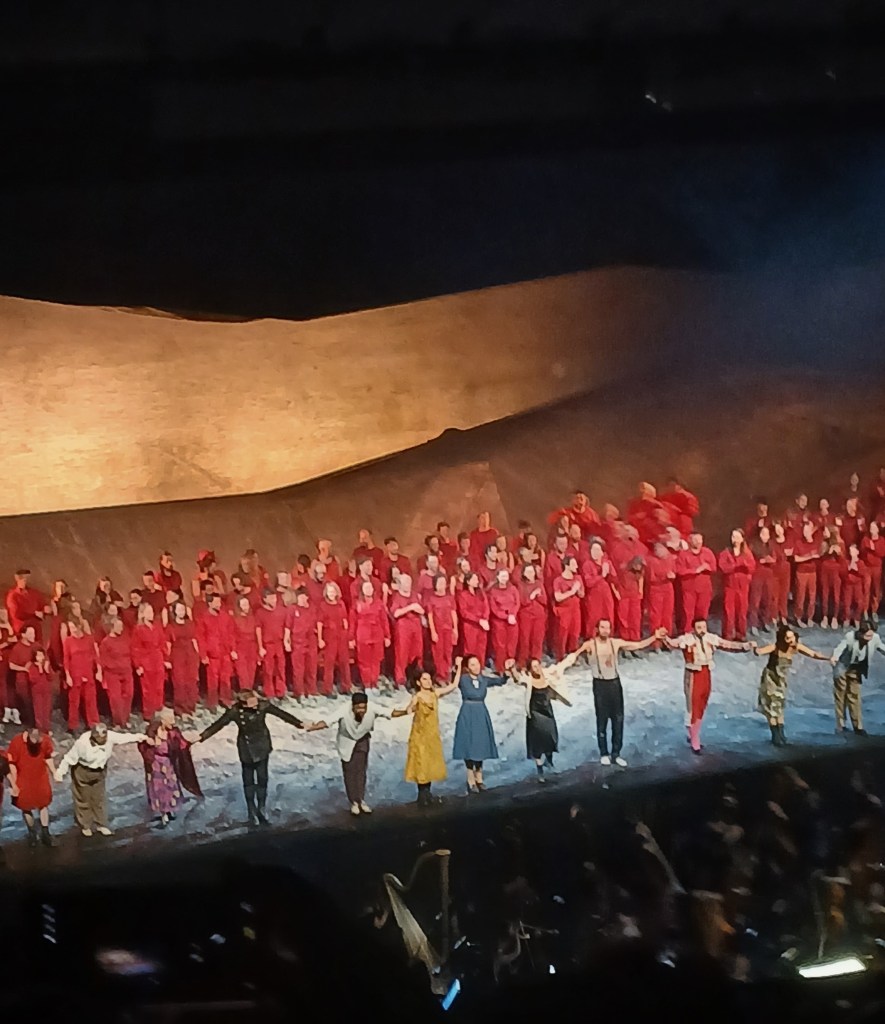
Despite the fact that Billy Budd is hardly an obvious Glyndebourne opera – hanging, sea battles, sadism and so forth hardly fits obviously with rose gardens, picnics, sunshine and country house lawns, nonetheless I thought this production was the best of those I can remember. Key to its success was the director’s making the story line very clear – I followed far more of the story closely than i can remember previously, and the lighting helped by not being too dark (though appropriately gloomy for the below deck scenes). The set was very effective – an oval concave deck shape, with two levels of gantries, ropes and rib-shaped planks.  A lot of thought had been given to the props – guns, lamps, chests and so forth. There was a wall with windows which came down from the flies scenes in Vere’s study. The full stage served equally well for above and below deck scenes. Colours were typically muted, apart from Billy’s light blue and the Marines’ vivid red and white clothing.

One of the merits of the directorial clear story telling was that I appreciated much more clearly the Biblical references in the text, and the clear analogies of Billy Budd with Jesus at his crucifixion. I had never picked up before on the Christ-like comparisons Forster and Britten clearly make with Billy’s character and situation, nor on the fact that Vere follows at the end of the opera in singing Budd’s moving words and music about a better life that awaits them. The point of the opera had always seemed to me before about Claggart’s destruction of the innocent Budd, Vere’s inability to stop him, and the latter’s inability to rise above the letter of the law, unleashing the terrible conclusion. What came out more clearly here was that both Budd and Vere see a final end to evil and the triumph of the good, and that Vere’s great cry ‘What have I done?’ is in effect answered by a small unspoken voice which says ‘Whatever you have done can be forgiven”.  In this reading, Claggart’s darkness didn’t have the same sense of subtlety and that was a pity – there was only threat. terror and cold fury in this character, which contrasted oddly with the more rounded and complex characters of Vere and Budd.

I was also struck afresh by the glory of the music. I have always loved the stirring battle [or not-battle] scene and the choral music for the seamen in the first act plus Vere’s beautiful monologues, but I had forgotten the loveliness of Budd’s two songs when he wakes from sleep and muses on his fate before his execution  and some of the ways the orchestra is used – the remarkable chords before the scene with Billy in his cell in Act 2, which is both wonderfully simple and also moving, presaging the peace Billy finds in his heart as he faces the future.  I was also very struck by the straightforwardness and clarity of Forster’s libretto. The careful tightrope walk needed between too much antiquated 18th century language and too much overdone sea salty naval language (‘avast, landlubbers’ etc) is very well kept to – the work feels passionate and urgent, but in a specific place and period

Billy Budd is very much a team opera – a large number of characters, a big chorus and orchestra. But the three major characters – Vere, Claggart and Budd – all have a major part to play in a successful performance of the work. The question mark in my mind beforehand was the credibility of Allan Clayton as Vere. Could this rather wild looking bearded man really play a character still so much associated with the creator of the role?  At first, surrounded by his officers and men, Clayton did seem a slightly unlikely smallish and tubby Vere but he came into his own in the 2nd act, where, downstage, spot-lit, he was very moving in his reflections about Billy’s sentence and death, while his voice cut through and filled the theatre, and his wild demeanour made emotional sense. Sam Carl as Claggart was perhaps slightly over-the-top – but this was a directorial problem than inherent in Carl‘s performance. Wearing black, having a resonant voice and given no occasion to modify his fierce hatred of Billy, it was inevitable that at the end at his curtain call he should receive pantomime-style boos from part of the audience (a deplorable modern tendency in British opera audiences against those performing ‘bad’ characters, but understandable here). Thomas Mole  as Billy had a beautifully glowing baritone voice, he was good at knowing when to stand still and not move manically around the stage, and gave a sense of Billy’s presence, his sensitivity and loving thoughtfulness for others. Among the many other members of the cast, Dansker played by Clive Bayley was a particularly strong performance.  The chorus was very strong, filling the house easily with their big sound when they needed to, but also with a lovely quiet sound at times. The LPO was particularly snappy and tight in this performance (I am hearing them again at Monday’s Prom performing Strauss’ Alpine Symphony!) and their conductor Nicholas Carter, currently GMD at Stuttgart Opera, seemed very effective at handling the ebb and flow of the work – both the excitement of the battle scene and the quietness of Billy’s reflections

Mozart, La Clemenza di Tito: Buxton Festival, 19/7/26

Adrian Kelly Conductor; Corina Wuersch Director; Xavier Más, Tito; Maria Stella Maurizi, Vitellia; Indyana Schneider, Sesto; Frances Gregory, Annio; Jessica Lawley, Servillia, Samson Seu, Publio. Buxton international Festival Orchestra

I hadn’t quite picked up that this was billed as a concert performance, though a director is credited as above, until just before I was about to set off for Buxton from home. The Buxton International Festival Orchestra is made up, I believe, mainly of music students and recent graduate young professionals. There was a fuss about this last year from the musicians’ union, but the issue seems to have died down this year – and in fact there were more mature faces around among the players I saw on stage.

When I last saw this work, 5 years ago at Covent Garden just after the ending of lockdown, I kept telling myself, “If this were music set to the story of Don Giovanni everyone would say how wonderful it was”. This time round it did feel a bit like a quickly written commissioned piece (Mozart is said to have written it in 18 days, and in the midst of composing the Magic Flute, with secco recitatives by Sussmayr, allegedly, requested by the Habsburg court for political reasons) which can often seem routine but which, Mozart being Mozart, has flashes of brilliance. Some of the lesser characters’ arias – Annio, Servillia – sound distinctly routine. However, at times you feel Mozart getting into his stride – the closing sequence of numbers for both Acts, and some of the big arias, which explore the characters’ feelings and motivations (e.g. “Vitellia’s (Se volto mai ti se” and “Non piu di fiori”). But it is interesting how the combination of the court poet Mazzola and Mozart slimmed down the original opera seria Metastasio libretto and changed it so that there were no long sequences of da capo arias, as there would have been 50 years earlier, but instead something much more dynamic with ensemble-singing and fluid arias that bring in other characters. There was never the sense of paralysis you get on occasion with Handel operas at their less inspired.

However, the work probably does need to be seen on stage and with a director’s vision to be fully absorbing for a modern audience – eg in the ROHCG production, Tito is in charge of what seems to be a sort of Fascist state, which gets nastier as the opera proceeds. Here in a concert version, there were simply audience giggles at the major shifts in the plot (Vitellia’s sudden reversal of the instruction to kill Tito, for instance). On the positive side, there were no scores or music stands in evidence, and no chairs, so singers came on stage and inter-acted with each other as they would have done in a staged performance, albeit in modern dress.  This made for some gripping scenes, though some took more advantage of this open stage opportunity than others…….

For me, the two stand-out singing actors were Xavier Más as Tito and Maria Stella Maurizi as Vitellia. The former was an excellent personification of a Roman emperor, and used his face and hands effectively. He has a big voice – maybe a bit too big for total clarity in the coloratura elements, but the generosity of volume and warmth of tone somehow matched the character of the emperor effectively. Maria Stella Maurizi as Vitellia was stunningly vampish, again with a big voice, and one which handled all the coloratura runs with ease. Both she and Tito were completely convincing and at home in their roles. Indyana Schneider as Sesto had a bit of a hang-dog slightly embarrassed stage presence, and her voice didn’t have the ‘presence’ of the other two – it had somehow a less varied range than the two principal voices, and sometimes a slightly tremulous vibrato. All the other parts were well taken. Listening to my cherished recording from the 70’s (Colin Davis ROHCG) I was aware how swiftly Adrian Kelly took some of the numbers. His conducting had the positive sense of pushing the action forward energetically, but occasionally I wondered if singers would have appreciated a bit more expressive space in some of their arias. At any rate, the orchestra sounded well-rehearsed and there was a good balance with the singers.

Maha Esfahani (harpsichord), St John’s Church, Buxton International Festival 12/7/26

Handel Sonata in G minor, HWV 580; Chaconne in G major, HWV 435; D Scarlatti Sonata in G minor, K 8; Sonata in E major, K 20; Sonata in A minor, K 54; Sonata in Minor, K 213; Sonata in D major, K 214; G.F. Handel Suite No 1 in B flat major, HWV 434; D Scarlatti Sonata in E minor, K 263; Sonata in E major, K 264; Handel Suite No 7 in G minor, HWV 432.

It was probably a mistake to go on to this recital about 50 minutes after the previous Handel opera. Maha Esfahani is a very fine harpsichordist indeed, and probably the best one regularly performing in the UK. However, after 45 minutes of music in the first half of this recital, I decided to give the second half a miss. The music is delightful, but a harpsichord sounds so small in a large church – you’re aware of a burbling buzzing noise but little else. The Handel and Scarlatti pieces were played with awesome virtuoso skill, but I found myself wishing for a set of transcriptions for the piano of this music, to be hammered out in this resonant acoustic

Handel, Amadigi di Gaula: Buxton Festival, 12/7/26

English Concert, Erin Helyard Conductor; Olivia Fuchs Director; Eleanor Bull Designer; Ben Pickersgill Lighting Designer. Tim Morgan Amadigi; Rowan Pierce, Oriana; Hilary Cronin, Melissa; James Hall ,Dardano

I saw this in concert form a couple of years ago at St Martins in the Fields in London, but have never been to a staged performance. I therefore came to this performance with some anticipation – plus the BIF operatic showings are usually great fun! I was also impressed, listening to Handel’s Partenope at ENO in December, by Jake Ingbar’s voice, who at the time of booking was scheduled to sing Amadigi. As it happens the title role had changed hands by the time of the first performance (which this was)…….

Amadigi di Gaula is one of those top-drawer Handel operas which has 6 or 7 attractive arias with tunes which buzz around your head afterwards – the Act 1 aria (Ah Spietato!), the aria in the fountain, the two concluding songs by Oriana and Amadigi (Destero dell’empia Dite), the lament by Dardano (Pena tiranna io sento al core), and the aria with recorders for Amadigi

The story is, for a Handel opera, refreshingly simple. Melissa fancies Amadigi, who fancies Oriana, who is also fancied by Dardano. In the end, Dardano is done away with, Melssa fails, and Oriana and Amadigi live happily ever after. The production concept here was of a Love Island set up -which makes a fair amount of sense. In design terms, following that concept, In the first act there’s a huge pink heart suspended above the stage saying ‘Melissa’s Island’, and the overture has a mimed sequence where Melissa is preparing for filming. There’s also a (very) large model of a pink flamjngo, large palm trees, an inflatable beach toy flamingo and an inflatable paddling pool (for the fountain) – you get the picture……… At the beginning, and to an extent throughout, there were also TV cameras. lighting stands and various crew members. In Act 2, the scene was darker -Melissa’s cavern I guess  – with a lit up dressing table, costume rack and swivel chairs. The flamingo etc are there in the background though……..It has to be said that the Love Island concept is not followed through particularly rigorously – given that Melissa seems to be the TV host, how does she end up so humiliated? And the camera crew barely makes an appearance between the opening and the closing scene (though Orgando, uncle of Oriana and a sorcerer himself, who is supposed to descend from the sky in a chariot and bless the union of Amadigi and Oriana is a TV executive type, and Dardano, rather than being killed, goes off in a huff with his wheelie-suitcase. Dardano and Amadigi do a lot of posturing for the camera at first, but that then goes away. So I wasn’t totally convinced by the concept – but there again, I have never seen Love Island and nor I suspect had most of the predominantly elderly audience, so I may have missed connections and allusions. Costumes were appropriate – the men’s costumes were mainly beach wear, Melissa had a glittery trouser suit and an obvious red wig; Oriana had rather extraordinary piled-up blonde hair and a glamorous red dress and high heels. Melissa at the end gets rid of her red wig – so maybe she was meant to be part of the action, but now has reverted to her TV  host persona…all a bit unclear.

In singing and acting terms, the two women were better than the men – Hilary Cronin had a large supple voice, managing well the coloratura elements of her role, and a brilliant slinky stage persona that was both funny and creepy – just as a sorceress should be. Rowan Pierce has a string of impressive ‘young artist’ credentials and, again, had a forward clear voice. She played the slightly dumb-blonde role to perfection. By contrast, Tim Morgan didn’t quite have the vocal power to project Amadigi’s emotions effectively and he also looked awkward on stage on occasion.James Hall, who I have heard singing Handel with ETO, was more forward in voice and his above-mentioned lament was very effective. But, again, at times he looked awkward, The English Concert gave a biting, sharp account of the orchestral music, with some beautiful woodwind playing.

Unusually for the sedate BIF audience there were a couple of boos when the director and team took a bow. I thought that was unfair. This was a good show, and Handel operas are tricky terrain

Tovesco Trio, Elbephilharmonie Small Hall, Hamburg

Veronika Rädler Violin; Tatu Kauppinen Cello; Francesco Maccarrone Piano. Haydn Trio in E flat major Hob. XV:29; Rebecca Clarke, Trio for violin, violoncello and piano; Bright ShengFour Movements for Piano Trio; Brahms, Piano Trio No. 3 in C minor op. 101

I decided to spend a day and two nights in Hamburg, coming back from my son’s wedding in Sweden. I had never visited the city and wanted particularly to see the Elbphilharmonie. Though there was nothing on in the Grosse Saal, the smaller hall had a chamber music concert, which I booked a ticket for. After a day wandering around Hamburg, with a pleasant time at the Art Gallery, I went on the U-bahn to as near as I could get to the Philharmonie and had a very windy walk through the spruced-up wharves – like Salford’s Media City but on a much larger scale. The Philharmonie is a massive building, boat-like in shape. I suspect you get the best view of it from a distance. The lower bits are I think a hotel and car park, so you have to go up a long escalator and several sets of stairs to get to the concert hall area. There are lots of viewing platforms and places to eat and drink at the top and crowds of Hamburg people and tourists just seemed to be there for the view.

Within the concert hall itself I couldn’t quite work out what was going on – despite its being not a big-name group of musicians, there were lots of young people, whoops for the performers, and, after the Haydn first movement, applause (how the Wigmore Hall audience would shudder).  There was lots of general audience enthusiasm throughout. 6 young people presented flowers to the trio at the end. Anyway, whatever the occasion, it made for a good atmosphere. 

This was an interestingly contrasted programme, with at least three pieces using some form pf ‘national’ musical inspiration. The Haydn piece sounded as though it was one of his works nearer to Beethoven than Rococo – and indeed, on looking it up, I found it was a late-ish one, published in 1797. Some early mysterious moments in the first movement, the enigmatic and brief slow movement, all contributed to this feeling, but then there was also a cheerful landler-based last movement. The Rebecca Clarke piece was an interesting choice for a German audience and non-British trio of musicians. Even for its time it’s a conservative piece (1923) . There are quite strong elements of Vaughan Williams in the piece – both the Tallis Fantasia of RVW and some of the more disturbing sounds from his works of the 1930s. But it has a lot of coherence on its own terms, some memorable melodies, and a sense of progression and narrative. The trio gave a deeply felt performance and in many ways this was the highlight of the concert. The Bright Sheng piece I didn’t really warm to – it used a mix of Chinese-sounding harmonies and sounds, and Western ones. The 4 movements seemed insufficiently varied.

The Brahms piece is a strange work – tense and with a sense of unease in nearly all its movements, and often compulsively rhythmically complex. Even the third, slow, movement, which sounds at its beginning as though it will turn into a classic melancholy wistful piece of Brahms, somehow becomes something darker and more intense. The first and last movements have those characteristic Brahmsian striding themes but, again, somehow, they seemed foreshortened, turned away from. So…..a complex work and I don’t really know how well the trio played it. The coda of the last movement sounded a bit soggy and lame in this reading. Anyway, much, slightly inexplicable, cheering st the end……

Wagner, Tristan and Isolde. LSO, Pappano, Barbican 1/7/26

London Symphony Orchestra, Sir Antonio Pappano   conductor; Clay Hilley   Tristan; Sara Jakubiak   Isolde; Marina Prudenskaya   Brangaene; Franz-Josef Selig   King Marke; Gyula Orendt   Kurwenall Neal Cooper   Melot; Michael Gibson   Sailor/Shepherd; James Emerson   Steersman; London Symphony Chorus 

I got myself into a ridiculous situation over this concert. I bought the ticket over a year ago and had been much looking forward to it. I was very pleased when I worked out going to it was compatible with the travel arrangements for my son’s wedding in Sweden!  About a week prior to the concert, without thinking, I signed myself up to be involved in a teacher recruitment exercise for one of the schools I am a governor for and then realised that the morning I’d agreed to do this would prevent me from getting to Act 1 of Tristan…..!! So I could only make the 2nd and 3rd Acts. I was very annoyed with myself but there was no way I could change this. I got to the venue about half way through the first Act and heard the loud bits sitting outside the Barbican Hall. Anyway, I still had about two and a half hours of music to go……………

My comments of a few weeks ago about Handel opera applies also to Tristan. This is again one of those operas which are fairly static, heavily focused on character, words and singing rather than action, and therefore well suited to concert performance. What then is important is that one feels and understands the nature of each character from the stance of the singer on the concert platform, and what they do with their face and hands. Scores and music stands can be an obstacle to this happening. 

In this performance, or rather in the Acts 2 and 3 I heard, Pappano’s reading had the same passionate sweep which makes his Ring conducting attractive. I was particularly struck by the rhythmic pointedness of some of the cello and double bass playing in the third act, and the depth and intensity of the strings in the Act 3 Prelude. The mournful cor anglais playing was very fine, and throughout there were many instrumental voices Pappano revealed which had never struck me before . The pace was fastish throughout – for the most part this was a positive feature of the performance but for me, the Liebestod was simply too fast for the singer to craft the phrasing and pointing of words compellingly.

I found Clay Hilley even better than his performance with Lise Davidsen in January in Barcelona. Jon Vickers is the benchmark here in my experience of the work in the opera house. But Hilley not only had the heft Vickers possessed but also a poetic refinement with certain phrases which (dare I say it) Vickers never reached in this role. His 3rd act acting was tremendous – hanging from the rostrum, half lying on the floor, he was every inch the tortured hero. Sara Jakubiak in her role debut has the big-hitting voice for the part and was excellent in Act 2 in the love duet. She also seemed to be stirred by Hilley’s singing in Act 2 to more variation and colour as the act progressed. The Liebestod was a bit of a work in progress, rather unrelentingly loud – and I could still remember how Davidsen (in her role debut too) delivered some of the phrases. Jakubiak’s stage presence was inevitably not helped by her need to check in with score/music stand frequently and Hilley and she barely acknowledged each other’s presence in the love duet. Gyula Orendt was one of the finest Kurwenal’s I have heard, singing some of the more lyrical passages with great beauty of tone.  Franz-Josef Selig as King Marke reinforced the positive impression I had of him from the April Vienna Parsifal, singing with impressive resonance and beautiful diction.  As for Marina Prudenskaya  as Brangaene I couldn’t give much of a judgement on her, as most of her role is in the 1st act. She sang the ‘Hab Acht’ passages from the back with great beauty but sometimes sounded squally earlier in the Act, and words were sometimes indistinct.

I felt overall this was a very good performance, but perhaps not one for the ages, apart from Hilley’s Tristan

Bellini, I Puritani: ROHCG Friends Dress Rehearsal, 27/6/26

Director, Richard Jones; Set Designer, Hyemi Shin; Costume Designer, Nicky Gillibrand; Lighting Designer, Adam Silverman; Movement Director, Sarah Fahie; Video Designer, Sasha Balmazi-Owen. Conductor, Riccardo Frizza; Lord Arturo Talbot, Francesco Demuro; Elvira, Lisette Oropesa; Sir Giorgio Valton, Ildebrando D’Arcangelo; Sir Riccardo Forth, Andrzej Filończyk; Enrichetta di Francia, Marcela Rahal; Lord Gualtiero Valton, Blaise Malaba; Sir Bruno Roberton, Giorgi Guliashvili

This work was a complete unknown to me – I decided to go to the dress rehearsal of this new production because I admire Oropesa as an artist (and hoped she would be singing and not marking in the role), and also because Bellini’s music was of interest to Wagner, so I wanted to further explore and listen to the connections. Indeed, at one point in his twenties, Wagner positively worshipped Bellini, and exalted Italian song above all other forms of operatic music. He had “Norma” performed for his benefit concert on Dec. 11, 1837 in Riga when he was GMD there.  It was also at a performance of Bellini’s opera I Capuletti ed I Montecchi, in his early 20’s that he heard for the first time Wilhelmina Schroeder-Devrient, and saw/heard how powerful the combination of words and music could be in the hands of a gifted artist – as late as 1872 he said, “Whenever I conceived a character, I saw her.” I have seen commentators noting that the horn fanfares at the start of Act 1 of Puritani are a distant ancestor of Parsifal Act 1 and describing how Wagner developed Bellini’s approach of building long lines of musical tension in creating Act 2 of Tristan……

At any rate, apart from Maria Stuarda, this was the most enjoyable bel canto opera I have been to, and my attention was held throughout.  The story is engaging if hardly historical – Elvira’s true love is a Cavalier but she is from a Puritan family. A Puritan Riccardo aims to marry Elvira. The Cavalier Arturo is suddenly given permission to marry by Elvira’s uncle and the marriage ceremony is about to take place. Arturo then realises that the mysterious prisoner in Elvira’s castle is actually Henrietta Maria, the widowed Queen, and she is about to be taken to London to be tried by Parliament. Arturo gives her Elvira’s wedding gear and escapes with the Queen in disguise as a bride to avoid certain death. Riccardo connives in this escape in order to remove Arturo from the scene. Elvira then goes mad (of course!) until the third Act, where Arturo returns, having delivered the Queen to safety. They are briefly united but then Arturo, who has a death sentence on his head, is captured, and is about to be executed – but suddenly a decree arrives saying Cromwell has issued an amnesty to all Royalists previously accused of anti-Parliament activity. End of Story (though not quite in this production, as we shall see).

I found the production peculiarly bitty – quite strangely so, really. I have normally been impressed by Richard Jones’s productions, but this for me didn’t quite work. The sets were simple and fine enough – a whole-stage castle stone-looking interior with several fireplaces on each side and heraldic signs at the back, with a small room setting that moved on and off downstage as and when needed. There was also a raised platform, cleverly appearing from nowhere, for Arturo’s presumed execution. Ribbons came down from on high for the wedding-ceremony-that-doesn’t-happen and there are strangely short flurries of confetti and snow in Acts 1 and 3.

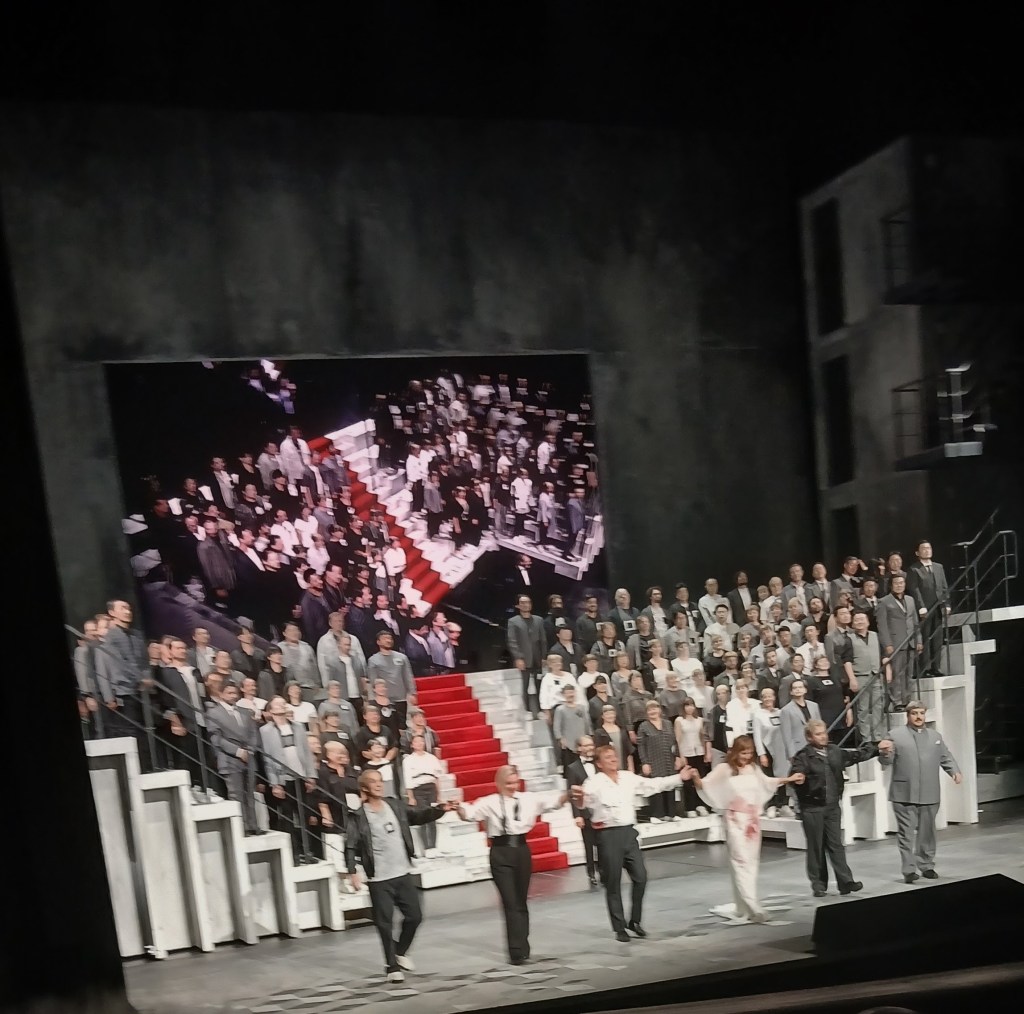
This seems to me to be a work that needs a director’s hand not just to tell the story but also to offer some sense of relevance to our own lives. The libretto was written by an Italian count with marked liberal sympathies and is full of references to ‘freedom’, which would to contemporaries have related to Italian nationalism and freedom from Austria. Roundheads and Cavaliers are also of course opposed political forces – something in all this mix might have been used more creatively. As it was there was well-handled simple story telling, with sudden furiously busy quirky stage scenes – at the end of Act 2, and the choral singing about freedom, a whirling set of barrows and cannons suddenly appears and as quickly disappears; at the beginning of Act 3, as Arturo tries to evade the Parliamentary forces hunting him, a huge steel searchlight is brought on stage. Something of the set up in Act 1 reminded me of a 1950’s New Bayreuth Die Meistersinger, with a massed chorus in line on a series of raised steps, moving slowly in ritual formation. But nothing here seemed either to particularly enhance the story-telling or to be putting that story in a wider context. The chorus turns up in metal helmets in the search party for Arturo but nothing is really made of that, in terms of visual impact. The final moments of the third act give us another one of those ending quirks which have been a feature of several recent ROHCG productions (e.g. Theodora and Semele) – Riccardo suddenly furiously stabs Arturo as the curtain falls. All of these are sensible enough ideas but they don’t seem to be serving any wider vision of what the piece is about. 

Happily, the singing and acting saved the day. Riccardo was excellently sung and acted by Andrzej Filończyk. He has a tall presence which he used in an effectively menacing and powerful way, and a warm expressive baritone voice, which could be both gentle (with Elvira) and demanding (with Arturo). I was also very taken by Ildebrando D’Arcangelo as Giorgio, Elvira’s uncle, who had the right note of authority, but also compassion as Elvira’s mental health collapses after Arturo’s disappearance. I can’t really comment on Francesco Demuro’s Arturo – as the performance went on, he seemed to be in some vocal difficulties, with his voice cracking under pressure frequently, though he managed some lovely legato singing, and some fiendishly high notes without any problems. It will be interesting to see whether he is well enough for the first night. Lisette Oropesa was an utter delight throughout. In this role she has a truly commanding and believable stage presence, and we fully understand the mental torment Elvira is going through – every movement serves a purpose and she is wholly invested in being Elvira on stage. Her very distinctive smoky voice with a quick vibrato was able both to handle some astonishing coloratura passages with clarity, some very high climatic notes, and convey Elvira’s passion without ever forcing her voice. I particularly remember her singing in the ‘mad scene (another one) in Act 2, and a form of lyrical folk song in the beginning of Act 3. One felt in the presence of greatness. I am looking forward to her singing Alcina again in September,

The chorus was both large (I counted 40 plus) and very, very good – powerful, tight, and justified the high-profile Jones’ production gave them. It’s in the nature of bel canto that orchestras accompany singers rather than being of equal worth with them, and some of the accompaniment is of the ‘oompah’ kind. But orchestral colour is needed at points and, in particular, the horns distinguished themselves. I have never heard of the conductor before but he moved the music along often with vivacity and bounce that kept your foot tapping even while one was asking oneself why such chirpy music was being written for such a sad set of emotions……

Handel, Serse (concert performance). Academy of Ancient Music, Barbican 19/6/26

Academy of Ancient Music , Laurence Cummings   director & harpsichord; Paula Murrihy, Serse; Louise Alder, Romilda; Rachel Redmond, Atalanta; Rebecca Leggett, Arsamene; Claudia Huckle,   Amastre; Luca Tittoto, Ariodate; Thomas Chenhall,   Elviro

I am pretty sure I saw Xerxes at ENO at some point in the last 20 years, maybe at the last ENO revival in 2014, but I have zero memory of it except for a very colourful first scene – with the plain tree – in ??yellows and blues. So going to this performance I was in essence listening to the piece as a whole for the first time.

It was fascinating to experience this as a concert performance. Unlike some operas, which really do need a stage – Mozart for instance – the focus in Handel usually on the inter-relationships between 5 or 6 key characters means that it is very easy to translate to a concert environment – the action and the emotions are in the arias, and with the singers who are singing to each other. The interior world of each of these characters is what is important, rather than their actions on stage. So here we had Serse, in love with Romilda, Arsamene (Serse’s brother) in love with Romilda, the scheming Atalanta, sister to Romilda, Amastre, Serse’s abandoned former love and a princess, with two minor characters Elviro (Arsamene’s servant) and Ariodate, father to Romilda and Atalanta. All that was needed was for the singers to react to each other, and to handle a modicum of character creation alongside the fiendishly difficult singing. It was lovely to be in the stalls and to be close enough to see these inter-reactions and facial expressions. Even the fact that there were three music stands and most of the singers were using, to a greater or lesser extent, scores, didn’t – as it does do in some other non-Handel concert versions of operas – really reduce their ability to be acting and responding to each other.

As Wikipedia points out – but I hope that I would have noticed this anyway – the work Serse is unusual in bringing together the opera seria and the comic modes of 18th century opera. It is often quite funny and the Barbican audience were moved increasingly to laughter as the evening went on – some of course generated by the daftness of the opera seria approach, but often the misunderstandings and mis-steps are genuinely funny. It was for this reason that the work was heavily criticised at its first run in 1738 – it was thought to be micing up that which should always be kept apart, and did not follow the path of decorum required by ‘proper’ opera seria. Charles Burney said “it is one of the worst Handel ever set to Music: for besides feeble writing, there is a mixture of tragic-comedy and buffoonery in it, which Apostolo Zeno and Metastasio had banished from serious opera” Wikipedia implies that Handel had recently seen the Beggar’s Opera, saw the good money it was making and decided to include something akin to it in Serse!

 This is top drawer Handel musically. Maybe the famous ‘Largo’ which occurs as the first number in the opera is not replicated later on by arias of equal memorability, but there are a whole range of enjoyable pieces, fast and slow, for all the characters. The other comment about the music to make, which, had I not read the Wikipedia article, I would have assumed was the result of concert performance cuts, is that some – not all – of the arias don’t follow the a b a traditional da capo model but just have one melody, or have two, neither of which is replicated. This does give us more music in the time available (this performance, at 2 hours and 50 mis, was probably cut as well) and move the action along – again, maybe, the influence of John Gay.

The Academy of Ancient Music (AAM) had brought together a really first rate cast, with no weak links. For whatever reason a counter-tenors was not used for Serse in this performance. The male part of Arsamene has always been sung by women since the premiere.  I’ve known Paula Murriyh was something of a Baroque specialist but have never heard her live in that repertory – she’s performed as Dido in Les Troyens and Countess of Essex in Gloriana in performances I’ve been to. Here she projected a remarkably effective regal presence, despite being smaller than Louise Alder, and she has both the ability for the pyrotechnics, spectacularly delivered, and some beautifully floated high notes; she could also use her voice expressively to demonstrate anger and affection with great credibility. Louise Alder, increasingly a UK stage favourite, is currently singing as Susanna in Figaro as well as performing this one-off Romilda, and I heard her not too long ago as Zdenka in Arabella, rather stealing the show in the latterso a highly versatile singer. Romilda is a bit of a mopey role – she’s a somewhat passive character, pulled about by different men’s affections – but Alder sang it with distinction and variation in the various slow arias she has (and she could also do the coloratura bits with precision). Hers is a big voice, and a big presence, but one that’s totally under control and serving Handel’s intentions. Rachel Redmond, who I have come across at Irish Opera’s performances at the Linbury, was a spectacularly good Atalanta. This is a high soubrette -type role and her singing was in some ways the best conceived of the evening – she got across the comedy of her part and the flirty nature of the role superbly well, and her coloratura was glitteringly precise and bell-like. Rebecca Leggett had a slighter voice than some of the others on stage and very occasionally she had to push it a bit too in expressing emotion, but she got across the frustration and ardour of Arsamene’s character. Claudia Huckle, a young singer, had a remarkable contralto voice as Amastre  – she is definitely someone to look out for. All the other characters were well taken and the AAM were the perfect accompaniers, never obscuring the singers’ voices, while Laurence Cummings bounced around in front of his harpsichord to encourage energy and life in the performance.