Nicky Spence, Oberon; Jennifer Davis, Reiza; John Findon, Sir Huon of Bordeaux; Yannick Debus, Sherasmin; Rachael Wilson, Fatima; J’Nai Bridges, Puck; Charlotte Bowden, Mermaid; Jessica Cale, Mermaid. Monteverdi Choir, Orchestre Révolutionnaire et Romantique; Sir Mark Elder, conductor
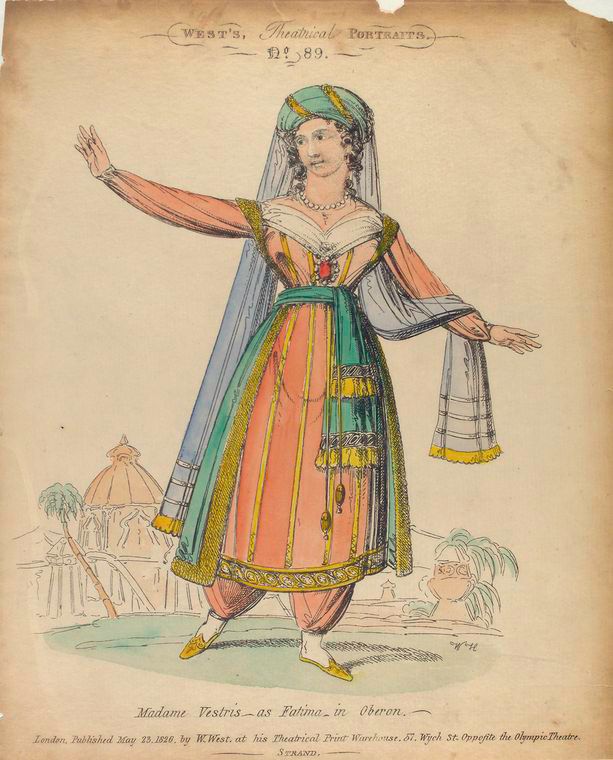
This was a great Prom in prospect – two strong tenors, a major soprano, Elder, and a brilliant period instrument orchestra, plus an opera I have never heard a note of before, apart from, of course, the overture. Oberon was Weber’s final work, and his third opera – written for Covent Garden 200 years ago. Oberon’s libretto was written by James Robinson Planché, a popular dramatist whose spoken text has not aged well (allegedly, since we didn’t hear it) involving fairyland, desert islands, Baghdad, pirates, and crusaders. Mark Elder wrote in the Guardian, in relation to this concert, that “to stage, or even semi-stage Oberon, its text needs to be rewritten, and for our Proms performance, author Timothy Knapman has created a new single narrative that respects the original but blows the dust off it. His witty version, narrated by Tamsin Greig, will entertain today’s audiences just as Londoners were entertained in 1826”. I assume here that Planche’s original text was retained for the sung element – certainly it sounded dire enough…The story is scarcely worth summarising but derives from a row between Oberon and Titania about who are more faithful – men or women. Oberon chooses Sir Huon and the Baghdad princess Reiza to fall in love with each other, and he then puts them in situations to test their love for each other.
This is a curious work. I am of course glad to have heard it for the bucket list but won’t be desperate if it never crosses my path again. If operas are declared to be masterpieces, but are hardly ever staged, this is usually because either they are too expensive to be put on very often or because, actually, the wider opera-going public has got the measure of the work and it isn’t all that it is cracked up to be. Oberon is a singspiel, like the Magic Flute and Fidelio, but with Planche at hand, there’s also an English pantomimic quality to it. Though the circumstances the characters find themselves in are certainly not funny, the reworked text (i.e. the story less the sung elements) read by a narrator as written up by Knapman often tended to be tongue-in-cheek, knowingly going for laughs through silly rhymes or the sudden juxtaposition of incongruous elements. The audience (quite a full one, though some empty seats in the Balcony) enjoyed this, but the spoken text made it harder for the singers to really shape their characters into flesh-and-blood creatures rather than cartoon-ish ciphers. The music, frankly, didn’t seem to be that distinguished, though it is always attractive to listen to and I was never bored (the best tunes are culled for the Overture). There are some interesting orchestral effects – rippling woodwind, ‘Turkish’ cymbals – and the numbers are very varied in pace and type. The music to me hovered between Donizetti (but without the energy and the lyrical grace) and the Mozart of the Magic Flute and Die Entfuhrung (but without the genius). There is in fact quite a lot of the Flute in the story – two couples, tests and trials for faithfulness and this must have been part of the attraction for Weber in setting this to music (incidentally, I hadn’t realised before reading the programme booklet that Weber’s father was the uncle of Constanze, Mozart’s wife, which must make Weber and Constanze cousins, I think). Wagner must have heard the work as a teenager, and was of course a considerable fan of Weber’s – it is possible that Reiza’s aria ‘Ocean Thou might monster’ with its declamatory style and absence of any standard aria format might have influenced him, and occasionally in some of the female vocal lines I thought I heard distant precursors of Lohengrin. Also. there are occasional brass passages associated with Oberon which reminded me of Telramund and King Henry in the same opera. The programme booklet asserts that the tune for Oberon’s magic horn is a sort of ur-leitmotif, akin say to the Ring sword motif – I am not sure about that……But the chorus of Tunisian dancing girls intent on carrying off Huon has some resonance with the Flowermaidens in Parsifal, I suppose
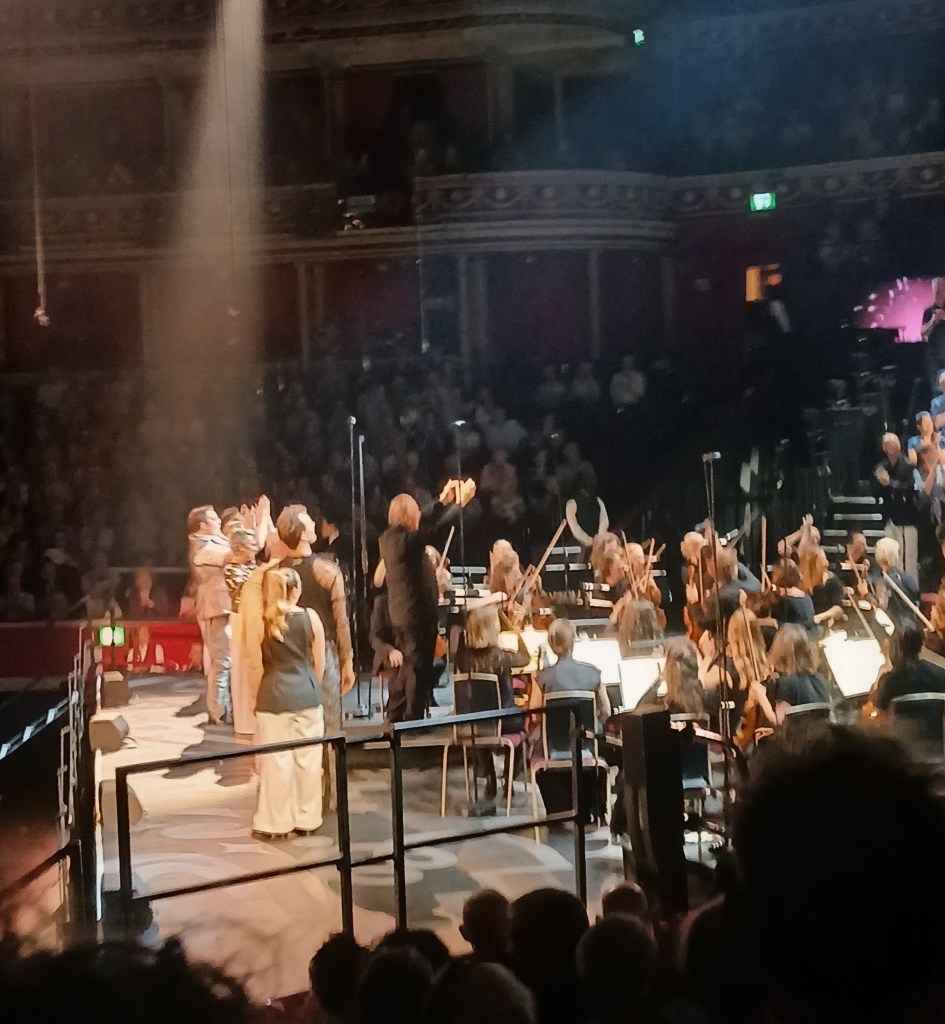
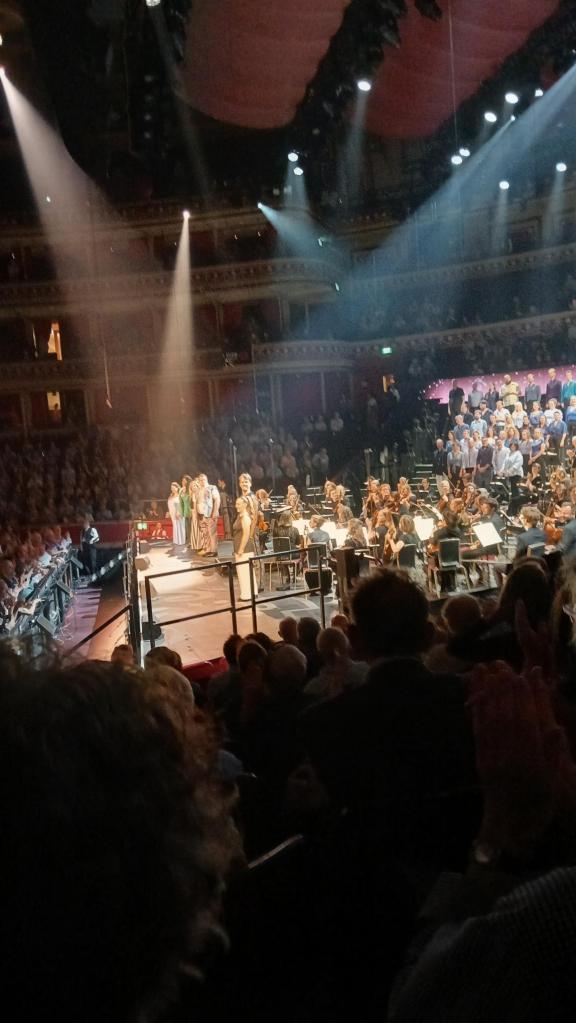
This was billed as a semi-staged performance, and there was a credited stage director – Emma Doherty – with very effective use of the whole stage and indeed wider Arena space (including Sir Huon and his sidekick Sherasmin going into the audience in their quest for Reiza). The area by the organ console, the back of the platform, the front, the sides of the platform – all were used and the singers and chorus were encouraged to respond to each other and act credibly. Dress was modern but credible. No noses in the scores here………Apart from the yearly Glyndebourne offerings, this was one of the most effective Proms concert stagings I have seen.
The standout singer for me was the young American singer Rachael Wilson, making her career in Europe, as Fatima (Sherasmin’s partner) who has a most beautiful voice and who thrillingly sung two of the most attractive arias in the work – the Act 2 aria “A lonely Arab maid” and the Act 3 aria “O Araby!”. Jennifer Davis sung ‘Ocean, thou mighty monster’ with the power it needs, and was also moving in her other big aria, “Mourn thou, poor heart” (Act 3) – she has considerable gifts as an actor, and engages well with audiences, but I have to say I find her singing lacks colour somehow. It was good to see and hear John Findon, who I interviewed 3 years ago for the Manchester Wagner Society when he was playing Mime in the ENO Valkyrie – his career is developing (at least in the UK) well (he was singing in Gerontius last week at the 3 Choirs Festival) and he was appropriately heroic, actually quite a good actor in this impossible role, and handled the florid elements of his arias capably. At one or two moments where he was singing softly, his voice cracked a little, which I have heard happen to him before. Nicky Spence did all that was required of him as Oberon to sound noble and authoritative, though he couldn’t resist a few campy twirls in one or two places, and the narrator also contributed effectively to the evening – with a difficult job, where the surtitles covered her lines as well as the singers so all the jokes in the text were revealed to the audience before she spoke them. Given how clear she was, the stage team would have done better to just focus the surtitles on the words for the arias. The Orchestre Révolutionnaire et Romantique sounded fabulous and I enjoyed as usual in a period band the rasping trombones (there are 3 of them) and horns, the pungent woodwind and the acidity of the strings. The chorus were clearly having huge fun, and well into their acting roles, as well as singing tightly. Mark Elder was evidently enjoying himself and conveyed his love for the music to the players.
This was a Proms first and notable for what must have been the considerable expense in putting this on – using a stage team and a quite complex lighting plot, using an external orchestra rather than a BBC one, and some major singers. So, thank you BBC for giving this work its best chance, it was a thoroughly worthwhile evening and we can all now put it back safely to bed in the knowledge that this is not an undiscovered masterpiece………