Kristine Tjøgersen, Between Trees; Canteloube, Songs of the Auvergne – selection; R. Strauss, An Alpine Symphony. Louise Alder soprano, London Philharmonic Orchestra. Edward Gardner conductor
This was a very interesting programme, very well thought through – a contemporary Norwegian composer’s piece about the sounds of the forest, folk songs from the Auvergne, and Strauss’ Alpine Symphony.
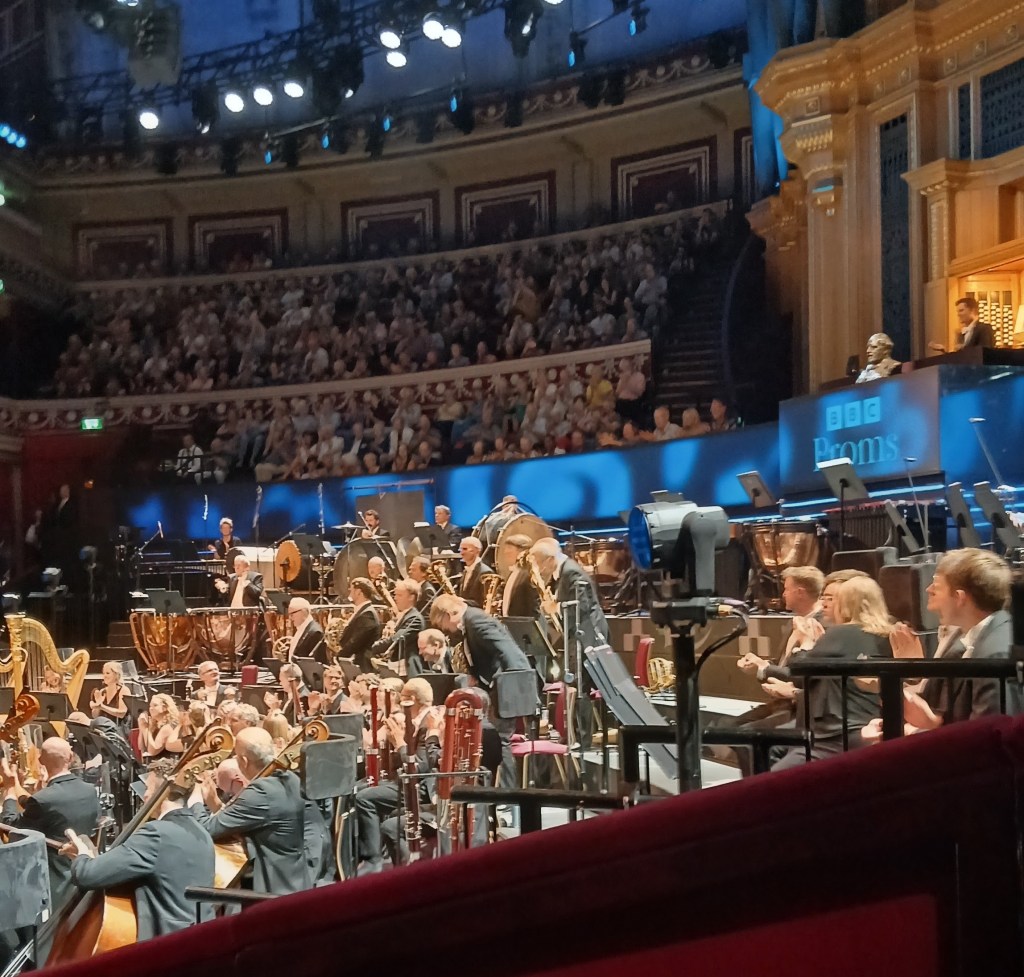
The piece by Kristine Tjogersen – ‘Between trees’ – was remarkable. Scored for a large orchestra, it used many unusual ways to produce forest sounds from instruments and merged them with more conventional sounds from what was quite a large orchestra. Sounds to represent forest animals and birds, and trees rustling in the wind included: a harpist running some sort of metal rod over the serrated top of her harp, percussionists spraying empty aerosol cans, brass players playing parts of their instruments filled with water, woodwind players using their mouthpieces, string players using the area above their bridges and wielding metal rods.. All sorts of chirping, popping, grunting, squeezing, swishing sounds emerged, way, way beyond what one might have found in a mid 20th century modernist work, and this was remarkably absorbing. The sounds were linked by quiet motor rhythms, particularly in the strings, which related to another theme of the work, the fungal threads working their way through the forest to keep it connected, and so there were gradual shifts in the nature of the sounds. What was at first entrancing after 10 minutes was on the verge of becoming repetitive, but then, in a change to an almost Straussian mode, the orchestra came together in a series of major key passages that welled up as the music might do in an Attenborough programme into a sense of exaltation and wonder which was very moving. After a few more minutes of chirping and rustling the music gradually subsides. I thoroughly enjoyed this work, and it was good to have the composer there to receive warm applause from the audience. I wondered if she had been present at rehearsals to help the orchestra to recreate the sounds she wanted – maybe even workshopped with them to get some new ideas…….
The Canteloube Songs of the Auvergne selection ended with the famous Bailero, and featured 5 others. Though the songs are written in the Occitan language – sounding a bit like a mix of French, Spanish and something else – they sound very far removed from their folk roots in Canteloube’s arrangements, bathed in a warm nostalgic glow of strings and woodwind, and predominantly slow. Alder’s voice and personality, with her’white’ vibrato-less sound , her ability to fine down her big voice with precision, and her ability to act out and articulate the words clearly, were ideal for the music, and I suspect (it was a first live performance for me) I shall never hear a better performance. One can grumble on the sidelines about what Canteloube was doing here, but, really, this was a very appealing performance.
I have heard 2 performances of the Alpine Symphony in recent years – Jurowski/Bavarian Staatsorchester at the Barbican, and Halle/Elder at the Bridgewater Hall. In in both cases, particularly in the unforgiving Barbican, my enjoyment was spoiled by the halls’ inability to cope with the sheer amount of noise this work contains, and the consequent acoustic distortion. No such problems in the RAH….. which was built for such monumental works….That gave this performance an immediate boost – the 9 horns, the 5 trumpets, the off-stage brass, the massed strings, the quadruple woodwind all sounded glorious. There was some standout playing from Tom Nielsen and his trumpet section (the high trumpet playing was superb), the horns, led I think by John Ryan, and first oboe Ian Hardwick.
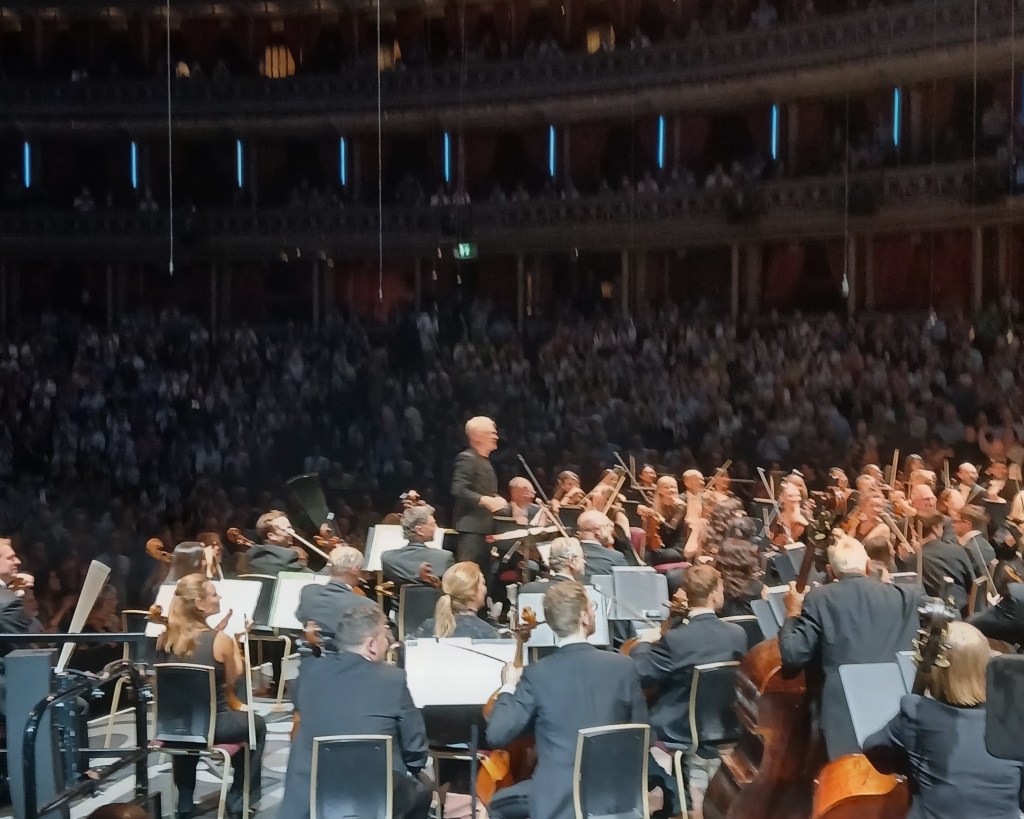
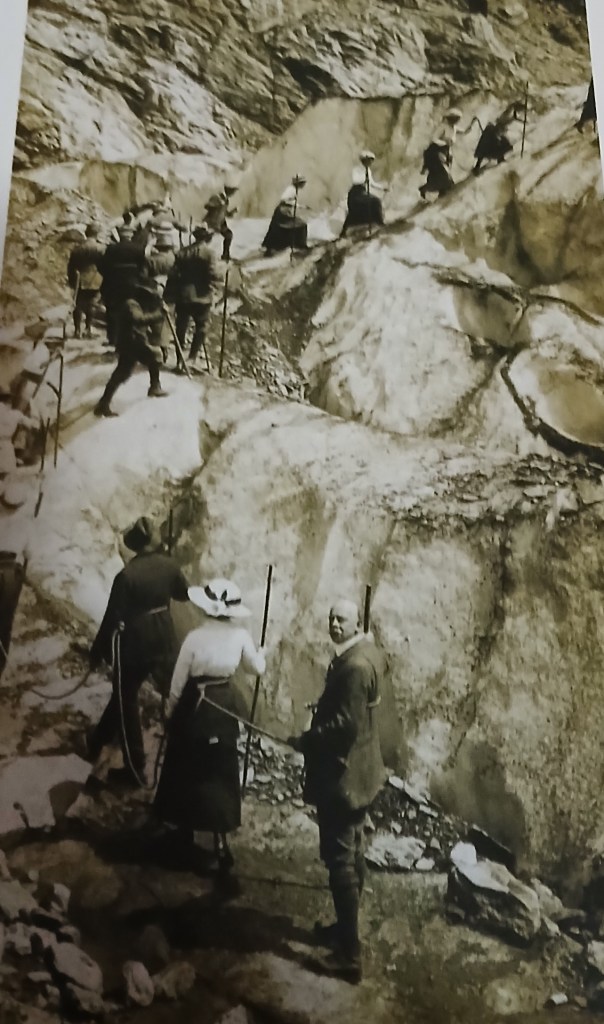
I find this the most appealing of Strauss’ tone poems – Ein Heldenleben by contrast sounds bombastic at times, and Also Sprach Zarathustra not really up to the quality of Nietzsche’s thinking (the rather gross waltz….. ). By contrast, Strauss’s main themes for the Alpine Symphony sound appropriately soaring and resplendent, the way they are worked on and transformed is cleverly done, and the work has resonance at several levels beyond a simple Alpine walk. Gardner’s beat is clear and without podium histrionics, and this seemed to generate a very well- signposted reading of the score – I followed the different sections much more clearly than I have in other performances, and Gardner was good at holding to a steady pace for the grand transcendent momnents, keeping a brisk pace in some of the intermediate stages of the journey, while building up huge climaxes with appropriate ritardandos, and handling the different levels of dynamics effectively. I was sitting to the side of the orchestra so couldn’t really comment on the clarity and balance Gardner was bringing to the performance, but certainly I heard everything I would expect to hear, and some strands which were new to me. His handling of the music after the storm was particularly effective. It was fascinating to hear in the opening couple of minutes Strauss’ own early 20th century version of Tjogersen’s woodland whisperings………….
So – my first Prom of 2026 and a very good one!