Conductor: Nathalie Stutzmann; Director, Stage design and Costumes: Alexandra Szemerédy, Magdolna Parditka: Rienzi, Andreas Schager; Irene, Gabriela Scherer; Colonna: Andreas Bauer Kanabas; Adriano, Jennifer Holloway; Orsini: Michael Nagy; Cardinal Raimondo, Vitalij Kowaljow; Baroncelli: Matthias Stier; Cecco del Vecchio: Michael Kupfer-Radecky
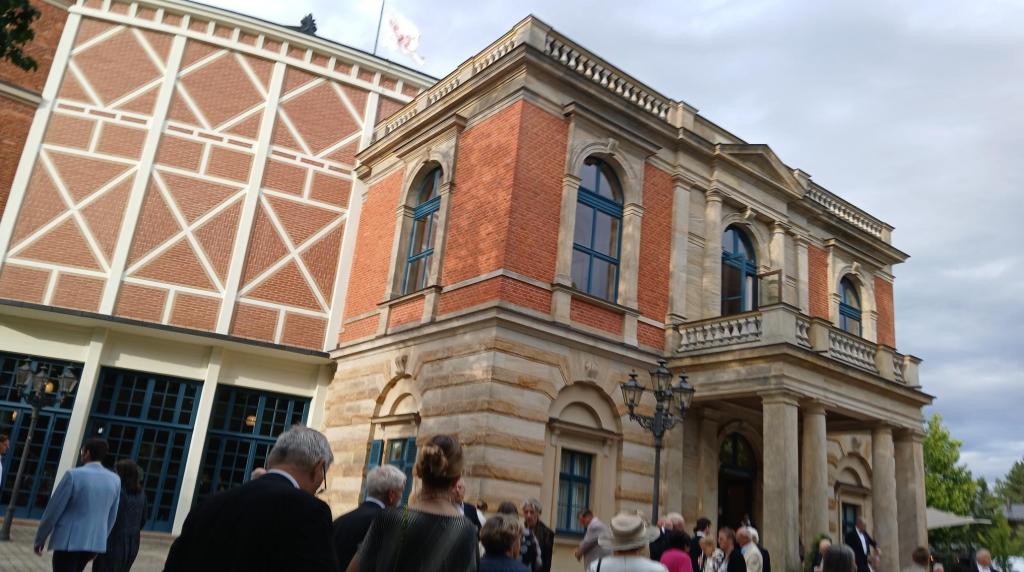
And so to Bayreuth, to Rienzi, the only performance I could get a ticket for this year (though not obtaining Ring tickets sounds to have been a merciful relief, given the extraordinary levels of condemnation and abuse given to the ‘AI’ Ring ‘curated’ ‘production’). And not without difficulties getting there – the DB rail replacement service from Nuremburg to Bayreuth proved astonishingly difficult to find outside Nuremburg station, but following the herd eventually bore fruit. After a nice Italian meal in the evening, and a ritual visit to Wahnfried the next morning (in pouring rain, after a dramatic thunderstorm the previous evening), I strolled up the ‘Gruene Huegel’ about 2,30pm for a 4pm start, It was great again to enjoy the very special atmosphere of the Festspielhaus, particularly in the 150th year of its operation, though it’s a pity the attendants have stopped closing all the doors theatrically with a resounding crash, to make you feel you’re locked in……
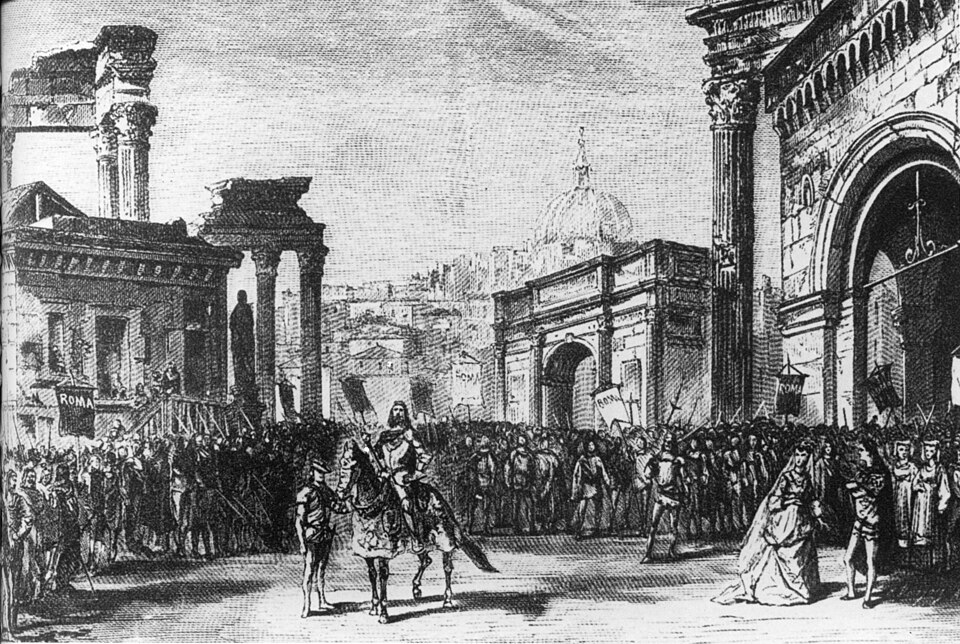
I was more impressed by ‘Rienzi’ than I thought I would be. The essential thing about it, I felt, is that it has huge energy and drive – very much a young man’s work (Wagner was in his late 20’s when he wrote it). It’s prodigious in every sense. Yes, some of it is repetitious, some is rather banal and four-square (those military march tunes), but somehow its enthusiasm wins through. The team responsible for the edition being used in this production stress that the “ten works of the so-called “Bayreuth canon” are not based on a will or authoritative formulations in the foundation deed of the Richard Wagner Foundation Bayreuth, but exclusively on passages from Wagner’s letters to King Ludwig II of Bavaria from 1882.” (quote from the Festspiele website) The team has attempted to uncover new sources and reconstruct parts of the score believed to be lost (the original manuscript was lost in Hitler’s bunker at the end of WW2); they believe that if there had been a definitive score, Rienzi – the Last of the Tribunes would have taken its place with the other 10. Wagner said in 1871, they report, that “they should see the fire in Rienzi; I was a music director and wrote a great opera; that this music director has given them such nuts to crack afterwards, that should surprise them” (the Bayreuth team doesn’t use the previous words in Cosima’s diary (‘Rienzi is repugnant to me, but……”) The team claim that “Even if Wagner had only written Rienzi, the opera is a unique masterpiece sui generis, which would have found its place in the genre history of European musical theatre even without the authorship of the later Bayreuth master.” And I would on the whole endorse that view. Nevertheless, the original length of Rienzi – 5 hours – has been reduced by an hour or so in this production, mainly through cutting the ballet and the recitative element. The other thing which surprised me is how many melodic links there are in relation to the Wagner ‘proper canon’, particularly the first three works, in Rienzi. There is the familiar Wagner turn coming again and again – which you get as late as Gotterdammerung – dah didi dah pause dah dah dah; there is a phrase that comes also at the end of Lohengrin Act 2, other phrases which occur in the Flying Dutchman, a softly sung female chorus that sounds like the bridal chorus in Lohengrin. Some of the choruses had a hint of ‘Fidelio’ about them. So – it’s not as though there is an unbridgeable stylistic gulf between Rienzi and the others – there are lots of similarities; it’s just that Rienzi is more sprawling, cruder, obviously has more in the way of identifiable arias and other operatic forms (there’s a trio, for instance) and is still, despite the cuts, very long – certainly as long as Tristan. We finished at 9.50pm after that 4pm start, with two one-hour intervals. The first two acts in the Bayreuth rendition, before the first interval, lasted about an astonishing hour and 45 minutes, which is as long as Parsifal Act 1 in most performances. But what I did feel is that I would much rather listen to Rienzi than Bellini or Donizetti, to the extent that I have heard them, or even the middle-period Verdi of the Sicilian Vespers and The Force of Destiny. I never lost focus in this long work, except right at the end when Rienzi, and Irene spent a ridiculous long time dying……
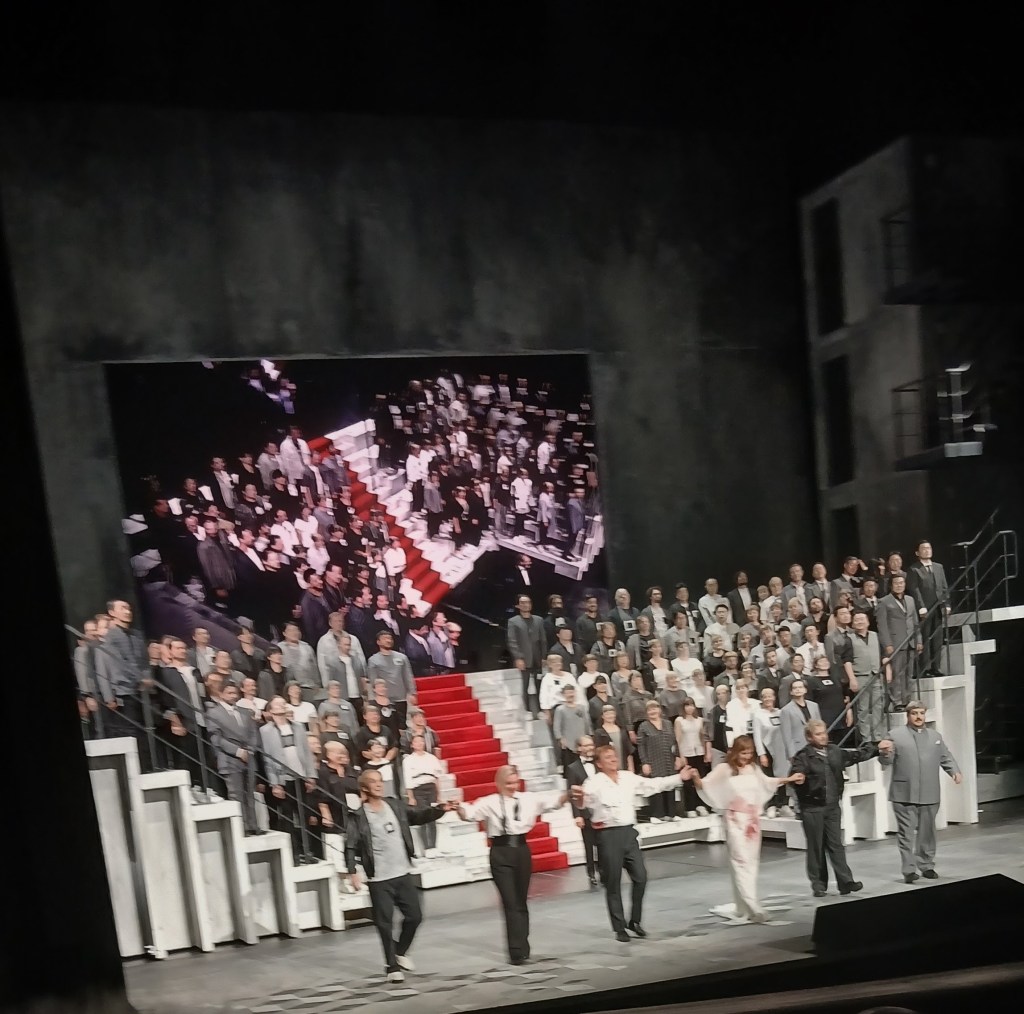
What of course you need, in seeing an opera as rare as this, is a directorial stance which isn’t too whacky, and which focuses on telling the story rather than a complex ‘take’ on the work, particularly when there are no surtitles. By and large the co-Directors and Designers Alexandra Szemerédy, and Magdolna Parditka achieved this. It’s true that there was a lot of ‘busy-ness’ on stage – flashing images of all sorts, a screening of Mathew 24 v1-33 at one point, people running around all the time – but the basic setting was clear: a contemporary or slightly-futuristic setting, with populist politicians bidding for the people’s support, and ‘the people’ being quite fickle about who was ‘up’ or ‘down’ in their estimation. There were placards like ‘make Rome great again’, and a 24-hour news cycle live streaming on all the screens around the stage with reports like ‘The Fight for Rome’. There were three elements to the stage design which were moved around and varied during the five Acts. The first was stacks of scaffolding and platforms, which formed houses, or rather flats, for people – Rienzi and Irene included, all with their individual TV screen; the second was a staggered amphitheatre with central steps (see photo below), and with a huge screen above it, to give close ups of speakers, voting projections and crowd responses; the third was a crudish theatre front, which served as a image for the Festspielhaus during the ballet (more of that below), and was brought down again for the ‘theatre’ of Irene and Rienzi’s deaths. In Acts 3 and 4 the staircase and the blocks of flats are combined to maximise space for the movement of rival troops and shootings. This wouldn’t have been the land of regie-theater if there weren’t a few oddities – principally in the overture a small boy dies. Is this a brother to Irene and Rienzi, or a child of their incestuous union? – it’s never clear. Nor is it clear whether Adriano is a trouser role having a heterosexual relationship with Irene, or whether ‘she’ is gay – again not clear and in both cases not important to the plot, The ballet was fun – quite a lot of the music was included but used for an amusing parodic run-through the major music dramas, using ‘traditional’ costumes, with winged helmets etc. My favourite image was that of Parsifal fiddling with the switch on his chalice unsuccessfully to make it glow; there were also interval scenes including the rush for the bratwurst stalls and the queues for the ladies’ loos in the ballet. I guess there were two oddities in the production – one specific to this production, the other generic to the place. Though the Pope, a Cardinal and the Church generally are referenced in the text there was no-one identifiable on stage as a Church person – which seemed strange. The other was the fact that this is obviously a grand opera with moments clearly meant for applause, after a big number. This being Bayreuth, of course, no-one did applaud, which seemed strange.
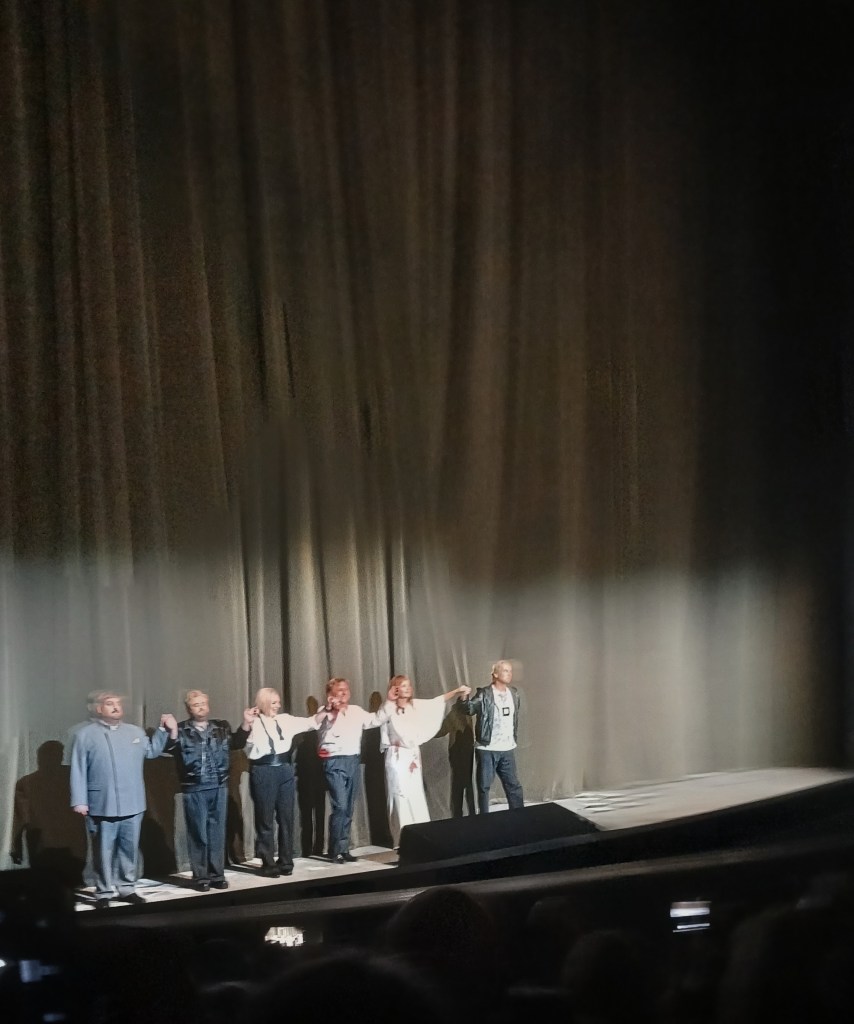
The principal singers were all excellent. Andreas Schager as usual flung himself into the action, with generous volume and at times engaging sensitivity. Hearing him from row 7 of the stalls, and viewing close-up his utter commitment was a real privilege. At times his voice frayed a bit, making one wonder how long he can carry on singing these heavy roles. But it was wonderful to hear him, and see him, so passionately engaged in the role. Jennifer Holloway, who has to emote probably the most of all the characters, flipping and flopping as she does between family loyalties and love for Irene, was equally passionate and convincing. Gabriela Scherer’s portrayal of Irene was a little hard to fathom – the sweet smile she gave Schager in the curtain calls made me realise her entire portrayal of Irene had been stony-faced, expressionless. Was she the power behind the throne? Was power what motivated her rather than the relationship with her brother/lover? It wasn’t clear……Vocally at times she seemed a bit underpowered but had a beautiful voice when you could hear it. The scheming politicians were all strongly sung. I thought Natalie Stutzmann conducted a flaccid and underwhelming overture, but thereafter things improved and she moved everything along with energy. The Bayreuth Chorus was hard-worked and beyond praise in the strength and subtlety of their sound.
I shall probably never see this work live again – it was wonderful to hear it at Bayreuth. I am now looking forward to the new Parsifal (conducted by Thieleman) and the new Lohengrin, with revivals of Die Meistersinger and Tannhauser next year at Bayreuth, for which I already have booked tickets!!