François Collin de Blamont, Diane et Endymion, overture; Sébastien de Brossard, Sonate en Trio in E minor SdB. 220; Michel Corrette Sonata in B flat Op. 20 No. 4 ‘Les délices de la solitude; Louis-Gabriel Guillemain, Sonata in A minor Op. 17 No. 6; François Couperin, La sultane; Jean-François Dandrieu, Sonata in G minor Op. 1 No. 3; Michel-Richard de Lalandel, Simphonies pour le Souper du Roy
I got into a huge planning muddle over this day. I had originally planned to get an early Eurostar to Amsterdam, see an opera (Weinberg’s The Passenger, on my bucket list) in the evening, have a quick look at a bit of Amsterdam on Sunday afternoon/Monday morning and go back to the UK about midday the next day. THEN I discovered there was a Monday morning meeting of great importance I had to be at in the UK near where I live. AND THEN I also discovered that The Passenger performance was actually a matinee and there would only be 40 mins between my train’s projected arrival in Amsterdam and the performance starting! For a while I thought of going to Amsterdam and coming back to the UK the same day (ie 26 April) and changed rail and hotel bookings on that basis. In the end, though, I thought it was all too risky (I also had an email warning of long queues on Eurostar) and too wearing, and managed to shift my Eurostar booking to something else I was doing in July, and the Dutch Opera kindly gave me my money back. I still had two day’s worth of London hotel bookings, though, so decided to spend the day in London on Sunday. There wasn’t much on musically, but I did manage to find two concerts of chamber music.
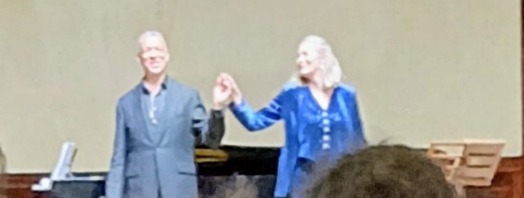
This was the first of them – a programme of pretty obscure Baroque music from 18TH century France (Couperin being the only composer I had heard of – possibly Lelande too). The concert was the debut of this ensemble at the Wigmore hall. The group, on this showing, consists of a harpsichord, period flute, period bassoon violin and viola da gamba, all very well played and the group was well balanced ,as an ensemble. As for ‘Hidden Gems’ -well, hidden certainly but whether gems is another matter. If Vivaldi has written 50 operas and only say 10 have been performed in modern times, then it is worth assuming that there’s plenty to be explored in the remaining 40 by a proven inventive and eminently-worth- listening-to composer. But if completely unknown composers from the Baroque period have written 1000’s of unknown pieces how many of them are likely to be ‘gems’? I am afraid that to my mind few of these pieces were in that category. The one I liked best – it seemed to have a lot of character with a special role for the bassoon – was the Michel Corrette Sonata in B flat. The LeLande piece ‘for the king’s supper’ was also interesting and slightly more memorable than the test.
But too many of the pieces were easy on the ear but rather unmemorable. Of course I get that an ensemble making its debut doesn’t want to perform yet another version of The Musical Offering, or a version of the Brandenburg Concertos, but this concert needed a bit more zing. What might have helped is members of the ensemble talking a bit about some of the composers or the contexts for which the music was written. Perhaps they thought it might be a naff thing to do in such an august venue, but if Roddy Williams or Andras Schiff can do it, why not this ensemble?
So….pleasant enough, but a bit unmemorable and could have been better presented………
London Philharmonic Orchestra, Edward Gardner conductor; Stéphane Degout, Wozzeck; Annette Dasch, Marie; Peter Hoare, Captain; Brindley Sherrat, Doctor; Christopher Ventris, Drum Major; Eirik Grøtvedt, Andres; Kitty Whately, Margret; Adrian Thompson, The Fool. London Voices
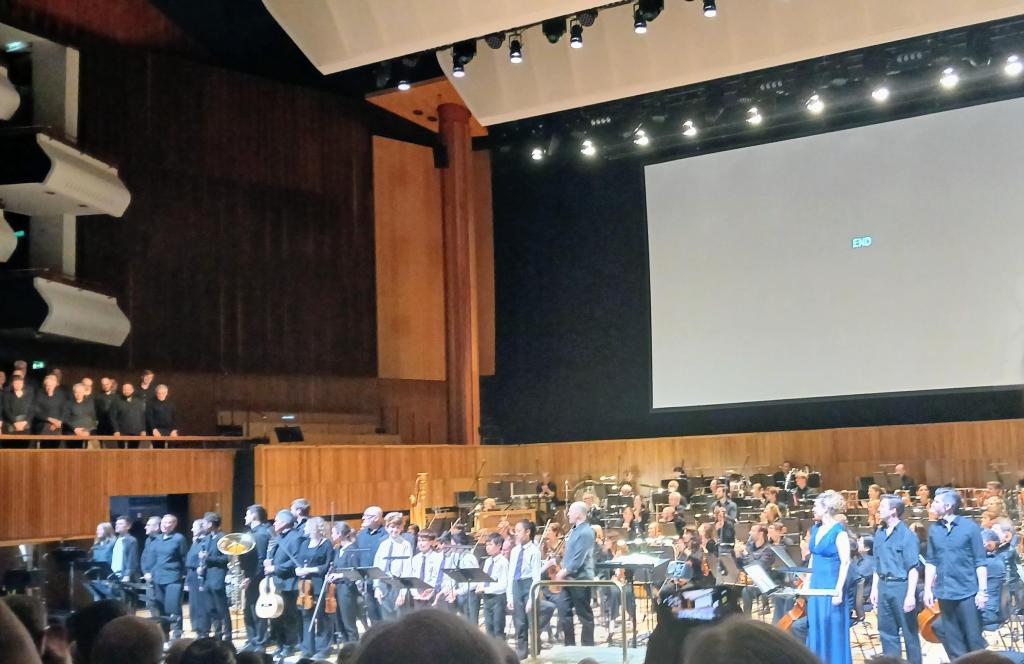
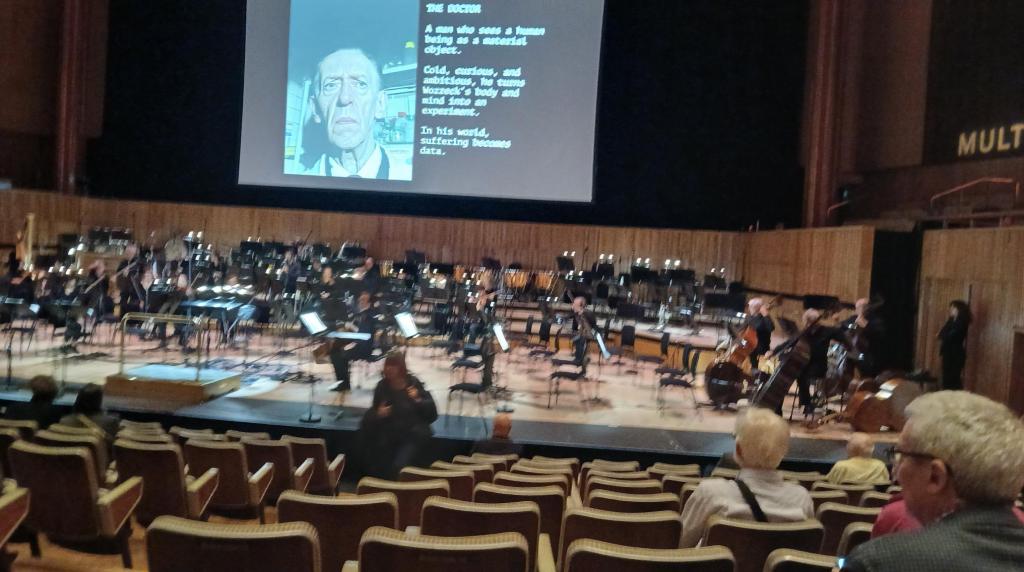
Comments come to mind about London buses…. but I booked this a year ago, long before I knew about the Vienna Wozzeck I went to earlier in April, and it’s not as though I know the work very well…… So, I decided to stick with this and go to London as planned. I’d forgotten, though, that it was part of the ‘Multitudes’ Festival on the South Bank, their yearly multi-medium arts festival ‘powered by orchestral music’. I went to a couple of these events, with some rather mixed responses, last year. In this case the London Philharmonic Orchestra “joins forces with acclaimed film-maker and video artist Ilya Shagalov, who accompanies the searing music with an atmospheric and expressive photo-film inspired by British social realist dramas. Reimagining Wozzeck for the modern day, Shagalov translates the story through the lens of a migrant worker, whose life is shaped by the pressures to survive and the casual cruelties of a fractured modern society.”. Hmmmm – I approached this event with some scepticism – it seemed a somewhat strange concept to have an opera (semi-staged) coupled with a film (though of course many staged operas make use of film). How would you cope with one story on stage and another on film? Why noy just put the opera on in an opera house? I guess it depends on what a photo-film is…………
In the event I am sure that some of the critics reviewing this will trash the concept (and indeed there was in the event, with a sub -trail complaining that the photos were ‘AI slop’. But (and there have been some similarly extreme pro-and-anti print and online comments for a multi-media synaesthesiac performance of Turangalila by the RPO/Petrenko a couple of evenings before) I found it worked quite well. In this particular case it was good that music stands were on stage and no-one – apart from Peter Hoare and Brindley Sherrat – really interacted with anyone else. One’s eyes and engagement could then move between the singers, fairly static, the text on the screen behind the orchestra, and the immense number of still shots produced by Ilya Shagalov (whether with or without AI I’m not too fussed by, in this context) giving his photographic version of the story. He has photographed people representing all the characters, sometimes clear, sometimes distorted and when needed more abstract shots – for instance around the murder. The photographed Marie has a particularly haunting face, and Wozzeck’s face too seemed infinitely capable of expressing fear and madness. The setting looked possibly Russian, possibly Eastern European. The migrant worker idea underlying the photographs was there an underlying theme but not so obtrusive as to distort our understanding of what was happening in the story the opera was telling – indeed that was a strong point for me of the whole event, that the photos supported a focus on the narrative, and the grimness of the lives these individuals were living. Perhaps because of the tellingness of the photographs, the contrast between the Doctor and the Captain’s atheism and Marie’s reflections on Mary Magdalene and the Woman taken in Adultery came across more strongly than in the Vienna production two and a half weeks ago.
In terms of the singers and their presence on stage, I was impressed by Stephane Degout, not a singer I have come across before. He personified Wozzeck, I have to say, far more effectively than Kranzle in Vienna two weeks ago – determined, gruff, self-absorbed, tense – he very much looked the part and his voice was richly compelling. He did little that could be called acting but his presence said it all. Peter Hoare was his usual very capable self – funny, manic, strongly-voiced and the best actor on stage, and Brindley Sherrat nearly his equivalent. Christopher Ventris was a more convincing Drum Major than his Vienna equivalent. About the performance of Annette Dasch, I was less convinced – somehow, she didn’t have the compelling vocal and stage qualities you’d want to see in this role, even in a concert version, though she was perfectly adequate. Vocally hers was quite a small voice, disappearing under the orchestra once or twice, but she offered us some beautifully floated high notes. All the other roles were well taken.
When I got back home after the trip to Vienna I listed to the old 1960’s recording I have of Karl Boehm, Fischer-Dieskau and Evelyn Lear in this work. One of the things that struck me was how much more exciting this was than either of the two performances I have recently heard, which in part has perhaps something to do with the forwardness of the recording but also with the much greater use of sprechtstimme by Lear and DFD (and Boehm was of a generation old enough to know how this music should go, I guess). However, Ed Gardner and the LPO gave a wonderful performance of the score which was at least as compelling as the VPO performance two weeks ago (some stunning trumpet playing) – and in the final verwandlung was even more expressively powerful. I found also (not that it wasn’t there two weeks ago but I noticed it more clearly here) that not only are there the powerful expressionist, the haunting Mahler throw-back, moments, in the score, but also wonderfully delicate sound effects – quiet string strokes, magical bells. The more you hear the work, the more you find yourself listening to the detail and the more haunting the work becomes.
There was a messy ending – part of it perhaps to do with the fact that (according to its manager anyway) 59% of people coming to this Festival last year were new to classical music at the South Bank). Gardner tried to hold the silence after the final chord, a few people clapped and then fell silent, but the spell was broken.. A pity, but maybe OK in the context of getting new audiences in…… Worse, after one inevitably, given the forces involved, messy and elongated curtain call, some idiot in charge of the lighting brought up the houselights so that the audience stopped clapping – a pity, because this was a very fine performance and I am sure the audience would have been up for 2 more curtain calls at least. It seemed very disrespectful to the artists
Tarmo Peltokoski conductor; Silja Aalto soprano; Huw Montague Rendall baritone; Hallé Choir Matthew Hamilton, choral director, Hallé Youth Choir Stuart Overington, director.Mahler, Rückert-Lieder; Vaughan Williams Symphony No.1, ‘A Sea Symphony’
This was a somewhat odd piece of programming on the face of it – though obviously the Rückert-Lieder are broadly contemporary with the Sea Symphony, there’s not much in the way of other connections, unless it is the use of forms of folk-like music. Would not say Elgar’s Sea Pictures have been a better coupling (and one showing VW in quite a good light)?
Tarmo Peltokoski is one of those incredibly young and dynamic conductors who agents and orchestral managers seize on and promote vigorously. – and he’s Finnish, as so many leading conductors are these days! He’s younger than even Makela and seems to pop up all over the place – music director of the Orchestre national du Capitole de Toulouse, and Hong Kong Philharmonic for starters, as well as many guest appearances all over the place I seem to remember his conducting Parsifal somewhere recently (I think Berlin) and he’s conducted a Ring cycle and Tristan too! For someone aged 26 this is remarkable and it’s mildly surprising that in all his rushing around the world he should be interested in coming to Manchester and conducting Vaughan Williams. One of his teachers is Sakari Oramo – maybe that’s the connection………….
This was a most enjoyable concert. The Mahler Ruckert lieder I have loved since I bought Barbirolli’s recording (of Mahler 5) and discovered Janet Baer’s recording of these songs on the 4th side of the LPs, in my gap year. So, I have known these songs for 55 years and yet I heard details of orchestration I have never properly registered before in Peltokoski’s performance. I was particularly struck by a little minor key whispered nudge from the double basses just before the end of ‘Ich bin der welt abhanden gekommen’. Huw Montagu Rendll was an excellent soloist, with good diction and pointing of words, and a beautiful golden tone to his voice, plus the ability to fine it down to an expressive whisper at points. Um Mitternacht had all the angst and soul-searching I would want from a performance of this piece. Throughout there was a sophisticated blending of orchestral colours from the orchestra, which told me that Peltakoski was indeed a very good conductor.
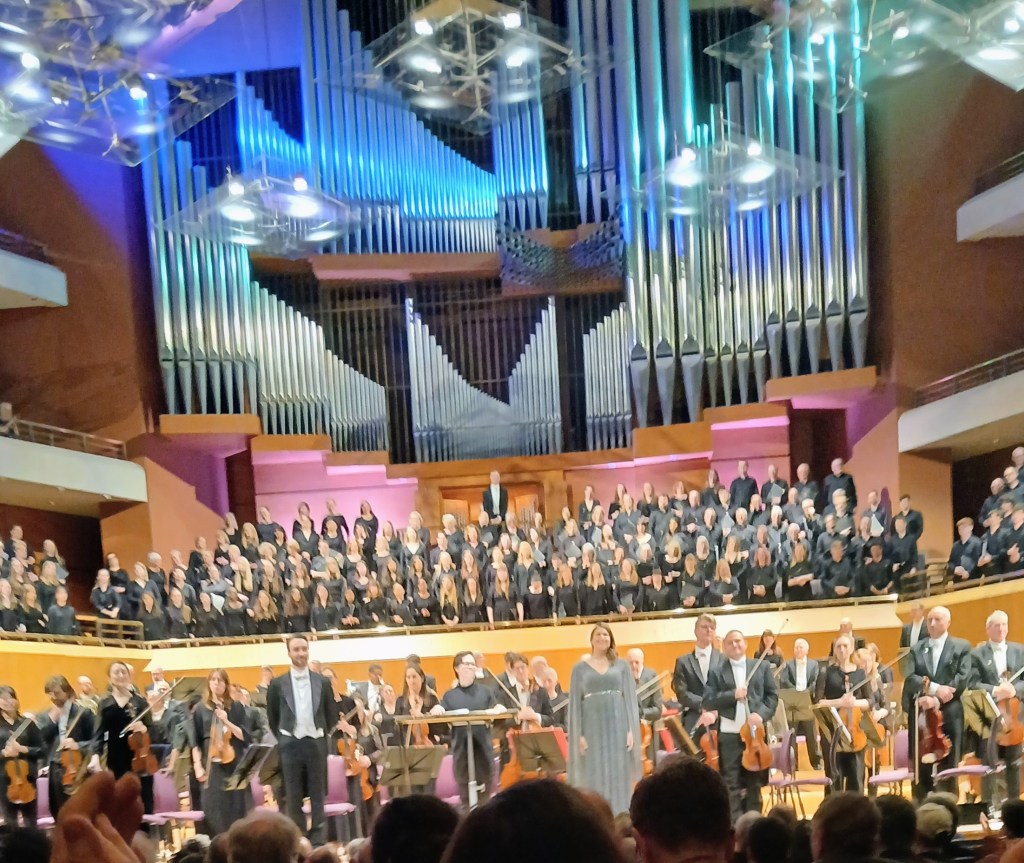
The Sea Symphony is a work that in many ways is a surprising Edwardian survivor. It has the upholstered, plush sounds of its time, and I have to grit my teeth when I get down to reading the Whitman poetry, so dire do I find it. Yet it has survived and maybe that is because it has a youthful sweep and an energy which carries all before it, as well as some very un-Elgar/un-Brahms/un-Parry touches – a hint of Hymns Ancient and Modern in the third movement, something of Tallis and Byrd in the finale (‘Wherefore unsatisfied soul’). It’s a young person’s work and as i said in a review of the LSO performing the Sea Symphony more than a year ago, the more I listen to this symphony, particularly the last movement, the more I appreciate it. I enjoyed the LSO performance a lot last year, but here the Bridgewater Hall ‘s acoustics really allowed the massed forces to bloom gloriously – a gorgeously rich sound from choir, orchestra, and soloists (the choir completely filling the choir seats). And, apart from a perhaps over-stately first five minutes, Peltakoski led the work in a bright, breezy and vigorous way that kept it moving and glossed over the occasional longueurs in the finale. The choral singing was crisp and together, with very good diction, even if ‘A pennant universal’ was , as always, a bit of a scramble. Silja Aalto had a powerful voice which sailed over the top of the waves of sound with ease in the first movement, though her strong accent was a bit disconcerting at times. Huw Montagu Rendall was very adequate, though not as exceptional as in the Mahler. Peltokoski’s conducting, as there is so much fuss about him at present, I did take the time to look at fairly closely. His conducting is relatively undemonstrative, with a small, very clear and tight beat from his baton. Very occasionally his arms sweep out at climactic moments but for the most part he remains fairly still on the podium, and was certainly not being unduly extrovert in order to encourage the choir, though he was mouthing the words and, obviously, cueing them in. Certainly, he didn’t appear to be playing to or on the hype surrounding him, but was just seriously making marvellous music
Orkiestra Historyczna, Arnold Schönberg Chor. Conductor, Martyna Pastuszka. Director,Max Emanuel Cencic. Alessandro: Maayan Licht; Cleofide: Bruno de Sá; Poro: Dennis Orellana;Erissena: Jake Arditti; Gandarte: Stefan Sbonnik; Timagene: Nicholas Tamagna
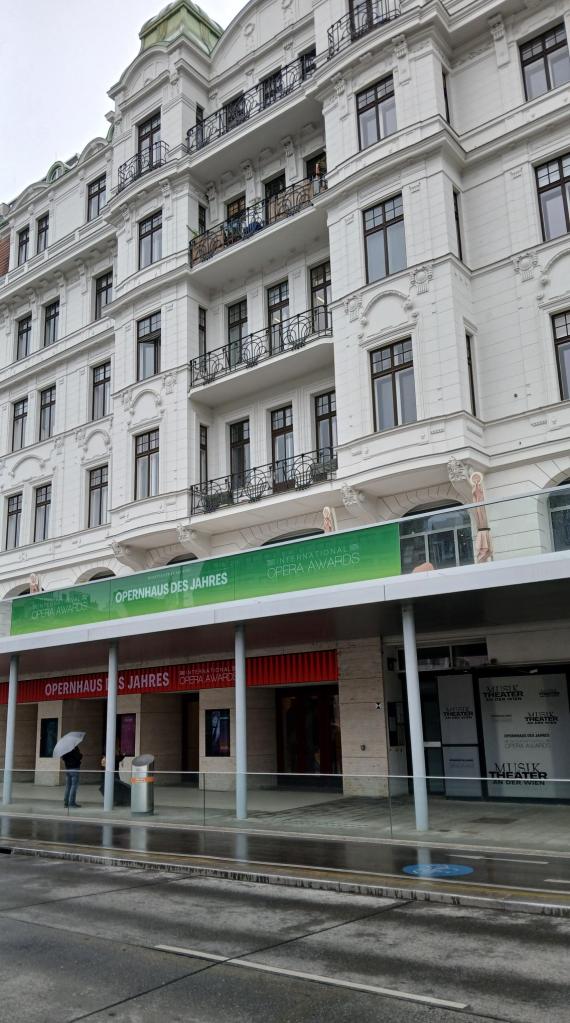
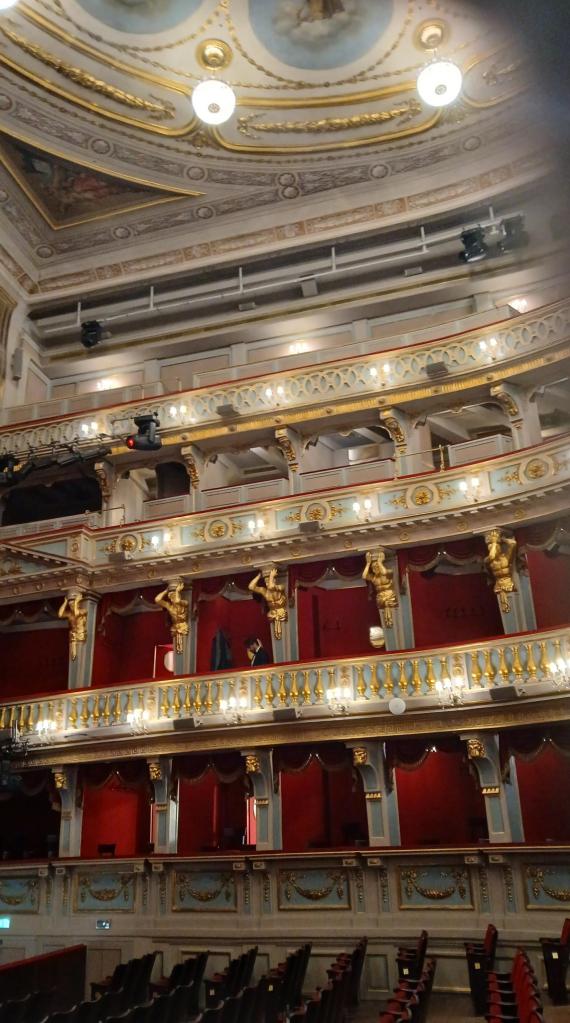
Quite apart from the wish to see this production, I was also very interested to see the Theater an der Wien itself – this was where Beethoven’s Fidelio/Leonoea was first performed and it has an important place in German -speaking musical history, set up by Emmanuel Schikaneder (he of the Magic Flute) no less.
“Alessandro nell’Indie” is an opera by Leonardo Vinci, set to music around 1730. Vinci’s opera was first performed in Rome and has gained renewed attention in recent years, particularly at the Bayreuth Baroque Opera Festival. This was the first production of the work (Bayreuth 2022) since the 1730’s, astonishingly. This showing in Vienna was part of a European tour and the entire production team had turned out for this, the first night of the Vienna run. The original Bayreuth production in the Margrave’s opera house can be seen on various YouTube videos and I believe there was only one change of cast from the 2022 videos to this Vienna run. The director himself has sung as a counter-tenor – so he knows this repertoire and its glories/problems extremely well – and it shows!
The story revolves around Alexander the Great’s love for the Indian queen Cleofide, who has been promised to King Poro, Alexander’s defeated adversary. The opera explores themes of love, intrigue, jealousy, and forgiveness, and was composed for male singers only due to the restrictions of the time in the Papal States about women performing on stage. Apart from these main three characters there is also Porus’ sister Erissena, and two faithful (or not so much) servant types, Gandarte and Timagene. The main storyline is thus around Queen Cleofide’s relationships with Alessandro and Porus, and how she handles both in the ups and downs of a war situation. The Greeks wear 18th European clothes, the Indians formal Indian dress. The dancers – on them see more below – switch between the two styles of dress depending on what they are doing and who they are accompanying. There are also two commedia dell’arte types with bouffant wigs and false long noses who announce where each scene is based (unaccountably in exaggeratedly posh English) and do scene- shifting/helping out with jokes.
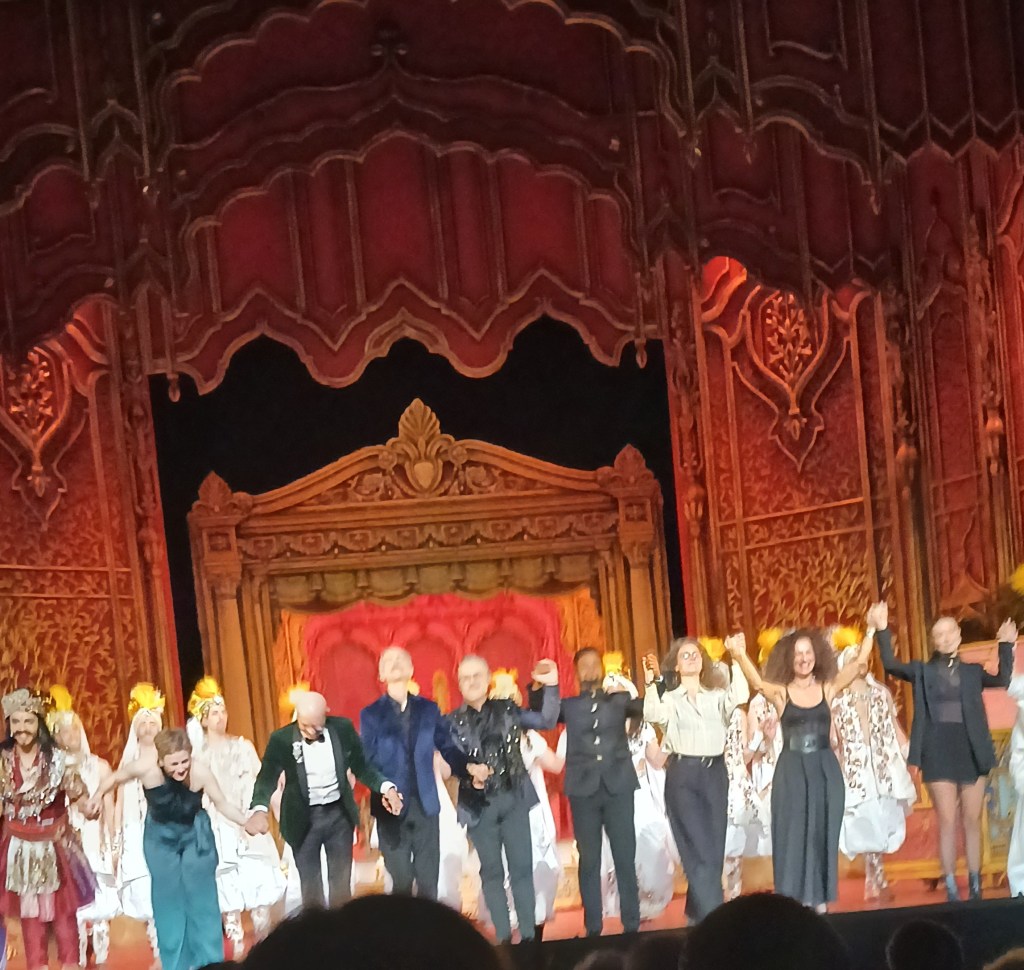
This is one of the best worked-through and totally engaging opera performances I have ever been to, a really life-enhancing experience and hugely enjoyable. It has the lot – some meltingly beautiful slow arias and foot-tapping fast ones. It is a long evening – the full Baroque whack, four and a half hours with intervals, and a positive blizzard of da capo arias. However, most of these are quick numbers, enlivened by dance and sometimes slapstick comedy. The general approach is to use Bollywood – based routines, emphasising spectacle and visual exuberance and to that end the 6 main singers are joined by 12 or so dancers. Certainly the singers are all male, 5 counter tenors and 1 tenor, and maybe all the dancers were, though at least some were in female dress. There is also a chorus, based in the pit, for a couple of numbers at the end as Alessandro prepares to get married. Vinci’s music sounds more like Vivaldi than Handel – more extrovert, less introspection. It would be fascinating to hear Handel’s Poro after this experience – I read that he pruned the Metastasio libretto quite a bit to bring out the drama more: with Vinci, at least in this production, it is more of a romp…..
All manner of gags are used to keep the audience engaged – Porus, Alessandro, Gandarte and Termagene travel around on camel and elephant bikes; at the end of Act 1 Queen Cleofide and Porus develop a duet into an operatic competition involving Mozart and Verdi; Porus is in competition with a trumpet at one point in an Act 1 aria. There’s an enormous and very realistic golden phallus and 2 Kama Sutra scene sculptures given as presents by Queen Cleofide to Alessandro; there are (mercifully sparely used) jokes made about false breasts by the men playing Queen Cleofide and Erissena. Various boxes are pushed on and off stage, to fly open with one of the main characters inside making a surprise appearance. There’s another gag at one point where the dancers help a not very competent Queen Cleofide execute some tricky dance positions. The dancers use soldier puppets for the battle scenes; Erissena with two of her ladies finds she hasn’t got any loo paper when she wants to use the toilet. These are just some examples – some very funny, some on the crass side – of the constant inventiveness of the production.
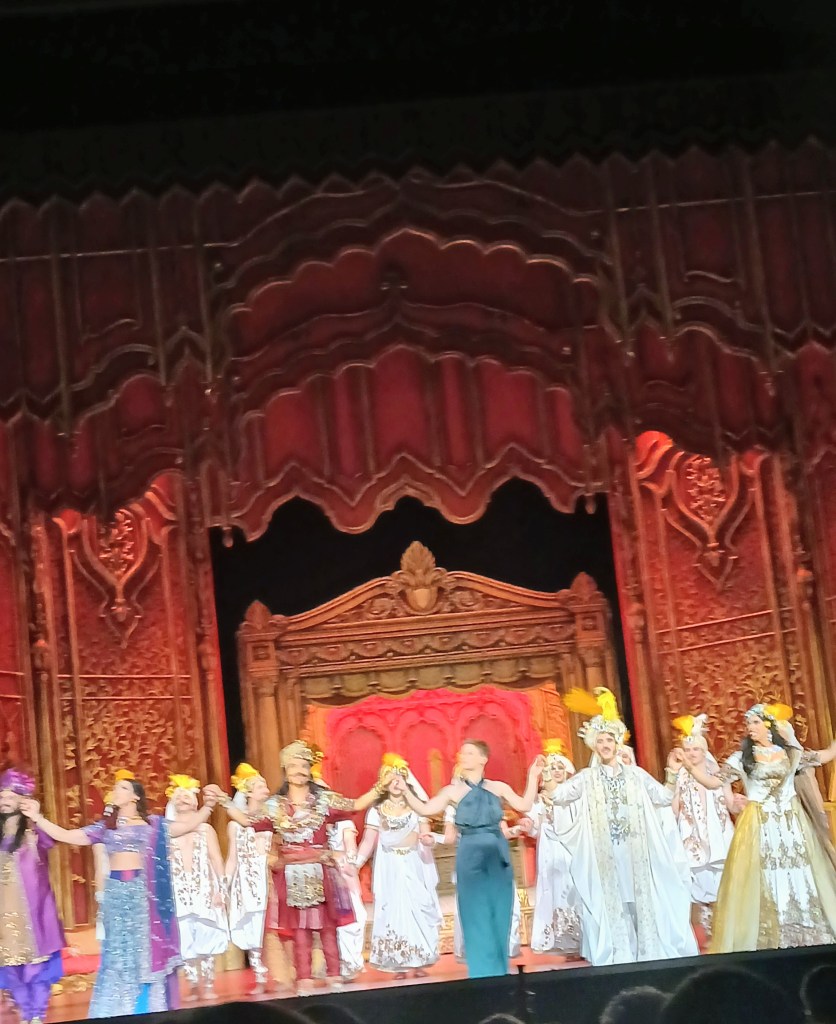
The sets are an important part of the overall impact of the show – there is an overarching backdrop and flies, looking like elaborately carved wooden screens. At the centre rear of the stage there is a semi-circular smaller stage which can move downstage when needed, and has painted backdrops (eg for Alessandro’s wedding), There are a few props – mainly couches and chairs. The general effect of the set is to enhance the Bollywood feel of the production, and give plenty of room for the dancers to do their stuff.
The (I think Polish) period instrument band was superlatively good – like the Irish Baroque Orchestra, they have the energy and precision playing to give character to each number. Their players include particularly zingy string players, a dynamic timpanist, and percussionists playing castanets and various kinds of cymbals – the leader of the orchestra Martyna Pastuszka helps out at one point by wielding a Lully-like stick with little jangly bells which she banged along with in one aria. She is also in fact the de facto conductor, using her bow at times to direct singers- she also comes up on to the stage to accompany an aria (another example of different forms of entertainment during the successions of arias.)
The days of hooting counter tenors I used to complain about are now a thing of the past. Counter tenors are capable of singing just as beautifully as sopranos or mezzos, and with the same superlative standard of coloratura. What singing in a countertenor range does to your voice long term I don’t know but any of the 5 counter tenors singing this evening I would happily hear again in other roles. Would it have been better to have the two female roles sung by women, I wondered? Clearly there is a historical argument for not doing so, but I suspect also the whole jokiness of the production is enhanced by having the two men playing women. All the singers had their particular merits but for me Bruno de Sa as Cleofide had it all – spectacular coloratura runs, perfectly poised high notes and great beauty of tone. Both Alessandro and Porus excelled in the agility of their voices, and Erisenna had a very beautiful lower register for some of her most memorable arias
All in all a hugely entertaining evening, fully living up to the hype around the production, and with such energy and joi-de-vivre….!.
Wozzeck, Johannes Martin Kränzle; Drum Major, Dmitry Golovnin; Captain, Jörg Schneider; Doctor,Dmitry Belosselskiy; Marie, Marlis Petersen. Conductor, Franz Welser-Möst; Director, Simon Stone; Designer, Bob Cousins; Costumes, Alice Babidge; Lighting, James Farncombe
I spent an interesting morning at the Central Cemetery visiting musical graves – found after a bit of an effort on my part but most of them are actually in one place. I did discover for bonus points Hans Pfiitzner and Franz Schmidt who are not in the same composer area (denizens include Beethoven., Schubert, Brahms, Mozart – allegedly – Hugo Wolf, Johan Strauss and Suppe), though they were fairly nearby. Interestingly I passed through on the tram to get to the Cemetery the area called Simmering, which features in this Staatsoper production as a working class district (which is, from what I saw of it from the tram).
Wozzeck was first performed in late 1925 at the Berlin Staatsoper, so is just over 100 years old this year. This particular production was first seen in Vienna in 2022, and is set in modern-day Vienna amongst the disadvantaged, the disenfranchised and dispossessed who are exploited, persecuted by a society they curse and blame for their troubles – and in Wozzeck’s case to the extent of damaging his mental health. Wozzeck is not a work I know that well – it’s not a piece for late night listening on earphones – and in fact I only really remember the details of what happens, and how the music sounds, from the live performances I’ve heard. It’s possibly I heard a performance in the 70’s but more recently I have only heard two – both at Covent Garden: in 2013 , conducted by Mark Elder and the title role sung by Simon Keenlyside; and 2023, conducted by Pappano, with Christian Gerhaher as Wozzeck. I remember particularly Gerhaher’s lyricism in the role.
One of the things which struck me about this Vienna production is that some of the casting was odd. Marlis Petersen was excellent and, as she has to be, was sexy and looked the part. But Dmitry Golovnin was scarcely a bear of a man, as described in the libretto, nor was his voice strong in the way I’ve heard it performed live before (one of the productions I saw had Clay Hilley in this role, a large man now singing heldentenor roles). Rather more worryingly, Johannes Martin Kränzle, an artist I have heard in different roles and always admired, looked far too unflustered and calm and ordinary throughout to be a convincing Wozzeck. Perhaps a Mr Prufrock, but Prufrock never has to do degrading jobs or go mad – Kränzle looked and sounded much the same at the end as he did at the beginning. This seemed misconceived. The other main roles – Doctor, Captain, Martha – were all well taken and sung. In general I wasn’t very convinced that the comments about social justice I’ve made above were really brought out in the production, in any concerted way.
The performance had no interval, lasting about 95 minutes. The sets were effective enough – for most of the performance there were three sides of a room on a revolving set, always white in colour, representing Simmering station, Marie’s house, the barbers and doctor’s house, a gym, a street with a wurst stall (with a sideline in schapps) and a bar. Towards the end the 3 sided rooms were removed and replaced by a beautifully realistic hill, with grass and flowers, where Wozzeck kills Marie, Wozzeck is found hanged and Marie’s boy plays by himself at the end.
I am sure, with Welser-Most in charge, that this was the 1st division VPO we had this evening and they played superbly for him, with a huge dynamic range and searing passion in the final interlude.
But in my limited experience this is not a work that you can simply push aside in your memory when it’s given a less than wholly excellent rendition – if a performance of this work is beyond just competent (and this was much, much more than that) the experience is gripping, it is hard to watch, and tonight the artists combined to keep me completely engrossed in the unfolding story and the music, whatever my reservations in thinking about the event afterwards
Amfortas, Gerald Finley; Gurnemanz, Franz-Josef Selig; Titurel, Matheus França; Parsifal,Klaus Florian Vogt; Klingsor, Werner Van Mechelen; Kundry, Jennifer Holloway; Der damalige Parsifal (?), Nikolay Sidorenko. Conductor, Axel Kober; Direction, design and costumes, Kirill Serebrennikov; Lighting, Franck Evin
Travelling immediately after Easter (and for over 17 hours) was not a very wise move – all my trains were incredibly crowded! In addition, my travel from London to Vienna had its normal scheduling ups and downs. Interestingly German police got on the train just past Strasbourg to do a passport check – the first time I have seen that happen since 2015 – which consequently delayed the train. I missed my booked connection to Munich in Mannheim but, as usual with DB, another train to Munich came along only 20 minutes later…….And my two Austrian trains were all on time (last time I went to Vienna one broke down….)
I spent the morning walking round the centre of Vienna, had an interesting visit to the Albertina Museum/Gallery, and a coffee/sachertorte outside St Stephen’s Cathedral. Then on to the Staatsoper……..
I calculated the other day this was the 11th production of Parsifal I’d seen live in the theatre (ROHCG early 1970’s [conducted by Goodall and Horenstein], Bayreuth 1972 [conducted by Jochum], ROHCG, late 1970’s [Solti], Lisbon,1980; ENO 1990’s and 2000’s, Bayreuth 2017, Leipzig 2023, Bayreuth 2024 and Glyndebourne 2025, plus concert performances by the Halle and Opera North_
This Vienna production by Kirill Serebrennikov has received much abuse and much praise – possibly more of the former than the latter. Mark Berry, the Wagner scholar, wrote very positively about the production a year ago in his ‘Boulezian’ blog, in a performance with the same conductor and same Parsifal, so I thought I would see it this year, a decision strengthened by the facts that the title role is being sung by the other major heldentenor of the moment apart from Andreas Schager (and it is great to have heard them both in the space of 3 weeks), that there’s also Gerald Finley singing Amfortas and that it is of course the Vienna Philharmonic playing (although of course you’re never sure whether it’s going to be their First Division players who turn up). Kober is a well-regarded and very experienced GMD on the German opera scene.
The production dates from 2021 and was newsworthy at the time because Serebrennikov had been put under house arrest in Moscow by the Putin regime, so that he directed the production via Zoom from Russia. It also had Jonas Kaufmann as Parsifal, which of course increased international attention. Despite Mark Berry’s blog’s recommendation, I arrive at the Staatsoper in a wary frame of mind. The production – appropriately enough in the circumstances – is set in a prison, possibly a Russian one, and reframes the story something like this:
– one aspect is that Acts 1 and 2 are to be seen as flashbacks – and throughout there is a silent young actor playing the younger Parsifal, with the older one, reflecting on his behaviour and all that has happened, doing the singing and occasionally remonstrating with his younger self
– the prison set up is very violent. Gurnemanz is a prisoner, a kingpin and fixer of the system (curiously, although there are guards, it’s not clear who runs the prison). The young Parsifal arrives in the prison, is beaten up, and kills another young man – essentially the swan. Amfortas is seen as a prisoner constantly protesting against the inhuman conditions of the prison, and (according to Serebrennikov, though this is not clear from what happens on stage) his wounds are self-inflicted, and Titurel and his call to uncover the Grail are voices in his head. Kundry is a chic journalist and photographer with permission to take pictures in the prison of prisoners, often of a patronising or suggestively sexual nature. She also does favours for them (eg the ‘balsam’). Her employer is Klingsor, with whom she has had some sort of relationship in the past. What the younger Parsifal is protesting about in Act 2 is less about the eros/agape dimension than the way he has been exploited, objectified by Kundry and her employer. At the end of Act 2, Kundry shoots Klingsor. Act 3 then brings us up to date with the older Parsifal playing a central role, and at the end he leads the prisoners to liberation from their prison environment.
Written down baldly in this way, it sounds fairly dire. In fact, it wasn’t – it was utterly gripping. I was thinking as I went back to my hotel how this differed from the reworking of the story the Glyndebourne production had offered last summer……the latter had turned the work into a fratricidal story of hatred between 2 brothers (Amfortas and Klingsor) who are re-united at the end. The difference with this Staatsoper production was that it was much more in tune with Wagner’s obvious intentions – the sense of liberation and transcendence at the end of the work was accomplished in Serebrennikov’s staging very effectively. A master-stroke in Act 3 – one of the best Parsifal endings I have seen – was to show a film of the dead ‘swan’ prisoner coming slowly to life and smiling, a wonderful image. But there were also inevitably lots of dissonances between staging and text, which ranged from the ‘so what?’ to the annoying – there was no spear at any point, there was a chalice in Act 1 (but not Act 3), but it wasn’t clear whether the Communion service really happened or was some figment of Amfortas’ imagination, Stretches of what Kundry sings in Act 2 – for instance the description of the meeting with Christ and laughing – didn’t really have a connection to what was happening on stage. The main problem for me is that, without Parsifal bringing the spear with him in Act 3, it becomes very difficult to explain why everyone in Act 3 should get excited about him or think he will make a difference. Some things did work very well – the flower maidens as stylists, script-writers, and editors all involved in Klingsor’s magazine; the Good Friday music with bunches of flowers brought by Kundry and some of the prisoners, and the whole prison set up in Act 1 with a constant flow of prisoners shadow-boxing, doing press-ups, wight-lifting and so forth. The staging of Parsifal’s ‘crowning’ by Gurnemanz was one of the most moving I have witnessed in my 55 years of hearing this great masterpiece.
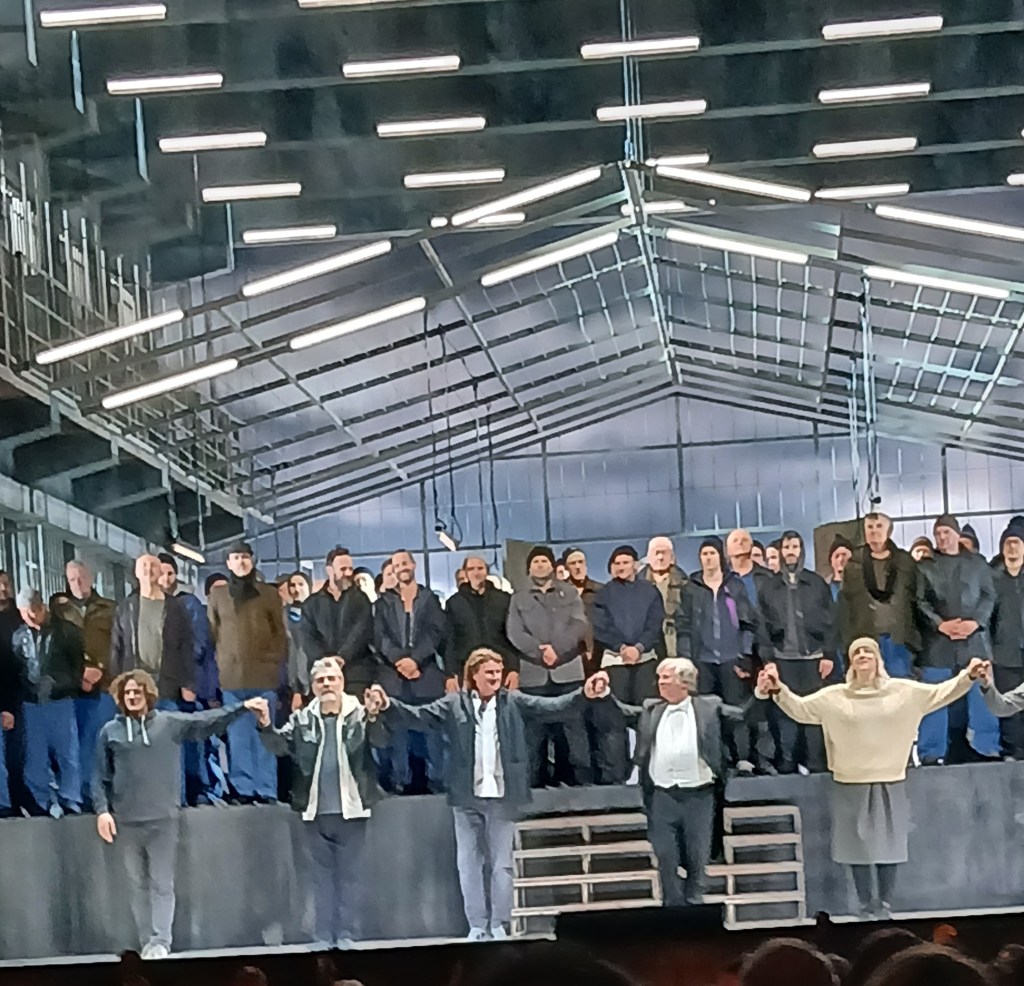
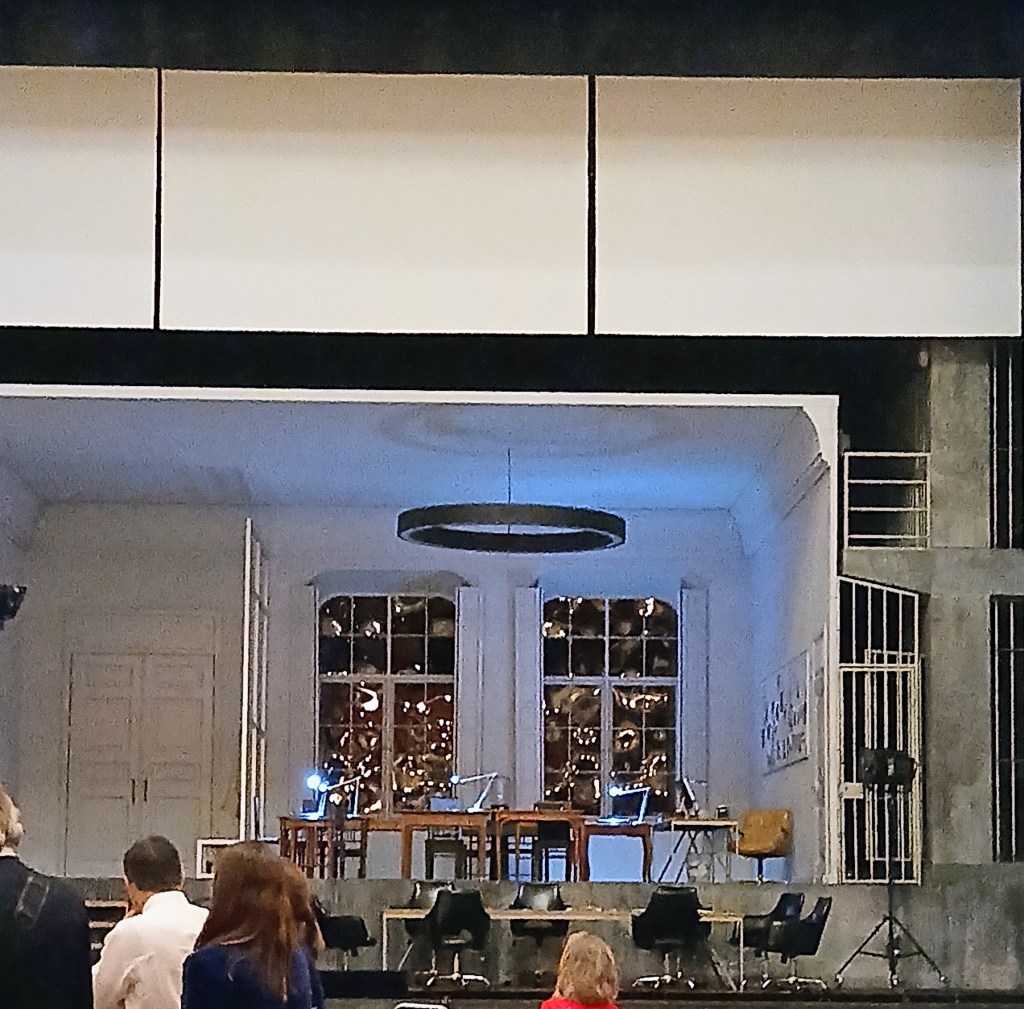
The sets all worked well – the first a moveable mesh of prison bars that had spaces looking like individual cells, entirely grey in colour and with prisoners in blacks, greys and dark blues. The second act – photo below before the start of Act 2 – is a modern shiny office, with a kitsch strip-lit cross which the young Parsifal is required to pose against with arms outstretched. The third act – as seen in the curtain call photo below – is a part-deconstructed prison with block-like tables (the prison has been decommissioned but some of the prisoners have stayed on, according to Serebrennokov’s programme notes). Above the set in all three acts are three screens showing a range of images, many of them apparently shot near Moscow. There are scenes of an abandoned church, an abandoned prison-like building, and lots of images of men looking like prisoners, sometimes with homo-erotic suggestion, sometimes with religious tattoos of chalice, spear and cross (suggesting that there is a need for faith in someone or something among the prisoners). This is where we see the albino-like swan prisoner who is killed by young Parsifal.
The trailer (from I guess when the production is new – Kaufmann is on screen) is here – Parsifal | Offizieller Trailer – which gives a sense of the production and its aesthetic
Musically this was one of the best Parsifals I’ve ever heard. There were several reasons for this:
In my previous visits to the Staatsoper, I have always sat in one of the side tiers. For this I was sitting in the centre of the stalls, towards the back. The pit is fairly shallow and wide, and the sound is simply glorious, the fff’s I felt through the floor as well as heard in the hall. The climax of the opening of Act 1 Scene 2, with bells going full tilt and timpani thundering out their 5 note repeated march theme was overwhelming. The bells were very convincing too – I read somewhere they are bronze-coated iron rods, struck with a hammer controlled by a relay and then amplified.
The orchestra sounded wonderful. Which division it was I have no idea but the Vienna Philharmonic’s quality of playing, the depth and intensity of its string sound, was glorious, and there was some spectacularly good woodwind playing (oboe in the Good Friday Music for instance). The brass were never strident, always blending in with other players. Kober’s conducting was almost always well-judged (climaxes particularly), though I thought he took the first act Transformation Music slightly too fast. The chorus, presumably enlarged, was impressive in its big moments.
Klaus Florian Vogt was on momentous form. His ‘white’, choir-boy-like voice is not to everyone’s taste in this music, but to me there is no one better to sing some of the climactic moments of the role – the last 5 minutes of Act 2, the Good Friday music, the final appearance with the Spear (or not)
A real find for me – I haven’t heard him before – was Franz-Josef Selig as Gurnemanz – a fine, dark voice, and used in subtle thoughtful ways; he’s a good actor too. Others – Gerald Finlay, Jennifer Holloway and Werner Van Mechelen – were more than adequate, though I have heard better Kundry’s (at a very high level of comparison)
Despite its inconsistencies and imperfections, I found this a dramatically very moving evening, and very much appreciated Serebrennikov’s attempt at a re-interpretation, while musically this was about as good as it gets………
Songs from Schubert, Die schöne Müllerin D795 plus Butterworth, Loveliest of trees; Trimble, Green Rain; Vaughan Williams, The vagabond; Boyle, A Song of Enchantment; Finzi, Overlooking the River; Vaughan Williams, The Water Mill; Clarke, Down by the salley gardens; Head, Tewkesbury Road; Vaughan Williams, Silent Noon; Quilter, Brown is my love; Finzi, He abjures love; Ireland, We’ll to the Woods No More; Quilter, By a Fountainside; Howells, The sorrow of love; Britten, O Waly, Waly;
Another concert that I probably wouldn’t have gone to in the normal run of things, but seemed eminently worth going to given that I was in London for the night before going to Vienna……..
The theme of this concert was ‘Love flows as the Brook flows’. Rather cleverly, it combined a number of songs from Schubert’s Die Schoene Muellerin with early to mid-20th century English art and folk songs, letting the story contained in the Schubert – the young man, the miller’s daughter, unrequited live and his eventual drowning – set the tone and content of the English songs used.
Rather oddly, the (generous given that it was a free one) programme booklet gave the German text for the Schubert and an accurate English translation, while Roddy Williams actually sang an extremely free English translation by Jeremy Sams. As the Schoene Muellerin poetry is hardly Goethe, I don’t think this matters, but it is a pity it was not recorded in the booklet, as Sams’ translation often seemed very clever and appropriate. Another mild grumble about the booklet is that it nowhere recorded the names of the poets who’d written the lyrics. The final grumble is that, although probably 95% of the audience probably knew the story of the Schubert song cycle, Mr Williams decided to give at points a narrative of what the young hero of the cycle was feeling. This sounded a bit naff and unfortunately, because the singer has a slightly bloke-ish and affable manner with the audience, also sounded ironic and produced giggles at points, inappropriately given the subject matter and the eventual suicide in the text.
Having got these points out of the way, I have to say this was a very enjoyable recital. Singing the Schubert in modern English encouraged the singer to offer even more than usual variation and shading in his delivery and in the way the words were communicated. Susie Allan accompanied the Schubert songs brilliantly, with crisp rhythms and a vigorous pulse. The overall effect was Spring-like and life-enhancing. The beautiful final song of the cycle ‘Des Bachen Wiegenlied’ was very movingly sung. It was lovely particularly to hear, alongside the Schubert, such songs as ‘Silent Noon’ and ‘Waly Waly’, as well as Butterworth’s ‘Loveliest of Trees’ (I was struck by the austere brilliance of Britten’s arrangement of Waly Waly) . I was also impressed by the impact of the Schubert cycle in contemporary English, which made it sound far more relevant and powerful, far more meaningful for today in some ways, than the English lyrics / music written 100 to 130 years later
Director, Natalie Abrahami; Costume designer, Hannah Clark; Lighting designer, Guy Hoare; Video Designer, Duncan McLean; Movement Director, Anna Morrissey; Set Designer, Michael Levine. Conductor, Bassem Akiki. Prologue/Peter Quint, Elgan Llŷr Thomas; Governess, Isabelle Peters; Mrs Grose, Claire Barnett-Jones; Miss Jessel, Kate Royal; Peter, Peter Willoughby; Cathy, Clare Kate O’Brien
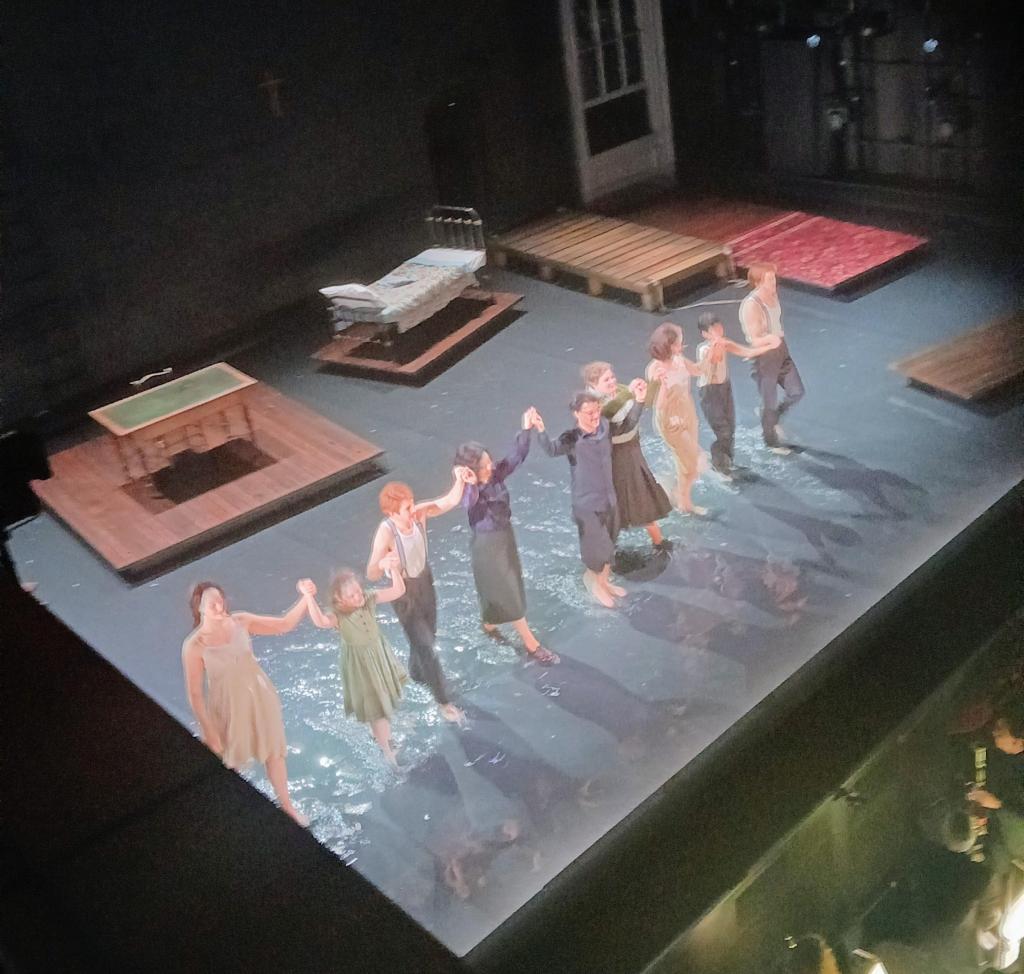
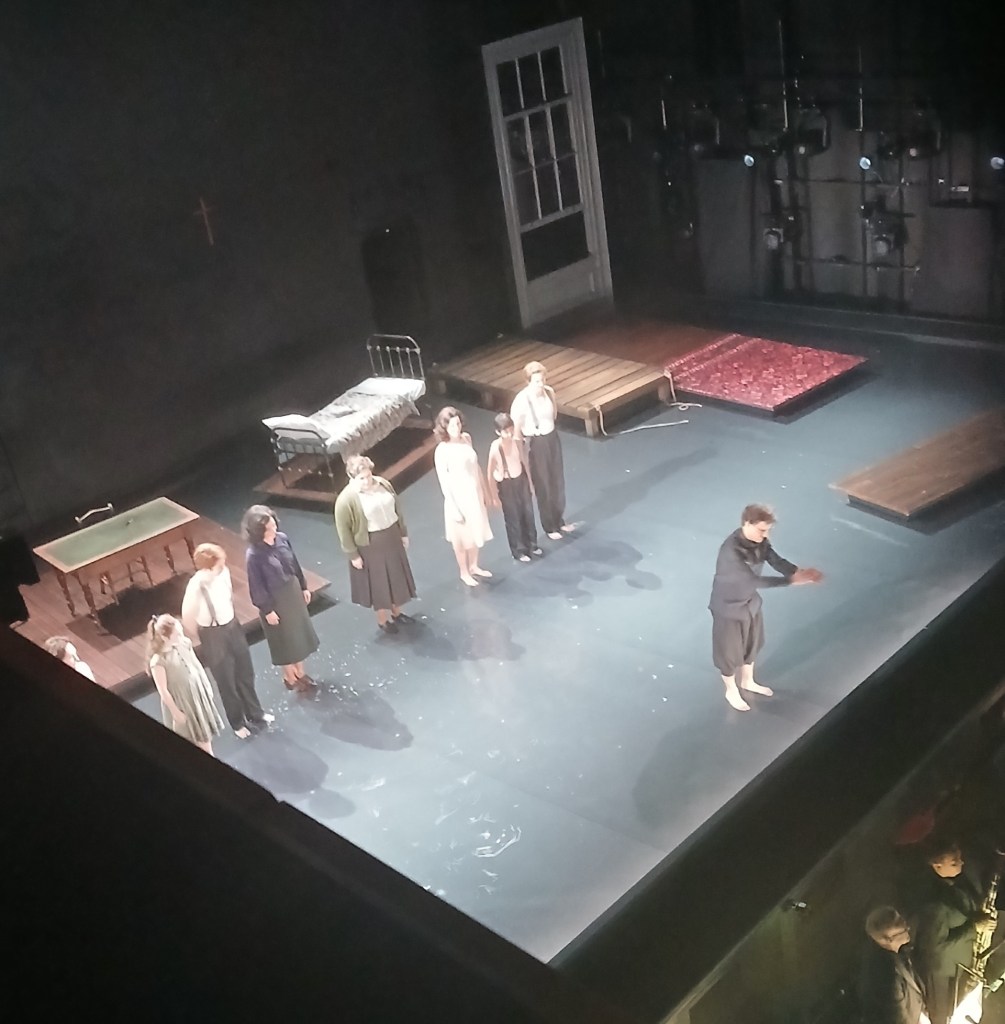
This is the third live production I have seen of this great work. There are, I guess,a number of ways a director can interpret this piece on stage: what happens can be seen as a neurotic fantasy of the Governess; one can suggest but never emphasise the reality of the ghosts and leave their presence as an unresolved mystery; a director can go all-out to focus on the sexual abuse aspect of the story; or one might weave several of these elements together.. The ENO production I saw 18 months ago emphasised the first approach and confused everyone not familiar with the plot. This production, much more straightforwardly, focused on the sexual abuse element of the story, with, on the whole, very corporeal ghosts. That’s not quite a fair or accurate description – there was a genuine creepiness at times, particularly in the first part which left you in doubt for a time about the reality of the ghosts’ presence; the unclear early appearances of Quint and Miss Jessel in the shadows, barely lit; the very effective video images of a stricken Miss Jessel and aspects of Bly House, suggesting a different perspective to everything you see on stage. However after a time the ghosts become much more clearly lit and Quint in his interactions with Miles is clearly moving beyond acceptable boundaries – moreover there are doubles for Quint and Miss Jessel who appear at points, seemingly more closely surrounding Miles and Flora, I guess the point being that perpetrators of sexual and emotional abuse are all around the victims, who can’t escape from them (plus of course doppelgangers make handy scene shifters). The only downside, I felt, to the matter-of-fact approach to the ghosts was to make Miles’ death a bit ‘ operatic’ – it is less clear why he has to die when Quint is so obviously departing as a physical presence. The other notable aspect of the production is the water – the fact that after the first scene or so in Bly House, we realise that the whole of the stage floor is covered in water, with islands for beds and a few other acting areas. This one assumes partly relates to the references in the libretto to the lake at Bly but must also references the Yeats quote in Myfanwy Piper’s libretto about ‘ the ceremony of innocence is drowned’. Maybe this is a slightly heavy-handed pointer by the director to the abuse aspect but it does allow for some very effective scenes with Flora – trying to drown her doll and being dragged into the water by Miss Jessel.
It was a huge benefit to see this work in a small auditorium properly suited to a chamber opera rather than the cavernous Coliseum – you could see every facial expression and hear all the nuances of the scoring. The cast of singing actors was very fine. Elgan Llŷr Thomas as Quint dominated the stage when he was present – forcefully voiced, domineering, insistent and tense. Both Mrs Jessel and the Governess were performed by singers – Isabelle Peters and Kate Royal – who looked the part, sang expressively and had clear diction. Claire Barnett-Jones conveyed the complexity of the character – part caring, part complicit – very well and sang beautifully. Flora had a bright clear voice and acted well, while Miles, who sounded a bit under-powered at times, conveyed effectively the burden of guilt and repression he carried.
It is a great merit of this work that it doesn’t trivialise abuse and controlling behaviour, and has nothing to say about their origins as an excuse for abusive actions. Britten’s anger at the death of innocence makes this a continually disturbing and upsetting work.
The more I listen to The Turn of the Screw the more enjoyment I find in the music. Some of it reminds me of Das Lied von der Erde. It was excellently played by the 13 instrumentalists in the pit. The picture of the conductor below wearing galoshes when he makes his stage curtain call is amusing………and his conducting was the polar opposite of wading in in an uncontrolled way – he encouraged the orchestra to expressive beauty and precision.
Beethoven String Quartet Op.18 No.1; Bartók String Quartet No.5; Schumann String Quartet No.3 in A
I heard the Fibonacci Quartet a few years ago at a City of London church lunchtime recital. They then seemed quite new and untested on the scene – but, in fact, I realise having looked at their website they have a busy international career: during the 2025/26 season the quartet is performing extensively across Europe, with highlights including performances at Vienna Musikverein, Berlin Philharmonie, Hamburg Elbphilharmonie, Frankfurt Alte Oper, Wigmore Hall, Munich Prinzregentheater and Philharmonie de Paris, as well as festival appearances at Edinburgh International Festival, Aldeburgh Festival.
Their programme for Sheffield looked to be interesting, particularly the Bartok. I have tuned in to the Bartok Quartets at various points since my teenage years but have always found them difficult to focus on. I thought this would be an excellent opportunity to engage again with one of them, listening live with the extra degree of attention which that brings.
The quartet sounded very impressive – tightly together, bows digging deeply into the strings, their playing energetic and accurate, their instruments sounding warmly blended. They sounded very good indeed in the Upper Chapel acoustics.
The Bartok piece, as the cellist acknowledged in his introduction to the piece, is quite a journey. I think I made more headway with it than I have done with any other listening session with Bartok quartets. Bartok’s voice in this work is utterly individual. It is not really ‘folky’ in any easily nationalist sense. Nor is it – as its date might lead one to anticipate – expressionist and angst-ridden. Maybe it is just my youthful exposure to Duke Bluebeard’s Castle, but this quartet seems to carry on from that early work the sense of a private space to be protected at all times, the music summoning up the precious spaces where the soul can be nurtured The first movement is almost classical, with a severe main theme and clear development and recapitulation sections (this theme also returns at the end of the work), very much like a protective carapace. The second and fourth movements are in Bartok’s night- music mode, as in the 3rd piano concerto and the concerto for orchestra, with the glimmering of something hidden, special, but just out of reach. The third movement has huge jagged energy – according to Bartok like Bulgarian folk music but it only intermittently sounded like folk-music-derived to me, and even then with a phantasmagoric feel – and with again a moment of golden quiet brilliance at its heart; it is on the whole a more lyrical movement than the others. The finale is frenetic, abrupt and challenging, much like the first movement – towards the end there are folk-inspired rhythms, and a quirky folk song tune suddenly interjected. I did enjoy this, and the Fibonacci’s gave the work a really gutsy performance….
I also enjoyed the performance of the Schumann which seemed a very flexible responsive reading. The first movement was understated (to my ears) at first, developing passion in the course of the movement. There was enormous energy in the second movement and an edgy unsettled yearning reading of the third. The finale set off at a hair-raisingly fast speed, but somehow never came off the rails.
By contrast the first work in the programme, the Beethoven, didn’t grab my attention in the same way as the other two pieces. I am not sure why this was – maybe the quartet feels less comfortable in the relatively more restrained Beethovenian idiom. Somehow the performers seemed politer than I think they should have been done – the slow movement looks forward to full-on Romanticism and here felt too much a throw-back to Haydn and Mozart, while the third movement wasn’t quite galumphing enough. However, perhaps I was just being unreceptive……
As an encore, the quartet played an arrangement of two Gershwin pieces – ‘i got rhythm’ and something else I didn’t catch, which was huge fun and which at times, whether by intention or not, sounded a bit like Bartok…! The audience reaction – after the Beethoven, which was a bit luke-warm – was very positive, with traditional Music in the Round foot-stamping.
Director, Barrie Kosky; Set Designer, Rufus Didwiszus; Costume Designer, Victoria Behr; Lighting Designer. Alessandro Carletti. Conductor, Antonio Pappano. Siegfried, Andreas Schager; Mime, Peter Hoare; Der Wanderer, (Tommi Hakala, replacing Christopher Maltman); Brünnhilde, Elisabet Strid; Alberich, Christopher Purves; Fafner, Soloman Howard; Erda, Wiebke Lehmkuhl; Woodbird, Sarah Dufresne.
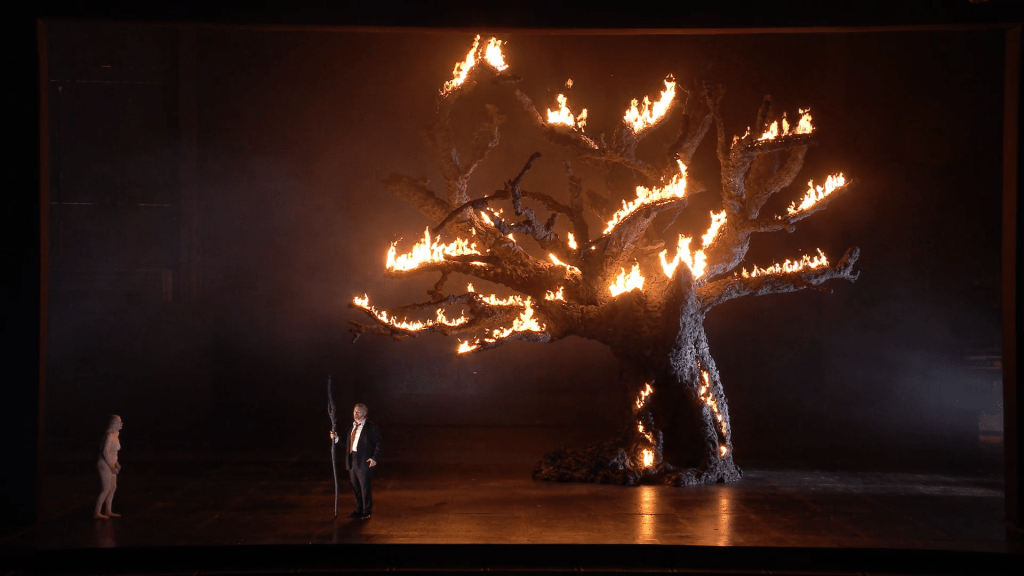
A couple of days before this performance, I got an email from the Covent Garden website telling me that the performance of Die Walkuere filmed last year in May with this team was now available for streaming. I dipped into it – I didn’t have a massive amount of time – and was quite astonished by the quality of singing and acting all offered, and the excellence of the orchestral playing. Though the live performance I went to was one of my highlights of 2025, this seemed to be at a level of ‘rightness’ I have seldom encountered with Wagner – beautiful, powerful singing (especially from Maltman), and thoughtful original staging, nearly always faithful to the sense of the text. I was also reminded of the rightness of the ‘Erda’ concept – the naked 80-year-old – as part of that, which was even more moving close-up. Here is a screen shot I took of the final few moments of the opera from the streaming, with the Magic Fire, Wotan and Erda.
So, it was with a renewed admiration for the team of Kosky and Pappano, for Maltman and Strid, that I looked forward to this live performance, the second of the run. Unfortunately, I got an email the day before telling me that Maltman would be off sick for my performance, and that someone called Tommi Hakala from Finland was replacing him. I quickly realised I had heard him before – in Ed Gardner’s Mahler 8 last year – and that he, for those with long memories, was a long-distant Cardiff Young Singer of the World (in 2003). He seems to have had a creditable but not stellar career and is now in his mid-50’s, with plenty of Wagner roles under his belt. I think my general feeling was – better Maltman get sick than Schager…………
Looking back after what overall was a tremendous performance, there were a few thoughts I had, which I’ll share:
Just as with the Walkuere production, the acting was excitingly physical and visceral, with much movement and non-singing vocalising when appropriate by Mime, Alberich, Wotan and of course Siegfried. I have seen Schager sing Siegfried before, at Bayreuth, and I remember his unflaggingly generous singing there, but I don’t recall the degree of humour, energy, and sheer abandon he showed at this Covent Garden performance, jumping up and down at every opportunity, playing Nothung like a guitar, doing extreme sulks with Mime, waltzing with a coat. The two – Siegfried and Mime – became a music-hall, Steptoe and Sons, routine very effectively.
The detail of the acting and thought given to tiny moments of interaction was impressive – the way Siegfried threw soup over Mime and then wiped his face in Act 1, indicating a more subtle relationship than many productions allow; the choreographing of what is a very long scene at the end of the work between Brunnhilde and Siegfried was engaging and meaningful throughout. I loved the way Kosky ended Act 2, with the increasingly irritated Erda pointing out to Siegfried where he’d left behind Nothung, and the Wanderer’s handing a packet of crisps to Alberich in their scene together. The scrap of bloody bear was a good way of dealing with that particular problem in Act 1.
Despite being a last-minute shoe-in for the ill Maltman, Tommi Hakala seemed just as effective as his predecessor on the first night in demonstrating the Wanderer’s conflicting impulses – towards renunciation on the one hand and on the other the need to retain power, both reflected in the wonderful scene with Erda, but also the way in which he enjoys getting one over Alberich and Mime – contained within his downsized grubby appearance. Peter Hoare as Mime managed to be both profoundly evil in his handling of Siegfried but at the same time to evoke some sneaking sympathy, given the background of his treatment by his brother; he was very far from being one-dimensional, which sometimes Mime is in performance
Vocally, all the singers performed at a very high level. Schager is not Alberto Remedios but he does at times offer softer more lyrical singing than the heldentenor norm, as well as wowing everyone with his energy and the sheer volume of his voice (pinning you back in your seat, even at Row D to the side of the Amphitheatre). Elisabeth Strid’s is not a steely high-volume Wagner soprano in the Nilsson/Davidsen mould, but she gave us much beautiful phrasing and banged out the top notes with energy and precision – her last top C among the best I have heard. Hakala was much more than an efficient stand-in ; he had his own gravelly splendour of voice, He probably didn’t do as much with the words as the ever-thoughtful Maltman would have done (and I might go to the cinema screening on March 31st if Maltman is singing) but he acted without hesitation and convincingly (in itself remarkable when you think how much rehearsal time he must have had). It was touching, and appropriate, that he got the third biggest cheer of the evening (after Schager and Pappano) by a very grateful and appreciative audience. Christopher Purves sounded a bit alarmingly stretched at the top of his voice but was otherwise dependable and Peter Hoare and Soloman Howard did all one could hope for vocally with Mime and Fafner. I also loved the beautiful rich voice of Wiebke Liehmkuhl as Erda.
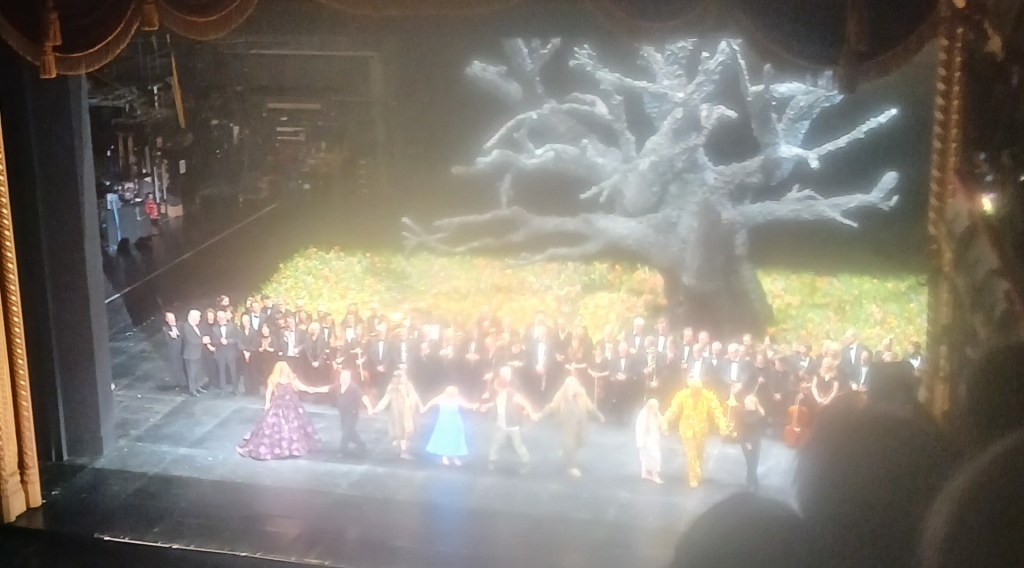
Schager in a Guardian interview described this production , in an appreciative way (as he would, having sung in the Schwarz Bayreuth Ring a number of times, and some other spectacularly ill-conceived regie-theater shows) as ‘old-fashioned’ and in a way it is – very focused on story-telling. If an object is mentioned in the text it’s there on stage – be it anvil or ring. The production is also kind to the singers – invariably they are placed down stage when the orchestra is at high volume. Coming on to the sets and design aspect, Act 1, and Act 3 scene 2 (i.e. at the mountain-top) worked brilliantly. Act 1 had a grey Hansel and Gretel type house stuck at a crazy level angle on top of a ladder, while two Heath Robinson machines huffed and puffed in the forging scene (with sparks flying from the sword). I liked the way too the whole length and breadth of the Covent Garden stage was visible, allowing for Siegfried to run around and for the Wanderer’s entrances. There were some spectacular fireworks at the end of Act 1! Act 3 Scene 2 had the, by now familiar, stark dead tree, last seen in Act 3 of Walkuere but this time surrounded by a carpet of mountain pasture flowers, in the midst of which Brunnhilde is lying. This looked quite wonderfully appropriate, with glorious colours – at the same time, the fact that it was obviously a carpet, and you could see the bare black stage behind and in the wings, suggested how transient this all was. Act 2 was about as far removed from the normal forest greens and sunlight-through-the-trees approach as you could find. We had the same night time scene as played out in Act 2 of Walkuere, again with a street lamp, but this time with (lots of) snow, and Fafner’s lair became a sinister looking bungalow, like something out of a horror film. There were park benches for Alberich and the Wanderer. Fafner was (curiously a bit like the Bethnal Green Regents Opera Fafner last year – could Kosky’s team have stolen the idea?) a human dressed in a suit made of hundreds of small gold leaves with golden crutches as weapons. Personally, I liked the setting and didn’t feel much incongruity with the text even during the Forest Murmurs – and Fafner in his suburban lit-up bungalow shows how far he, as current Ring-holder, is from the Nature which Siegfried references throughout the act, also symbolised of course by the Woodbird and ‘old Erda,’ who I’ll come onto below. What I found difficult to accept is the staging of the encounters Wanderer has with Erda and Siegfried in Act 3, plus Siegfried’s walk through the fire. Each of these scenes is in essence played in front of the curtains, with a grey wall blocking the set up for the final scene, and with no props beyond spear and sword – plus ‘young Erda’ crawling out of the capacious dress of ‘old Erda’. Surely something could have been done to light the scene more effectively and to suggest the magic fire (the person I was with, seeing the work for the first time, wasn’t even clear when Siegfried was going through this)?
‘Old Erda’ is possibly even more prominent than she has been in the other two music dramas – on stage throughout all the Acts, I think, with very brief exceptions, and there’s a particularly nice cameo of her watering the flowers in the last scene. We will have to wait till Gotterdammerung to get the full view of what Kosky intends by her, but she is in this work less of an agent than she was in ‘Walkuere’, and this makes it easier to get your head round the ‘Erda’s dream’ concept for the whole cycle
The orchestra under Pappano sounded glorious – full bodied, wonderfully delicate woodwind at times, beautifully-rounded horns, sumptuous strings in the final scene. Everything sounded paced at speeds comfortable for the singers and allowing clear diction (another notable aspect of this production) while keeping the drama taut. There was no lingering, but also much sensitivity.
I have seen, in over 50 years of opera-going, perhaps 10 productions of Siegfried (plus two concert performances): – ENO 1970’s, ROHCG, 1970’s, Bayreuth 1972, ROHCG 1990, ROH 2012, Opera North 2016, Longborough 2022, Bayreuth 2022, Regents Opera 2025, and now this one. I think this is the best staged production of the lot (though Goodall’s conducting and his cast at ENO were very special)
PS Also ROHCG Screening at Sheffield Curzon cinema, 31/3/26
I used the excuse that I hadn’t seen Maltman sing the Wanderer when I went to the live performance on 21/3 to justify to myself going to the screening of Siegfried at the end of March. Although it was disappointing to have the last 10 minutes of the first act removed by a ‘technical hitch’, the screening proved to be a very exciting and engrossing occasion, demonstrating to a huge audience the fine acting as well as singing informing the performance. In particular I was struck by Elisabeth Strid’s acting – how every gesture, every movement of her hand, counted. And she was able to use her face so expressively, even while managing to keep an eye on the conductor, and managing her vocal chords. Schager was just as energetic and credible close-up as he was in the theatre. In fact, it is remarkable that both Strid and Schager, both in their early to mid-50’s and in one sense looking their age, can be such credible figures on stage playing characters years younger. Maltman didn’t quite bring, to my ear anyway, the sort of lieder-singing approach and sensitivity to words that I remembered from Walkuere but he was always credible, and with a strong voice easily riding over the orchestra. Almost my favourite scene in the Ring is the one between Erda and Wotan in Act 3, and this was wonderfully realised. One thing I hadn’t appreciated while seeing that scene live is that throughout old Erda is mouthing ‘young’ Erda’s words – taking part in, or remembering, the conversation, I am not sure. I don’t think also I had appreciated before Pappano’s varied approach to these huge acts. Act 1 is taken at really quite a pace, cutting 5 minutes off the scheduled timing, and the Erda/Wotan scene is taken at quite a speed as well, whereas most of the final scene between Siegfried and Brunnhilde is taken at a set of almost-Goodall-like tempi, until the last 5 minutes, when he suddenly speeds up. This varied approach helped the drama I think to move at a pace that engaged the audience’s attention. Whether it totally makes sense structurally is another issue, but, in the excitement, I wasn’t bothered.