Bruckner, RLPO, Hindoyan – Liverpool Philharmonic Hall, 6/2/26 

Schubert: Overture, Rosamunde; Saint-Saens, Cello Concerto No 1; Bruckner, Symphony no 6. Royal Liverpool Philharmonic Orchestra. Conductor Domingo Hindoyan; Guy Johnston, cello

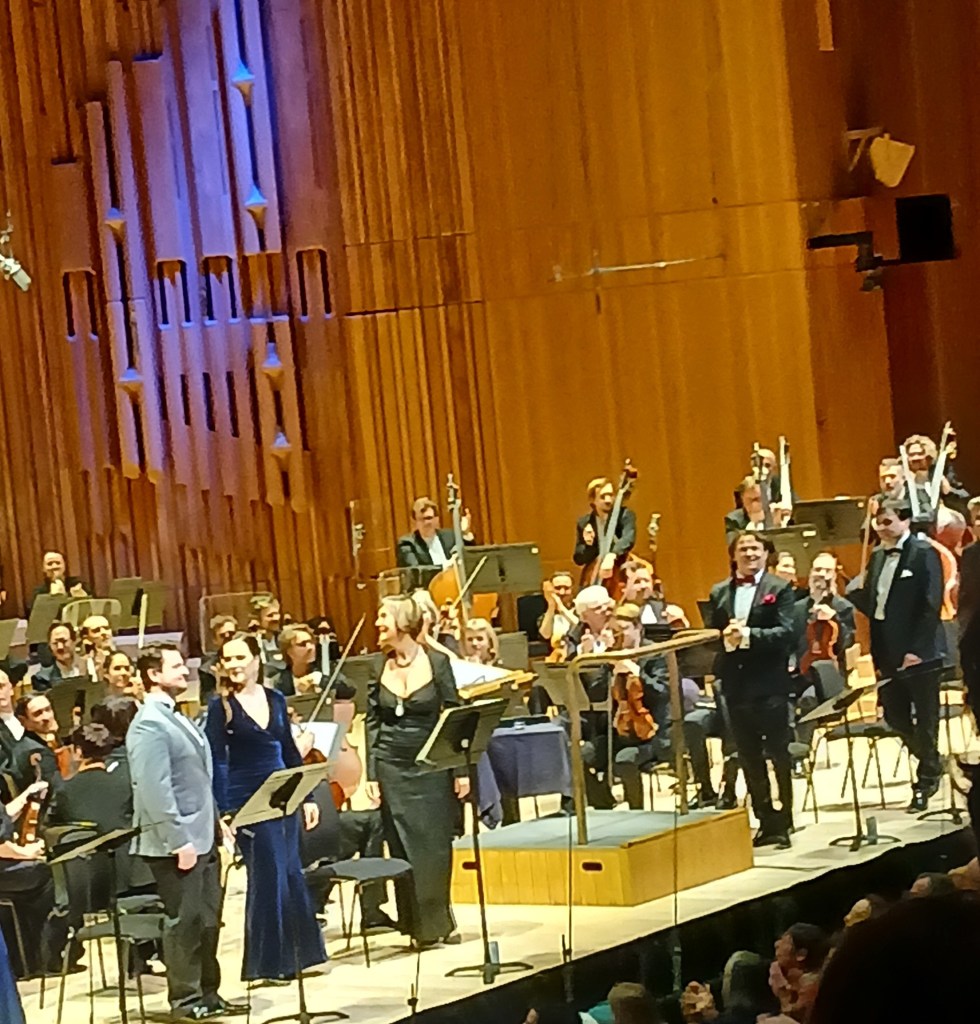
It must be nearly 10 years since I last heard Bruckner 6 live (in the distinguished hands of Barenboim and the Berlin Staatskapelle, at the RAH Proms), so I was keen to go to this concert – it’s not a work that often pops up in the concert hall. I may also possibly have gone to a BBCSO performance conducted by von Dohnányi in 1969 and I remember a BBC Phil Proms performance in 2012. That’s about it in terms of live performances….. I have known this work since I was 17 or so and bought a disk of one of Jochum’s performances. But somehow in this Liverpool performance of Bruckner 6 I found I was hearing the work as though for the first time.

The programming didn’t make a great deal of sense (except for the very general connection between Schubert and Bruckner) unless, I suppose, seen as two tasty morsels served before something more challenging, designed to encourage the cautious to take a risk. In fact, though I’ve known the Schubert overture since I was about 13, I have no knowledge at all of the Saint Saens piece, which, like most of his music, has simply passed me by (I keep meaning and failing to see Samson and Delilah at ROHCG).

All three of the major Midlands/Northern orchestras seem to have struck lucky with their musical directors appointed in the past two years or so – Manchester, Liverpool and Birmingham (and actually the BBC Phil at Manchester too). So I was also interested to hear and see how the relationship b between the RLPO and Hindoyan was developing

It was bitterly cold when I arrived in Liverpool, with a biting wind straight off the Irish Sea. The manic character of central Liverpool – one of the more likeable of British cites – seemed worlds away from 19th century Vienna. The bright white glare of the Philharmonic Hall seemed equally far from both. However, Hindoyan and the orchestra deftly squared the circle and took away both the glare and the cold by offering a sprightly Rosamunde overture, with punchy tight woodwind playing, extremely rhythmically precise string playing (I was sitting in the front row and they were flawless) that nevertheless had a properly Viennese lilt to it and was not hard driven. There was also some gorgeous oboe playing in the solo introduction

The Saint Saens piece I had low expectations of as music and by the law of self-fulfilling prophecies that’s exactly how I found it. It is urbane, and tuneful but nothing that marks it as an interesting journey or one which grips the listener. I fell asleep momentarily in the finale. Guy Johnston gave a nuanced delicate account that sounded just right for the piece (and I appreciate cellists probably have a different view of the work, given their limited repertoire). Johnston’s encore, perhaps inevitably was The Swan, with accompaniment  from the RLPO cello section in an arrangement by Ben Hughes..

The performance of Bruckner 6 I liked very much. The RLPO sounded quite magnificent, with a gorgeous central European sheen on the strings, cellos and basses in particular digging deeply into their notes; the horn section sounded full-bodied and unfaltering, and there was some very fine woodwind playing – the oboe, again, comes to mind, in the slow movement.

Bruckner 6 is an oddity even among his quirky set of symphonies.  It is more hesitant and unpredictable than the others, sometimes feeling as though its music lurches forward pursued by something deeply unsettling, even evil. The end of the finale, normally in Bruckner a glorious hymn of praise bringing different elements of the symphony together, in the 6th symphony sounds rushed and perfunctory, as though the door opening up the heavens is being slammed shut quickly before the demons get in. Hindoyan made the centrepiece of his interpretation the slow movement, which was a real revelation to me. Hindoyan and the orchestra gave a full-blooded loving account of the music, and I enjoyed I think this performance of it more than any other I’ve heard live. Again, it’s not like many other slow movements of Bruckner’s, which have a triumphant almost orgasmic climax, and its structure is more complex,  but it is a place of consolation and safety around which the other movements swirl. The closing bars were quietly luminous and beautifully played by the strings and woodwind. The first movement was fastish, and again emphasised the demonic element – the insistent 5 note rhythm sounded threatening and urgent, a nervous tic, in Hindoyan’s reading, and although the broadening brass blaze towards the end offers hope, it is overtaken by the driving 5 notes again, ending in what sounded more like a threat rather than a promise. The third movement was curiously unsettling, the fluttering main theme difficult to pin down, perhaps a little like that of the 9th’s second movement’s Trio – wisps of melody that are by no means benevolent. The fourth movement, usually described as difficult to bring off, Hindoyan and the orchestra drove forward convincingly, pushing back the darkness, with some splendid brass playing.

This was by no means a conventional approach to performing Bruckner, but for this symphony anyway it worked really well. I’m glad I made the effort to travel to Liverpool to hear it. Hindoyan is an undemonstrative conductor on the rostrum – a clear beat, lots of use of the eyes, not much gesturing – and probably all the better for it – certainly he gets superlative results from the RLPO
From Versailles to Leipzig via Venice: BBC Philharmonic, RNCM, 30/1/26

Lully Suite from Le Bourgeois Gentilhomme; Bach Selections from The Art of Fugue; Vivaldi Concerto for Two Trumpets; Bach Concerto for Oboe and Violin; Rameau Selections from Les Indes Galantes, Naïs, Hippolyte et Aricie, and Dardanus. BBC Philharmonic Orchestra: Jonathan Cohen director; Tom Fountain, Gwyn Owen trumpets; Jennifer Galloway oboe; Zoë Beyers violin

I don’t think I’ve ever heard any music by Lully or Rameau live in the concert hall or opera house. I have a recording of some of Rameau’s dances, and an album of French Baroque arias and that’s about it. So I was interested to find this concert in the listing as well as the combination of a well-known ‘period instrument’ conductor, usually working with the group Arcangelo, and an entirely modern-instrument (though of course slimmed down) symphony orchestra.

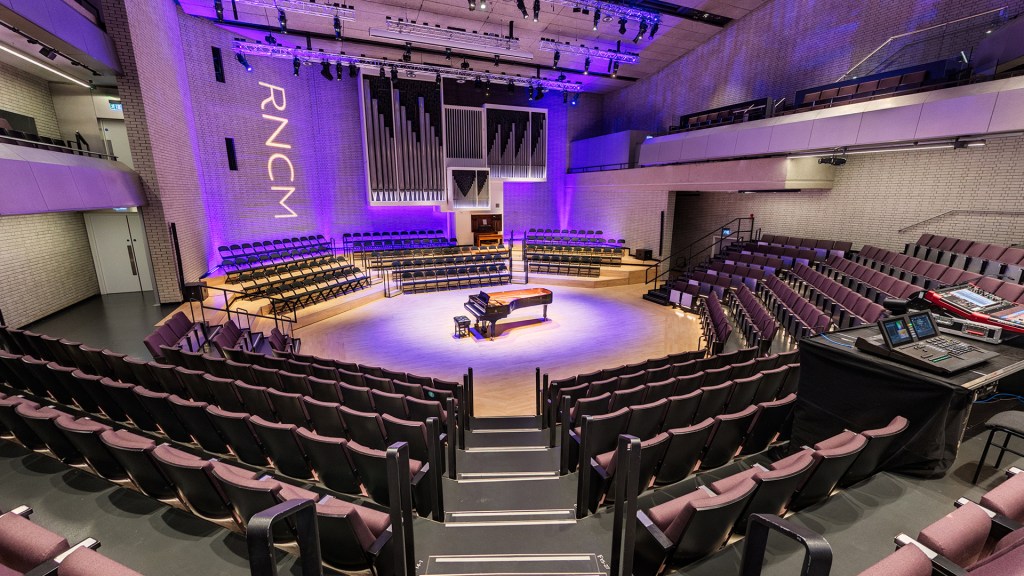
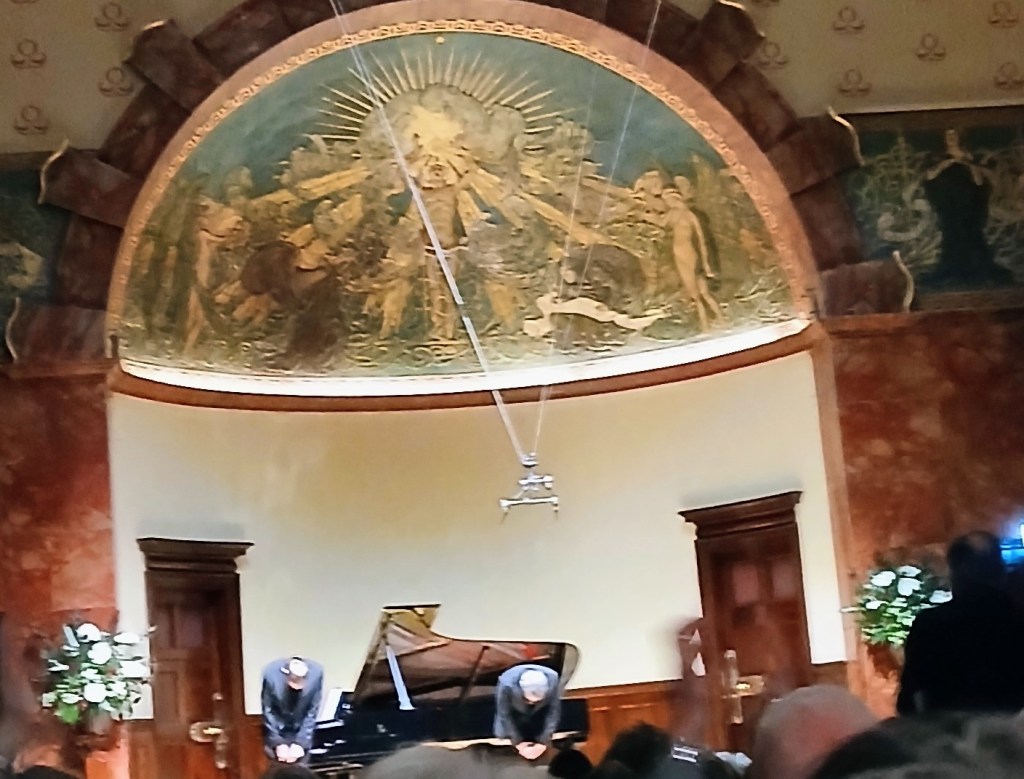
It was also the first time I’ve been in the RNCM concert hall as opposed to their theatre. It is splendidly equipped and has great acoustics (see photo of the stage), cleverly nested into other parts of the building.

I wasn’t quite sure about the why for this concert. Was the BBC Phil seeking to show what it could do with modern instruments (which these were, though strings were played as far as I could see without vibrato, and obviously numbers were pared down, to about 28 players or so in all) ? Did they feel a need to broaden their repertoire? And why this particular combination – was the main driver to given some of their players a solo role in a way they wouldn’t normally have the opportunity to do?

It was an enjoyable evening, and the BBC Phil players provided all the energy and variation they could. It has to be said though that I missed the buzz and the rawness of gut strings and the more extreme sonorities of period wind instruments.

On the whole, it was the Bach and Vivaldi pieces which came off best , unsurprisingly since the Bach works are on another level of thought and depth to the Lully/Rameau dances, while the Vivaldi, not as complex as the Bach, has its very exciting two swirling trumpets. The highlight of the concert was the Bach oboe and violin concerto, probably also the best known work, with its central slow movement offering a lovely lyrical line and stillness. I hadn’t appreciated that this work is only known in written form as a concerto for two harpsichords, BWV 1060, which has been speculatively re-constructed for oboe and violin, based on similarities in the harpsichords’ music to some features of woodwind and string playing. The oboe playing of Jennifer Galloway was exemplary. The Art of Fugue extracts were the main theme “No. 1, the fugue theme inverted (No. 4), at double and half speeds together (No. 7) and slowed down and set against a new counter-theme in running quavers (No. 9).” (from the programme note by Lindsay Kemp). Here the orchestra was very good at bringing out the emotion, the melancholy, of the piece, as well as the intellectual tour de force that is very obvious in key board versions (though no credit was given to the orchestrator). The Vivaldi trumpet concerto is exciting, and huge fun. I guess with modern instruments you lose something of the high wire act of playing on period trumpets (the programme note interestingly says that, because of the technical limitations of early 18th century trumpets, in the whole work the two soloists play only 11 different written notes) but they were classy enough to give that sense of possible danger, even if it was one which could easily be averted.

I had hoped the Rameau selection might have included the gorgeous ‘Entrée de Polymnie’ from Les Boreades, but it didn’t. The Lully and Rameau dances and orchestral extracts were good fun – with drum and tinkly cymbals – and well played but frankly a bit boring without any stage action, and my mind began to wander in the Rameau. I think they might have ditched the Lully, cut the Rameau and have had a Brandenburg concerto or similar Handel concerto grosso instead……

Bartok, BBC Philharmonic, Bihlmaier, Bridgewater Hall, 24/1/26

BBC Philharmonic Orchestra, Anja Bihlmaier conductor’ Jennifer Johnston – Judith; Christopher Purves -Bluebeard. Boulanger D’un soir triste; Kodály Dances of Galánta; Bartók Bluebeard’s Castle

This was a very enjoyable concert, and well programmed too. The Boulanger piece seemed to have thematic and harmonic links with the Bartok piece at times, and shared a similarly gloomy outlook. And obviously Kodaly and Bartok have that immediately recognisable Hungarian sound world in common.

The Boulanger piece was obviously of its time and the influence of Debussy and Faure are clearly present. But there’s enough that’s distinctive to make one wonder what sort of composer Lili Boulanger might have become, had she not died so young  (24). It’s a sombre piece, clearly structured and immediate. I liked it.

The Kodaly piece is often used as an orchestral show – off work, and what I liked about this performance is that, though it was very well played – some spectacularly fast woodwind playing as things pick up speed, and some gorgeous string sound, as well as some very characterful clarinet playing – it was all at the service of the music. Anja Bihlmaier wasn’t just driving the music forward relentlessly, but loosening it up at points, so that both she and the orchestra looked as though they were enjoying themselves throughout. That said, the very ending, after the slow down, seemed a bit underpowered, as though the sudden reversion to the quicker tempo was too fast for the players to catch on to. Throughout, Ms Bihlmaier seemed utterly focused on the orchestra, with no element of self-conscious playing to the audience. Though fairly new to major international engagements, she’s in her late 40s and a very experienced conductor, trained in German provincial opera houses. She is currently chief guest conductor of the BBC Phil. – I hope she stays for longer than her initially contracted 3 years. She’s now beginning to be courted by the Premier League orchestras (she had her LSO debut recently)

The Bartok Duke Bluebeard performance was very absorbing (and indeed was heard by one of the most silent and non-coughing audiences I can remember at the Bridgewater Hall) – I have to say I enjoyed it more than the Budapest orchestra’s performance in the summer. One of the main reasons for this I think was that it was sung in English.  While I know that the melodic lines are rooted in Hungarian speech, hearing it in English makes it so much more immediate, and it also felt as though the translation was not distorting the musical phrasing in any way.. The second reason for my enjoyment was the performance of Christopher Purves, a late stand-in,  who gave a master class in how to make every word, every note count, with superb diction and a riveting stage presence. He didn’t act in any physical sense in front of a music stand, but everything we needed to know about the character -paranoia, love, resignation – was in his singing. His verses about his previous wives at the end -which rather passed me by on the summer Proms performance – were gloriously and affectingly delivered.  He occasionally used sprechstimme to great effect. Jennifer Johnston wasn’t in the same league of singing and presence as Purves, she wasn’t as believable, but she sang powerfully, with careful shading of phrases, and a glorious top-whatever at the 5th door. The telling of the story was enhanced by some well-judged lighting effects (done without disturbing the orchestra). Door no 5 was further enhanced not just by the Bridgewater Hall organ at full tilt but also by 8 extra brass players in the choir stall. They made a wonderful noise. Ms Bihlmaier’s conducting was fluent and straightforward, again focusing on letting the music speak, or rather sing, for itself, rather than emphasising particular aspects for effect. All her tempi sounded ‘right’ in context. I saw one review which grumbled a bit about the orchestra being over-loud at points. From where I was sitting – Row M in the Stalls – if anything the orchestra was almost too subservient to the singers, but certainly Anja Bihlmaier had them well under control (perhaps in fact Door 5 might have been louder. I shall listen to this again on Radio 3 whenever it is broadcast.

The Makropoulos Case, Janacek – concert performance, LSO/Rattle, Barbican 15/1/26,

London Symphony Orchestra, Sir Simon Rattle   conductor; Marlis Petersen   Emilia Marty; Aleš Briscein   Albert Gregor; Jan Martiník   Dr Kolenatý; Peter Hoare   Vitek; Svatopluk Sem   Baron Jaroslav Prus

It’s a strange piece of programming to have this concert performance (the 2nd of two) happening only two months after the ROHCG production of the same work. However……this was just such a different experience to seeing the ROHCG production that it didn’t matter at all. Good though the ROHCG one was musically, it was let down a bit by an over-complicated production. Somehow, having the singers and orchestra on stage in a concert performance as in this performance felt more intense, clearer and easier to follow dramatically. Even the surtitles seemed to make more sense and to be easier to understand,

This was without a doubt the most convincing and gripping performance of this amazing work I have heard, and increasingly I find that this work and the Cunning Little Vixen are my favourite Janacek operas. It helped that, like the ROHCG production, it was played without a break – it would seem almost an obscenity after these two different performances for the work to be divided by an interval.

Part of the reason for the extra intensity was that Marlis Petersen’s was such a more sympathetic portrayal of EM than Ausrine Stundyte. Clearly EM is in many ways a sad and nasty piece of work and that must remain a constant in any portrayal, but somehow Ms Petersen drew out more of the humanity and more of the sadness there is in the role. The last 10 minutes were absolutely glorious,. A lot of the role is declamation but where there was a lyrical passage Ms Petersen unfailingly handled it sensitively. Ausrine Stundyte was more formidable and cold – an equally valid approach but which, together with the ROHCG production, left one a bit distanced at the end of the work. At the end of this work, I had tears in my eyes – for the sadness of EM’s fate and the affirmation of ordinary human existence.

The rest of the cast  – with the exception of Vitek and Hauk – were Czech singers, and this helped the fluency and the understandability of the story. There were no weak links – all were outstanding, and kudos to Alan Oke for his definitive performance of the ageing Baron.  The other great contributor to the success of this concert was the LSO and Rattle – balance between singers and orchestra was perfect, there were many outstanding solos from the woodwind and horns, the strings sounded glorious in the last 10 minutes or so, and Rattle gave the more energetic parts of the score a propulsive dynamism – the opening prelude was tremendous. Having the offstage brass come on at the end to add to the grandeur and tragedy of the closing bars was a magical touch.

All members of the cast were very restrained when it came to acting, so that there was no irritating distinction between those using the score and those throwing caution to the winds and singing from memory. Everyone had a score in front of them, all sung towards the person they were addressing but nobody started hogging the limelight. Ms Petersen used the same space given to everyone else in portraying so clearly the character of EM.

It will be fascinating to see what Janacek operas Rattle and the LSO want to perform next– From the House of the Dead, which I have never heard a note of, would be ideal……..

I am so lucky to have started the new year with four such very fine performances

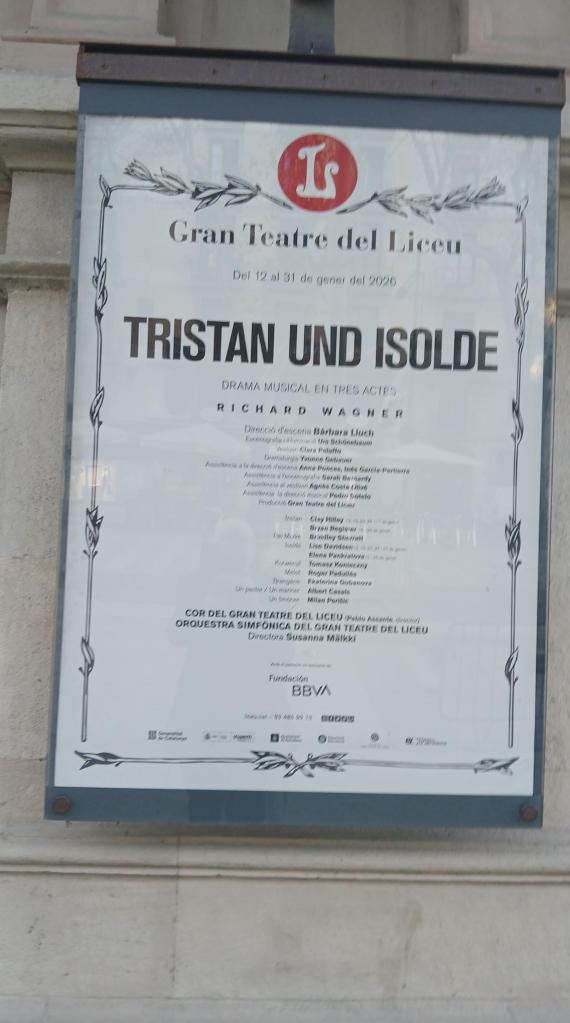
Tristan und Isolde, Wagner – Gran Teatre del Liceu, Barcelona – 12/1/26

Clay Hilley, Tristan; Brindley Sherratt, King Marke; Isolde, Lise Davidsen;Tomasz Konieczny, Kurwenal; Melot, Roger Padullés; Brangäne, Ekaterina Gubanova; A shepherd / A sailor, Albert Casals; Milan Perišić, A helmsman. Director, Bárbara Lluch; Scenery and lighting, Urs Schönebaum; Costumes, Clara Peluffo; Conductor Susanna Mälkki

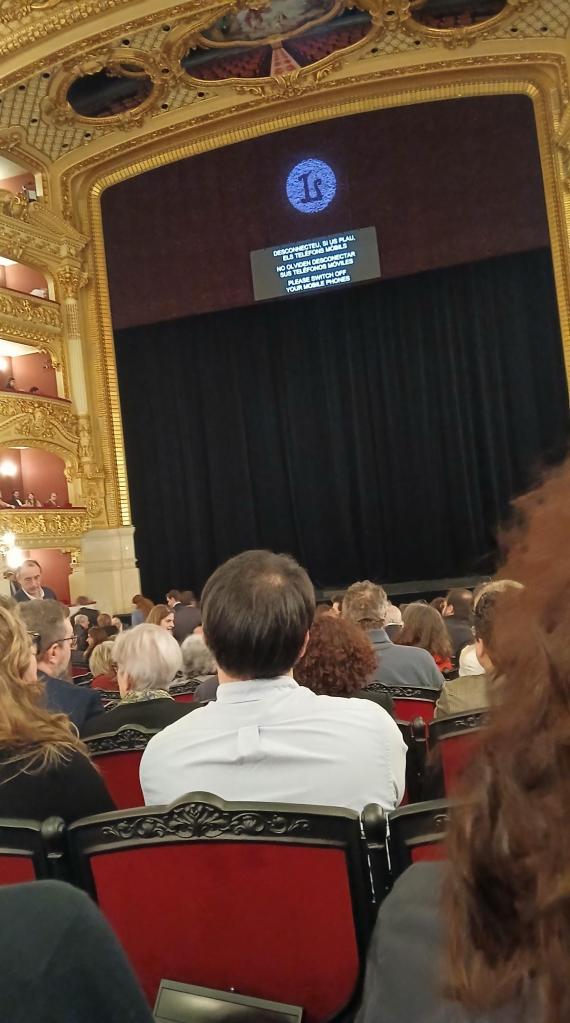
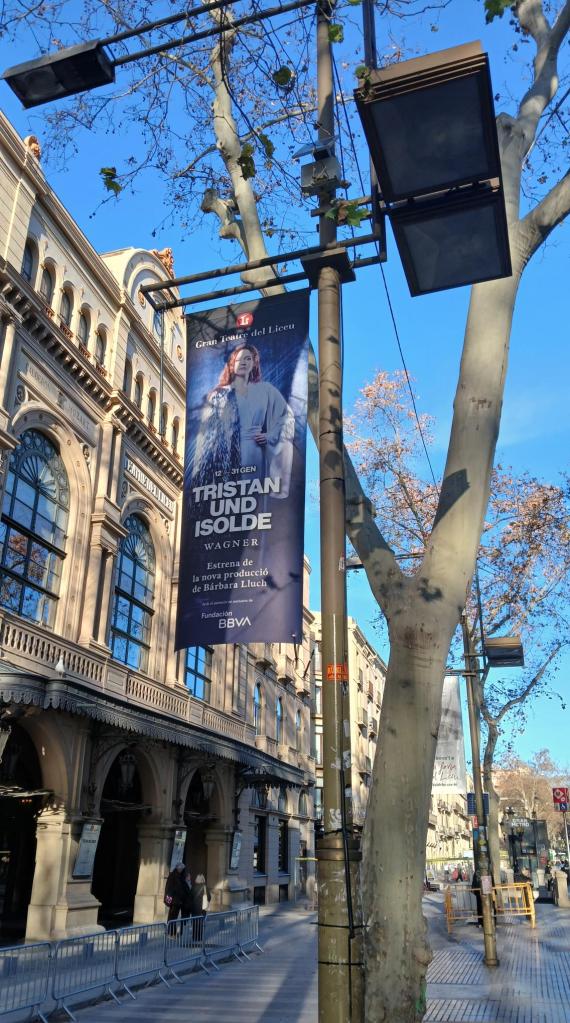
I spent a pleasant morning and early afternoon wandering around the centre of Barcelona, seeing the Gaudi-designed house Casa Batllo and having a very good tapas meal, with Eastern connotations, with an old friend also in Barcelona for Tristan,. After a quick rest, then, on to the Liceu Opera House. This has apparently been burnt down three times, the last in 1994 – but it has been finely restored to its original state. It’s a tall theatre (5 tiers) and with a stage that is certainly adequate but not enormous. I was sitting towards the back of the stalls, The sound was warm and resonant – the orchestra in particular sounding gorgeous, and the singers had no difficulty in cutting through the orchestra even at the loudest moments. So – a good theatre, I thought, and with less dampening of sound than Covent Garden.

I have not seen that many performances of Tristan after the 1970’s. I heard two performances at Bayreuth in 2017 and 2024, both musically very good but, in the Bayreuth mode, without surtitles, and with questionable regie-theater interventions, and a Proms/Glyndebourne semi-staged performance in 2021. Because of the English surtitles, and because of the quality of the performance, this Barcelona production was probably the most gripping, engaging account of the work I have seen since those glory days in the 70’s (Kleiber at Bayreuth, Nilsson at ROHCG, and also Vickers).                                                                                    

Taking on the role of Isolde, and subsequently Brunnhilde, is something that many Wagnerians have hoped Lise Davidsen would agree to, and so there was an excited international component to the audience for this performance, of admirers of her singing from many different countries here in Barcelona both to support her and hear her sing the role for the first time. (January 12th was the first night of this run, so her debut in the role, though she has sung Act 2 in public with Simon Rattle before).  All in all, it was an extremely fine performance which showed her to be in very good voice, her time off for child-birth having had no discernible impact on her characteristic sound,  It was – above all – a thought-through performance, where the phrasing of every line seemed to have been considered afresh.  She was commanding in the narrations of Act 1, with top notes securely pinged out, and, while she isn’t always a magnetic stage presence and can seem awkward on stage, here she looked very much the angry and formidable Irish princess, and her actions conveyed her frustration and her contempt of Tristan. Elsewhere she demonstrated the importance of stillness in achieving a credible stage presence. Her diction was excellent and there were many examples of shaded phrasing accentuating critical lines. In the love potion scene, and much more so in the love scene of Act 2, she produced some meltingly soft phrasings (her singing contemplating the word ‘and’, for example), while her vocal power in extinguishing the flame and in the final moments of the love duet were astonishing. It is very difficult in listening to the ‘Liebestod’ not to bring to mind the way many others – Nilsson, Flagstad, Meier – have sung it; the  powerful thing about Lise Davidsen’s performance was that it felt quite fresh – she wasn’t simply repeating how others had sung it, and she sung beautifully some parts which others have glossed over, while in turn not using the same approach as others had to other parts of the text. There was a dream-like wondering quality to her singing of the Liebestod, and this, and the sound of her glorious voice riding over the orchestra at full throttle at the climax, made for a memorable ending, and with a most beautifully floated last top note on ‘lust’ . Ms Davidsen has allowed a brief clip of the opening of the Liebestod, made presumably by the theatre staff, to be attached to her Facebook page – the link is here – https://www.facebook.com/reel/3213889715451005

This was a starry cast and there were no weak links. Clay Hilley is one of the three or so Tristans of choice at present and you can see why. His is not a very powerful voice, but he has the stamina to still sound fresh at the end of the third act, and he delivers the text in an intelligent way, with lots of dynamic variations and colour. He doesn’t have the ardour of Andreas Schager, but, still, he is very good, and parts of his Act 3 monologues were very moving, particularly towards the end. Tomasz Konieczny as Kurwenal is luxury casting – he has been the go-to Wotan at Bayreuth for a number of years. He sung it as well as anyone I have ever heard (though I can’t now remember much about Norman Bailey in the role) and was absolutely believable as Tristan’s bluff comrade.  The Brangäne, Ekaterina Gubanova, is another Bayreuth regular (she sung a very fine Kundry there two years ago which I saw). Hers is not a rich or warm voice, but her vocal style seemed admirably suited to the anxious, doubting character she was playing – even her vibrato felt part of the character. Her warnings in Act 2 were beautifully sung. And Brindley Sherratt was wonderfully sonorous as King Mark – I am sure his was the best account of the long Act 2 lament I have ever heard. I realised that the Melot, Roger Padullés, had been singing the tenor role the previous day in the Messiah at the Palau de la Musica  – his Melot was as suitably thuggish as his Handel singing was bright and clear.

Susanna Mälkki is a name I have come across but I have never heard her conduct before, and as far as I can make out, from an admittedly cursory review of the web, she’s not had much experience of conducting Wagner in the opera house, though it looks as though she has conducted Tristan, or at least extracts of it. I was very impressed by her reading of the score, for the following reasons:

  • She had clearly been working closely and well with the orchestra and they sounded very fine indeed. There were a few wobbles of ensemble in the first act but after that everything went smoothly. Some of the playing in the love duet was beyond sumptuous
  • Her reading was flexible, and she was careful not to overpower the singers (which admittedly may not be possible with Ms Davidsen). Her pace at the start of the love duet was very fast, her prelude to Act 3 very slow – thus she let the emotional waves of the music ebb and flow, and didn’t impose too tight a framework, so that the audience wasn’t consciously aware that there was a directing mind behind it. Here’s a video clip of her curtain call – https://www.facebook.com/share/v/1C88vhNJyC/

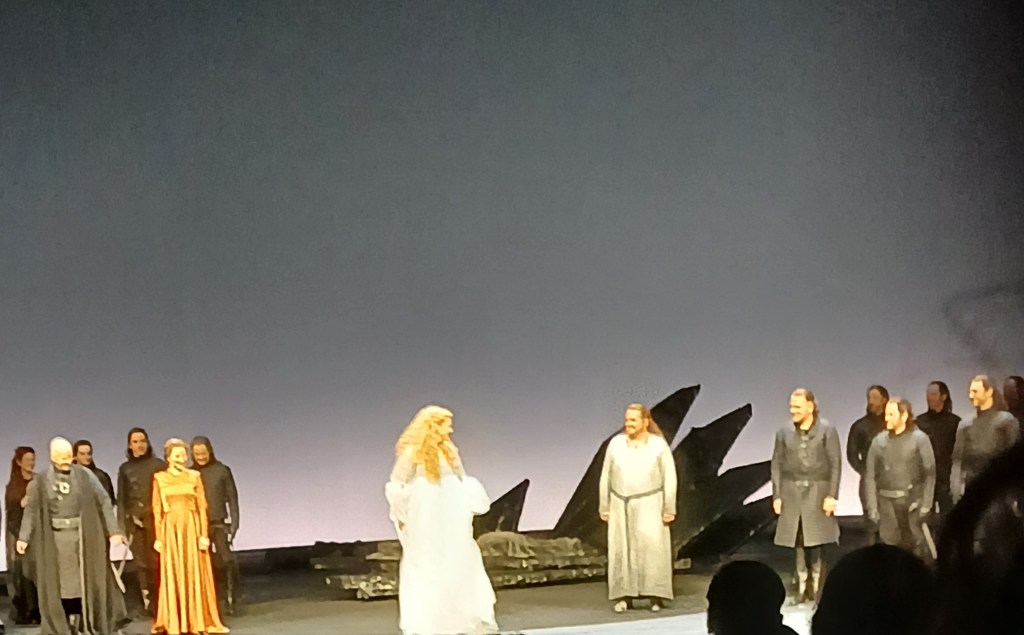
I hadn’t quite appreciated in advance that – though there was an apparently fully serviceable 10 year old production in the Liceu’s repetoire, this was actually a new production – I read in a Spanish newspaper (possibly stirring it) this was because Ms Davidsen wanted her debut to be in a production directed and conducted by women. Fair enough, and the conductor choice worked out brilliantly – the directing etc less so. The production would have gladdened the hearts of those who grumble about regie-theater  . There were no underlying concepts at odds with the music and text, but just a simple telling of the story, and so far so good – this worked very well. King Mark even wore a crown, and there was a love potion! However one felt at times there could have been a bit more personen-regie. The love potion scene seemed clumsily handled – Tristan and Isolde wandering around a bit aimlessly. A few times there was a standard stand-and-bark/two-singers-at-the-front set-up with all eyes on the conductor (though of course musically it was very far from barking). There was little or no set (a la New Bayreuth) – just a stage and a back-screen, and in Act 3 a kind of mirror suspended over the stage. There was some obvious light/dark contrasted lighting, as this is a basic element of the text, but oddly there seemed to be a bright light throughout the Liebestod, which seemed counter-intuitive to me – shouldn’t this be sung to gradually enclosing darkness (like Act 2, which had a lovely starry sky projected on the screen)? When the stage team came on at the end, there was a kind of growl of disapproval, and a certain amount of booing……..

Here’s a clip of all the curtain calls from the Liceu Facebook page – https://www.facebook.com/reel/821117084268049

Anyway, some production oddities aside, which didn’t matter much in the overall scheme of things, this was an outstanding performance. I am so glad I went to Barcelona to see it. Sadly I can’t see Ms Davidsen’s Met performance of Isolde screening on 21 March as I will be at Siegfried at ROHCG that night, but I am hoping to get to a Schubert song recital in late May at the Wigmore Hall

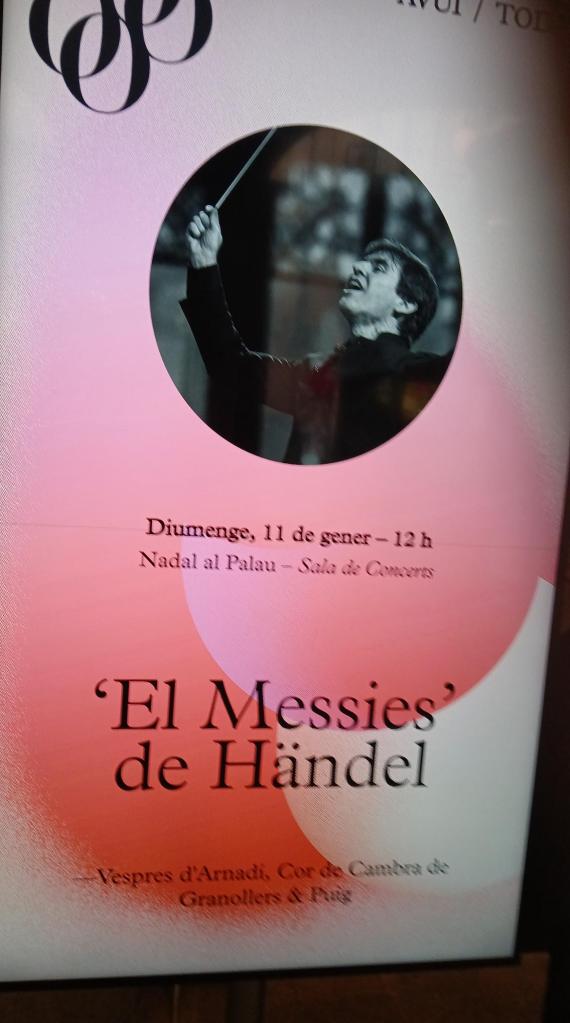
Handel, Messiah (extracts). Palau de la Música, Barcelona. 11/1/26

Irene Mas, soprano; Daniel Folqué, alto; Roger Padullés, tenor; Josep-Ramon Olivé, baritone; Cor de Cambra de Granollers; Vespres d’Arnadí; Xavier Puig, conductor

The principal purpose of my visit to Barcelona was to hear Lise Davidsen singing the role of Isolde for the first time, but I am also taking in this concert of Messiah extracts and doing some sightseeing (I have only ever spent one night in Barcelona before). My trip to Barcelona was smooth apart from the prospect of having to sit next to a very large and furry ginger cat in a basket for 6hrs and 50 mins on a train from Paris to Barcelona. Its owner dearly wanted to cuddle it on her lap but, in my fractured French, I suggested it was not a good idea to let the cat out of the bag (as it were) as my asthma is normally set off by cats after an hour or two. Another seat eventually became available – just in time; I was beginning to wheeze.

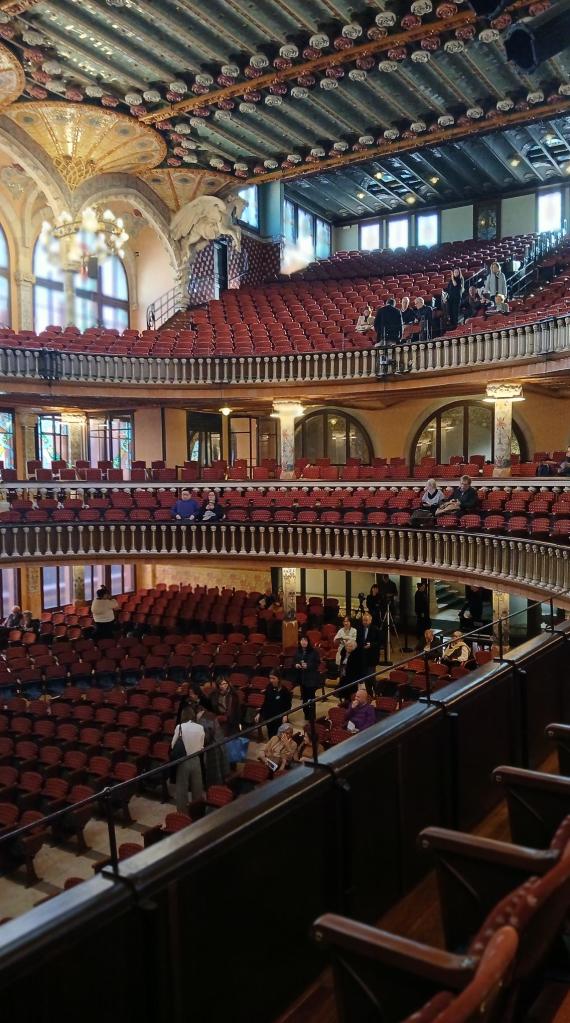
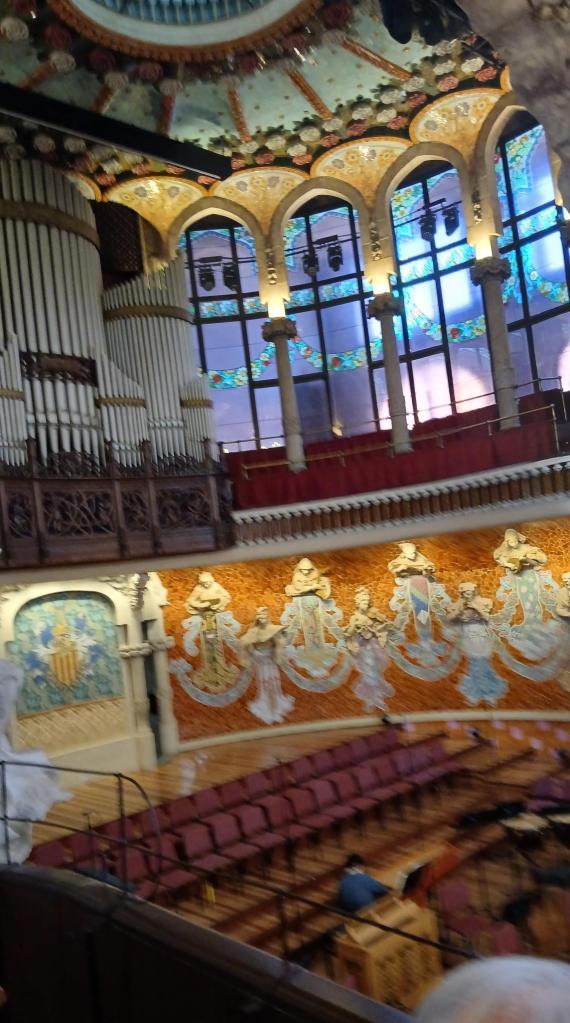
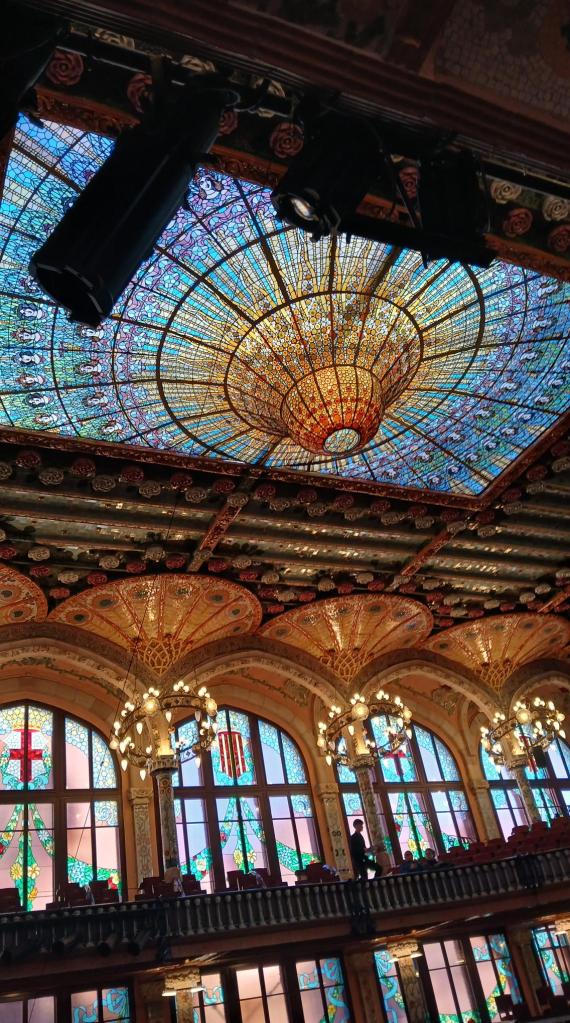
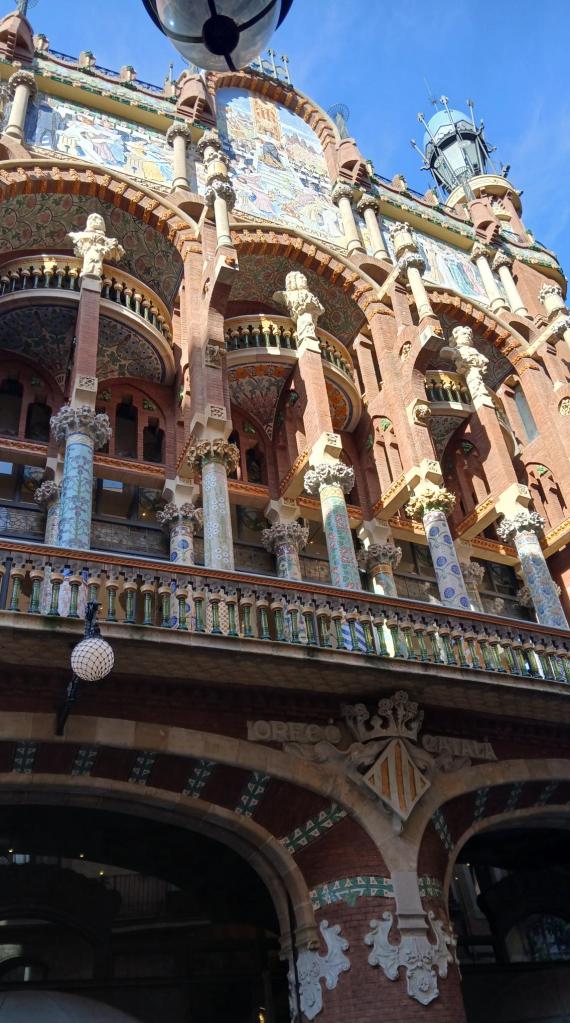
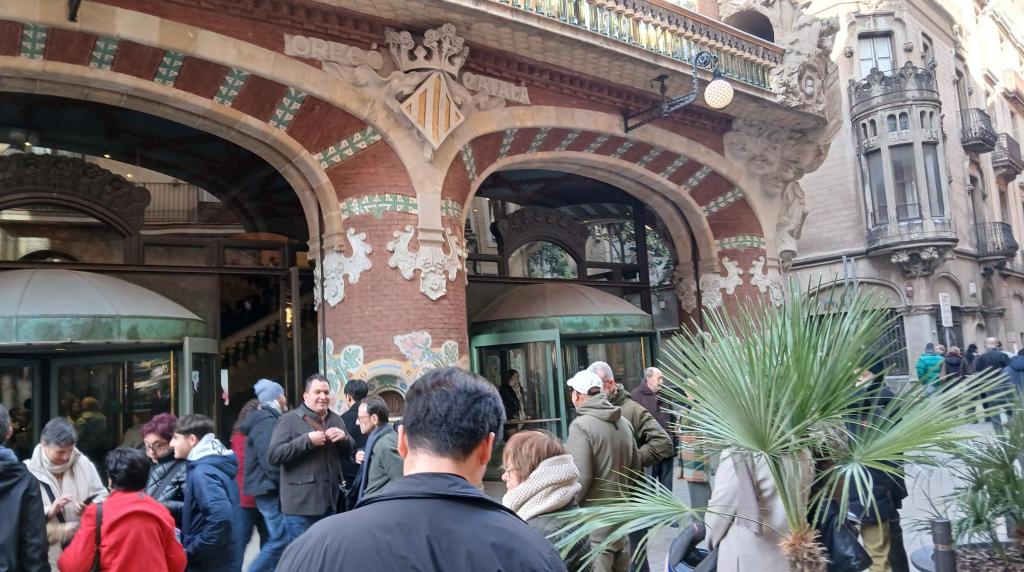
After a pleasant 15 minute walk through the Gothic Quarter to the Pallau de la Musica the next morning, I found myself amazed by the building. I hadn’t read up on it and assumed it was some 60’s/70;s concert hall with carefully thought-out acoustics and bland furnishings. In fact, it’s over 100 years old, and stunning. The concert hall was designed by the architect Lluís Domènech i Montaner – alongside Gaudí one of the most important representatives of modernism in Spain.  Construction began in 1905 and the Palace of Music was inaugurated in 1908. The Palau de la Música Catalana has been on the UNESCO World Heritage List since 1997. It is in art nouveau style, I would have said, and remarkably riveting to look at – the photographs below show the concert hall, and the beautiful ceiling, as well as the chunky quite strange outside of the building.

The concert consisted of about 75 minutes of the ‘Messiah’ with an encore of the Hallelujah chorus.  It included most of the big numbers – some of the recitatives I am sure were left out along with the pastoral music for the shepherds. The band was an expert period instrument one, with some very fine natural trumpeters, and all the energetically alert sound you would expect from Baroque strings. The chorus were about 40 in number and all looked like young professional musicians – they made a powerful impression and the different voice parts seemed well-blended. They sung with good attack and were very much together. I was wondering afterwards whether in fact I had ever heard a period instrument band play this live before – I suspect not, or not so you would notice. The only performances I can remember are amateur performances in Cairo and Accra, and in Autumn 2024 at Westminster Abbey, where the Abbey Choir was used, and, although a period band probably was playing, the soggy acoustics of the Abbey meant that it didn’t come across as such, apart from some highly percussive sounding timpani. I was sitting at the side almost on top of the band in the Palau de la musica and, although I do grumble in these pages about the lack of subtlety and finesse sometimes in period band performances, and the speed with which things are taken, as with the Irish Baroque orchestra, the sheer energy and vivacity of this concert was overwhelming. But more than that, it was carefully phrased and characterised, finding physical shape in Xavier Puig’s conducting , which was constantly attentive and demonstrated a thoughtful grading of the dynamics of the piece. The 4 soloists – a soprano, a counter-tenor, tenor and bass, were all very good – from where I was sitting the counter-tenor seemed to project less intensely than the others but that could just be my problem.

The whole 75 minutes – the work, with its extraordinary fertility of invention and melody, the performance, the setting – felt like a great wave of joy, with the bright winter sunlight shining through the extraordinary windows of the concert hall. This, already, must be on my longlist of top performances for 2026

An English Song Winterreise  Wigmore Hall, 9/1/26

Roderick Williams baritone; Christopher Glynn piano. Songs by Vaughan Williams, Quilter, Dring, Finzi, Bridge, Parry, Gurney, Boyle,  Britten, Williams, Weir, Tippett, Maconchy, Carwithen, Procter-Gregg, Wallen.  

I hadn’t appreciated that the reference in the programme to Winterreise wasn’t just a slightly fluffed up way of describing a gloomy set of English songs with a wintery theme, but very precisely described a set of songs established by Roddy Williams to not only to have the same number of lyrics as the Schubert cycle but also for each English song to be an equivalent in some way or other to the Schubert song at the same position in the cycle. Thus the last song in this cycle – Errolyn Wallen’s Peace on Earth – in its eerie stillness and wide open-eyed brightness (it’s a fine song) elegantly matches Schubert’s Der Leiermann. Mr Williams explained that he first had the idea of putting songs together in this way when he was learning the Schubert cycle in German.  I guess some of the songs you’d choose are fairly obvious – gloomy Hardy poems comprise 7 out of the 24, and Vaughan Williams Songs of Travel are another predictable choice, but there’s also RL Stevenson, Shakespeare Yeats, de la Mare and others. And although the likes of RVW, Finzi, Gurney, Quilter etc provide 14 of the songs, there are also contemporary / non-cowpat songs by the likes of Machonchy, Weir, Wallen and Williams himself. And some composers I’ve never heard of – Ina Boyle, Humphrey Procter-Gregg…… So what’s notable  – as you can see from the list of composers – is the sheer variety of works Roddy Williams is drawing from, and that he includes some well-known pieces  – the Britten Winter Words song, for example –  alongside works completely unknown to me.

All the songs were superbly delivered by Mr Williams, each song well characterised, and with both clear diction and sensitive phrasing. He has a very easy manner on stage, fairly still, expressive hands,  which helps you to focus on the music. His voice has just the right volume range for the Wigmore Hall.

Songs I found I enjoyed particularly, in addition to the Wallen ending, were Williams’ setting of Blake’s The Angel, Ina Boyle’ A Song of Enchantment, RVW’s Linden Lea (parallel to Der Lindenbaum) and two Finzi/Hardy settings – In a Churchyard and Waiting Both.

There was a brief encore – a Schubert setting of Goethe, with a sense of final peace. This was a very fine evening  – a great musical start to the New Year….It was a full and very enthusiastic house, too. Williams always has lots of very vocal fans!

Thalassa Piano Trio, Regent Hall, 9/1/26

Thalassa Piano Trio. Beethoven, Piano Trio Op 70, no 2; Babajamian, Piano Trio  in F# minor

As often has been the case over the past few years, I have found myself planning to be at a Wigmore Hall recital – because there’s always something interesting happening there – the night before setting off on the Eurostar the following morning for another European opera/concert trip. The trip this time is to Barcelona – see above for posts next week – but the Wigmore Hal recital by Roddy Williams was a programme that looked very well worthwhile listening to in its own right, and I might have come down for it even if I wasn’t going on to Paris the next morning.

However, this time planning went slightly awry, and the force of Storm Goretti, which closed all railway lines near my home from 6pm on 8/1 to Saturday 10/1,  meant that I had to come down a day earlier to London than planned. That had various negative consequences financially, but one pleasant result was being able to go to this lunchtime concert.

I had never been in the Regent Hall before – it is a fine building, run by the Salvation Army with a café and advice centre as well as a large auditorium which the SA use for Sunday worship but which has extremely good acoustics – lots of wood around – and is excellent for recitals, holding maybe 300-400 people. Curiously it is right in the middle of Oxford Street, on the other side of the road from John Lewis.

The Thalassa Trio is multi-national (hence the title – people coming from both sides of the Atlantic) but formed at the RAM. To my surprise I discovered beforehand I only had a recording of the Beethoven ‘Ghost; and ‘Archduke’ piano trios and had never heard the Op 70 no 2 piece before. In 4 movements, it is a very attractive work – with a slow haunting introduction  (poco sostenuto) almost offering a glimpse of the world of the late quartets and some very fine broad striding Beethovenian melodies, particularly in the third and fourth movements. The players gave it lots of energy – which is right – though from where I was sitting the violin was occasionally a bit over-powered by the cello. But I enjoyed this enough to listen to it again on Youtube when I got back to my hotel in the afternoon. A nice find!

Arno Babajamian was a completely new name to me – a Soviet-era Armenian composer, a bit younger than Khachaturian, and writing in a variety of styles – popular music, film scores but also ‘serious’ music. He apparently often uses Armenian folk tunes (as a good Soviet composer would have been expected to do). The work is frankly not that interesting –  some Rachmaninov touches, occasional hints of Shostakovich. It had a particular problem in knowing when to stop in the first and third movements, where things seemed to judder to an abrupt halt rather than emerging from an organic process. The second movement was lovely, though.

Live concert and opera highlights I have been to in 2025

It’s been another extraordinary year for high quality classical music performances I’ve attended. These are my top ten performance highlights, in no particular order:

1.           Mahler Symphony No 2: Wong, Halle, Bridgewater Hall

2.           R.Strauss, Arabella:  Runnicles, Deutsche Oper Berlin

3.           Wagner, Die Walkure: Pappano,. ROHCG

4.           R.Strauss, Die Liebe der Danae: Bayern Staatsoper, Schager/Bystrom/Maltman

5.           Mozart, String Quintets K515/516: Takacs Quartet, Wigmore Hall

6.           Puccini, Suor Angelica, Pappano, LSO, RAH Proms

7.           Turnage, Festen: Gardner,  ROHCG

8.           Adams, Harmonium:  Adams, Halle, Bridgewater Hall

9.           Strauss, Salome, Grigorian, Pappano,  LSO, Barbican

10.         Mozart, The Marriage of Figaro, ENO

It was difficult to choose these ten. There were so many others I could have chosen – a powerful Brahms 4 with Rattle, and LSO, in January along with Janacek’s Jenufa at ROHCG conducted by Hrusa. I loved the Beethoven 9 the Halle performed with their talented chief conductor Kahchun Wong in February, along with the excellent Regents Opera performance of Walkure in Bethnal Green. March saw some superb performances – the Bartok Concerto for Orchestra, with the Berlin Phil and Hrusa, alongside Strauss’ Intermezzo, at the Deutsche Oper Berlin. It was very good indeed to hear another live Mahler 8 after 5 years, conducted by Ed Gardner with the LPO in April.  There were a number of excellent Handel opera productions, notably Semele, at ROHCG and Partenope, at ENO. At the Proms, there was one of the best Beethoven 7’s I’ve ever heard (Budapest Festival Orchestra / Ivan Fischer) and a jagged exciting Sibelius 2, with the Leipzig GO, and Andris Nelsons, while Anna Netrebko was unforgettable in December’s Turandot, and there was an excellent performance of Die Schweigsame Frau in Berlin, with Thielemann conducting, in July

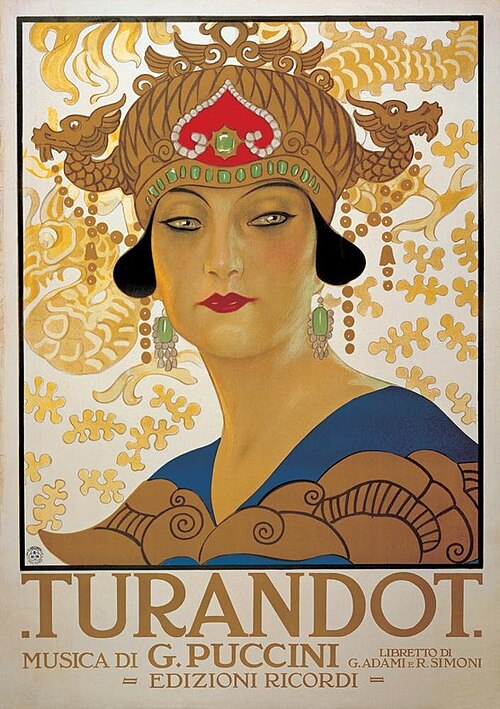
Turandot, Puccini – ROHCG – 18/12/25

Director, Andrei Șerban; Designer, Sally Jacobs; Lighting designer, F. Mitchell Dana; Conductor, Daniel Oren. Cast: Princess Turandot, Anna Netrebko; Calaf, Yusif Eyvazov; Liù, Masabane Cecilia Rangwanasha; Timur, Rafał Siwek; Ping, Simone Del Savio; Pang, Emmanuel Fonoti-Fuimaono; Pong, James Kryshak; Emperor Altoum, Raúl Giménez; Mandarin, Ossian Huskinson

I spent my day in London partly at my laptop, partly doing some shopping, before going to Choral Evensong (some very fine Palestrina) at St Paul’s Cathedral and then on to Covent Garden for Turandot. I’ve seen this production once before, in 2017. It is one of Covent Garden’s most venerable ones – at least 40 years ago – but it still looks very good., and much less silly than the equally venerable Met Zeffirelli offering I saw on screen a few years ago. I thought at that time that I had probably had enough of live Turandot performances for the foreseeable future, but I reckoned without the return of Anna Netrebko to the Covent Garden stage. I have heard her only once live before – as Tatiana in Eugene Onegin in Vienna in 2015 – and I was fascinated to see how she would perform Turandot and whether her voice was right for the role.

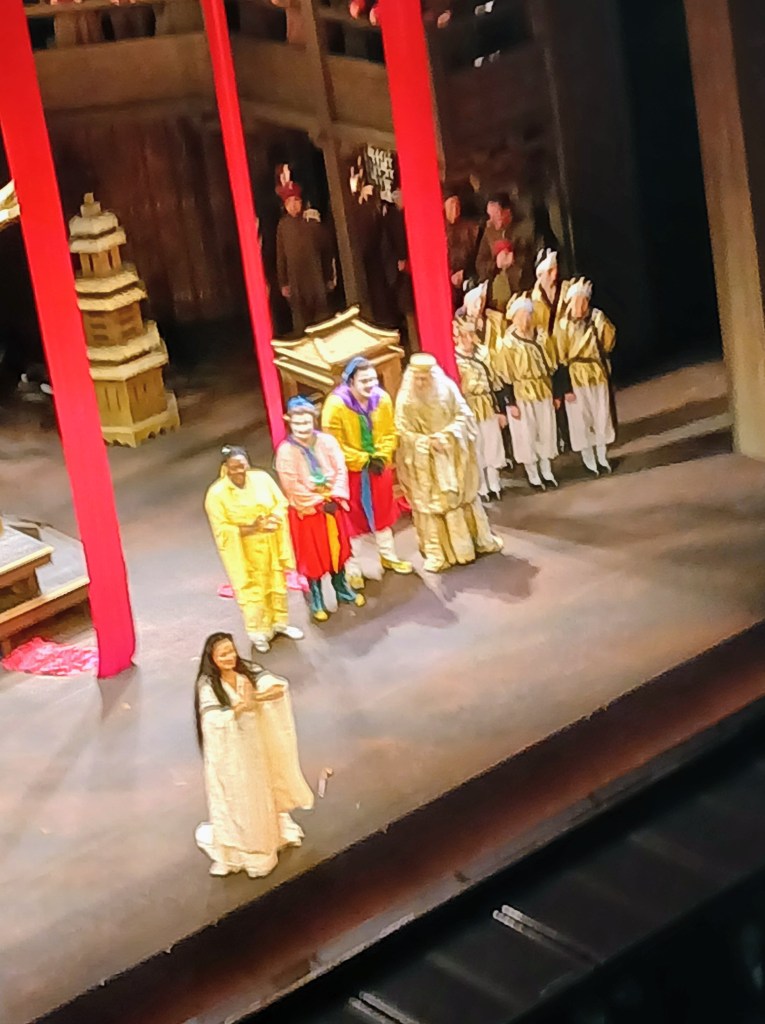
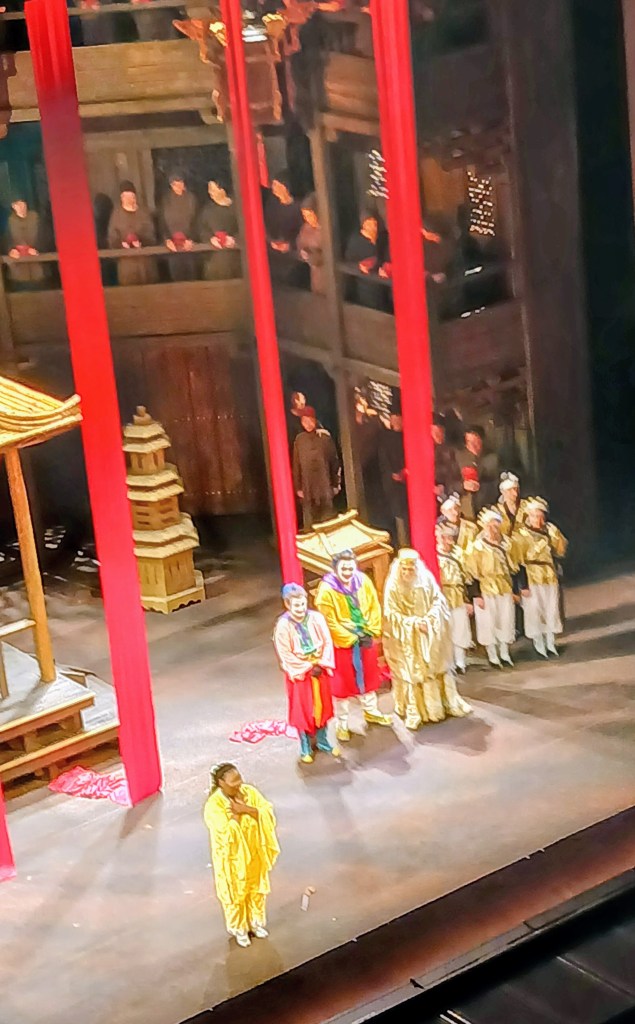
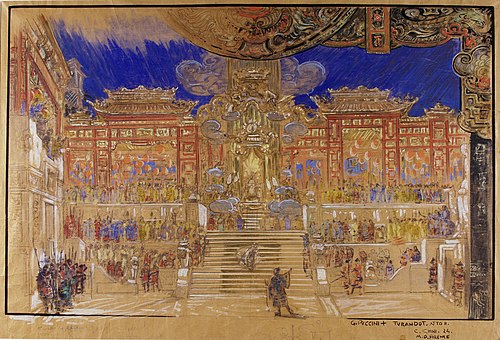
I realised that apart from possibly in the 70s (did I see Nilsson in this role? – I seem to remember the Cecil Beaton sets but think it was probably Amy Shuard in 1973), I have only seen Turandot live that once, in 2017. And I also realised that, while I know the famous parts of the music from recordings, I don’t know the details of the plot and what the characters are doing in any detail. I found this performance gripping throughout until after the death of Liu. It may be 40 years old but it is a tremendous show, with its dancers, masks, carts and chariots, red ribbons flying down, huge cut-off heads,  the emperor coming down from Heaven, the floating moon and the towering sets. It is never over the top in the Met manner and the masks, the emphasis on the blood and cruelty, made the setting sinister, not just a tawdry bit of early 20th century Orientalism. The agony of the Chinese people under the terrible regime of Turandot is emphasised – I had never really picked up on the desperate choruses before. Although I suppose cultural appropriation is involved, the production seemed less disrespectful than the Met one. In fact, at the end of the 2nd act, I was in a state of high excitement – this must really be, I thought, one of the best things I’ve been to this year. However, as I guess in every production of Turandot, you cannot hide the fact that what happens after .the death of Liu in Act 3 – which was where in completed full score Puccini left the work when he died – is a bit of a mess, musically and dramatically. The Wikipedia article on Turandot suggests there is still Mahler 10/Elgar 3 type work to be done on Puccini’s sketches, beyond what Alfano reconstructed; there are also bits Alfano did complete which Toscanini (?) cut and aren’t always heard in modern performances. Whatever further work might be done, the ending is dramatically unconvincing and musically seems to tread water. Perhaps the fault lies with the librettists – I think Puccini was on the 4th version of the text when he died, but he had spent months trying to wrestle with the issue of how Turandot changes from ice-princess to a more normal human being. Perhaps it should have been Turandot who dies and not Liu……? Until the death of Liu, I was constantly amazed by the colour of the score and how attuned it was to the work of Puccini’s contemporaries – there’s flecks of Debussy, Stravinsky and Mahler to be heard, but all recast into something immediately recognisable as Puccini. After the death of Liu I found my enthusiasm flagging and felt increasingly disengaged.

Anna Netrebko was simply tremendous as Turandot. She has the classic operatic superstar ability to make you focus on her every move and she commands the stage whenever she is on it. Martin Kettle in his Guardian review puts her in the Callas/Sutherland league. I never saw either of them, so can’t comment, but certainly she has that same magic that some singers I have seen – Janet Baker, Boris Christoff, Birgit Nilsson – possessed. Her voice was much more powerful than I was expecting, pinging out the top notes, and with an impressive lower register. I heard little of the Slavonic vibrato I was also anticipating. What I did hear was acute attention to words, to phrasing, to line, so that everything she sings sounds freshly minted. Her rendition of the riddles was astonishingly detailed and imaginatively sung, and In questia reggia was overwhelming. This was, simply, a great performance. 

Masabane Cecilia Rangwanasha is no great actor, but her Liu was beautifully and thoughtfully  sung, she was sensibly costumed and was a worthy counterpart to Netrebko on stage. About Yusif Eyvazov (Netrebko’s ex….) as Calaf, I had mixed feelings. He’s a thorough professional and Nessun Dorma was sung with all the heft it needs; he’s also quite a competent actor, and can use face and stance intelligently to emphasise what he’s singing. His voice is un-Italianate (fair enough, he’s Russian) and decidedly gravelly – there wasn’t much lyricism in his singing, but, I guess, if you have to balance heft against lyricism for this role, heft probably wins out. Ping, Pang and Pong made more sense than they did to me 8 and a half years ago, and I thought the way the trio worked together and got their lines across was very effective – it helped that one of them could do somersaults……Timur and the Emperor were well sung, and I should mention also the dancers, who have a lot to do in this production and have a major role in making it imposing, were tremendous.

Reviews of Daniel Oren’s conducting on the first night were universally negative – it was said he made the orchestra play too loudly and too insensitively. For me, it was good enough – the Lower Slips inevitably highlights the orchestra’s role (you’re almost sitting on top of them, though from a distance) and the voices didn’t seem overpowered by how the orchestra played this wonderful score.

Here’s a short trailer which gives a further sense of what the production looks like – Turandot