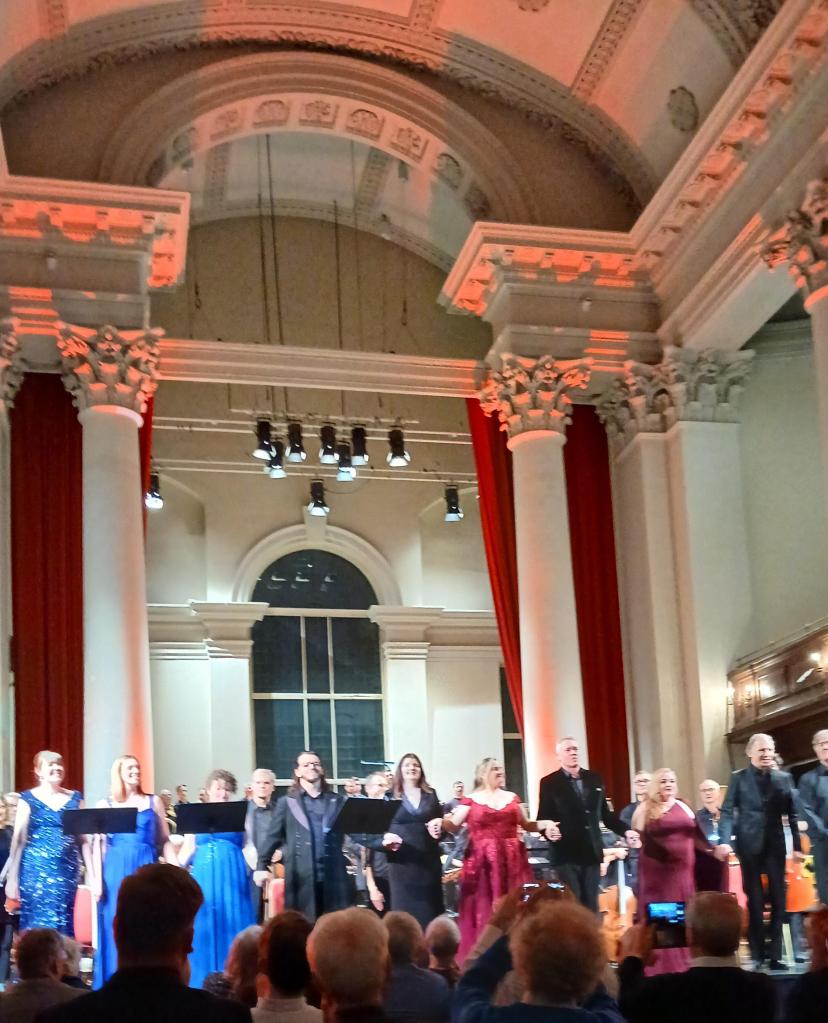
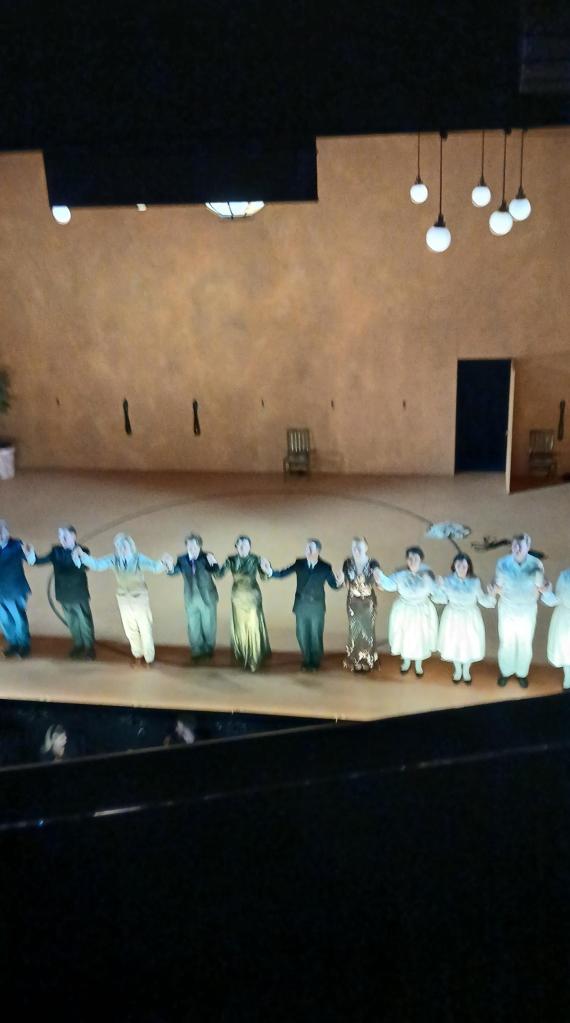
Director, Katie Mitchell; Costume Designer, Sussie Juhlin-Wallén; Lighting Designer, James Farncombe; Set Designer, Vicki Mortimer; Video Designer, Sasha Balmazi-Owen. Emilia Marty, Ausrine Stundyte; Albert Gregor, Sean Panikkar; Baron Jaroslav Prus, Johan Reuter; Dr Kolenatý, Henry Waddington; Vítek, Peter Hoare; Janek, Daniel Matoušek; Count Hauk-Šendorf, Alan Oke; Krista, Heather Engebretson; Stage door woman; Susan Bickley
Of the mature Janacek operas, it’s now only From the House of the Dead I have never heard…..This is, I think, the third production I have seen of this work – the first was an ENO one with Mackerras in the 70’s, the second was a very fine performance by WNO about 3 years ago in a joint production with Scottish Opera.
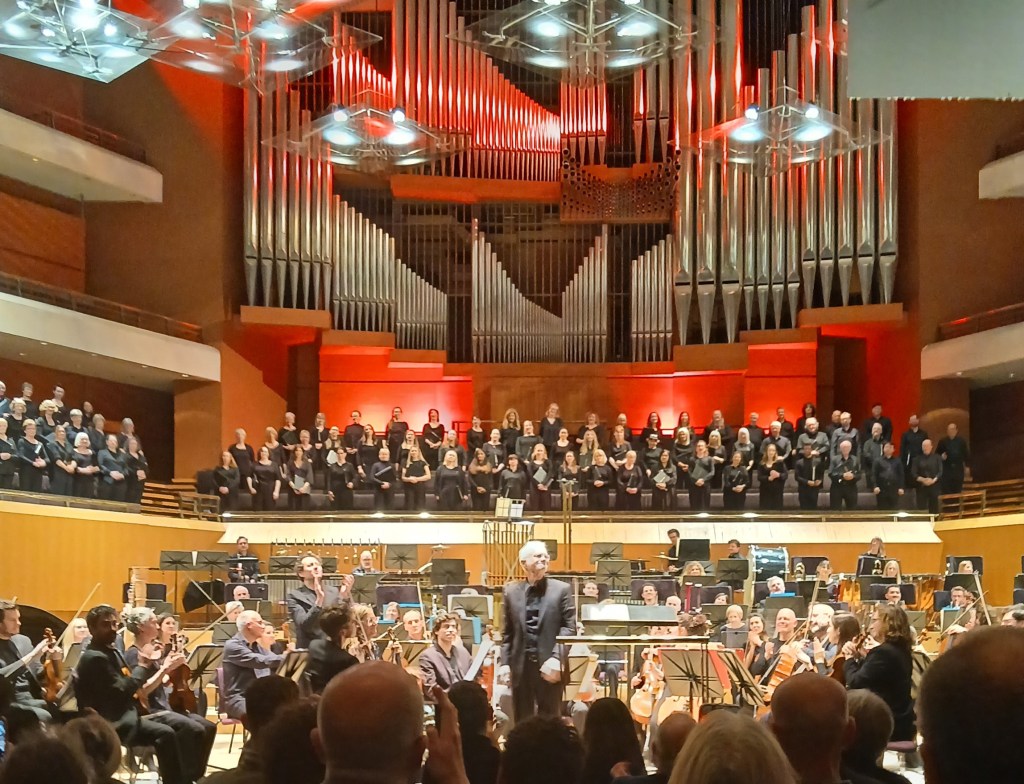
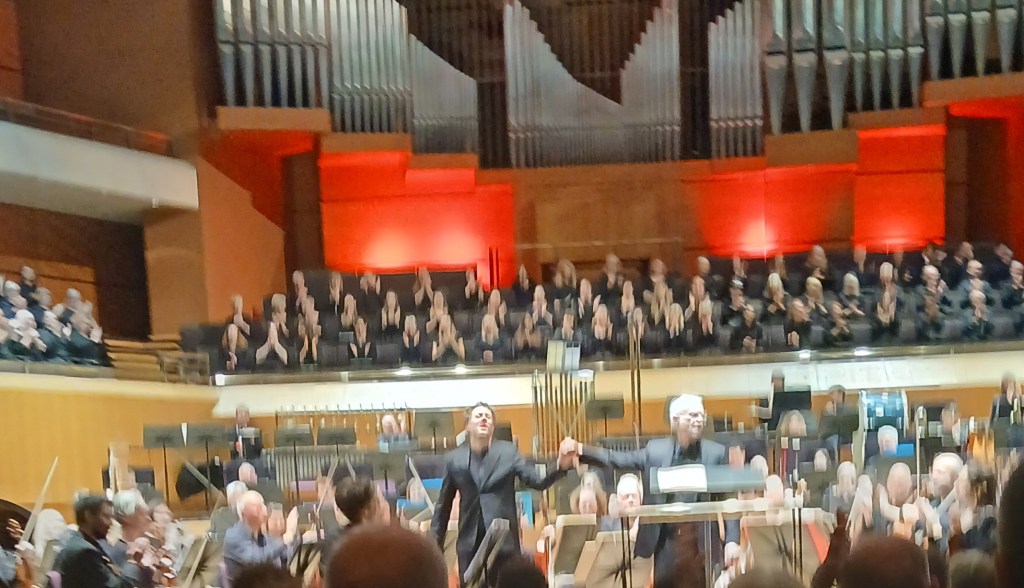
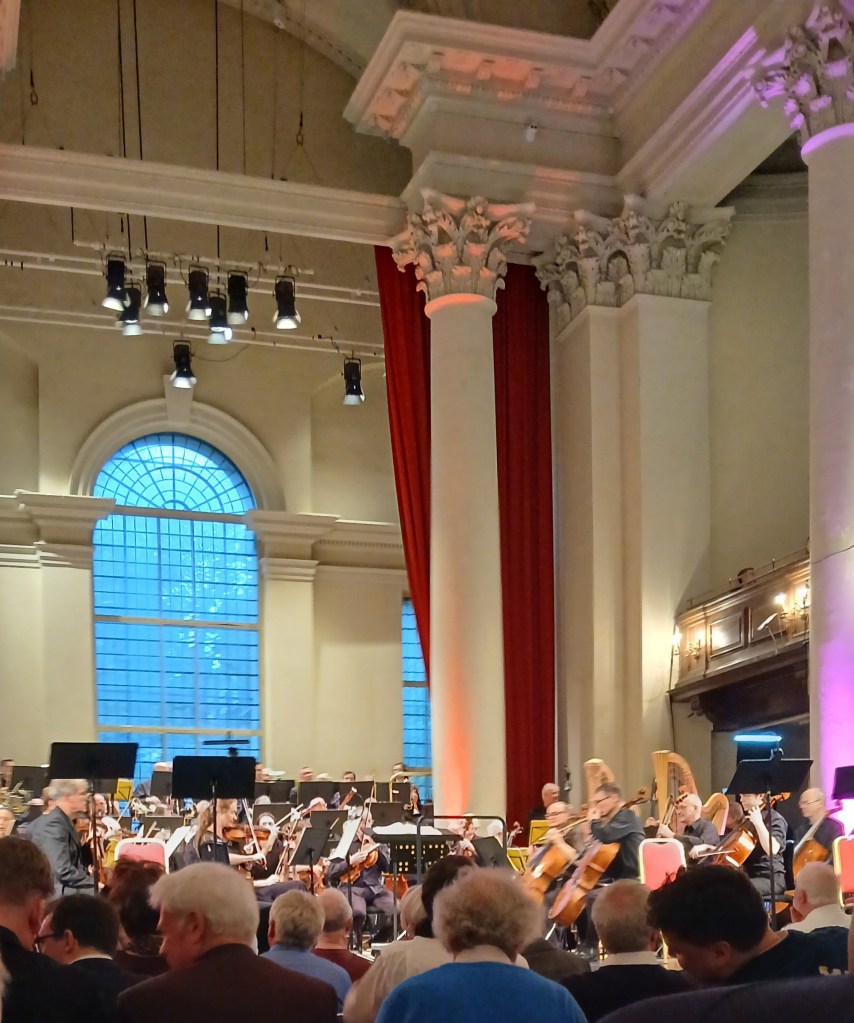
Reviews of this new ROHCG production were mixed, as far as what was happening on stage was concerned, but all agreed on its musical merits. The more I hear The Makropoulos Case, the less it seems outlandish and the more i find to enjoy. There were splendid, even great, aspects to this performance and some other areas where things didn’t go quite as well. Foremost amongst the very positive things were the playing of the orchestra, with Hrusa as conductor, and Ausrine Stundyte’s towering performance as Emilia Marty/Makropulos etc (hereafer EM). The orchestral playing was glorious. The score, which I have only heard a few times, is more lyrical than I remembered, and the strings produced sweetness and intensity for the emotionally charged passages. The combinations of instruments are sometimes quirky but one felt an inherent rightness about the balance achieved in those moments in this performance, obviously benefiting from Hrusa’s long association and detailed knowledge of the work. I recall some particularly subtle and impressive horn playing. At the same time when, as in the prelude to Act 1 , there are outbursts of energy, these were performed with great brilliance and accuracy. The, in the context, eerie and unworldly sound of the viola d’amore to suggest the iciness of EM’s personality and her inner life was wonderfully done. Hrusa and his musicians seemed to be having a love-in at the beginning and end of the performance – Pappano is no easy act to follow, and it is very heartening to see such mutual respect developing between Hrusa and his orchestra.
Ausrine Stundyte was outstanding as EM. Her tall glamorous presence was ideal for the role, and she delivered the challenging task of making her stage presence one of infinite hauteur and infinite boredom while still keeping the audience’s fascination and attention. Vocally she was ideal – a bright strong voice (I saw her as an excellent Elektra at ROH a couple of years ago) which could be coloured to present her quiet, weary, and sad asides effectively. There were no weak links among the singers – Sean Pannikar and Johann Reuter were particularly effective. Hrusa praised Henry Waddington on the “Insights” stream for his idiomatic Czech.
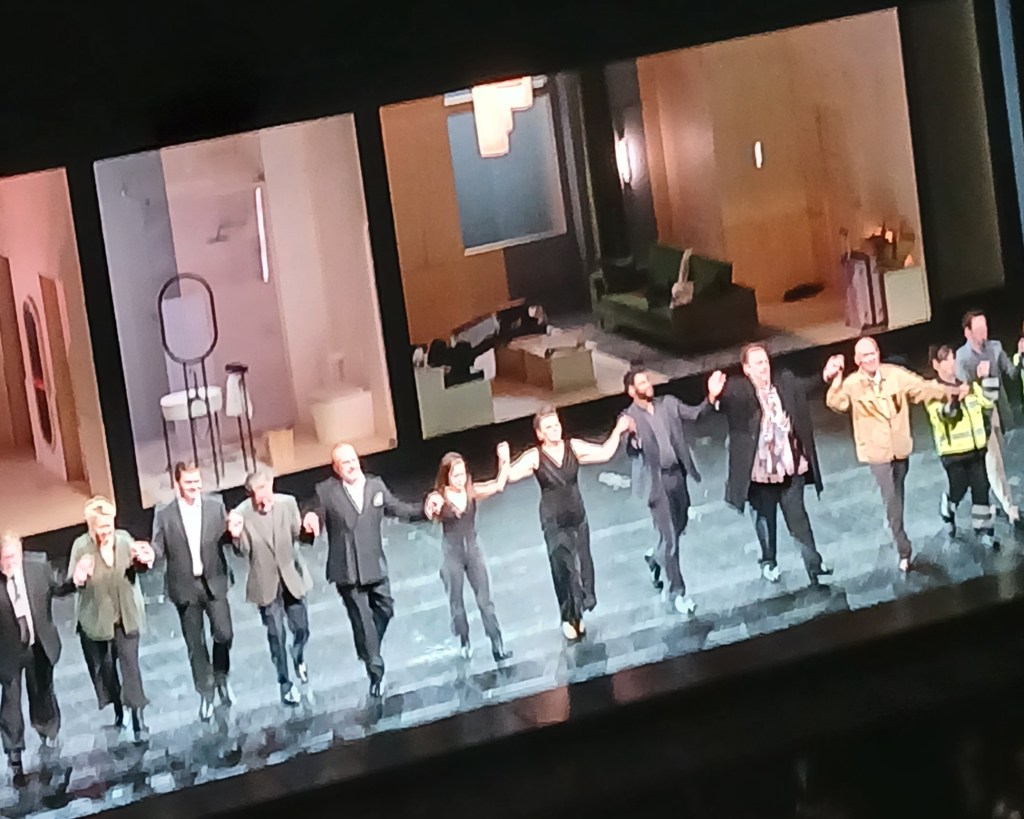
The director’s concept was of a work which was wholly contemporary in focus. This worked very well – the sets, the costumes, and the acting of the singers, all reflected this admirably. An enormous amount of work must have been done with the singers to get them moving and reacting to each other so normally, and this meant that the complicated to-ings and fro-ings of the plot, with all the details of the will, in Act 1 seemed entirely understandable. So far so good…….
Unfortunately, while direction and stage pictures made for an effective contemporary setting, and huge efforts had been made to create believable characters on stage, the problem with the production was that it was cluttered in ways which did not help our, or at any rate my, understanding of what was going on. The introduction of a lesbian relationship between EM and Krista is not too much of a complication, though what it adds to the main themes of the work is debatable. What did add unnecessarily to the complexity was the displays of texting, below the surtitles, going on between EM and Krista, Krista and Janek and Krista and her Dad. The Krista and Janek exchanges at least allowed Krista’s rooting around EMs hotel room, and all the memories of over 400 years to be displayed to the audience, but on the whole it was just confusing to cope with so much going on at the same time. There were various changes to stage directions in the last two acts – Krista shoots Janek rather than Janek killing himself, and Krista keeps the everlasting life formula rather than its being destroyed. These were not particularly bothersome – the main problem was the two-sets-at-a-time on stage approach, which restricted room for action and movement. This was particularly an issue in the last act (when in fact three different rooms were on display). EM’s bedroom on stage was far too small to allow her the space to die dramatically and appropriately, and accommodate the 4 or so people who have to witness it. From where I was – second row Upper Circle – it was sometimes difficult to see what was happening. The WNO/SNO production handled the demands of this act far more clearly, with a huge bed with sail-like curtains. Nor was there any attempt to represent EMs sudden ageing (very effectively done, again, by WNO/SO)
So this production, while its focus on the contemporary may well attract people who are not normally opera-goers (and from conversations overheard there were definitely young people in that category in the house), confused more than it enlightened. But its musical and acting strengths redeemed the clutter.


 John's musical journey