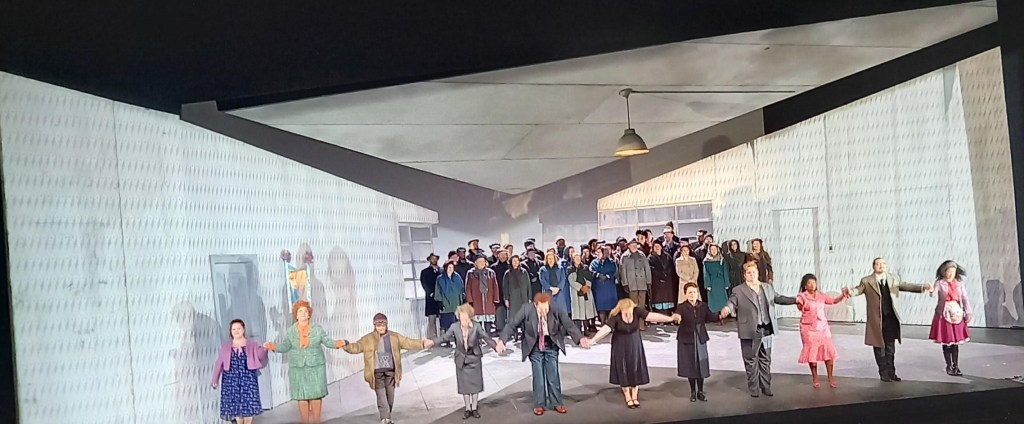
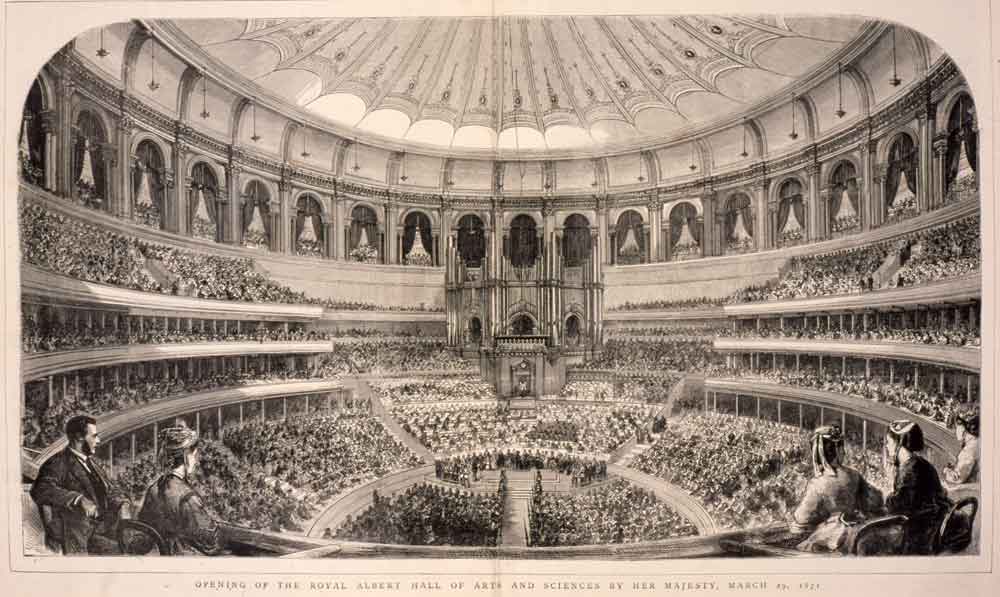
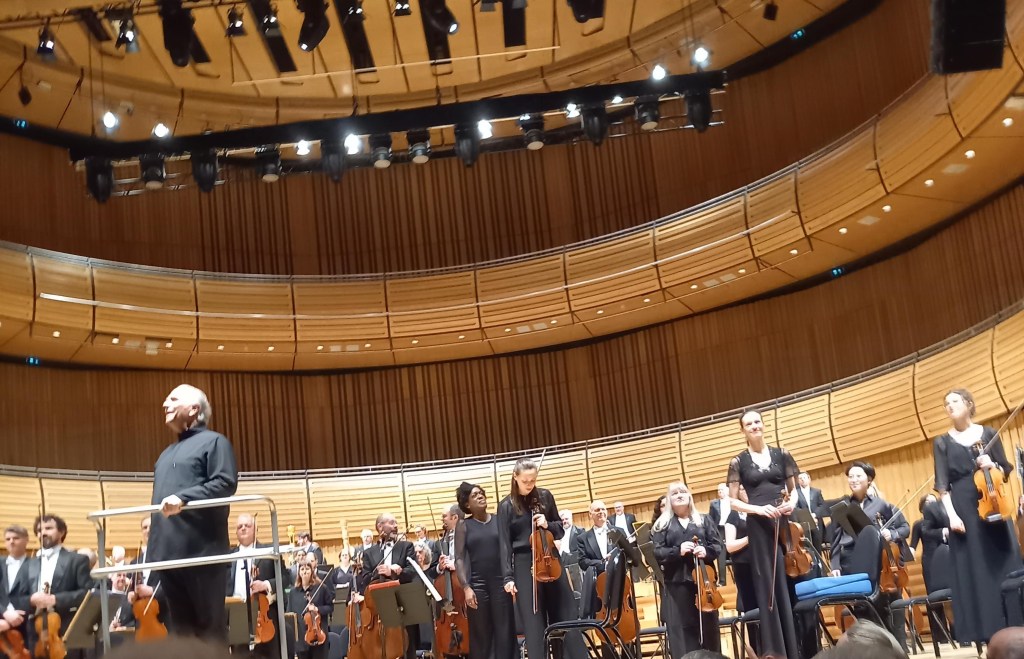
Boston Symphony Orchestra, Nelsons: R.Strauss, Prokofiev – RAH Proms. 25/8/23

Julia Adolphe Makeshift Castle (European premiere); R. Strauss Death and Transfiguration; Prokofiev Symphony No. 5 in B flat major. Boston Symphony Orchestra – Andris Nelsons, conductor

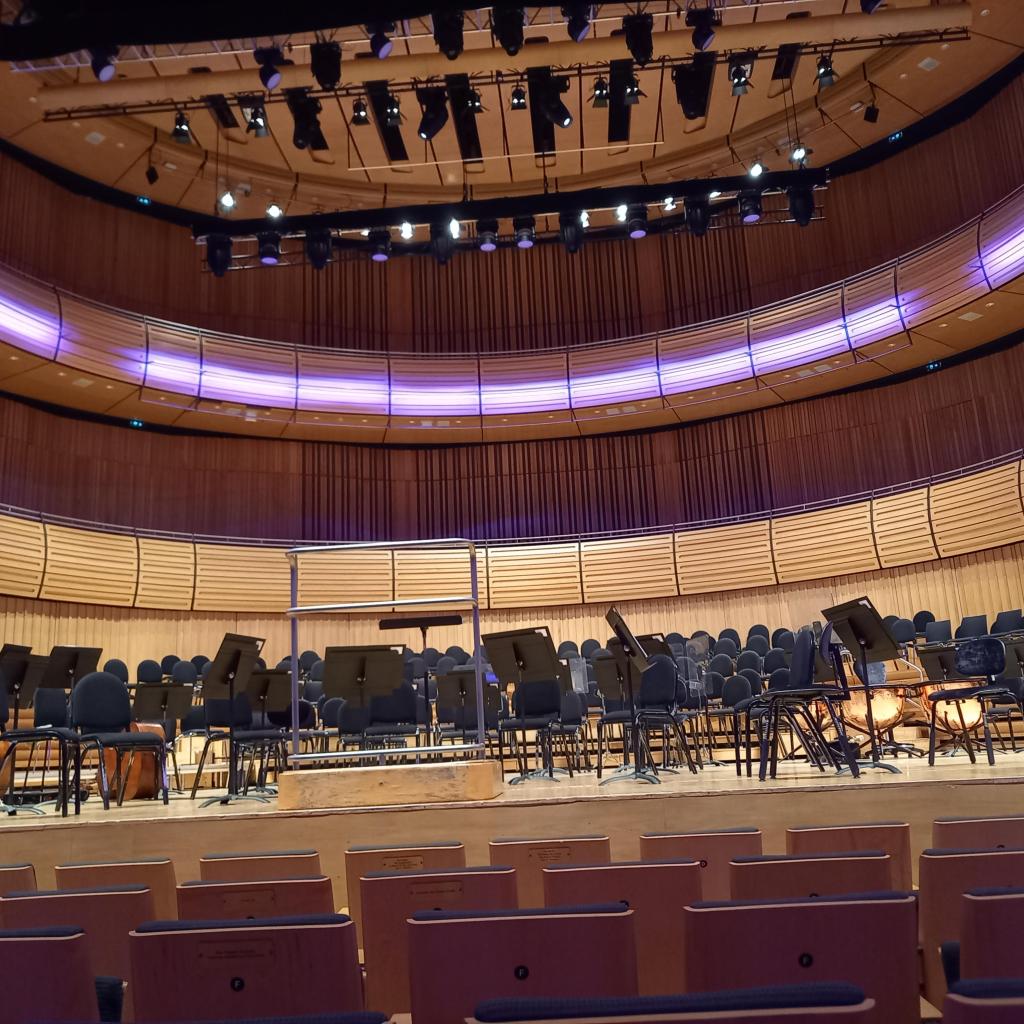
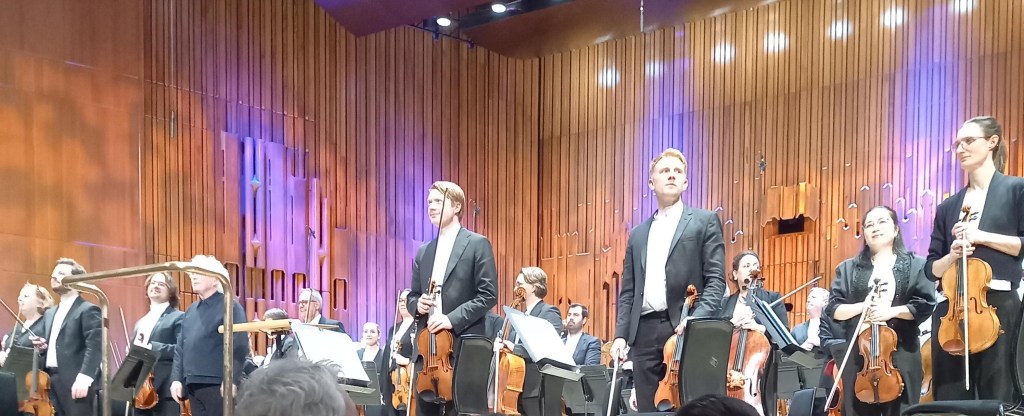
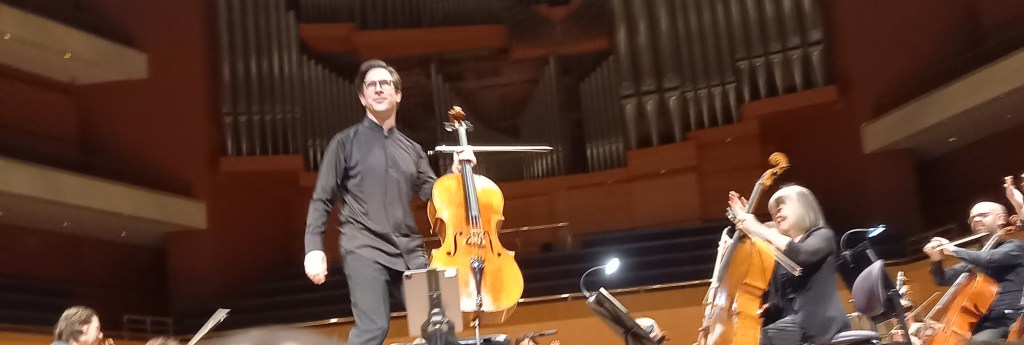
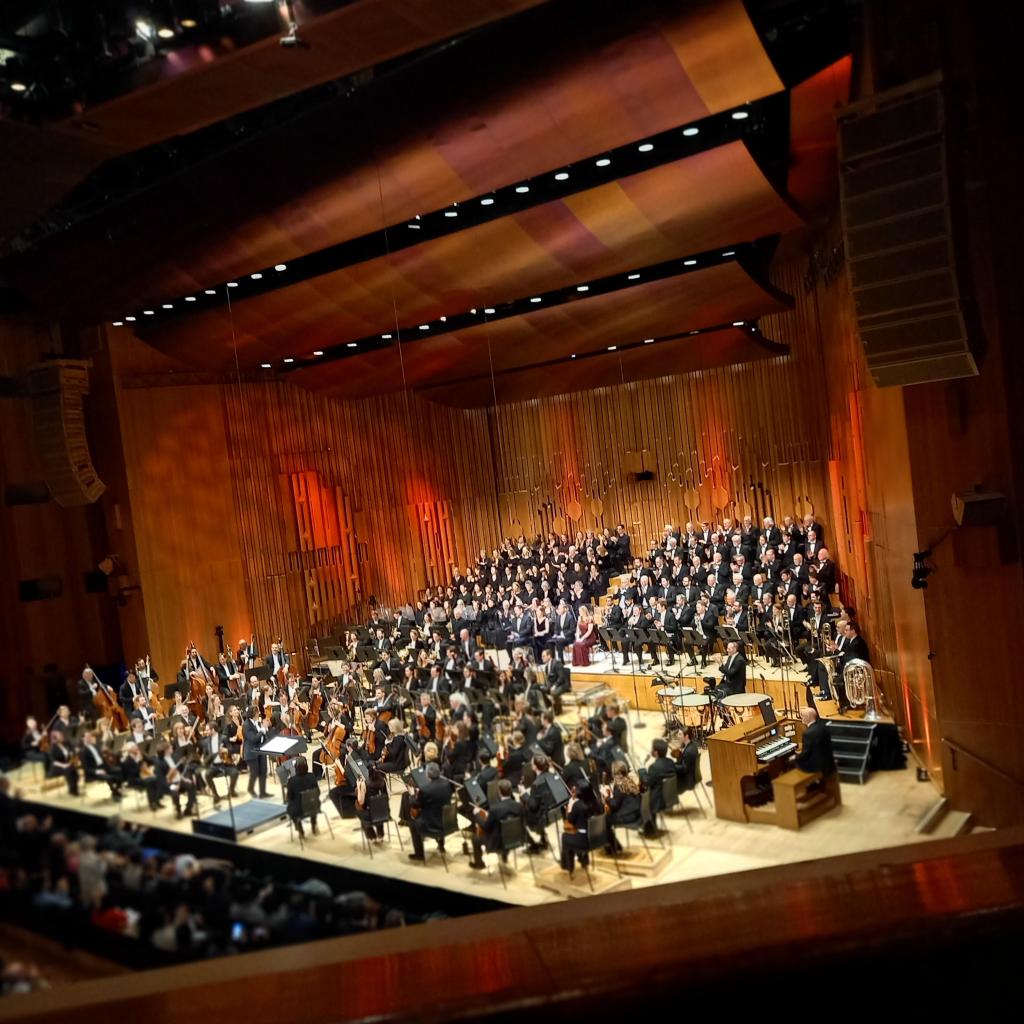
 Three months after seeing him conduct Mahler 8 in Leipzig, it was good to see Andris Nelsons looking healthier at this Prom than he did back then. He had lost weight, walked relatively quickly to the podium, and conducted energetically (although he did seem to bring his own podium with him). This is good news concerning an extremely talented young-ish (as the breed goes) conductor. The hall was pretty – though not completely – full  (the following BSO concert the next day is sold out). I had a family next to me in the Arena consisting of 4 small children under 10 and three adults – very brave to take such small children to a long concert. I take my hat off to the grown-ups for keeping the children relatively silent – the oldest of them was bopping along in the faster rhythmically energetic bits of the Prokofiev – or asleep throughout the concert despite occasional rustling of sweet papers – I think promises of ice-cream at the interval helped in the first half………….

I am not sure I’ve heard the Boston Symphony live before – their appearances at the Proms have all been when I was away overseas or on holiday. As you would expect, they sound very fine indeed – almost a cliché of how American orchestras are ‘meant’ to sound – full-bodied bright sound, immaculate ensemble, bright brass, stunning woodwind, and a string sound that is warm without having the lustrousness of the big German orchestras. And it’s large – 10 double-basses, I counted.

The first, Julia Adolphe, piece I wasn’t’ hugely taken with, though I enjoyed the second movement. It combined reflections on past and present, meditating on the first time she saw her father cry and her first memory of a beautiful sunset. The first movement didn’t really convey to me any sort of childhood memory in musical language and thematic material, sounding ‘merely’ threatening. The ending was lovely, though. The work overall was approachable, listenable to and I’d happily hear it again (though didn’t get the relevance of the title).

I remembered again Stephen Johnson’s before-concert talk in Leipzig when he described (not a story I’d heard before) Mahler and Strauss having a bet that each of them would write a piece about death and the after-life. Mahler produced Totensfeier (eventually becoming the first movement of the 2nd Symphony) and Strauss wrote Death and Transfiguration (aged 25). I first got to know this piece in an old Furtwangler HMV recording and oddly it is the first time I’ve heard it live. I’ve always loved it, though over the years I’ve seen how comparatively superficial it is compared to Mahler’s part of the wager, how relatively almost cynical in its adoption/manipulation of particular harmonies and the certainty of its outcome. But it is brilliantly put together and I always love listening to it. The performance was stunning – a most beautiful oboe solo in the opening, a lovely violin solo, powerful brass and dark cellos and double-basses, and soaring upper strings at the end. The orchestral power unleashed at the climaxes of the protagonist’s struggles and the end of the piece (taken more slowly than some I’ve heard) was quite something……..

The best performance I’ve ever heard live of Prokofiev 5 was by Gergiev and the LSO in 2011. I have to say this one was at the same level of achievement – a wonderful performance. As I listened to the music. I found myself thinking – how DID Prokofiev get away with this? How did he convince the Soviet nomenklatura that this was a celebration of Russia’s turning round of the German invasion, the likely victory and the ‘greatness of the human spirit’? That may be part of Prokofiev’s aim, but there seems to be a constant undermining of this positive spirit – the dance music in the scherzo and finale which sounds ironic, like dances being led by mechanically-moving marionettes, and the distance, the sadness of the third movement, together with the terrifying madness of the cartoonish ending, like one of those Bugs Bunny films where they all go over the top of the cliff, run along the air for a bit and then plunge into the abyss; all these elements feel to me to be undermining the ‘nobility’.

I thought Nelsons shaped the first movement brilliantly, with a very careful grading of climaxes, quite moderately paced (but then it certainly isn’t marked as allegro). The second movement was also less than frantic, at a pace which to me allowed more pointing, more of the mordancy to come through, more of the terrors lurking behind the jolliness, though some critics I think felt it was too soft, not pointed enough! The slow movement has that Romeo and Juliet sound at its beginning, but without human beings dancing, the overwhelming effect is of something distanced, behind a gauze, Miss Haversham-like – I find the waltz theme coming in after a couple of minutes one of the most haunting themes I know. The finale was brilliantly done, with the percussion excelling themselves!

BBC SO/ Oramo: Weir, Schumann, Elgar – RAH Proms 24/8/23

Judith Weir: Begin Afresh; world premiere; Schumann: Symphony No. 1 in B flat major, ‘Spring’ ; Elgar: Violin Concerto in B minor. Christian Tetzlaff, violin; BBC Symphony Orchestra; Sakari Oramo, conductor

 I hadn’t intended to go to this, though I thought it looked like a good Prom – however, for various reasons I can’t go to Rattle’s Mahler 9 on Sunday (not such a huge loss. I have heard him perform this with the LSO before, and it is being televised, plus I heard a superlative account of the work in Leipzig three months ago) so this concert seemed a good way to replace it at a time when I was available.  I got a last minute Choir seat right at the back and near to the organ, so a bit problematic for the violin concerto in prospect…….I plan to stand for the two Boston Symphony concerts and have taken an arena seat for the late night Bach concert.

I really enjoyed this concert, and, actually, being right at the back of the Choir is probably preferable to being at the front, overwhelmed by brass, timpani and percussion.

The Weir piece was about trees, and their progression through the seasons, starting in April and ending in February, with a particular richness in October in the central part of the work (about 15 mins in all) and tougher sounds, ushered in by a piano, where the movement of the roots and the winter winds are portrayed. I am not sure the ending was successful – it seemed simply too abrupt. It was very accessible, though (or perhaps that’s an ‘and’?) reminds me of Bax, Britten and even Vaughan Williams at times. I would like to hear it again.

I am not sure I have ever heard Sakari Oramo conduct live before. Sitting in the choir, it was noticeable how clear his beat was and how energetically he encourages the orchestra. I am pretty sure this was the best performance of this work I have heard live – it was fastish, but in a way that encouraged energy, freshness and a rhythmic spring (as it were) rather than slurred phrases and gabble, and with a sure sense of dynamics. I was very impressed by the orchestra too – responsive to every gesture Oramo made, with some outstanding woodwind playing, particularly by first flute and oboe (and notably in the finale), and a very emphatic hard-sticked timpanist, which I liked. The ending of the finale was quite remarkably exciting – that’s not normally a phrase that comes to mind when I think of Schumann….The most controversial movement in terms of speed  was the slow movement, which was really quite quick, but beautifully shaped by these performers (Oramo using his hands rather than baton for this movement only).

I am also not sure I have ever heard the Elgar Violin Concerto live before, which is a bit of an admission. I may be wrong – looking at the Proms Archive for 1972, when I went to the Proms most nights when in London, there was what must have been a remarkable performance by Menuhin (who of course as a teenager famously recorded the work with Elgar) and Boult – but I think I might have been on my first visit to Bayreuth then, or have totally forgotten it…….

Somehow I have never quite held the Violin Concerto in the same regard as some of Elgar’s other works – I find the structure of the first movement difficult to follow, and to a lesser extent the finale.  In this performance I found myself bothering less about the structure and just enjoying  the glorious music. There’s a good argument for saying that the dedication in the score to the ‘soul of XXXXX’ represents a dedication to Elgar himself (also 5 letters) and the work offers us the deep feelings of a conflicted, restless soul, nevertheless able to find great beauty within himself, as well as the sadness for paths not taken.

Being at the back of the choir is indeed not a great way to hear this piece. What was notable for me was the introspection of both soloist and conductor – this was a poetic often slow-ish reading (probably less restless than Elgar’s own recording of the work), with some extraordinarily quiet meditative playing by Tetzlaff – and the extent to which Oramo reined in the dynamics so that Tetzlaff came over very clearly even when hearing him from the rear (the volume when Oramo let the orchestra off the leash was startling). Sometimes in the first movement I felt that a bit more bite and angst from the orchestra would have been a good idea, but for the most part I just succumbed to the beauty of the work. The second movement has always seemed to me to be the most accessible part of the work (i.e. with a clear structure) and this was gloriously performed, quite slowly, and deeply moving – that sense of an interior place of quiet beauty and longing always there, whatever the outward circumstances. Tetzlaff’s cadenza in the last movement was remarkable too.

Kreisler, the first performer of the work, thought that this was the finest violin concerto after Beethoven’s and Brahms’. Although there are occasional phrases in his works that sound like Brahms, R.Strauss or even a Wagnerian turn, as in this concerto, Elgar is one of those truly great composers, instantly recognisable, always himself, whose major works never fail to move and nourish me.

Kurtág – Endgame: BBC SSO, Wigglesworth – RAH Proms 17/8/23

György Kurtág Endgame (UK premiere). Frode Olsen, Hamm; Morgan Moody, Clov; Hilary Summers, Nell; Leonardo Cortellazzi,  Nagg; BBC Scottish Symphony Orchestra, Ryan Wigglesworth, conductor. Victoria Newlyn, stage director

This is an event that I really felt duty-bound to go to, without necessarily a huge amount of enthusiasm – but a new work by the last of the great European post-war modernist composers still alive, and a magnum opus of his being given its UK premiere both felt like ‘musts’; it was time to grit my teeth and embrace the new.

It’s interesting how – relatively speaking – full the RAH seemed for this performance. The upper ranges were more or less empty but the stalls and boxes were full and so as well was the arena – surprising for what one might have assumed in advance to be a somewhat tough-listening experience. I remember reading about a Proms performance of Messiaen’s Francis of Assisi opera given at the Proms about 40 years ago and the reviewer referring to rows of empty seats, and it being a thoroughly dismal concert. Kurtag’s work by contrast had a warm and appreciative audience last night – there was a lot of hype about this performance in advance (e.g. an article in the Guardian) which might partly explain the crowd but I’ve noticed generally increased numbers at all the Proms I’ve been to this year – partly based on the huge numbers of tourists, in London no doubt – but this was one, obviously based on my purely subjective views, that didn’t seem to have tourists boosting the numbers . A few people left as the performance proceeded but the overwhelming majority stayed to the end and cheered.

Nor indeed was the work as rebarbative as I’d feared. OK, the combination of Beckett and Kurtag isn’t going to make for a Barber of Seville experience, but I was surprised by the relative absence of dissonant grinding chords and also the way in which the text was used to create wisps of melody, based on speech patterns, throughout the work (slightly like Janacek, I suppose). It was all thoroughly listenable to and there are moments of great beauty – Nell singing about boating on Lake Como, for instance. I guess Endgame is in fact an odd work to wish to set as an opera, given that the point of the play is that none of the characters can communicate effectively with each other, and that silences are at times as important as words – whereas music is precisely all about communication (though silence is also important)……..It is however a tribute to Kurtag’s skill that somehow the opera was a different experience to watching the play – not just a theatre piece with some incidental music, but Kurtag has created something new artistically, and the music provides connections that the words of the characters cannot . The text – allusive, gnomic, spare – and music seemed well suited to each other.  The orchestra is large, but with less than the normal number of strings, making for a sharp, crystalline musical sound world, heavy on brass, wind and percussion, all of which are used sparingly and often very quietly.

This is an ideal opera for a concert performance – static, no real need for scenery or indeed props apart from the two barrels for Nell and Nagg and Hamm’s toy dog. The singers performed on the upper level of the stage below the organ, lit as they would be in the theatre (with Sir Henry Wood being an occasional unintended participant). Clov is the only person who moves around and he had the full length of the stage to do so. Some shapes and scenery were projected onto the wall immediately below the Choir area – these were intermittent and didn’t really add much. The only slight setback in the staging was the strange English sometimes used in the surtitles – Hamm calling a walking stick a stanchion, for isntance. It became apparent why when a Iook through the programme credits disclosed that the surtitles were provided by Flemish Opera.

All the singers were utterly credible in their roles. Nagg has the most ‘characterful’ role and this was very well done by Leonardo Cortellazzi. Hamm has to do the lion’s share of the singing and did so magnificently. Ryan Wigglesworth seemed totally in command of the music and had indeed met Kurtag earlier in the year in Budapest to discuss the work

Was this an utterly absorbing experience ? – yes, it was. I really enjoyed listening to this – perhaps ‘enjoy’ is not quite the right word, but certainly it felt like time very well spent – it was an intense experience.  Would I want to repeat it? – not soon, but yes. Currently Kurtag has only set some 60% of the play . There is a hope – perhaps forlorn- given that he is now 97 – that he may yet be able to set more of this to music.

There is sometimes a bit of an Emperor’s New Clothes aspect to responses to new music by famous composers, and so, analysing my reactions to the work and what I’ve written above, my only query would be about seeing it in the opera house – it made a lot of sense for it to be a staged concert version, but what would it feel like in the opera house – is there enough action for it to absorb the audience in the same way? There were a few times when I felt things were moving very slowly – at such points in a concert there is plenty look at in the orchestra, but obviously that’s not an option in the opera house

Britten: Midsummer Night’s Dream – Glyndebourne Festival Opera, Glyndebourne. 8/8/23

Conductor, Dalia Stasevska; Original Director, Peter Hall; Revival Director and Original Choreographer, Lynne Hockney; Designer, John Bury; Revival Choreographer, Lauren Poulton; Lighting Designer, Paul Pyant; London Philharmonic Orchestra, Trinity Boys Choir. Puck, Oliver Barlow; Oberon, Tim Mead; Tytania, Liv Redpath; Lysander, Caspar Singh; Hermia, Rachael Wilson; Demetrius, Samuel Dale Johnson; Helena, Lauren Fagan; Quince, Henry Waddington; Snug, Patrick Guetti; Starveling, Alex Otterburn; Flute, James Way; Snout, Alasdair Elliott; Bottom, Brandon Cedel; Theseus, Dingle Yandell; Hippolyta, Rosie Aldridge

Another day, another revelation, facilitated by Glyndebourne. I have never really got to know this work in the way I know Peter Grimes, Billy Budd, Turn of the Screw and Death in Venice. This I guess is partly about the productions that were easily viewable in the UK in the period 1969 to 1983 when I was going to music events regularly  – there was no MSND production gettable-to that I ever saw of the work in that period (and I wouldn’t have ever contemplated going to the first performance of this production in the early 80’s). Between 1982 and 2010 or so, with the combination of working overseas and young families, I saw very little of anything, and there has only been one production I’ve been to since that time – the ENO production around 10 years ago, set in a grey dark 1950’s prep school which left little in the way of memories or enthusiasm for the work. I have a CD set of this opera, and then an MP3 recording, but have never really played these until I knew I was going to this performance.

Glyndebourne was externally not at its most magical on the day I went – drizzling rain before and throughout the performance; I was on my own, and sat in the interval in one of the few sheltered spots outside not rained on, munching my Pret sandwich and looking out over an entirely deserted lawn and green area – not a picnic hamper in sight. But I am pleased to report that inside the auditorium the atmosphere was absolutely magical.

The reworking of the play by Britten and Pears focuses very much on the fairy world, and less so on the aristocratic humans and the ‘mechanicals’. That gives a tightness to the opera but it does leave the back story a bit loose – you would have to know the play to know who Lysander, Hermia, Demetrius, and Helena were and why they would be running around in the woods; likewise, who on earth Theseus and Hippolyta were when they suddenly pop up towards the end of the work. It’s inevitable, I guess, that something has to be removed to turn this into an opera, and the great advantage of the reworking and emphasis on the fairies is some of the wonderful music Britten was inspired to write for them. I kept asking myself as the evening progressed – why do I not know this music better; why have I not appreciated it more for what it is? The answer, probably, is that I have never seen an effective production of it before. 40 years on, the sets for this production seem very effective. Until the scenes with Theseus and Hippolyta, the scene is the forest, and this is very effectively done, with a dark glittering floor that can sometimes seem as though it has pebbles or ponds, and a darkness that allows you to just about see the trees and bushes, somehow almost alive (and there seem to be lots of stagehands and fairies moving them around) while there is clever lighting for the singers on stage. The fairies glisten in the darkness in black and silver, except for Puck who has a red cap. The general effect is both delightful and also a little sinister – this, I guess, mirrors the way the fairies are to be seen: the familiar Britten theme of innocence distorted or corrupted in some way. Oberon is malicious, motivated by annoyance with Titania – he treats Puck badly at one point, and the latter’s escapades do a lot of human harm. This mix of the sinister and innocence is beautifully captured by the opening, where branches rustle and things move, ambivalent in their meaning. The set for the palace of Theseus and Hippolyta is simply done with a few framed arches and windows, and these melt convincingly back into the darkness at the end of the opera. The costumes for aristocrats and humans  is sort of neo-Elizabethan, and the fairies have their own dark and silvery costumes that has some relationship to some of the more extravagant of Elizabeth’s ruffs and dresses

Toe-curling comes easily to me with Britten’s operas, certainly in the works I have known for a long time, so it’s a relief to report that the combination of Shakespeare and Peter Hall removes any trace of tweeness. Puck could be a danger-point, but in fact Oliver Barlow is very effective in this (spoken) role, scurrying around madly with very clear diction. The movement of the characters is easy and natural – things just flow. I thought the scenes with the mechanicals were particularly well done – very funny but not over the top. I had completely forgotten the very funny Donizetti imitations in the Pyramus and Thisbe play, and I think there’s also some fun with something that sounds like Verdi at one point.

The singers were uniformly excellent and had that sense of having worked together and grown into their characters that you get with festivals. Oberon is probably the biggest role and I thought Tim Mead did this very well, with no sense of counter-tenor hooting that can be off-putting. I was particularly taken by Lauren Fagan and Liv Redpath, but all were good. Dalia Staveska seemed to be very effective at creating the right flow for the music – it’s constantly changing in character so can’t be easy to conduct. She never drowned the singers, nothing dragged, and she seems well-liked by both orchestra and audience. I saw her on the train afterwards going back to London, talking animatedly to a group of people – she seems very dynamic and, relatively young, a conductor to watch..

So thank you, Glyndebourne, for giving me two operas to re-assess in two days

Glyndebourne at the Proms – Poulenc, Dialogues of the Carmelites. RAH 7/8/23

Sally Matthews, Blanche de la Force; Katarina Dalayman, Madame de Croissy, (Old Prioress); Golda Schultz, Madame Lidoine (New Prioress); Karen Cargill, Mother Marie of the Incarnation; Florie Valiquette, Sister Constance of St Denis; Fiona Kimm, Mother Jeanne of the Child Jesus; Paul Gay, Marquis de la Force; Valentin Thill, Chevalier de la Force; Vincent Ordonneau, Father Confessor. Glyndebourne Festival Opera Chorus; London Philharmonic Orchestra, Robin Ticciati, conductor

My previous experience with this work has been mixed. I very much enjoyed a Met live screening a few years ago, the first time I had ever come across the work;  I also went just before lockdown to a live performance at RNCM. I’m afraid I was rather bored at the latter and left at the interval. I rather wondered which way this performance would go for me……

I was initially disconcerted, on entering the RAH, to discover that the seat I had been allocated was at the very extreme end of the Side Stalls, and that, with the extended stage in place, I was behind where the singers would be acting (thereby losing some of the impact of their voices, and also very near the orchestra, plus had to twist my head to the right and up to see the surtitles up above the organ. This did not bode well, I thought…..I anxiously scanned the hall to see if there were empty seats nearby. For once I was disappointed to note that to all intent and purposes the hall was full – no easy way out……I settled down wearily to what I expected to be an unsatisfying and physically awkward evening.

However, such was the quality and sheer dramatic power of this performance that I didn’t mind a bit. I was totally gripped from start to finish. I ended up convinced this work was a masterpiece, which to be frank I hadn’t considered it to be earlier. The elements leading to this change of view were:

  1. Although you obviously can’t recreate, in the concert hall, the specifics of a stage production, this one went much further than most in trying where possible to bridge the gap. The singers looked as though they were all in costume, there were a range of props (chairs, candles, prayer desk, Bible etc) and above all the forward-extended stage made it possible, as far as I could see (without knowing the details of the stage production), for singers to act, and react to each other, as they would have done on the Glyndebourne stage, allowing the nuns to huddle, line up or, at the spectacular conclusion of the first part, fall on their fronts, lined up prostrate on the stage, and also giving the revolutionaries full room for their menacing presence. Moreover the director’s working with the singers on stage had clearly been very effective –  every single person was utterly convincing in their role and in the quality and intensity of their interactions with each other – the way the nuns were inter-reacting was very well done.
  2. There were some stellar performances, totally gripping in their intensity. Sally Matthews as Blanche was in a role that seemed absolutely hers – it suited her voice, not plush but piercing, voice, her style of acting, and her build. She conveyed much more of the nervous intensity of the role than I remember her Met counterpart doing on the live screening a few years ago, and was very convincing in the rather strange mix this role demands of the assertive and the timid. Karen Cargill was magnificent as Mother Marie – again cast in a role that suited her down to the ground in terms of voice timbre, presence and movement. Golda Schultz too had considerable presence and made a convincing contrasting presence to Cargill’s Mother Marie (though in the story the new Prioress seems an odd figure, rushing off to Paris and then returning, with no time in the text for her to explain or meditate on her decisions). As luxury casting there was Katarina Dalyman as the Old Prioress, totally living her role, and still, as an ex-Brunnhilde and Kundry, with a very powerful voice and a great stage presence..
  3.   The other hero in all this was the orchestra and indeed the music it was playing. The music for this opera grows on you almost imperceptibly – at first it seems an understated melange of melodic fragments that sounds almost like film music. But gradually, as the drama intensifies, the music becomes more powerful, with the wisps and fragments cohering into fuller melodies. Some of the later interludes are very moving. The orchestra, with the difficult job of representing Poulenc’s music to the best of its ability while at the same time not drowning the singers when out of the pit, achieved this brilliantly, even from where I was sitting – and all credit to Robin Ticciati for helping them to achieve that.

After the nuns’ hymn rang out at the end,  and one by one they left the stage, their exits punctuated by very scary and effective-sounding guillotine swishes, and as the metaphorical curtains closed, I found myself thinking this is really one of the great operas of the 20th century

Rachmaninov/Walton – Sinfonia of London, Wilson: RAH Proms 6/8/23

L. Boulanger, D’un matin de printemps; Rachmaninov Piano Concerto No. 2 in C minor; Walton, Symphony No. 1 in B flat minor. Alim Beisembayev, piano; Sinfonia of London, John Wilson conductor

I don’t think – I need to check – that I’ve ever heard the Sinfonia of London live before. I was very struck by the quality of their playing. Possibly it is partly me getting used to the very peculiar RAH acoustics, but I found the difference between the BBCSO on Friday and the SoL last night very striking. Theirs is not a plush European sound, like one of the German orchestras, but what I can perhaps describe as ‘muscular’ – very forthright; clear energetic playing, tight, the confident full sound of an orchestra that knows exactly what it’s doing. That’s not very clear, but the best I can do. There was some beautiful horn/oboe/trombone playing, the strings bloomed when they needed to (as in the Rachmaninov), there was a very energetic and effective timpani player (Walton) – all contributing to a full-bodied exciting sound. 

So I want to make that clear, and also point to the effectiveness of John Wilson’s conducting, before writing that this concert was not as satisfying as I hoped it would be – which may be a question again of the RAH acoustics as much as anything else (but not entirely). The programme was a slightly odd one – none of the pieces really had much to do with each other, and seemed to have been positioned arbitrarily together (‘we’d better do Rachmaninov because it’s his anniversary, Lili Boulanger is a forgotten composer worth reviving , and the SoL/Wilson combination would be great for Walton 1’.)

The first piece was, frankly, a bit inconsequential – sort of sub-Debussy, sub-Ravel – though clearly written by someone very gifted. It would have been better to do a curtain-opener by Ireland, Britten, Vaughan Williams or similar.  The Rachmaninov was, as you would expect, not less than very good. But somehow my heart in this very familiar music only seemed to lift when the orchestra was playing (the sound of them in the final reprise of the finale’s big tune was quite something, when they were let off the leash). The pianist (possibly again acoustics) seemed to have quite a small voice, and Wilson as far as I could see was quite focused on holding the orchestra back to enable him to be heard. Of course it was technically very well played (to the extent that I can tell) and there were some nice touches of phrasing, but (standing in the same spot as for the Yuja Wang concert, handily near to a railing to hold on to should my legs get tired) there didn’t seem to be enough projection, enough of a narrative arc, a sense of where the piece was going. I recalled that I’d heard Yuja Wang play this piece in May 2021 as lockdown lifted, and I remember that as a much more characterful reading). Alim Beisembayev of course is a young man in his early 20’s, with lots of time before him, but even so, given his background, you would have thought he would have had this piece as a central part of his repertoire and would have more ideas about it. Maybe he was just nervous, as a last minute replacement. Interestingly his encore was a transcription of the Infernal Dance from the Firebird, which sounded spectacular. It was an oddly contrasting performance – so much more confident.

The Walton was superbly played by the orchestra. Wilson was particularly good at carefully grading the dynamics which adds, for instance, to the impact of the grinding unresolved chords in the first movements so that its end was overwhelming. The crispness of the scherzo was superlative. My problems with this symphony come really with the last movement. Until that point, you can feel a fairly clear emotional trajectory in this work – an angry first movement, a vicious dissatisfied scherzo that continues that anger, and a heart-searching slow movement that seems to hint at an unresolved inner coldness, almost a sort of existential despair. It’s a cliché of programme notes, but nonetheless true, to say that the finale doesn’t really provide any sort of resolution to these issues, that Walton struggled with it, and finished it quite a bit after the composition of the other three movements. It’s exciting, certainly – those huge gong crashes, the second timpanist coming in before the end – and maybe in those old 1970’s performances Previn and the LSO made it work, but in this performance (and no fault of Wilson/SoL – who obviously realised the problem, and set off at quite a gallop so as not to linger), too much sounded like note-spinning, a triumphant blast that resolves nothing. That may, of course, be the point, but it doesn’t make for a very satisfying concert experience. Oh well……I shall look forward to SoL playing other works I enjoy more in the future (I remember being hugely impressed by their performance of the Korngold Symphony listening to a Prom at home a year or so ago).

Bellido, Rachmaninov, Walton – BBC Symphony Orchestra, Mäkelä, Wang – RAH Proms 4/8/23

Jimmy López Bellido –  Perú negro; Rachmaninov – Rhapsody on a Theme of Paganini; Walton, Belshazzar’s Feast. Yuja Wang, piano; Thomas Hampson,  baritone; BBC Symphony Chorus, BBC Symphony Orchestra, Klaus Mäkelä conductor

This was one of the first Proms to sell out  – the attraction being mainly Yuja Wang, and also some interest around Klaus Makela as an emerging conducting star – and they are of course now a couple, which might influence a few more people to come along.

This was quite a concert by the ‘power couple’. Such was the enthusiasm to see Yuja Wang that a few people slept outside the RAH overnight to get a good position in the Arena standing queue. When I arrived shortly before 5pm after a board meeting of something I am involved with, there were about 150 people in the queue. By the time 7.30pm came the Arena was full, at about 1000, and the rest of the hall’s seat were taken. When the Proms is as packed as this it is a really special atmosphere, particularly standing in the arena…….

There were clearly some interesting thematic connections between the three pieces in the programme – two of them from the Jazz age and using jazzy rhythms and sounds; all of them with propulsive thematic material, very exciting to listen to, with large percussion sections inventively used, and generally big orcheatras

The Bellido piece was not quite what I was expecting – darker, more inventive and quite varied, with different motor rhythms pushing things forward. I though it slightly outstayed its welcome – it might have been cut by 5 minutes and been a tighter piece. However, it never lost my attention and was thoroughly worthwhile to listen to.

As I have said before on this site, I can’t always tell when a pianist is technically excellent or beyond excellent in the way they manage their fingers…… What I can tell is when a pianist is making every note count, is able to offer a very broad dynamic range, is able to phrase sensitively and make every line of the music ‘sing’. Beyond the hype and the flashy short dresses, whenever I hear Yuja Wang, she makes me listen to a work as though for the first time. This performance was quite wonderful – every bar line offering something new; the way she phrased the ‘big tune’ of variation ?18 was memorable, and the sparkle and delicacy of some of the slighter variations equally so. Klaus Makela and the BBCSO offered sharply defined accompaniment, rhythmically taut and revealing some orchestral lines I can’t remember so clearly before. Yuja Wang gave two encores – a piece by Rachmaninov (a kind of jokey polka), and Art Tatum’s version of ‘Tea for Two’ – the latter very drolly played. The audience went mad……but for once rightly so.

The Walton was also very well done indeed – it must be the best I’ve heard apart from the memorable performance by Andre Previn and the LSO in the 70’s. It was certainly better than the rather soggily sung, over-fast Halle version in Sheffield 14 months or so ago. The BBC Symphony Chorus sounded impressively strident (in a good sense) and very together. Klaus Makela led a performance that probably was only slightly slower than the dismal Sheffield experience but which was much better played by the orchestra, better articulated, better balanced, and more moving in the opening 10 minutes or so. It was interesting to see his conducting style in the Walton – he pays a lot of attention to what is happening in the orchestra and controls it closely – it was noticeable how often he signalled to the orchestra to emphasise a syncopation. The Albert Hall acoustics, as has often been said, are ideal for this sort of work and the Arena the best place to hear it from – the brass bands blazed, the percussion hammered but all was able to be encompassed and balanced. The dynamics were very well managed too – so the chorus really made an overwhelming impression in its final few minutes, with the driving rhythms underneath them. Perhaps Thomas Hampson is getting a bit old to perform such a work in this big a space – his voice had really quite a wobble at first. But he was excellent in his declamatory passages, with a highly effective projection of the words.

All in all, this must be a good candidate for one of my top ten concert candidates of the year. And on to more Rachmaninov and Walton on Sunday

CSYO – Mahler – Sheffield Cathedral: 31/7/23

City of Sheffield Youth Orchestra: Mahler Symphony no 5 in C minor

Partly because of my volunteer role as a Welcomer at Sheffield Cathedral, partly because I am a trustee of an organisation connected to CSYO, and partly because it’s not a work I would associate necessarily with the skills and experience of a youth orchestra, I wanted to hear this. I therefore arrived for my duty not really knowing what to expect. I met several people beforehand who told me how fine the orchestra’s performance had been last Saturday at the Stoller Hall in Manchester.

The orchestra was maybe 65 or so strong – less than the 100 there would be in a professional orchestra playing this work but still a very impressive number of talented young people. Though there were some tutors dotted around, and some college-level performers who were back in Sheffield for the summer holidays, at least 75%, I was told, of the performers were school-age students. There was a fair degree of diversity in the group too, in terms of heritage, and probably the orchestra has the same sort of profile as the organisation I am a trustee for, extending over many more Sheffield and South Yokshire postcodes than just those associated with the posher areas of West Sheffield

I thought the band gave a really very, very fine performance of Mahler 5. The acoustics of the cathedral – like most of its ilk – are very echoey, but perhaps luckily in my role as a volunteer event steward I  was asked to be stationed to the side of the orchestra,, so in many ways had quite a clear sense of the orchestral sound. Thinking of previous experiences of school based orchestras I wondered how this band would cope – in terms of staying together, the actual execution of the notes, and the balance. Obviously from the side I couldn’t really tell what was happening with balance – there were for instance 6 horns (less than the usual professional orchestra 8/9) and at least 3, maybe 4, trumpets and trombones, capable of overpowering a relatively small string ensemble. But the execution of the notes was phenomenal….! The solo trumpet beginning of the work strikes fear, I’m told, in the hearts of all professional orchestral trumpet players – it’s solo, exposed, high notes and at the beginning  of the work. I’ve heard it fluffed on a number of high profile occasions. The young woman playing it here did so fearlessly and totally accurately and powerfully. The Mahler is an extraordinarily densely scored work but everyone seemed absolutely on the ball, even in the inner parts, giving it their all. …..and they were doing so together! Not once did I hear any major mishaps with sections getting out of synch with one another. I was particularly impressed by the stylishness of the string playing and the general fearlessness of the brass!

This was both a heartening and also really enjoyable evening

Korngold/Prokofiev – BBC Symphony Orchestra, Gimeno: RAH Proms 30/7/23

Herrmann, Vertigo – Suite; Korngold, Violin Concerto; Prokofiev, Symphony No. 3 in C minor. Vadim Gluzman violin; BBC Symphony Orchestra, Gustavo Gimeno conductor

The insertion of the Korngold concerto was a fairly late one – it was originally meant to be Mason Bates’ piano concerto, with Danil Trifonov playing the solo part – he however couldn’t apparently get a visa in time…..I was in fact quite happy with the change as it fitted in well with the Hermann score, and the Korngold is a work I’ve never heard live, and wanted to. I had heard the Prokofiev once before, in Munich, with the Opera orchestra conducted by Vladimir Jurowski, in 2015, in an exciting performance, and I wanted to hear the work again. Gustavo Gimeno is a new name on me, though I see he’s currently chief conductor of the Toronto Symphony Orchestra. Interestingly – given its close connection with the thematic material of the Prokofiev piece – he conducted Madrid’s production of The Fiery Angel last year……. I see he is also about to take up the chief conductor role at the Madrid Opera – so clearly a rising star…..

It was lovely to be back at a Prom albeit one with less than full attendance, which you’d expect given that this was a far from mainstream programme – still the Stalls, Arena and Choir were pretty full.

This programme in its final form was very interesting- all three pieces had their origins in stories which the music was originally intended to accompany – the Vertigo Hitchcock film is the obvious basis of the Hermann piece and its swirling obsessive motif at the beginning very much mirrors the plot of the film. The Korngold work takes themes from 4-5 different films he wrote music for, including the ‘Prince and the Pauper’ in the finale of the concerto. The Prokofiev work uses music from the ‘Fiery Angel’ opera (I would love to see that). The question then for me is – how successful are these three pieces of music  as stand-alone pieces – can they survive and on what basis?

I suggest there are three elements to a successful transition: 1. Strong melodic content; 2. Colourful interesting orchestration; 3. Some sense of structure and progression in the work as ‘absolute music’. For me only the Prokofiev ticked all 3 boxes. The Korngold piece (‘more corn than gold’ as a New York critic had it unfairly after its New York premiere), dedicated to Alma Mahler, is a last bastion of lush late Romanticism and has glittering orchestration ( I was sitting in the choir behind the percussion section so was fully immersed in some of the glorious sounds). Likewise, no-one who composed ‘Marietta’s Lied’ is going to fail on no 1, and there are some gorgeous tunes. But it’s very difficult to understand where the work is going – the tunes are announced, fiddled with (literally) and reprised: that’s it. It’s very different from Korngold’s tight, severe post-war symphony. The Hermann piece only passes on criterion 2 – it doesn’t really work without reference to the original movie plot. The Prokofiev is a very different beast (it’s interesting to note that Prokofiev was actually 6 years older than Korngold – in idiom the 4th symphony sounds like the work of a younger man – and there is a very clear distinction between different themes in the opening movement, and the alternation of machine-like frenzy, nostalgia and fear is carried through, with different emphases, in the next three movements, concluding on the opening frenzy. I found it utterly compelling to listen to as a journey, both the driving motor rhythms, the passion of some of the string-based music and the darkness of some of the instrumental solos. I must listen to the R3 recording.

The BBCSO sounded impressive throughout – of course not always easy to tell from row 1 of the Choir seats but certainly the Prokofiev was tightly played, there were some excellent wind solos – particularly by horn and oboe – and the percussion were having a whale of a time throughout! Mr Gimeno was very stylish in his beating of time and gestures and one sensed the orchestra were enjoying working with him. Vadim Guzman (Israeli but Ukrainian in origin) sounded good, though again it’s difficult to tell when he’s playing with his back to you, and played a melancholy encore by the Ukrainian Valentin Silvestrov.

Buxton Festival: Handel, Orlando – 21/7/23

Liberata Collective; Ensemble Hesperi. Cast:  Christian Joel, Orlando; Joanna Harries, Medoro; Olivia Doutney, Angelica; Susanna MacRae, Dorinda; Jolyon Loy, Zoroastro; Musical Director, Adrian Butterfield

The Liberata Collective apparently wants to recreate the experience of Baroque opera for modern audiences: using period instruments, providing printed libretti, and most crucially, performing according to the art of Baroque Gesture (rarely seen on stages since that period). The complex plot of Orlando is interpreted in this performance through a series of expressive movements, in a style that Handel’s own singers would have performed in. I came along to this not really knowing what to expect, and was surprised at how easy and flexible it all seemed. Baroque movement like classical ballet is based on a series of movement signs that have meaning – some obvious, some less so. Some of the gestures between individuals clearly persisted after the era to become the norms of melodramatic acting – for instance the actor who puts two hands palms outwards, one near the body, one stretched out is clearly giving a sign of aversion to another actor on stage, still in use in silent movies. How singers stand is also important- they should be standing with their “weight on one leg , with the other relaxed, giving a natural tilt across the torso and shoulders. Arms should be at different heights to create a pleasing symmetry in the silhouette….It would not be typical for singers to stand with their weight equally balanced and entirely head on.“ (quote from programme booklet). The use of the hands is important – right hand for good things, left hand for bad. Position on stage is determined by social status, based on court etiquette. And so forth…. fascinating, and very convincing. The evening was worth it alone for insights of this kind.

One of the three Handel operas based on Ariosto’s epic poem Orlando Furioso, Orlando opened at the King’s Theatre in London on 27 January 1722 and ran for only 10 performances. The first production since Handel’s lifetime was given at Halle, Handel’s birthplace, in 1922. For the Buxton production, the young singers of Liberata Collective were working with the musicians of Ensemble Hesperi, playing on period instruments, with Adrian Butterfield directing from the violin. I think most of the recitatives had been removed and some da capo arias shortened so that the evening came in at just over 2 hours. The plot concerns Orlando (Roland), a chief soldier in Charlemagne’s army, who falls desperately in love with the pagan princess Angelica, who is in turn in love with another man, Medoro. Orlando cannot accept this and he is driven to madness, prevented from causing absolute carnage only by the magician Zoroastro (who eventually restores his sanity). While there are no stand-out hit numbers, and the plot more than usually preposterous, this was a very enjoyable evening, with some good singing, and several very good arias – eg the aria:Verdi piante. As so often with Handel even if there are no truly memorable ear-wormy songs there is a lot of good music that makes you want to keep listening and not drop off to sleep (which can happen in some of the slower da capo numbers if they don’t strike any interest). I remained entirely alert all evening!

The set was basic – dark curtains and flooring and two colourful ?cherry trees in full blossom. To me the stand out singer was Olivia Doutney,, who had a beautiful voice that could easily fill a larger theatre and was able to produce exquisitely soft singing and carefully attentive phrasing; she was also a very good actor.  I was also impressed by Joanna Harries’ contralto voice, and she was particularly good at the Baroque movement – exactly the image if a courtier. Susanna MacRae as Dorinda has a lot to sing in a sort of soubrette role and she sung it very well (plus she did the Baroque gestures very well and has a very expressive face)– whether her voice would carry in a larger theatre I am not sure. Christian Joel had a hard acting job in having to both keep to Baroque movement styles and act mad, and I thought he did that very well. Again he had a rather soft voice but as I was sitting in the second row that wasn’t a problem – he also had some of the toughest singing to do, in the role originally sung by the superstar castrato Senesino.  Jolyon Loy did all that was required of him as Zoroastro. The 7 or so musicians stuffed in at the side of the stage were great!!