Lise Davidsen soprano; James Baillieu piano, Songs by Grieg, Schubert, Berg and Sibelius
This was a hugely enjoyable recital. This was because:
1. Ms Davidsen is an engaging presenter of songs. She’s willing to talk to the audience to give her perspective on some of the composers. She is also not just confident on the concert platform but good at acting out with her face and hands the story of each song (without going over the top)
2. Apart from some of the Schubert songs (e.g. An die Musik) this was unknown territory for me and I particularly enjoyed the Grieg songs (for instance ‘To my Son‘ and the song about the snail!). The Berg songs were typically angst- ridden and after a distance of 12 hours become somewhat indistinguishable but I think I recall enjoying Traumgekront the most. The Sibelius songs were very varied and I particularly enjoyed Little Lasse. In fact not all the Schubert songs I knew well – Am Tage alle Seelen I am sure I’ve never heard before, a beautiful song.
3. The quality of Ms Davidsen’s singing. She has extraordinary control over her voice so that she can both ping out top notes at full volume without any sort of wobble and sing softly and beautifully with absolute security. Hers is a wonderful voice…. We are very lucky to have the opportunity to hear her so often in London.
In a song recital I suppose every singer is stretched to their limits – the sole focus of everyone in the audience, having to sing more in a evening than a major role in a Wagner opera, and having often to deal with a mass of disparate material demanding very different approaches. Ms Davidsen was unfailingly musically sensitive and varied in how she sang, but I think it’s fair to say that her diction was sometimes less than crystal clear, and also that in the narrative well known songs such as Erlkonig one sometimes missed the clarity of story-telling that you’d get in the greatest lieder singers. But still – a wonderful evening…I’ve just picked up that Lise Davidsen is singing Salome for the first time in Paris next May. I must get a ticket for that…….
Catriona Morison, mezzo & Malcolm Martineau, piano: German romantic songs by Brahms, Strauss, Mahler and Berg:
I had various lunch time music options today when in London but I decided to go for the LSO St Lukes Radio 3 lunchtime concert, which was part of a series focusing on R. Strauss’ chamber music, and therefore in this recital included some of his songs.
I had not come across Catriona Morison before. She’s clearly making a name for herself and, in her mid 30’s, has various European engagements in recitals and operas, including Fricka in Die Walkure. Her voice seemed very well-controlled, very flexible, and she offered some sensitive phrasing – nothing felt uncomfortable about what she sang, and also she gave a good projection of the dramas of each poem, and her German sounded pretty good too…….She was also on top of the issue of how to stand in front of a piano without looking awkward for an hour and a quarter
It is surprising to me just how much more attractive the Mahler songs compared to anyone else’s in this programme, and Ms Morison probably gave her best performance in these songs – a lovely and passionate ‘Urlicht’, a bright-eyed ‘Wer hat dies liedlein erdacht’, and a ‘Rheinlegendchen’ sung with a beautiful lilt. I liked the last of the 4 Brahms songs she sung – ‘Auf dem Kirchhofe’, which ends with a beautiful chorale-like melody. The R Strauss songs – very early ones – were frankly a bit dull but I liked the Berg Op 2 songs, the last one, ‘Warm die Lufte’ drifting off into atonality.
The veteran accompanist Malcolm Martineau again had particular fun with the Mahler, I felt………….
Bartok, Divertimento for Strings; Adès, Concerto for Piano and Orchestra; Beethoven, Symphony No 7. London Symphony Orchestra, Sir Antonio Pappano conductor, Kirill Gerstein piano
This was interestingly programmed – a polite way of saying that it seemed an unusual juxtaposition. My take on it is that both the Bartok and Ades pieces, while ‘modern’ in their different ways, used elements of past musical practice – the 18th century concerto grosso in the case of Bartok, the 19th century (plus Rachmaninov) piano concerto in Ades – while the Beethoven uses the symphonic format created by Haydn to produce something revolutionary and new (thus the process in reverse). Apparently, I later discovered, this concert was part of a sequence of LSO concerts all related to dance but the relationship of certainly the Bartok work to that theme seemed a bit tenuous.
This was a very enjoyable evening. I was sitting more or less in the front row and therefore able to hear and see at very close quarters the stunning, pin-point accuracy (but also warmth) of the LSO strings, the brilliance of the playing in the Ades, and the rhythmic accuracy in the Beethoven. Apart from a Mahler 1 at the Proms a few years ago with his St Cecilia orchestra, I have only seen Pappano conduct from the distance of an Amphitheatre seat at Covent Garden. He’s a very energetic conductor (banging and stamping on the podium), very intense in his focus on the players and obviously gets great playing from them.
The Bartok piece I have never heard before though I discovered afterwards I have a recording of it by Solti in my collection. Its three movements obviously mirror some of the musical practices of the Baroque – the soloist leaders of the different sections against the massed strings – and are quite different in character- the first is quite light-hearted, the second tragic in feeling, the third much more obviously folk-tune based. It reminded me in a way of Tippett’s two big string pieces – the Corelli variations and the Double Orchestra piece
It’s a pity that this performance of the Ades came so soon after the one at the Proms by Gerstein (not brilliant scheduling) – a few people might not have come to this concert who otherwise would have done, as a result. I have heard the Ades concerto a number of times, and enjoy it more as I listen to it more. I feel I am fully on top of the first two movements, but still getting there a bit with the third, though I love the ending – a wonky bonkers version of the conclusion of something like the Rachmaninov 2nd concerto . There’s a dark and mysterious passage in the middle of the movement I can’t quite relate to what has gone before and what comes after. But it’s all enormous fun to listen to. Quite what it amounts to I’m not sure, and I am sure there are lots of jokes within the piece that I don’t get, but it makes me smile! And I shall carry on listening to it and enjoying it and exploring it further. The composer came on at the end to considerable applause, and Gerstein played a beautiful piece by Ligeti – something about raindrops?
I am reading at present a great – and apparently a surprisingly very successful – book called “Magnificent Rebels: The First Romantics and the Invention of the Self ” by Andrea Wulf. In the UK we tend to think of the great outburst of energy and new thinking about the world in the early Romantics through the constellation of the great poets emerging at the same time and influenced by the French Revolution and the need to escape the tyranny of rationalism – Keats, Shelley, Wordsworth, Coleridge and Byron. But there was something similar going on in Germany – in poetry but also philosophy and scientific thinking – focused on Jena and the university there Through its very accessible pages the book introduces readers to the Schlegel brothers, Fichte, Schiller, Caroline Schlegel and her lover Schelling, Hegel, the Humboldt brothers, Novalis, and hovering in the background the older Goethe – all of whom knew each other. You can see a very similar eruption of new energy and innovation in Beethoven, albeit with no other artists really able or trying to do what he did, and the Beethoven after the interval of this concert was quite something…….it was a fast, compelling reading, made more urgent by not having any pause between the 1st and 2nd movements, and the 3rd and 4th. Played with quite large forces, though with what sounded like hard timpani sticks, this was a life-enhancing performance – not really very subtle, perhaps, and with little opportunity for the woodwind to caress phrases in the 2nd movement, but just so energetic and joyful, so propulsive, that you did indeed want to get up and dance, as Wagner long ago described. The audience rightly gave the performance a considerable ovation at the end. It sounds as though the LSO have made a great choice in their new chief conductor
John Findon, Peter Grimes; Elizabeth Llewellyn, Ellen Orford; Simon Bailey, Balstrode; Christine Rice, Auntie; Clive Bayley, Swallow; Alex Otterburn, Ned Keene; ??, Bob Boles; Anne-Marie Owens, Mrs Sedley; David Soar, Hobson;Ronald Samm, Reverend Horace Adams; Cleo Lee-McGowan, First Niece; Ava Dodd, Second Niece. Conductor, Martyn Brabbins
I missed the raved-about production of Peter Grimes at Covent Garden last year because of Covid. I saw a good Stefan Herheim production last summer in Munich and now, more than a year later, another well reviewed production. Somehow I was much more affected by the music this time round than I had been in Munich- this might have something to do with the fact that I’d brought the wrong pair of glasses and so I couldn’t always follow the surtitles…..! It seems remarkable to me now that when I first heard the Four Sea Interludes, it would only have been 24 years after the work’s first performance – it’s like looking back to the year 2000 today. It is a remarkably haunting and affecting work.
Gwynn Hughes Jones has been much praised by the critics for his portrayal of Peter Grimes in this run of performance and so it was with disappointment that I saw an announcement that he was off sick. However I was fascinated by the choice of the understudy to replace him – this was John Findon. John was Mime in the recent ENO Rhinegold but also we had had an evening with him at the Manchester Wagner Society, where he spoke about his career and hopes for the future. This was a big moment for him and I was certainly rooting for him as he came on stage. Thus, what follows may not be as objective as it might otherwise be…..I thought John was a very fine Grimes – not the equal of Vickers, but certainly less anxiety-inducing than Stuart Skelton in Munich (see review on this blog). First of all, his voice has heft and power, the top notes at full intensity ringing out thrillingly. Goodness, I thought, this man is a future Tristan or a Siegmund. Secondly his quiet singing was (with a couple of exceptions) well grounded and often beautiful – ‘Now the Great Bear’ moved me to tears, as well sung as I have ever heard it live – and this was far removed from Skelton’s occasional falsetto. He’s also a big man and so could move convincingly and was utterly credible as Grimes. My only criticism would be that on a couple of occasions his voice wavered in dealing with very high notes sung quietly – but this was preferable to being nervous all the time about whether Skelton’s top notes would crack…..John had been scheduled to play Bob Boles and whoever replaced him also sung very well.
The other distinctive singer I really appreciated was Elizabeth Llewellyn. I have only heard her (I think) as a (very fine) recitalist and concert soloist. I realised that she actually has a real stage presence and her Ellen was a very compelling reading. Hers is a voice that’s clear and bright, not warm and sumptuous exactly, and that somehow felt just right for the dutiful Ellen, keeping her spirits up despite all the evidence. Again, I was moved to tears by some of her reflective solos. I’d love to hear her in Strauss or Mozart.
Simon Bailey as Bulstrode was very good – clear diction, solid voice, sensitive singing – he reminded me of Norman Bailey, which is the highest compliment I can offer. There were no weak links in the rest of the cast.
About the Alden production I was less keen than some of the newspaper reviews. There was nothing so distracting that it impacted on the power of the drama and music, but Peter Grimes is one of those works directors should be careful about meddling with too much. There were, for me, several issues:
I. Sets. These were big and clunky, necessitating two intervals which to my mind dissipates the drama needlessly. There was a rather effective cloud backdrop with a platform stage in various forms for outside scenes, and then for indoor scenes oppressive walls. There seemed to be some fiddly tables/platforms being shifted around in Act 1, and I found the way the pub scene worked – cosy lamplit snug, and then the back wall lifting to show the threatening crowd beyond at intervals – distracting. What was effective about the sets and the costumes was the feeling of greyness and drabness of the post war 1940s Britain Alden clearly sets the opera in (and indeed I still remember Mrs Sedley look-alikes when being taken by a great-aunt to church in Enfield in the very early 1960’s). The lighting is harsh and effective – whites and yellows, not much in the way of warmer colours – there’s little sense of the sea . The lighting also cleverly enables shadows on the outside backdrops – so that for instance when Grimes came on stage for the last scene he appeared to be communing with a larger doppelganger (a stunning stage picture though what it added to the drama I’m not sure)
2. The direction. The intention was clearly to emphasise the threat of the Borough mob, and some of the strangeness, the frustrations underlying ‘ordinary’ people’s lives, denied, and projected onto Grimes. What this for the most part, other than a dominatrix Auntie, and various escapades going on at the Act 3 party, meant was a lot of coordinated movement e.g for the lynch mob in Act 2, giving the Borough crowd a robotic or puppet -like appearance, more akin to a musical. Fair enough, in one sense but it tended to look simply and only mechanical and to undermine the concept that these are ordinary people, caring and considerate to their own, who can nevertheless be manipulated and whipped up into a frenzy of hatred against the outsider. It seems to me pretty obvious that the opera is as much about what had happened over the previous 12 years in Germany before its first performance as anything about a gay man’s reaction to public dislike of his sexuality,. While mass manipulation was obviously part of what happened in Nazi Germany, in this case the more powerful way I think for the director to handle Peter Grimes is for the Borough people to seem and act like normal individuals while behaving like a brutal mob. I thought Herheim was much better at conveying this.
In many ways the best of the evening was the chorus and orchestra. You somehow know when an orchestra is on fire, and it undoubtedly was at this performance – the strings really digging in, the brass crisp, the climaxes overwhelming – I heard details you don’t normally come across, such was the clarity of the sound the orchestra produced. The chorus, I assume augmented, was excellent, with a direct attack, rhythmically incisive in what sounds like the very tricky sea shanty in the pub, “‘old Joe has gone fishing” and simply very loud when needed.
Although I thought the Herheim production in Munich was bettter this was an exciting and moving performance with the audience showing their full throated and warm support in the curtain calls for ENO’s continued presence on the national musical scene
Director, Christof Loy; Designer,Christian Schmidt; Lighting Designer, Olaf Winter; Choreographer, Otto Pichler. Conductor, Mark Elder. Donna Leonora, Sondra Radvanovsky; Don Alvaro, Brian Jagde; Don Carlo Di Vargas, Aleksei Isaev; Padre Guardiano, Evgeny Stavinsky; Preziosilla, Vasilisa Berzhanskaya; Fra Melitone, Rodion Pogossov; Mastro Trabuco, Carlo Bosi; Marquis of Calatrava, James Creswell; Curra, Chanáe Curtis; Alcalde, Thomas D. Hopkinson
Oh dear. My Verdi re-evaluation was going so well….. I saw Rigoletto in 2021 and was thrilled by its energy and the tightness of the drama. I was convinced by the new ROHCG production of Aida when I saw it in the cinema, also in 2021. I enjoyed Traviata with a star soprano (Lisette Oropesa). And I was very impressed by hearing Don Carlo with Lisa Davidsen. So I came to the performance of Forza with an open mind. But I’m afraid I left at the end of the performance as unimpressed with the work as I had been by the Met relay last year.
There were several reasons why this performance put me off this work for good….
It’s long – 4 hours of music and intervals; in fact, it’s too long and could do with extensive cutting
It’s a totally daft plot, full of unlikely coincidences and spread over so many years it becomes completely disjointed. If the plot were just the murder and revenge story that would be tighter and make more sense. But thrown into the mix are the Preziosilla scenes which have nothing to do with the main plot, lots of religious references that don’t necessarily sit easily on modern ears and the obligatory dance sequences. Totally, it was opera it its worst……. Several people around me in the Lower Slips left at the first interval – I wanted to say to them – it’s not always like this: look at Wagner, Mozart, Puccini, Britten etc…….
Much though I love his performances, I’ve noticed that Mark Elder has tended to slow down of late when he is conducting music he clearly loves. He does evidently love Verdi and the work I think was too lovingly conducted, with not enough bite and energy at times. I also thought that the orchestra – who played so magnificently for Pappano the previous evening in Rheingold – were a bit asleep at some points; there were several moments when someone came in too early or carried on when they should have ended (including, embarrassingly, the last note, where the violins carried on after the last plonk from the basses). Someone was telling me the orchestra gets paid overtime if they have to play beyond 1030. This performance finished at 1027….
Although the themes from the overture occurs frequently, on the whole the music is less memorable than say Don Carlo.
There are moments when social injustices are expressed, and the poverty of many people after the wars is apparent, but these are in no way integrated into the story
On the positive side:
A director would have to work his socks off to make all this coherent. I am sure Christof Loy did work very hard and did what he could to make sense of the plot, but it was not enough. The set was basically the same throughout – a multi-angled room that served as Leonora’s home, an inn, the monastery, and, with the back wall removed and a country scene projected instead, a military camp. The basic set worked well. The dancing sequences were very effective. Helpful use was made of video to bring back flashes of memory of Leonora’s father’s murder – or accidental death, rather….. The action during the overture made clear the unpleasantness of Leonora’s father. Costumes were unspecifically 20th century for the most part – mainly greys, blacks and whites with some colour for Leonora and Preziosilla
There were several star performances. Sondra Radvonovsky was terrific as Leonora – she was also performing the same role in the Met relay. She has a powerful voice that carries easily over the orchestra, she can act, and she looks convincing on stage; she also showed she could sing beautifully and subtly at times. I was very impressed by her. Brian Jagde had an apology made for him at the beginning – he had a cold, but he was impressively unrestrained in his high notes despite that, and struck me, as he had with Lise Davidsen in Don Carlo, as a very fine singer; there were just a couple of moments where his voice cracked under pressure, clearly due to his cold. I was also impressed by Yevgeny Stavinsky as Padre Guardiano. Generally the singing was at a high level and the acting was decent enough.
The other positive factor is that, because I rather feared I would have the reaction I’ve described, I only bought a Lower Slips seat (A24-goodish) and I was reminded what good value these seats are – wonderful sound and good view really of a lot of the stage. I must sit there more often
Georgia Malcom, soprano; Michael Bell, tenor; Florence Stoertz, baritone; Juliette Mey, contralto. Sebastian Wybrew, piano.
This lunchtime song recital was very enjoyable
Led by Dame Felicity Lott and a distinguished French singer, Francois Le Roux. the Wigmore French Song Exchange brings together young artists of different nationalities to work on French song under the guidance of the aforementioned senior artists. A series of classes and workshops are followed by a final public recital
The songs chosen by the singers came from a wide range of late 19th century to mid 20th century repertoire including both Boulanger sisters and composers I’ve never heard of . Perhaps inevitably the songs I enjoyed were those of the major composers – Faure, Tchaikovsky, and Debussy, although I always have a soft spot for Reynaldo Hahn.
What was interesting to me, not having gone to many song recitals over the years, is how very important the non- singing aspects of a recitalist’s work are to put an audience at ease. The two Brits, George Malcom and Michael Bell, and the German Florian Stoertz had very fine voices and obviously from their profiles are already professional singers in demand; however, they were very stiff and uncomfortable looking on stage and didn’t look as though they were feeling their roles, or indeed enjoying themselves. By contrast, Juliette Mey – by the sound of it French and obviously with a head start in language – oozed so much more confidence on stage and threw herself into the mini– dramas of each song
Director, Barrie Kosky; Set Designer, Rufus Didwiszus; Costume Designer. Victoria Behr;
Lighting Designer. Alessandro Carletti. Wotan, Christopher Maltman; Alberich, Christopher Purves; Loge, Sean Panikkar; Fricka, Marina Prudenskaya; Freia, Kiandra Howarth; Donner, Kostas Smoriginas; Froh, Rodrick Dixon; Mime, Brenton Ryan; Fasolt, Insung Sim; Fafner, Soloman Howard; Woglinde, Katharina Konradi; Wellgunde, Niamh O’Sullivan; Flosshilde. Marvic Monreal; Erda, Rose Knox-Peebles. Conductor, Antonio Pappano
We in the UK are extraordinarily lucky not only to have two Ring cycles planned currently in London, even though one may not proceed after Die Walkure, but to have had two such engrossing and excellent productions of Rheingold/Rhinegold to see, in the space of 7-8 months.
I have not seen that many complete Rings live – obviously the 1970’s ENO one, Wolfgang Wagner ‘s Ring in the early 70’s, Gotz Friedrich’s Ring at ROHCG in the 1970’s, Keith Warner’s at ROHCG in 2012, the Opera North Ring in 2016 and the Bayreuth Schwarz production in 2022. In addition I saw another (second) Friedrich Siegfried production in 1990 and the Birmingham Opera Rhine Gold in 2021, plus a concert cycle by Mark Elder and the Halle in the early 2000’s, and two Ring music dramas in concert recently conducted by Jurowski with the LPO. For me, both Richard Jones’ Rhinegold at ENO and Barry Kosky’s at ROHCG are of the highest quality, worthy to stand beside any of their predecessors, and it is very difficult, and probably inappropriate, to evaluate one against the other. Musically the new ROHCG production might be stronger, the design aspect is maybe stronger in the ENO production. Where Jones focuses more on the portrayal of the characters on stage in strong and interesting narrative detail, the Kosky production is stronger on the overarching ‘concept’.
The ’big idea’ in Kosky’s production, though of course we have no real understanding yet how this will play out in the other three works, may be that the entire Ring cycle will be viewed from the perspective of Erda. Certainly that is how it was in this Rheingold, where a very old Erda is on stage throughout, watching the action unfold, perhaps as a memory or dream. Occasionally she is in costume – a waitress in Scene 2 – but mostly she is naked, treading slowly round the scenery with infinite weariness. This obviously seems to set the course for a Ring that will focus on biodiversity loss, climate change and the polluting of the planet, though of course we can’t be clear at this stage. But it certainly fits with that concept that the basic set for all 4 scenes is a charred and broken, dead, World Ash Tree, which is cleverly used for the Rhinemaidens to pop in and out of in Scene 1, as the backdrop to the gods’ picnic in Scene 2, with a colourful picnic rug thrown over most of it and as the basis for Alberich’s gold smelting operation in Scene 3 (as well as enabling his toad and dragon transformations). Interestingly the gold is seen as a liquid – maybe the sap of the World Ash Tree (though it seems to be ‘milked’ from Erda’s breasts in Scene 3; this emphasises the original innocence of the gold, its centrality to life and nature, and its connection to the Rhinemaidens and Erda, its being both a representation of nature itself, and then an example of its subsequent tragic misuse. The gold is poured over Freia in buckets in scene 4 to measure how much needs to be handed over to the giants, rather than the usual gold blocks built up over her, and this was particularly effective in showing how the corrupted gold was literally smothering the goddess of love and beauty. There were some very dramatic ‘freeze’ moments, where lights cut and there was a single intense spotlight on Wotan – most movingly when Wotan and Erda circled slowly round each other slowly and embraced during her warning in Scene 4 (sung off stage). The costumes were contemporary, though with no placing as far as Loge, the giants, Alberich, Mime and the Rhinemaidens were concerned. The gods – at least Wotan and Fricka – were wearing jodhpurs and riding boots, and there were polo mallets around, clearly indicative of privilege (Wotan looked amazingly like Ian Duncan-Smith….).
Like the Jones’ ENO Rhinegold, the ROHCG production clearly intended to keep to the story – there was a spear, something representing a toad, and so forth. To be honest I had a few quibbles – how is Erda supposed to be the mother of Brunnhilde and the Valkyries if she is quite so old? And what was the point exactly of the Brechtian alienation sequence before ‘curtain up’, with the World Ash Tree covered in a cloth, the whole of the backstage exposed with its machinery, and various stagehands walking across at intervals (plus the cloth covering the tree being hoisted up during the prelude. One of its ends got a bit snagged up in the World Ash Tree and needed an extra yank). Also I didn’t quite see the point of the over-large caricature elf head masks the Nibelungs wore, and Alberich’s prosthetic penis was probably a mistake……! But these are minor issues. It did seem as though Kosky might have used some of Jones’ ideas – a silent sequence before the opening E flat major chord, the glitter at the end, the surrounding darkness – but I don’t see any problem in this. As I said, I think in time I will find the Jones’ imagery for this work more memorable, and nothing in the Kosky production quite matched the ENO coup de theatre of Valhalla’s prison walls enclosing the gods and keeping the Rhinemaidens out at the end of the work.
The cast was pretty uniformly good. Their diction was extraordinarily clear and they worked hard to ensure that the words really meant something and were accompanied by appropriate actions. Christopher Maltman as Wotan was truly excellent, with a bigger darker voice than I was expecting, and a nasty brutish presence (his wielding a knife to cut the ring off Alberich’s finger, and subsequently wiping the blood off was very unpleasant). I was very moved by his final peroration, and this suggested perhaps that Maltman would be equally good in portraying the introspective Walkure Wotan as he was performing the thuggish Rhinegold one. Fricka had a warm caressing tone and was an effective actor. In some productions Loge steals the show, and it is a tribute to the other performers that he didn’t in this production, while at the same time being as good as any other Loge I’ve seen – very hyperactive, a slightly mad cackle, and a strongly projected voice. The two giants were strikingly characterised as abrasively rude builders (with Fasolt’s gentle side coming out well in his infatuation with Freia). Fafner performed one of the nastier killings of Fasolt I’ve seen – death by polo mallet….. Christopher Purves was, I thought, outstanding as Alberich – again, every word clear and pointed, and his anguish at rejection by the Rhinemaidens and the loss of the ring was utterly convincing. The ENO/Jones singers, I’d stress, were in my view of a similar standard (particularly John Relyea and Derek Welton), although I felt in this ROHCG production that the Froh was a bit underpowered, and Mime not as well characterised as by his ENO equivalent.
Where the ROHCG production really scored by comparison with ENO’s, I thought, was in the quality of conducting. I don’t recall being particularly struck by Pappano’s conducting in 2012, but here there was a real fire to hid conducting and the way the orchestra played. The reading was relatively swift (maybe 2hours and 25 mins) but nothing seemed rushed – the big orchestral moments, like the ending, the descent to Nibelheim, and Alberich’s calling up of the dwarves, were very powerful and well judged. It was in summary just very excitingly but sensitively paced and utterly gripping. Covent Garden is never going to provide the best acoustics for Wagner or R.Strauss but the orchestra sounded as fine as it ever can in this house.
What will Walkure look and feel like? I can’t wait to find out next year….and I’d love to still be on the planet to see the full cycle in ?2027/2028 (if the funds are still there to mount it)
The English Concert; Tim Mead, Amadigi; Hilary Cronin, Oriana; Mary Bevan, Melissa; Hugh Cutting, Dardano. Kristian Bezuidenhout, Director
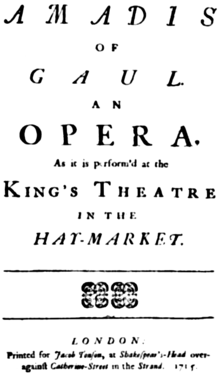
(Cribbing mainly from Wikipedia), Handel composed Amadigi in 1715 for Richard Boyle, 3rd Earl of Burlington. The work was premiered in London at the King’s Theatre in the Haymarket on 25 May 1715. Exceptional care was lavished on the production, which was a success. The King attended several performances (but was then put off going to more by the 1715 Jacobite rebellion, which meant that it was unsafe to appear in crowded venues. The opera received a known minimum of 17 further performances in London until 1717 and 17 after that in Hamburg. The opera then was not revived until 1929. Amadigi was written for a small cast, employing no voices lower than alto. The opera is scored for two recorders, two oboes, bassoon, trumpet, strings, and basso continuo (cello, lute, harpsichord).
Two of the singers were known to me – Tim Mead had been Oberon the previous month at Glyndebourne, and Mary Bevan had sung gloriously in Alcina a little less than a year ago at ROHCG. The other two singers I was unfamiliar with.
This was a full-on 3 hours of recitative and da capo arias, which was very enjoyable. It’s a young man’s work – Handel was 30 when he wrote it – and it fizzes with ideas and energy. As with Haydn you just marvel at the fertility of the work’s invention and how sometimes quite simple melodic lines are gorgeously wrapped around with orchestral decoration. As indicated above, it’s using a relatively large orchestra which means more orchestral colour – at times some of the arias began to sound a bit like the Royal Fireworks music (even though that was 34 years in the future), particularly the undoubted showstopper of the work, Melissa’s Destero dall’empia Dite, which unleashed a storm of applause at the end of Act 2. But there are many other arias that I’d want to hear again – Melissa’s lament in Act 1 (there’s an awful lot of lamenting in this work) ‘Ah! Spietato!’; Oriana’s beautiful Siciliana ‘Gioie, venite in sen’; Amadigi’s opening aria in Act 2 ‘Sussarate, onde vezzose’; Dardano’s last aria (with ear-wormy string accompaniment) ‘Tu mia speranza ‘, and Amadigi’s last triumphant aria with trumpets ‘Sento la gioia’.
The opera was clearly originally intended to be a stage spectacular, with dance sequences (the music for which is now lost) and complex transformations with, as the original 1715 publicity had it “a great many Scenes and Machines to be mov’d”. It also has the smallest number of roles in any Handel opera. The plot of course is notably silly – the wicked witch Melissa loves Amadigi who loves Oriana, who is loved by Dardano. It ends with Dardano dead, Melissa powerless and Amadigi and Oriana together.
The performance was strictly a concert one, with music stands and scores. It was being recorded and filmed for some purpose or other (odd, since Bevan and Mead recorded the opera last year). All 4 soloists were excellent. I even forgot Tim Mead was a counter-tenor and just enjoyed the beautiful phrasing and flexibility of his voice. Hugh Cutting was equally expressive though his voice was perhaps less distinctively beautiful than Mead’s. Mary Bevan and Hilary Cronin were both outstanding – Bevan of course is an already established artist but Cronin must surely have a great career ahead of her.
There were two other contributors to my enjoyment of the evening. One obviously was the English Concert, which buzzed with energy and colour, with lovely woodwinds, horns and trumpets and whose strings were constantly energising the music. The other was the church itself, which had surprisingly supportive acoustics and good sightlines ?(the odd pillar apart). More or less contemporary with the opera (completed 1724) I imagined Mr Handel himself attending the occasional service or concert here in his later years.
I’ve now heard 15 Handel operas live; only 30 approx to go!
Victoria Poleva – White Interment (UK premiere); Alban Berg – Violin Concerto; Richard Strauss – Eine Alpensinfonie. Bayerische Staatsorchester, Vladimir Jurowski conductor; Vilde Frang violin
I have never seen a live performance of the Alpine Symphony before, so I was looking forward to this concert a lot. I had missed going to what must have been a very special Proms performance of the work in 2014, by the Vienna Phil and Haitink, and I was thwarted by a train strike from going to a BBC Philharmonic Alpine Symphony last year.
The Bayern Staatsorchester a.k.a the Munich Opera orchestra is yet another great German orchestra, with weighty stylish strings, superbly confident brass and dextrous woodwind. It is a national embarrassment to see this wonderful visiting orchestra – albeit a monstrously large one for this outsize work – so cramped together on the inadequately small Barbican stage (and with the organ having to be an electronic one). With 10% more space the sound would have been better – it might have bloomed more and not be the tight restricted sound people have complained about since the place was opened – and the visual impact would be improved. Why it had to be the space it was is beyond me…..
Anyway…..this was an excellent concert. It opened with a new work by a Ukrainian composer, Victoria Poleva. This was ‘White Internment’ , about the experience of being surrounded by snow. It reminded me of a work by John Luther Adams – tonal, slow moving blocks of sound, suggestive of massive natural forces and some fairly obvious connections to the Alpine Symphony. There was something like a quirky folk tune towards the end, which seemed to be an attempt to break through the weighty unshifting chords – or maybe even suggesting an escape.
Quite how the Berg Violin Concerto fitted into the overall programme I’m not sure. I can never quite get my head round this work, despite having heard it live and in recordings a number of times. Somehow its structure eludes me and I feel sometimes the violin is a bit too busy – I felt it would be good to hear the orchestra off the leash. As far as I could tell this was a fine sensitive performance….but I’m afraid this work leaves me unmoved except for the last 5 minutes or so.
As for the Alpine Symphony, this performance was all I wanted it to be – sumptuous, brilliant and very very loud at times. Like, more obviously, Ein Heldenleben, the work is perhaps a metaphor for the journey we all take as humans, with all its glories, tribulation, terror and joy, and speaks to me in a way that some of the other Strauss symphonic poems eg Don Quixote don’t. And while there are some Straussian melodic tics in the Alpine Symphony which pop up in other works, the melodic material of the piece is rich and varied enough for you not to be saying every few minutes – oh, there’s a bit of Rosenkavalier there, or that sounds just like Die Frau ohne Schatten!
The great virtue of the performance apart from the wonderful and precise playing of the (huge – 6 oboists for instance) orchestra was the clarity of sound Jurowski got them to produce and the way each episode of the work was characterised. I have never heard the chattering woodwind undergrowth of some of the climb in the mountain so clearly. Compared to the old Kempe recording, which is the one I got to know this work from, some sections were faster than I expected, but everything hung together very well, moving inexorably towards the final ascent of sumptuous strings, wonderful horn playing and thrilling cymbal crashes. The whole didn’t feel at all episodic (which by its nature I suppose it is in fact) but very much purposefully moving forwards towards the dark ending. R.Strauss’ music can sometimes feel garrulous and contrived, cynically pushing the buttons, but this was his music at its brilliant best. I hadn’t heard before how some of the work sounds startlingly similar to Mahler, not just the pastoral cowbell bits, but also shrieking clarinets at times in the run up to the storm.
Amazingly after all the effort of the Strauss the orchestra also gave an encore- a beautifully meditative Prelude to Act 3 of Meistersinger.
By chance I saw a white suited Jurowski with a group of people in the pub afterwards, downing a pint. He looked pretty pleased with himself, as well he might……
Iúnó Connolly; Andrew Henley; Philip Sheffield, Guy Beynon, Aaron Kendall; Ellen Mawhinney; Sarah Chae. Thomas Blunt, Conductor; Jeremy Gray, Stage Director
How best to describe this experience? It was like being invited to have dinner with an uncle of one of your oldest and best friends. You accept willingly and at first you are astonished at how similar to your friend his uncle is – very similar features, expressions, ways of holding himself and voice…..And you’re initially very engaged in chatting with him. But then gradually the feeling comes over you – this man is really a bit of a bore; superficially he’s like your friend but he lacks the anecdotal punch and sparkle of your friend, his way of telling a story and the range of things to talk about, the reliable attractiveness of your friend’s conversation.
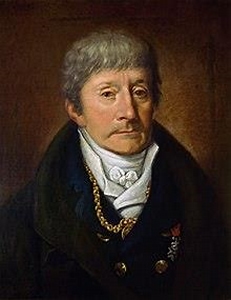
And that’s how it is with Mozart and Salieri. The story about the latter poisoning the former of course is almost certainly nonsense ( Salieri claimed he’d done so in later years when suffering from dementia but in his lucid moments always denied it). Mozart apparently got on well with the slightly older man (born 1750) and certainly was not above borrowing from him – the masked ball scene in this work might well have been the inspiration for the not dissimilar idea in Don Giovanni. Salieri was more popular than Mozart, biographers say, but maybe slightly envied the latter’s prodigious talents.
Given my grumbles below, it’s worth saying that this opera was written when Salieri was only 21. It was hugely popular at first, receiving something like 30 productions in Salieri’s lifetime, but by the 1790s was being viewed as old fashioned – Leopold Mozart was commenting on it unfavourably even in the early 1780s. If you were to listen to it casually, dipping in for a few minutes you’d think it was Mozart – very similar orchestration, turns of phrase, musical mannerisms. What you begin to miss soon though is the lack of complex harmonies, the ebbing and swelling of different emotions, the characterisation of different scenes, the absence of memorable melodic material. In truth it’s pretty boring. It bounces along amiably – one pleasant aria follows another. But there’s no wit, no dynamism. The denouement in Act 3 is appallingly below the standards of Mozart’s finales……..Nor was the librettist (brother of the composer Boccherini) up to the standard of Da Ponte or even Schikaneder – the opera’s protagonists are cardboard cutouts, the plot plain silly (though of course Cosi Fan Tutte is bound to some to seem as ridiculous) – nobleman comes to Venice with his aristocratic fiancée but at the same time wants to have a fling with a local Venetian girl, who’s scheming and wily. She pops up from time to time to embarrass him when the nobleman is with his fiancée, and when the latter gets to realise that she’s got a rival she uses the opportunity to dress like her at the masked ball and humiliate the nobleman. Eventually all are reconciled with the aid of large wodges of cash and the engaged couple are married.
Bampton Opera I’ve not come across before – one of the smaller country house opera companies, it specialises in putting on long forgotten 18th century operas with young singers. It was using St Johns Smith Square for this performance. The church like most churches was not an ideal musical performance space- quite echoey, so that the English translation got swallowed up in the acoustic depths and little could be understood of what was being sung (the men in recitatives being an exception). The staging was fairly minimal – the scenery being a series of advertising boards for Venice, and various props further reducing the space for singers to move in. There was some good lighting, making effective use of the church’s massive pillars, and a rather clever silent fireworks display projected onto the church roof during the final wedding scene.
The singers did their best to make the characters interesting. Ellen Mawhinney has the most demanding acting role as Falsirena and she did very well in conveying her tricksy wayward personality. All the singers might be ‘young artists’ but the main three all have an impressive track record of UK and international performance. I was, of the three, most impressed by Sarah Chae as Marchioness Colloandra whose voice seemed to gain in agility and power during the evening. But Ellen Mawhinney and Andrew Henley as Duke Ostrogoto were very good too. I was also impressed by Iúnó Connolly. Phillip Sheffield gets full marks for the audibility of his words. Occasionally, in some of the smaller roles, there were signs of straining, as though young voices were having difficulty in projecting their voice into such a large space.
The orchestra raised on platforms behind the singers was a small period instrument band who performed very effectively, though the lighting for their scores seemed to shine over the singers into the eyes of the audience, reducing the visibility of what was happening on stage.
All in all this was, despite everyone’s best efforts, a rather dull but undoubtedly fascinating evening that threw interesting light on what makes Mozart special. I’m glad overall I went. This run of performances by Bampton were the UK premiere of the work. I can’t see it cropping up again in my lifetime……
 John's musical journey