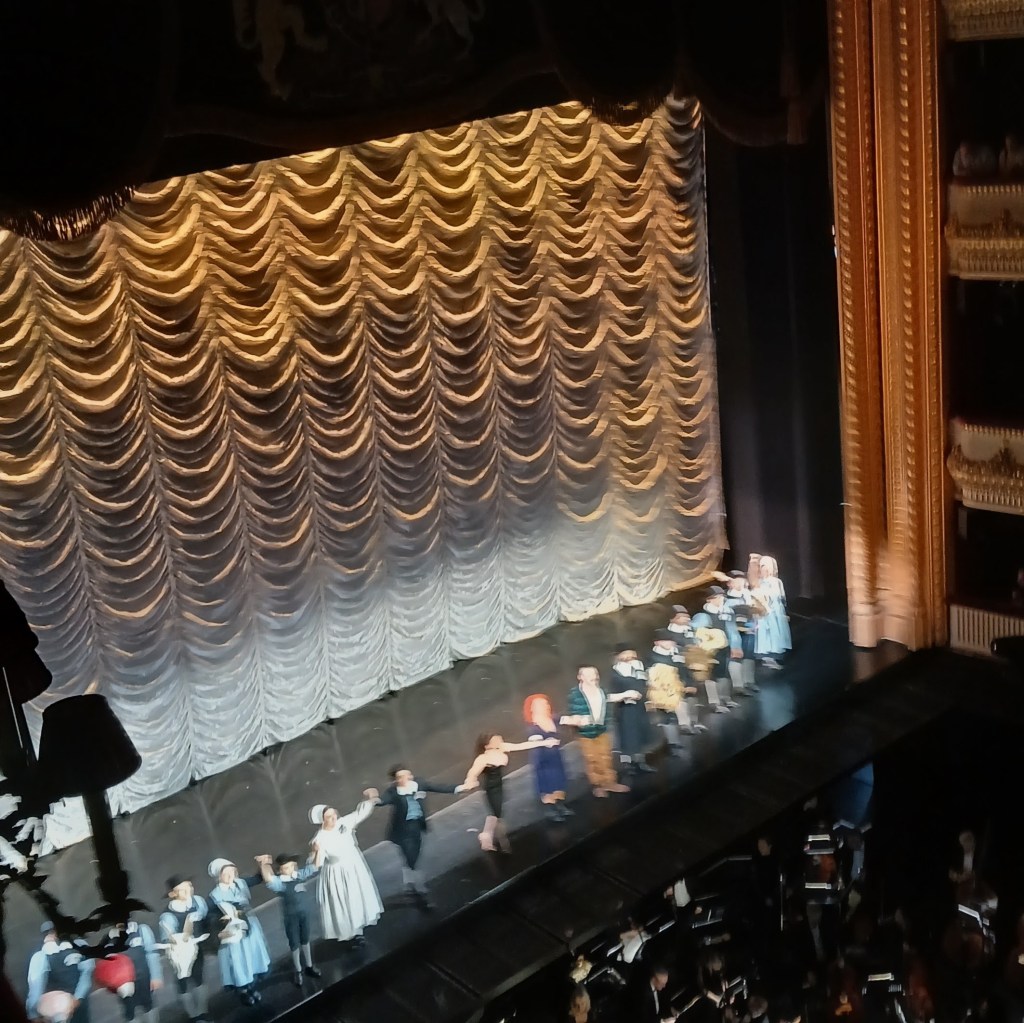
Director, Richard Jones; Designer, Antony McDonald, Lighting Designer, Lucy Carter, Conductor, David Bates. Alcina, Lisette Oropesa; Ruggiero, Emily D’Angelo; Morgana, Mary Bevan; Bradamante, Beth Taylor; Oronte, Ru Charlesworth; Atlante, Edward Grint
I loved this this award-winning production when it was new in 2022, and now it’s back with some of the same cast – notably Oropesa – but with Beth Taylor Bradamante instead of Varduhi Abrahamyan, and a different conductor. I hugely enjoyed it in 2022 and I was as impressed by it in 2026. The story involves Alcina, an enchantress on a magic island, using her powers to lure her lovers to her island. When she tires of them, she transforms them into animals. Ruggiero is her latest lover – but his wife, Bradamante, is intent on rescuing him. She arrives on Alcina’s island, disguised as ‘Ricciardo’, a man. Morgana, Alcina’s sister, is immediately attracted to him, and Morgana’s jealous lover, Oronte, falsely states that Alcina is in love with ‘Ricciardo’ too. We feel increasingly sorry for Alcina as she tries to sort out this mess………………..
I asked myself afterwards why was this so enjoyable – the best Handel production I’ve ever seen, apart arguably from Saul at Glyndebourne directed by Barrie Kosky. I think it’s a fairly simple answer in fact – great singing and an extremely inventive production, and one where all the singers are invested in the production and look as though they are thoroughly enjoying themselves; also it is one of Handel’s greatest operas, in my view, in terms of the quality of the music and the way one feels for the characters in this huge entanglement they’re all in. And, in this production, it’s fun!!………
The singing first: there are no weak links in the singing. As a matter of personal taste I am less enamoured of Emily D’Angelo’s voice than Oropesa’s, Bevan’s or Taylor’s – it always sounds just slightly constricted/tight and insufficiently colourful – but she offers all the stylish singing and the athletic coloratura one could wish for (and she is a much more convincing male than many singers in trouser roles on stage, in movement and stance), and also I think the house disagreed with me; she got a bigger cheer than Bevan. But, for me, I was really blown over by the other three females. Oropesa’s virtues have been praised in this blog on several occasions over the last 5 years since I first heard her in Rigoletto; here she was supreme. She has relatively little to do in the first act but her singing in the second and third acts, expressing rage at what she sees as Ruggiero’s betrayal and her sadness at the loss of her magical powers and her lovers was very finely done – powerful top notes, the voice fined down on occasion so that it appeared to have the same resonance as a flute, pure and clear, the elaborate clarity of the coloratura, the pointing of words; all this was extremely well done. And she acts well too, creating a credible mischievous, energetic and lively personality without ever overdoing it. Mary Bevan I thought was even better than 4 years ago, floating her high ‘white’ voice beautifully in Tornami a Vagheggiar, and her silvery coloratura was precisely judged without a single smudge. It’s not a big voice but she makes it carry. Her energy was engaging – she threw herself round the stage and was the most active dancer among the singers. Beth Taylor, who I heard in Les Troyens at the Proms few years ago and who has been making a name for herself in Europe and most recently at the Edinburgh Festival has a wonderful voice, full and dark, and again supple enough to deliver accurate coloratura. She only won the BBC Cardiff Singer of the Year in 2023 and is clearly destined for great things. She also was utterly engaged with her part, expressing her fury at Ruggiero’s spell-driven love for Alcina vigorously. Ru Charlesworth as Orontes has more to do than I remembered and he again was very fine, with all his arias (and there must be at least 3 of them) all delivered with distinction.
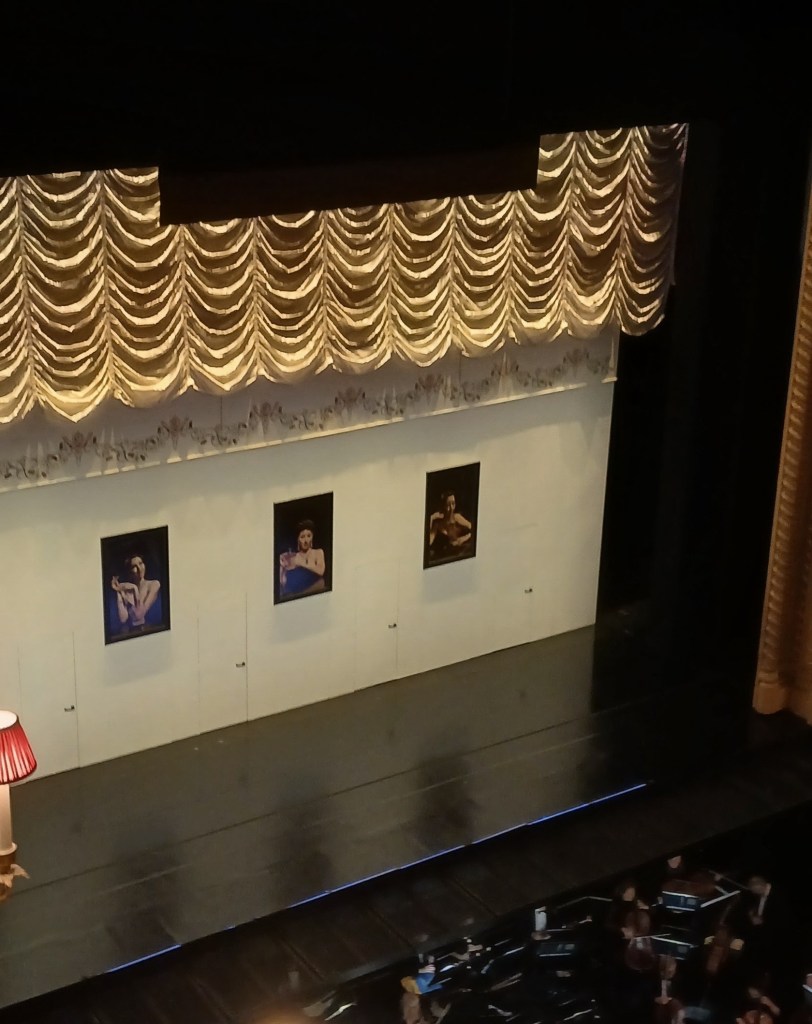
The main thing that distinguishes the production, I think, is its energy. The whole design concept serves this – there are two screens that go up and down (one of them with doors – in the photos below), curtains that can be raised and lowered, and a whole range of shiftable bits of set which can be moved around, and brought on and off stage – a wooden shed for Orontes the gardener, various bits of foliage, hillocks and trees, Alcina’s magic perfume bottle, the huge bed. In addition, of course, there are the 12 or so dancers who form the troupe of enchanted lovers turned into animals, with their wonderfully crafted heads – they form the backbone of the various dance routines, and are constantly on stage, moving things around and reacting to the main characters. What all this means – and it’s been done here to a much greater extent than in most of the Handel productions I’ve seen – is that there is always something going on, something to watch, somebody opening and closing doors, in the big da capo arias, and not one of them seemed over-long. Yet at the same time, the production allows Alcina to be alone, on the big dark Covent Garden stage, with nothing around her, in her arias of sadness and betrayal – so the energy always feel appropriate to the musical mood. ‘The concept’ – which I’d completely forgotten about from 2022 – doesn’t get in the way either: the enchanted animal lovers, and Bradamante/Ruggiero, are all 17th century Puritans, as is Atlante (why Puritans, goodness knows, since they are neither related to Handel’s time nor Ariosto’s, but anyway…..) focused on love, duty and Bible-reading. The opera begins and ends with them in Puritan clothing, seduced by Alcina at the beginning, and subverted by her and Morgana at the end (replacing the Bible with The Joys of Sex!). It’s all extremely well done, funny and touching, moving as well – we really feel for these characters. David Bates energised the orchestra and made them sound like a period instrument band – even though they aren’t!