Vaughan Williams Fantasia on a Theme by Thomas Tallis; Britten Violin Concerto; Carmel Smickersgill A Brick Thrown with Love ; Vaughan Williams Symphony No. 9 in E minor . Simone Lamsma violin; Royal Liverpool Philharmonic Orchestra, Andrew Manze conductor
The puzzle I pondered over in relation to this concert before the event was why it was one of the first Proms to sell out and provide an audience almost as big as for the BPO the two previous evenings. Was it simply the lure of the Tallis Fantasia? Was it the assumption by a lot of people that the 9th Symphony must be like the Tallis Fantasia or The Lark Ascending? Is Carmel Smickersgill a rock star (I think not – her bio says she “is an award‑winning UK composer and performer whose work spans concert music, opera, electronic releases, theatre sound design, and live performance. She studied composition at the Royal Northern College of Music (RNCM”, The violinist is very good, but not, I would say, well known. I doubt if the Britten Violin Concerto would draw the masses. RLPO groupies? Who knows – anyway, whatever, the hall was packed out, and obviously that’s all to the good.
It was certainly a concert I really enjoyed, with one work I and indeed everyone else had never heard before (being a world premiere), two I have listened to but never really ‘got’ and I don’t think have heard live, and one old favourite (obviously, ‘the Tallis’). The programming I guess was intended to balance the serenity of the Tallis against the other three works – all troubled pieces for troubled times.
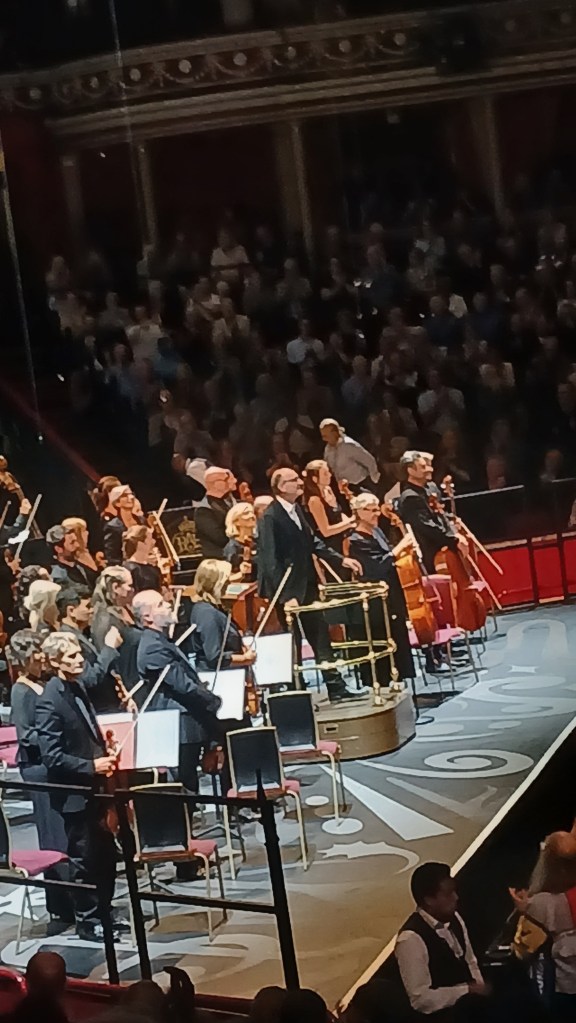
I can’t remember how other orchestras have been arranged for the Tallis piece. Here, Andrew Manze (a tall, very serious, slightly awkward presence on stage) had put the chamber strings group at the back of the stage above the orchestra, while at the same time the 4 string principals also offered commentary as the work proceeded. It was a fine performance, the RLPO strings sounding sumptuous when they were allowed to go at full tilt – they certainly didn’t sound an embarrassment after the two evenings of the Berliners.
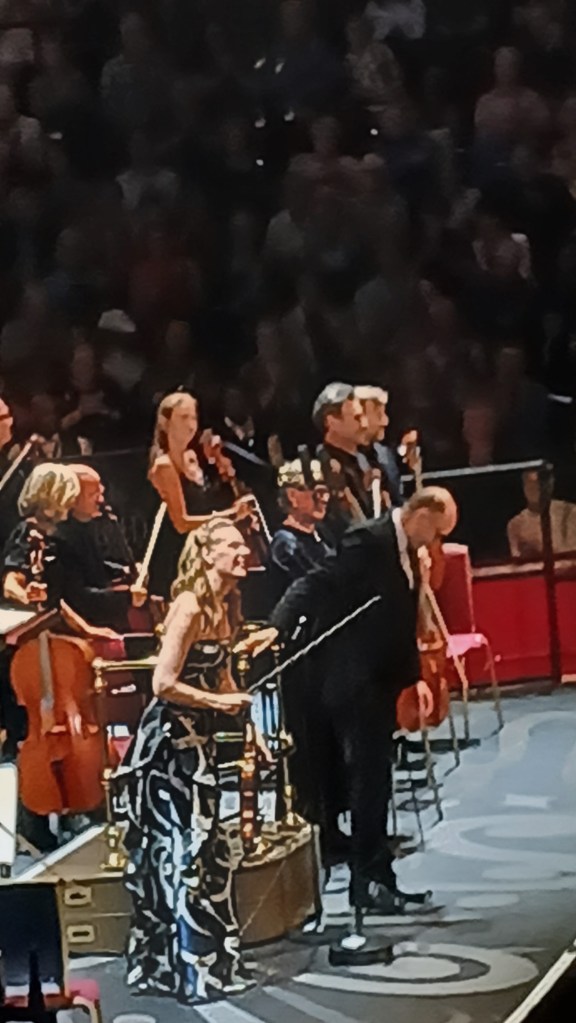
The Britten piece I am gradually getting to know and understand. The overall feel of it for me is of uncertainty – the piece has an unresolved feel at its very end. It speaks of its time – Spanish Civil War, Germany’s occupation of Austria and Czechoslovakia. The first movement feels to me about a simpler past, yearning for it perhaps – the opening timpani notes of course must indicate some nod of recognition to the Beethoven concerto the previous evening. Even this first movement is complex in mood – sometimes hurried forward (perhaps how Britten felt in London as a student after his childhood), sometimes yearning and nostalgic – though with a clear identifiable main melody. The melancholy of the violin part fits well with the Albert Hall – a lone voice within a huge structure. The second movement moves on to different terrain – an unstoppable momentum towards some dark future, with protests from the violin solo (there’s some brilliantly imaginative orchestral colour in this movement), or perhaps a dance of death (and there’s a Spanish twist to the music at one point reflecting the civil war). The final Passacaglia (a set of variations on a ground bass) seems to be a dialogue between soloist and orchestra – the soloist perhaps representing the individual crushed by global conflict they have no control over, and the orchestra seems to finish on what sounds to me like a major chord, while the soloist is left on an undecided trill. Lamsma played it brilliantly – there was some remarkable playing in the cadenza after the 2nd movement, reflecting on the past again in the return of the first movement’s main theme. All in all this was the first time I have really felt I had got onto the wavelength of this work……….and also realised how compact and approachable it is (as is always the case with this great composer). So thank you Mr Manze and Ms Lamsma.
The Carmel Pickersgill work was approachable enough but I couldn’t understand the emotional journey – perhaps I should have bought a £7 RAH programme (but then why should I?). The audience anyway was appreciative, and the composer there to hear and see the enthusiasm.
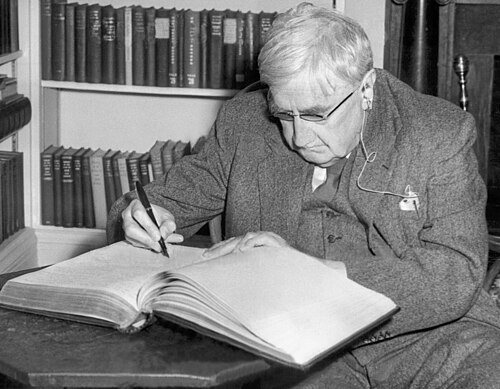
The Vaughan Williams piece completely passed me by in my teenage years and 20’s. It was only recently – after reading enthusiastic reviews of Pappano/LSO’s performance of the 9th – that I realise I had no version of it in my streaming library. It still takes some getting-of-the-head round – I am sure I have recounted before in this blog Pierre Boulez in his days as Proms supremo in the 70’s referring dismissively to Elgar but saying of Vaughan Williams that he was innovating, thinking through new things, all the way from the early 1900’s to the 1950’s – Boulez appreciated him for that. It’s scored for a huge orchestra, including a trio of saxophones, and a flugelhorn. The symphony starts out broadly like the 4th and 6th, but with a wider range of emotions. It’s in four movements – conventionally a 2nd slow movement, a 3rd scherzo and a finale, andante tranquillo. Its general mood is one of darkness and doubt, little resolution, but the enormous crashes at the end in a major key (E?), fading away into silence, give a reminder of Job, 20 years earlier, and sense of hope – different to the entirely bleak ending of the 6th. I would say that its mood is altogether more complex than the 4th and 6th symphonies. It’s also interesting that, though there are plenty of VW musical tics and memories of other compositions, this work still feels as though it is saying something new. I was very moved by this performance.
Throughout the RLPO played magnificently – I noted one tiny slightly-too-early entry, but that was all in the way of glitches.
I feel very lucky to be nearly 74 and still exploring works I don’t know, and appreciating them so much…………..
I was intrigued by my neighbour in the seat next to me, a (to me) youngish smartly-dressed man in his maybe early 40’s. He seemed to have little interest in the Tallis or Britten (or the Pickersgill), alternating between looking at his phone and the stage. Suddenly, at the start of the Vaughan Williams, he seemed transfixed, and remained motionless and phone-less throughout, applauding vociferously at the end. Was he an example of a VW groupie?