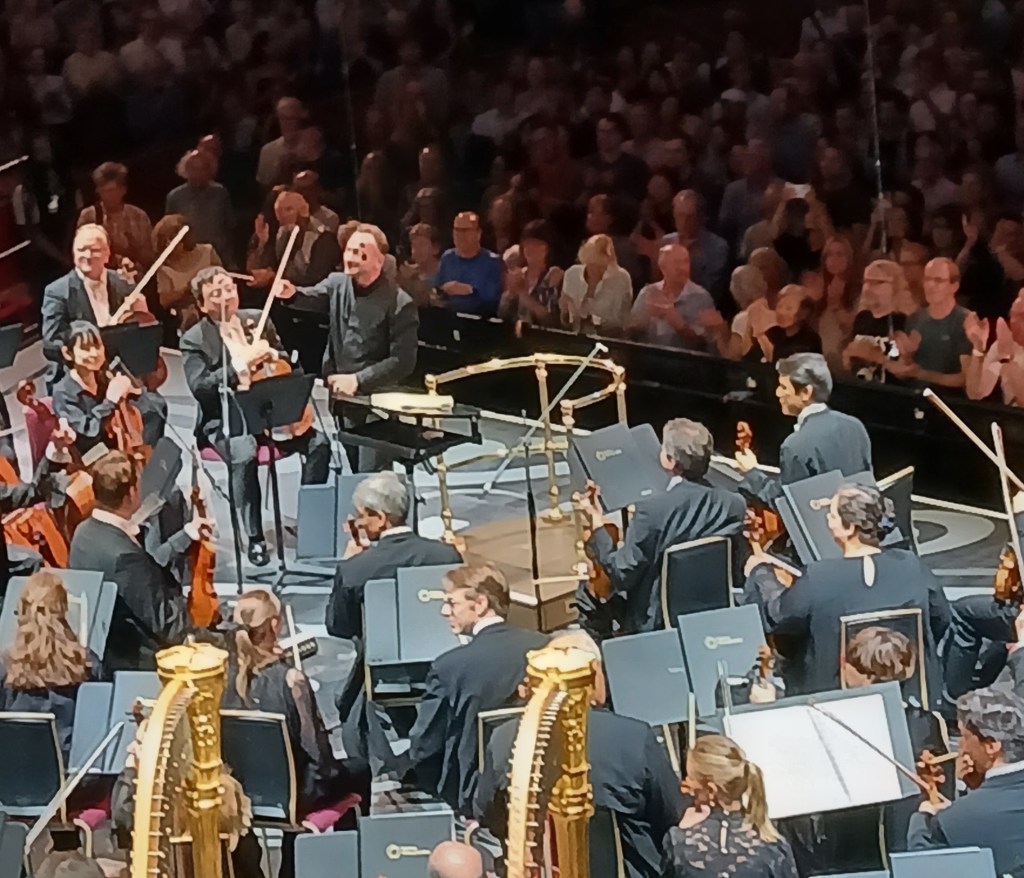
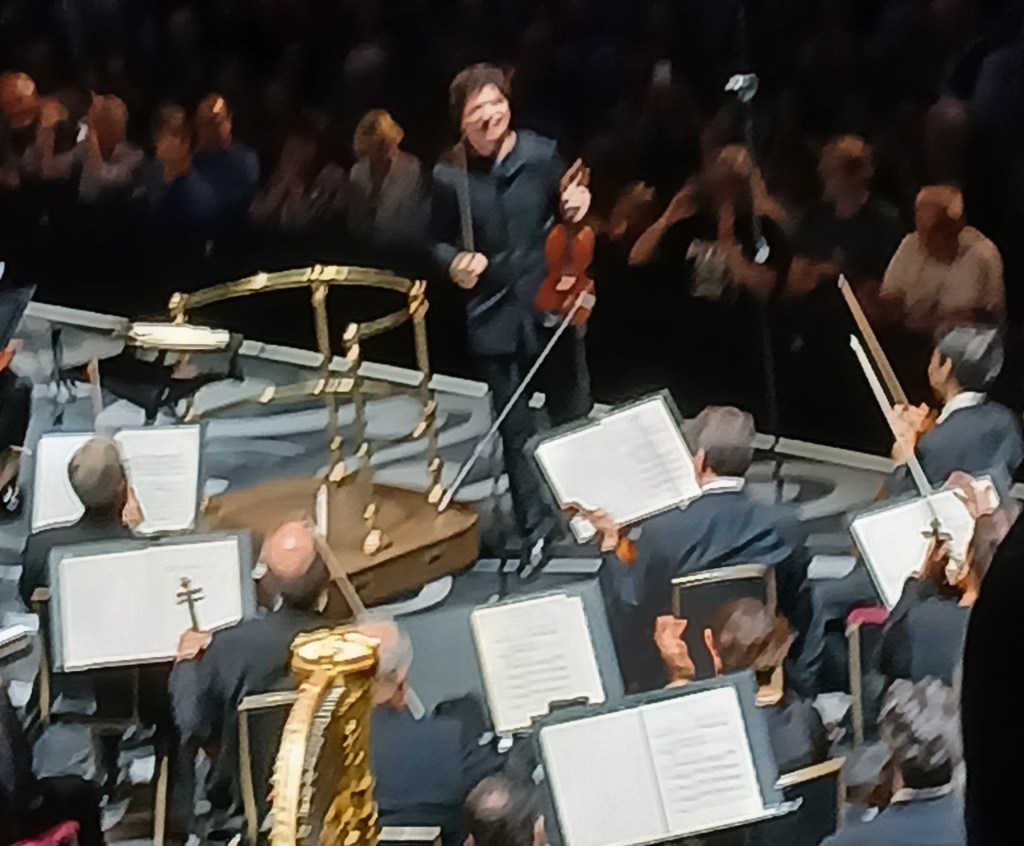
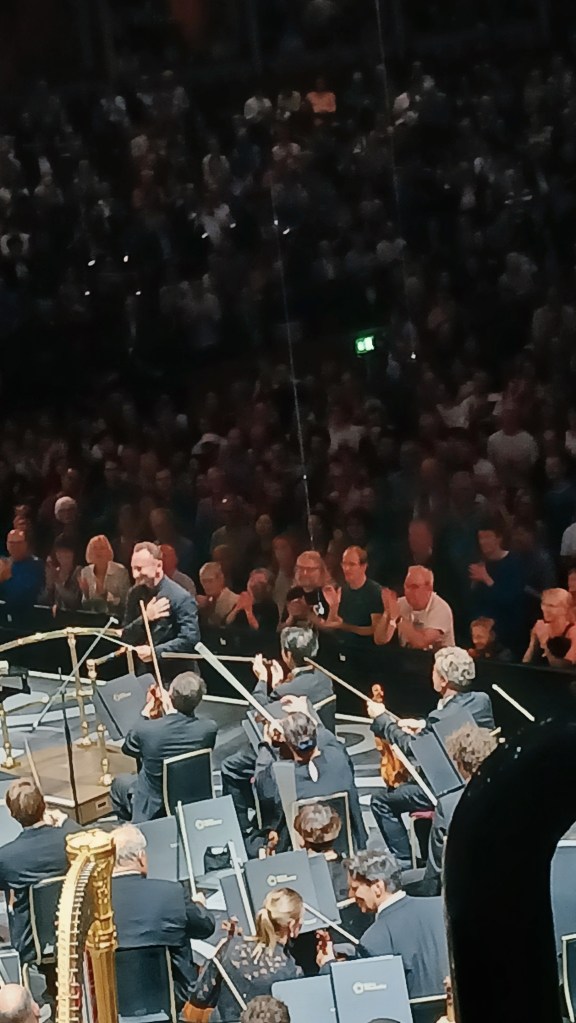
Beethoven Violin Concerto in D major; Scriabin Symphony No. 3 in C minor, ‘The Divine Poem’, Augustin Hadelich violin, Berlin Philharmonic, Kirill Petrenko conductor
This was the fourth performance of the Scriabin work at the Proms – the others being 1918, 1921 and 2010 (with Vladimir Ashkenazy conducting). The concert looked to be a more substantial one (time-wise) than the previous evening – and Hadelich has been making a big impression recently (he performed the Brahms concerto with Thielemann and the VPO in Salzburg 10 days or so ago); the Scriabin work I don’t really know at all.
It was a decidedly large body of strings which emerged to play the Beethoven – probably needed, given the size of the RAH. I have to declare that the Beethoven concerto is not my favourite – in particular I often lose focus in the first movement. I recognise the extraordinary skill in the way Beethoven puts it together – all the thematic material is related to the first 4 drumbeat notes and the woodwind response, but I do find it meanders a bit. And it meanders particularly when a slow basic tempo was used, as was the case here…..Hadelich’s approach seemed sweet and dreamy – most beautifully so; perfectly legitimate, but somewhat soporific (not helped, I admit, by the fact that I was in a Choir seat – great for listening to an orchestra, less so for a soloist). The few orchestral tuttis occasionally galvanised the proceedings, Petrenko back into stick jabbing mode, but then we sank once more into meanderings….The slow movement was better (because it is MEANT to meander) and was intensely beautiful – extremely lovely playing from Hadelich. The third movement – always my favourite – was beautifully sprung and taut, the BPO sounding like an orchestra twice its size, and, apart from Hadelich, there were also some very perky contributions from woodwind and horns. Hadelich’s artistry and technique was remarkable, and he was received ecstatically by the packed-out RAH and played his own arrangement of a Schumann piano piece as an encore.
The Beethoven had obviously been programmed as a crowd-pleaser to bring in the punters who might (understandably) be put off by Scriabin. I wish I could confidently refute a reviewer of that first Prom performance of the Symphony in 1918, who described it as ‘having little to say but a great command of language’ and said it was ‘a long moan of most articulate anguish’. But, actually, that sums the experience; nearly 100 years later on its 3rd outing, the Independent reviewer wrote in 2010 ‘the will to live comes and goes during Scriabin’s protracted 50 minutes. Was music ever so static?’ I did have a prior listen on YouTube which confirmed my suspicions that it was essentially a bucket of chromatic soup. However I had a (slightly) more positive impression of the work, listening to it live. I hadn’t appreciated there was a Nietzsche-style programme (try to become a god and fail; fall into voluptuousness, try again and become god-like, approximately) and that there are three movements (though the boundaries are a bit hard to identify). There are also identifiable themes,which are developed and recapitulated along recognisable symphonic lines. But it is very densely and turgidly orchestrated (this makes the programme of the previous evening more pointed – both Elgar and Tchaikovsky were wonderful orchestrators); even though a huge orchestra is used (8 horns, triple woodwind) there is little in the way of brilliant sound (there’s no percussion) and mostly the only variation is in terms of volume. I have to say I never day-dreamed in the way I did in the first movement of the Beethoven – watching Petrenko manage these huge forces is a delight in itself – and i can’t say I ever felt restless. But the work did go on……and the emotional journey signed by the movements was less than totally clear. Enervated was probably the best description of my state at the end of it all!
Still, I am glad to have heard it, and of course it was wonderfully performed