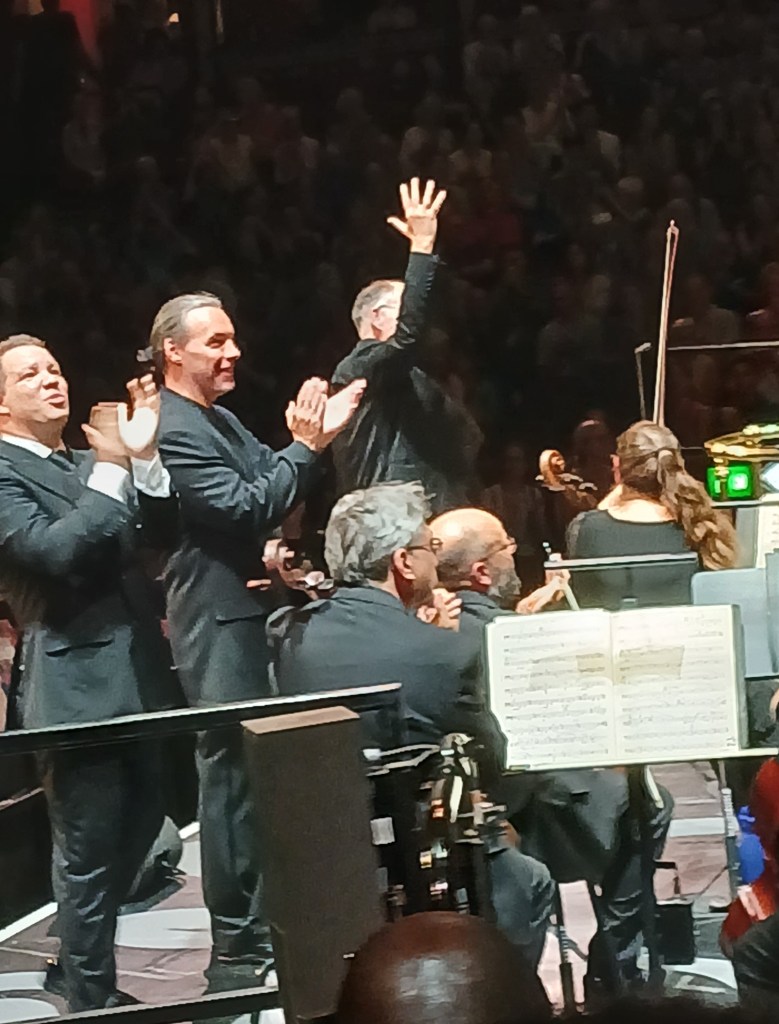
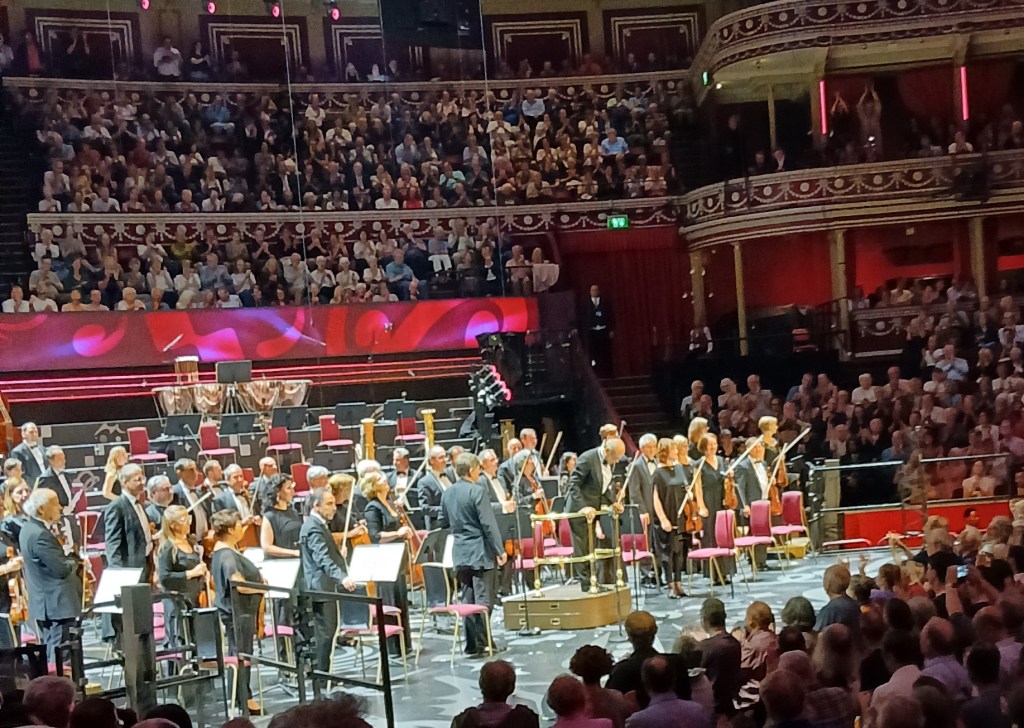
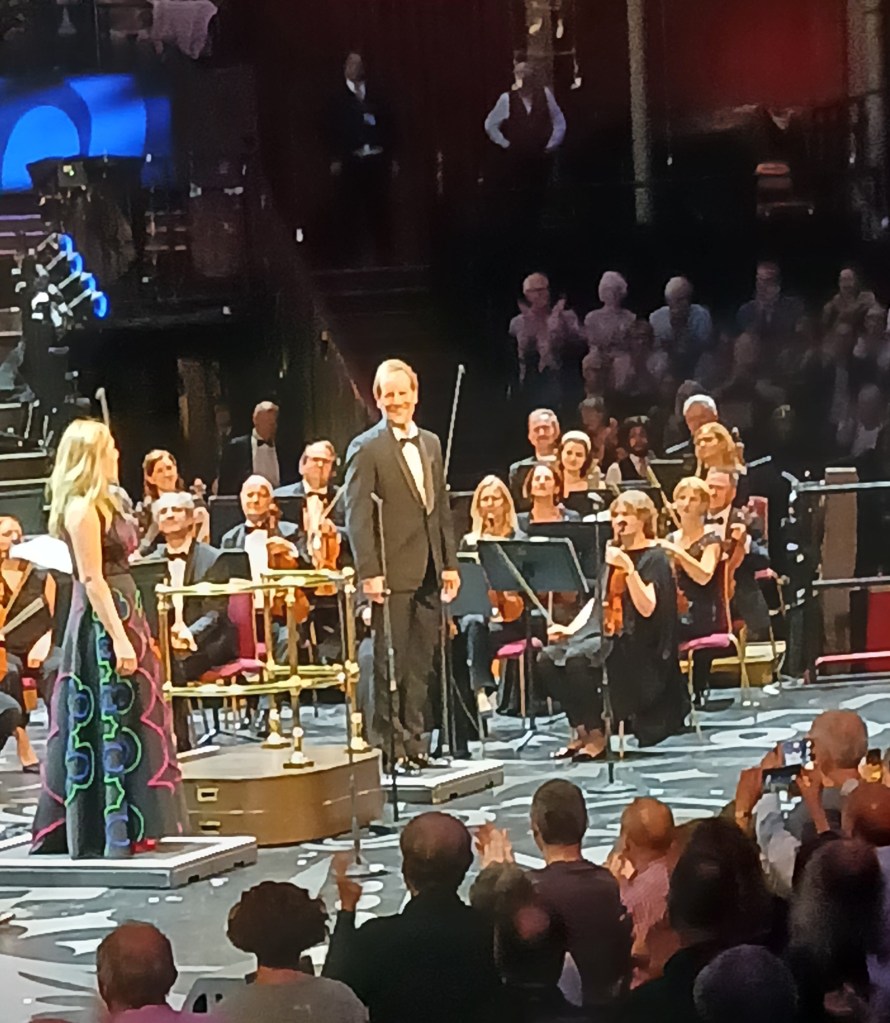
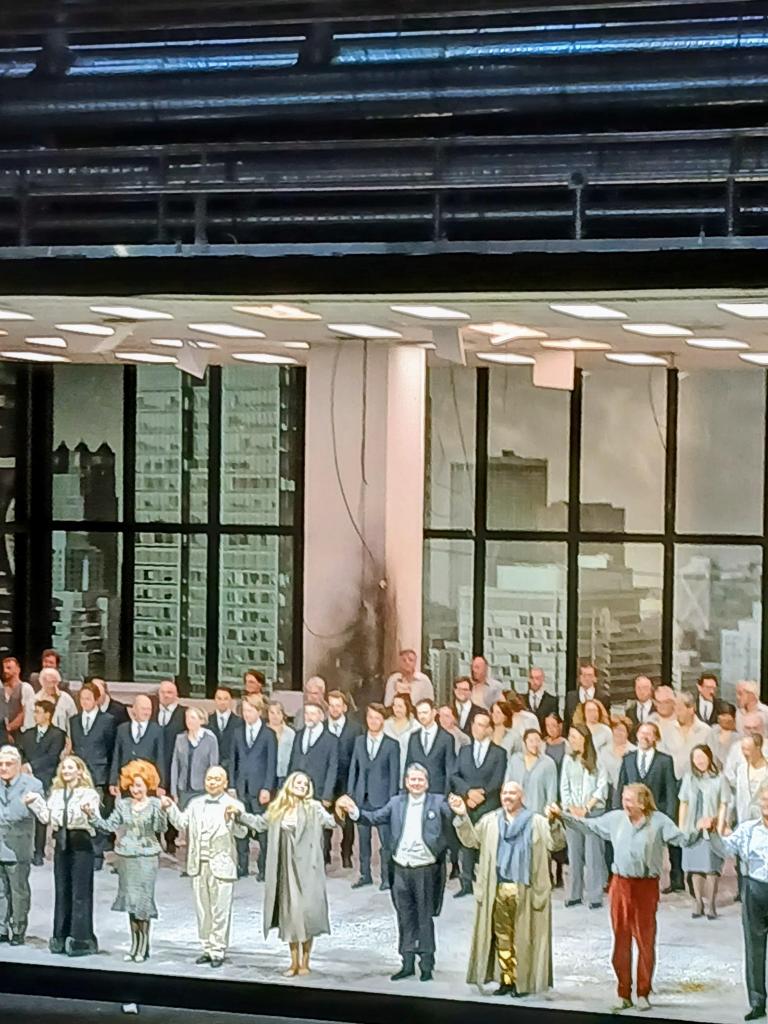
Conductor, Robin Ticciati; Director, Jetske Mijnssen; Set Designer, Ben Baur; Costume Designer, Gideon Davey; Choreographer, Dustin Klein; Lighting Designer, Fabrice Kebour. London Philharmonic Orchestra, The Glyndebourne Chorus. Cast: Parsifal, Daniel Johansson; Gurnemanz, John Relyea; Kundry, Kristina Stanek; Amfortas, Audun Iversen; Klingsor, Ryan Speedo Green; Titurel, John Tomlinson
In the essay ‘Religion and Art’ (1880) Wagner says that “…. where Religion becomes artificial, it is reserved for Art to save the spirit of religion”. In my view, almost all Wagner’s music dramas from the Flying Dutchman onwards deal in some way or other with the ‘spirit of religion’, though by no means through the lens of orthodox Christianity. Issues about what ‘salvation’, ‘renunciation’ or ‘redemption’ might mean in a modern context are often referred to, as well as concepts like sacrifice – dying that one may live. Wagner was also very much aware of the power of myth, and mythic symbols, many years before Jung and others began to explore these issues – in the inimitable translation of Ashton Ellis, “The incomparable thing about the mythos [Wagner wrote] is that it is true for all time, and its content, how close soever its compression, is inexhaustible through the ages. The only task of the poet was to expound it”. For me the classic presentation of that religious/mythic ‘‘Parsifal’’ was the 1950’s Wieland Wagner production at Bayreuth, which I was lucky enough to see in one of its last showings in 1972. Different ways of exploring the meanings of ‘‘Parsifal’’ are possible within a broadly similar framework. One can focus on a corrupted religious community and the story of how that comes to be healed; there is the approach (quite well taken in the much-abused Bayreuth production of 2016) which moves from the externals of religious faith to what Wagner called ‘True Christianity’, based on compassion and without any sort of clerical caste or external symbols. I saw a notable production which had Parsifal rejecting the demands of an oppressive community and going off on his own at the end as a kind of sadhu. I have also seen productions that emphasise the male oppressiveness and crudity (exemplified by the ‘robust’ Grail knights’ choruses) of Act 1 and the reunion of male and female at the end of Act 3 (and of course the spear and the grail can be seen as symbolic in that context). In many productions a core issue is the distinction. learned through painful living, between eros and agape – desire and compassion, if you like.
There’s also the definition of the term Gesamtkunstwerk – in my understanding this is the ideal of unifying all expressions of art via the theatre. That must include words – that the text is important and that the words the characters are using when they sing in a Gesamtkunstwerk must be consonant with musical expression, dramatic movement and sets/costumes/lighting. A Wagner production of his works after Lohengrin that ignores that consonance is likely to be problematic.
And yet……………….despite all the above, there are the occasional productions that break all the rules and yet are clearly well-grounded interpretations, winning much praise. I am going to what may be one such in Vienna after Easter in 2026, the Serebrennikov production of Parsifal set in a prison, much praised by Mark Berry (whose views I take seriously, so I’ll give it a try…….though loathed by others). People of many different persuasions have praised the power of the Herheim production at Bayreuth in 2008 (which I haven’t seen, though it is on YouTube and I should do so), set in Wahnfried and the wider Germany of the 19th and 20TH centuries. It is also worth pointing out that a director of an opera/music drama does have in theory the ability – often taken up in regietheater – to ignore the gesamtkunstwerk concept and offer different meanings related to different elements of the music drama in question – to indicate one meaning through music and another through words or set, an interplay which is unique to this art form. This can make for complex but powerful theatre, particularly relevant if there are, for modern eyes and ears, problematic elements to the work in question. I have just been reading about a feminist production by Katie Mitchell of Die Frau ohne Schatten – a problematic work in terms of some of its assumptions – in Amsterdam, where a reworking of some elements of the plot sounds to have been very successful.
Ultimately, though, while there may be a very few outstanding directors who can look at a work like ‘Parsifal’ and provide a radical reinterpretation that is satisfying to many, there are considerable perils in moving beyond that essentially religious/mythic focus which Wagner clearly has in mind in relation to all his works, and only a few highly talented directors are able to provide a radical reinterpretation of ‘Parsifal’, in particular, which is consistent, truly satisfactory and without serious problems emerging. To me, maybe because I am a ‘person pf faith’ ,‘Parsifal’ is not problematic in the way Die Frau ohne Schatten can be, and I see little evidence for Gutman-like (and others’) interpretations of the work as racist.
So – after all this long preamble – what of the Glyndebourne ‘Parsifal’? My first comment is – why on earth would you seek to graft an additional story onto a plot which is already quite complex and sometimes obscure….? I find it difficult to summarise my reactions to this performance: maybe my best effort would be that it was flawed, insightful, and very impressive musically. It was not a Herheim-like totally original take on the work, magnificently realised. Nor by any means was it a disaster. It was much more powerful and moving dramatically (though musically marginally less impressive) than the Parsifal I saw in Bayreuth last summer, and also much better than many of the reviews I’d read had led me to expect.
The ‘flawed’ aspect is not easy to describe and assess. The director had decided to recast the work as a ‘Chekhovian family drama’ (her own words, in the programme’). Essentially then the back story changes to something very different from Klingsor’s estrangement from Montsalvat, his entrapment of Monsalvat Knights through their sexual desire for his “flower girls’, and his seizing the Holy Spear from Amfortas after his seduction by Kundry, wounding him in the side as a symbolic representation of sexual desire constantly tormenting and never overcome. Instead we have a (far too quick) back story during the Prelude of a quotation of part of the Cain and Abel story from the Bible on the front curtain, and two young men, one Klingsor, one Amfortas, clearly intended to be brothers, seen with a young woman, Kundry. both clearly in love with her; there is then an altercation between the two men, Klingsor stabs Amfortas with a small knife and runs off. Klingsor and Amfortas are thus permanently estranged. This back-story is clearly intended to cut through and remove the mythic and to some extent religious (but see later) aspects of the work. There is no Holy Spear, no real emphasis on the difference between eros and agape. It is unclear in this version why Amfortas should feel unable to take the Grail service. The wound here becomes simply an ongoing fratricidal hatred, powerful obviously, but not connecting clearly to many of the Buddhist, Schopenhauerian and Christian elements of the story that Wagner clearly wanted to include. The whole idea of Kundry being in thrall to Klingsor and her moving between the Grail castle and Klingsor’s gardens and castle, her timelessness, becomes obscure in this context, as are the reasons for why she should be seducing Parsifal or of Klingsor being a sorcerer. The whole issue of Kundry being cursed because she laughed at Christ becomes unmoored
The ‘family feud’ idea is intensified by the use, rather confusing, of ‘young’ and ‘old’ figures of the main characters – a young and old versions of Kundry, Klingsor, and Amfortas, as members of the family. The use of these additional characters and the import of them I often just didn’t ‘get’, particularly in the first scene of Act 3. Much more effectively, Titurel is present on stage throughout Act 1, fussing around Amfortas ineffectually. At times in Act 1 Klingsor males his way into the house, hoping to be accepted and there are mimes of his being pushed away by other family members. The family dimension disappears entirely in Act 2 (though see below) and appears again (in ways to be described later) in Act 3. To make things more confusing, there is a very clear and straightforward Grail scene in Act 1, with the family, Gurnemanz and all the Knights in white and black surplices and essentially a Protestant Communion service enacted with a giant cross and crucified Christ in the background. The Grail is an ordinary silver chalice. None of this very clearly relates to the emerging themes hitherto. At first sight, therefore, so far so grim – more than a bit of a muddle.
The key to what is insightful here is excellent personen-regie, every move, every character reaction, carefully plotted, with an intensity of acting only a Festival opera setting can create. What was particularly insightful is the way the theme of compassion is treated in the production – and its obverse. In terms of the latter, the knights are a brutish bunch, in the 1st Grail scene manhandling Kundry and setting upon, booting and punching Parsifal with abandon during the communion service. Parsifal ‘s dawning awareness and reaction to Gurnemanz’s comments on the swan is very carefully and well handled. In a remarkable handling of the ending of Act 1, Parsifal cradles Kundry in his arms, empathising with her rejection (she has tried to enter the grail scene and been pushed away by Titurel). The staging of Act 2 is exemplary and throughout Parsifal demonstrates a sensitive compassionate approach, not just feeling the wound of Amfortas and his suffering, but also clearly understanding the suffering of Kundry in front of him, in a way I’ve never seen in any other Parsifal production. The way in which Act 2 ends is extraordinary – not with the collapse of Kingsor’s castle and his presumed death, but rather with Parsifal holding Klingsor in his arms. In Act 3, Klingsor, who enters with Parsifal and who in a sense has ‘become’ the Spear (a point of major obscurity I’m just passing over) is constantly the focus of Parsifal’s compassionate attention, as is Kundry. Kundry’s role is by now impossibly complex, and not again one I can elucidate, as she washes Parsifal’s feet and receives his baptism but she is undoubtedly fully also the object of Parsifal’s compassion – and he washes her feet too, which is a very moving moment. This compassion is remarkably evident in the Good Friday music, where (maybe with a bit of help from changes to the surtitles) Kundry becomes the subject of all Gurnemanz’s and Parsifal’s comments about redeemed Nature, through references to flowers; there is no pointing to an external world as there normally is (in the 2016 Parsifal at Bayreuth there is a Garden of Eden scene at this moment, with naked young people) There is no Grail scene at the end, only the healed family gazing at each other with love, presided over and brought together by Parsifal, with Amfortas and Klingsor finally reconciled. It does leave an open question though as to what status Parsifal has at the end of it all – he is shorn of his normal ‘king-like’ manner and attributes.
In short, what we end up with in this production is something like Wagner’s True Christianity, but with an overlay of Christian and mythical inputs from a traditional version of Parsifal which don’t fully now fit into this renewed reading.
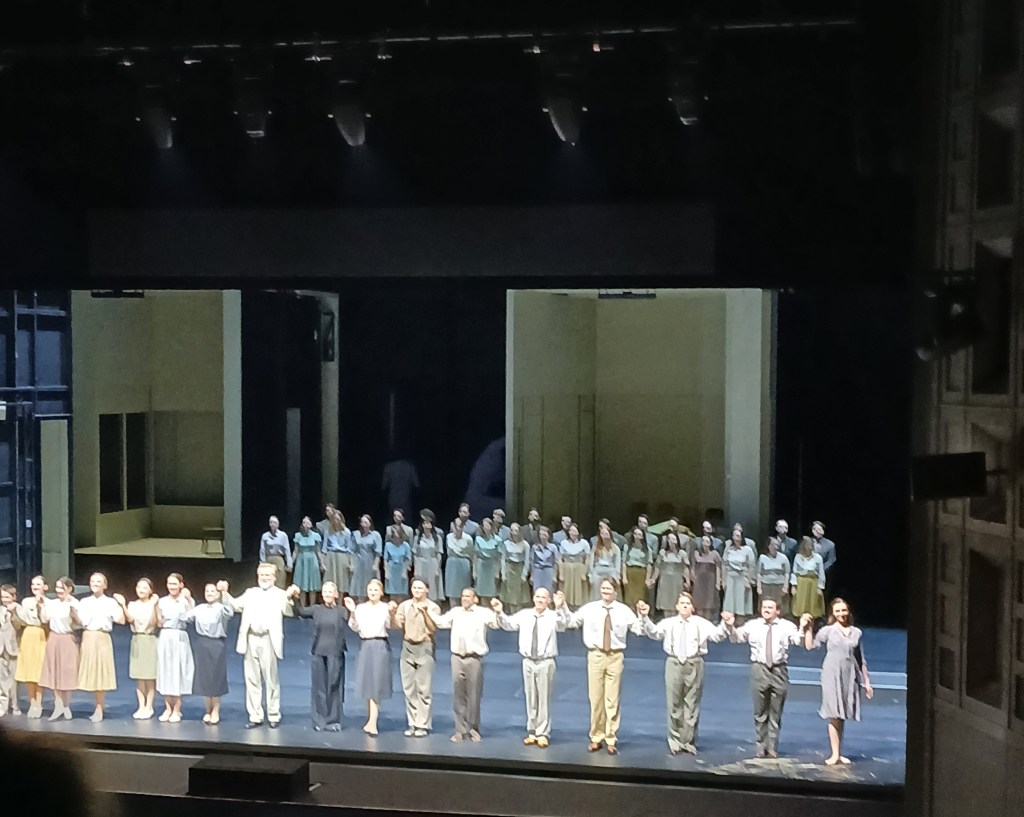
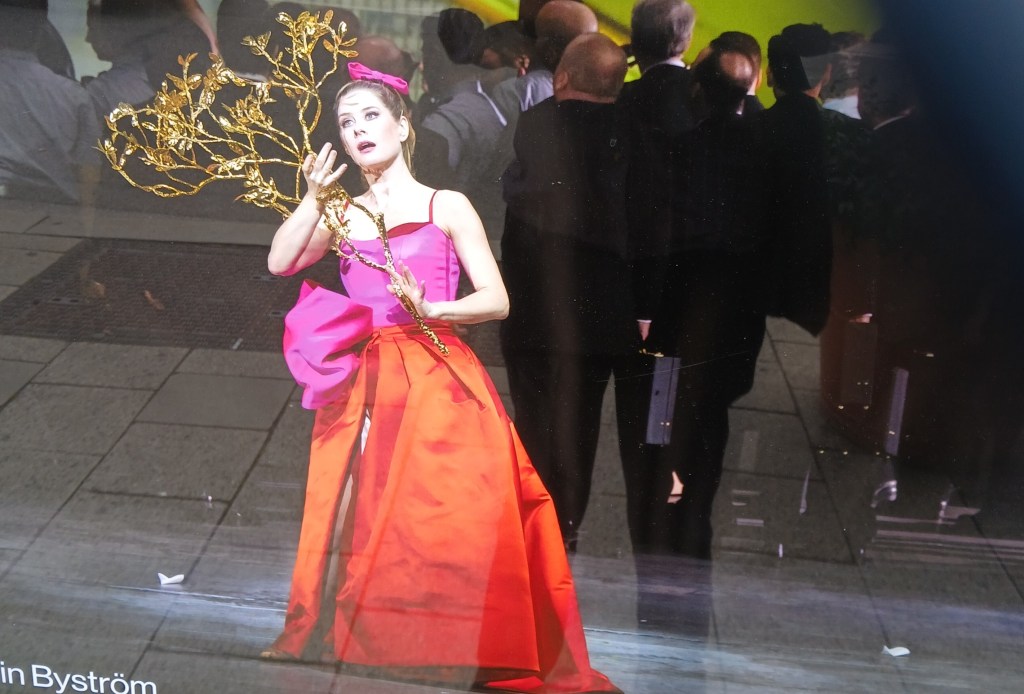
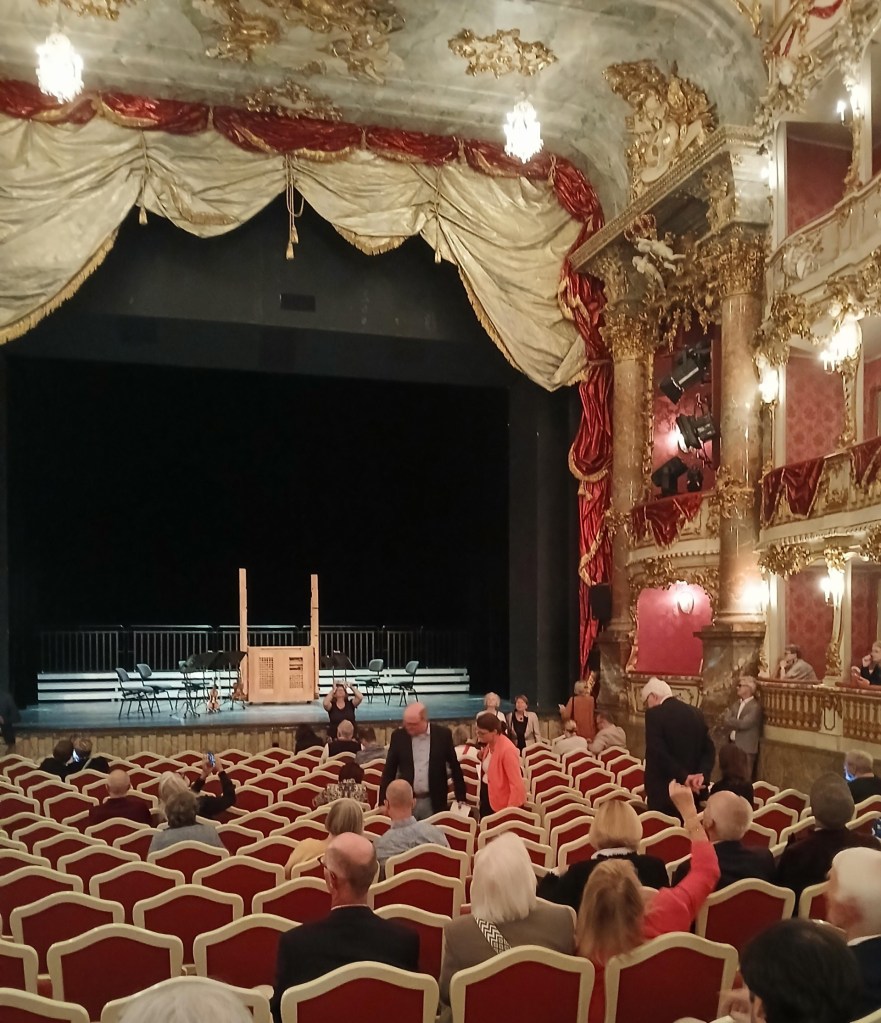
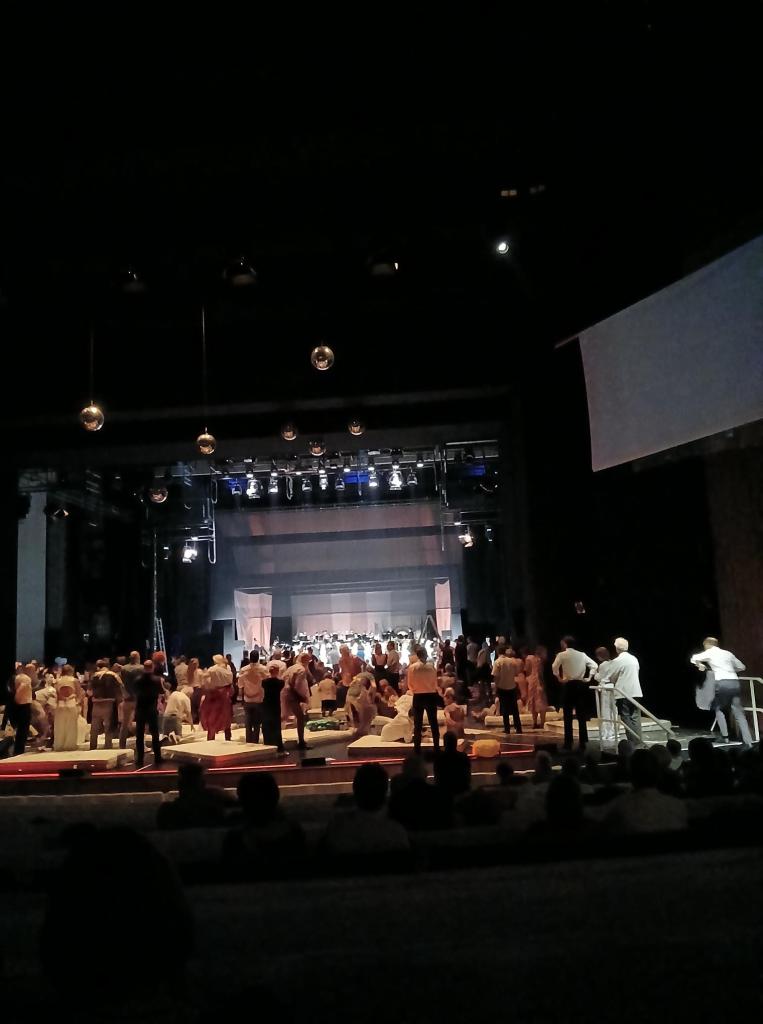
In design terms, things looked much the same throughout the three acts. As the curtain opens after the Prelude to Act 1 we are in a gloomy claustrophobic Victorian large countrty house, perhaps a seminary. The set for all three Acts remains essentially the same – dark and forbidding. In the first act there is a sidelong seemingly large window letting light in but this disappears thereafter, and the whole building appears to be crumbling in Act 3 . The Grail scene in Act 1 is impressively staged, with long tables, candles and a very large image of Christ on the Cross at the back of the stage. There is no opening up of the set to light during the Good Friday music. Costumes are grey, black and dour. There are no richly coloured flower girls, just young women in long Victorian grey dresses and tightly drawn hair. Kundry is depicted with red hair and clearly intended to look something like Lizzie Siddall (the model for Rossetti and Millais),. Again, she wears a long grey dress but changes into a white night slip for the seduction scene with Parsifal. There are two rather clumsy black curtains drawn across the set by the actors to effect scene changes. Three design memories stand out – the white Victorian bed in front of a bare black tree in Act 2 for the seduction scene, and the remarkable visual impact of the procession for Titurel’s funeral in Act 3, snow falling, the pall bearers and mourners wearing heavy black coats and top hats. Also the flower girls all dressed identically to Kundry – is this meant to suggest they are all figments of her imagination?
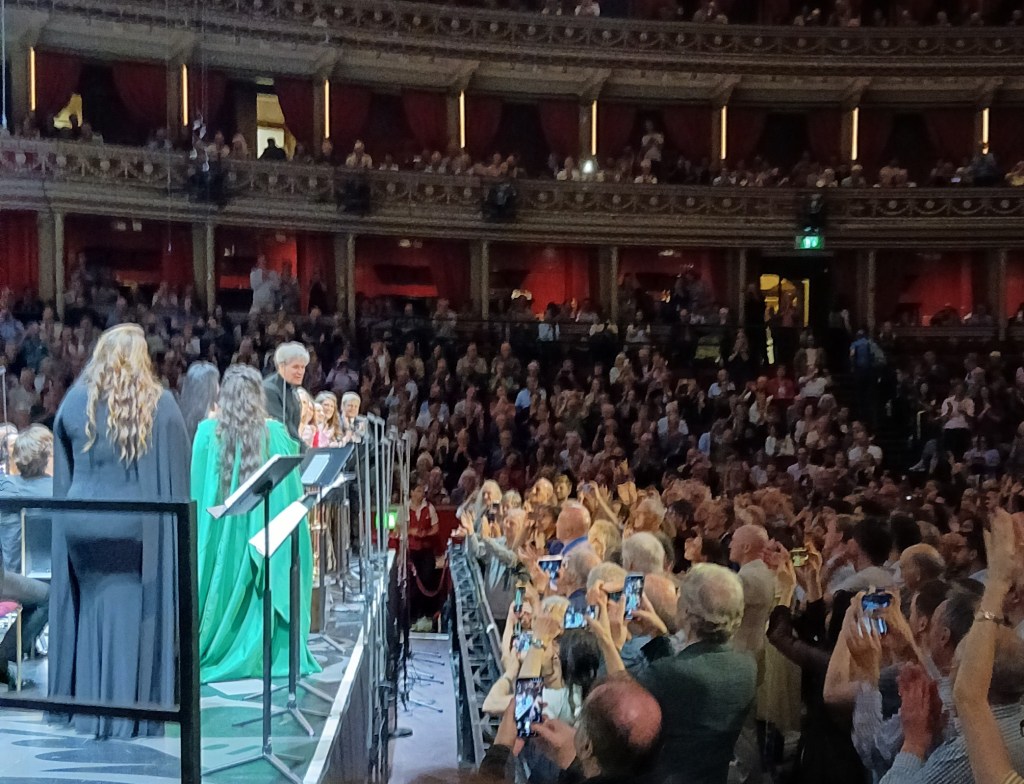
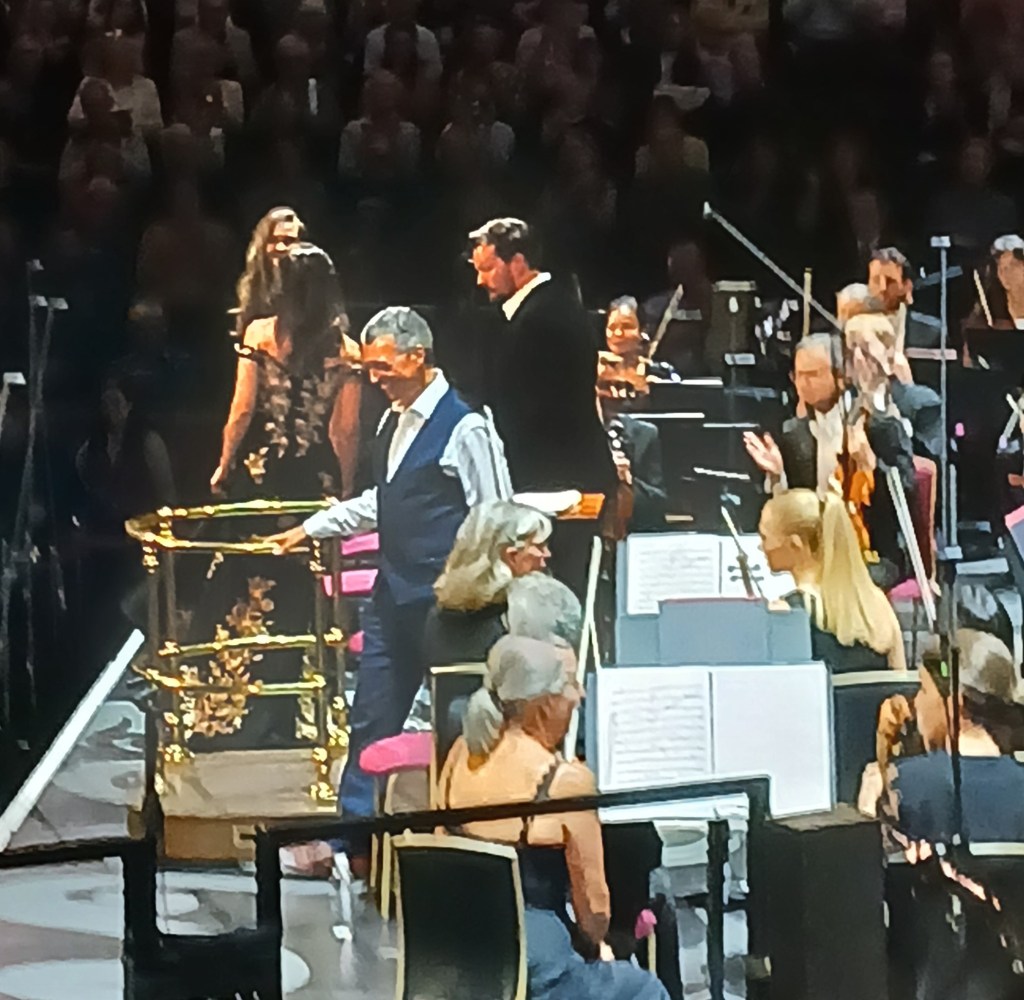
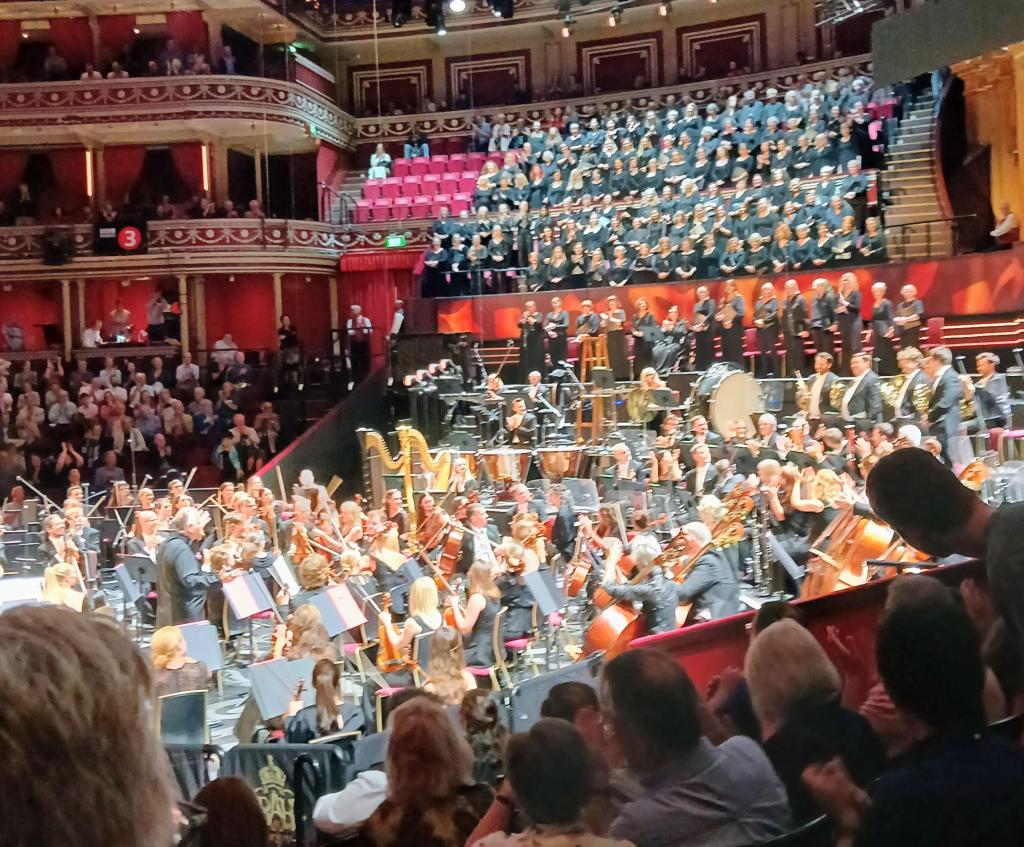
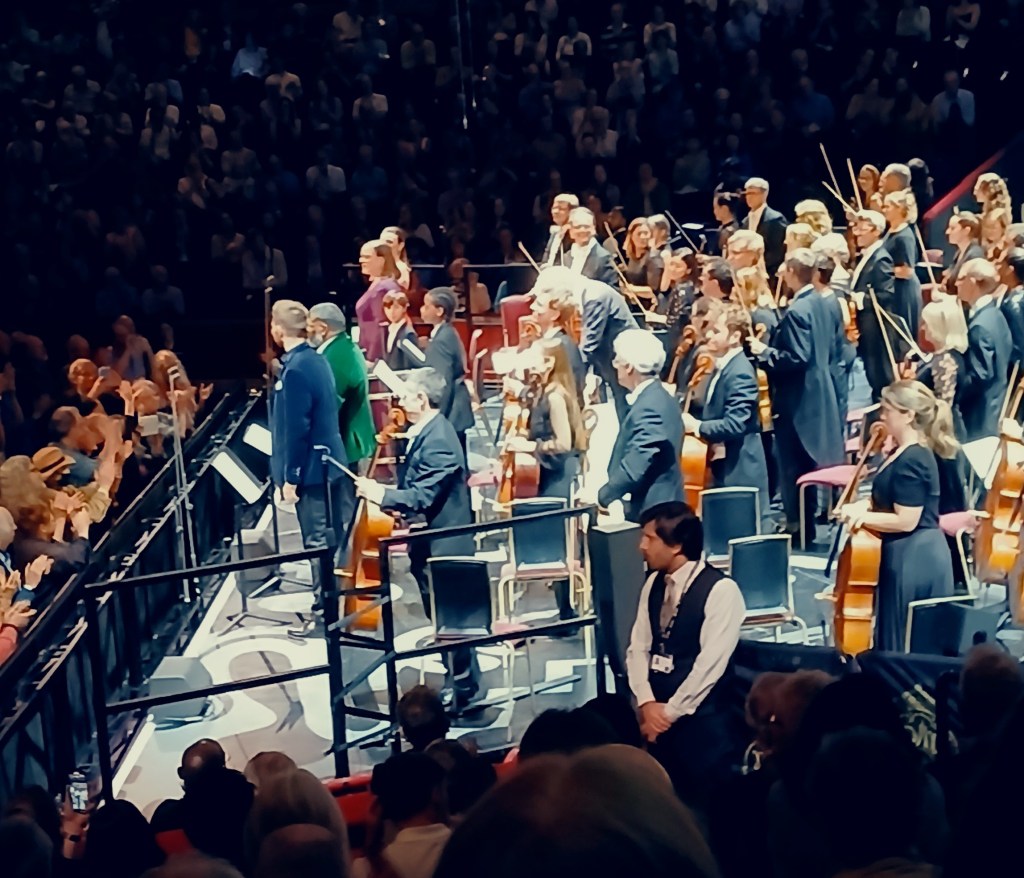
Musically there are no question marks – this was a remarkably good performance, all elements of it being at a very high level. The orchestra has a golden glow in the Glyndebourne house’s acoustics, and there was first class playing from all sections of the orchestra, though I’d single out the woodwind as being particularly excellent. The string playing was also enveloping and warm. Ticciati’s reading struck me as very flexible – shaping the music carefully, extraordinarily slow at times (e.g. the Prelude to Act 3) while the flower girls chorus went at quite a lick. He was particularly good at shaping climaxes, and holding back the full force of the orchestra until it was really needed. I also heard a lot of the inner voices in the orchestra through Ticciati’s careful balancing. Of the five principals, the standout has to be John Relyea as Gurnemanz -a beautiful voice and the music sonorously delivered, always with clear diction, and breathing understanding and meaning into every phrase. I was also deeply impressed by. Kristina Stanek as Kundry, who offered real warmth of tone in her voice, looks right for the part, and, through her singing, engendered a real sympathy for her character. Though a mezzo, her top note in Act 2 for ‘lachte’ was remarkably powerful. Amfortas and Klingsor were perhaps less notable but still very good. Parsifal came across as a bit of a cypher sometimes dramatically – you got in a sense that he was working his way into the role, but he did have the power for key parts of his role in Acts 2 and 3, and provided some sensitive shading of phrases. The chorus sounded magnificent throughout (though at times I think their singing was recorded)
In summary, then, the production’ is incoherent and muddled at times but also with new and refreshing readings of some of the scenes. All in all this was an impressive evening, albeit problematic. I am glad I went.