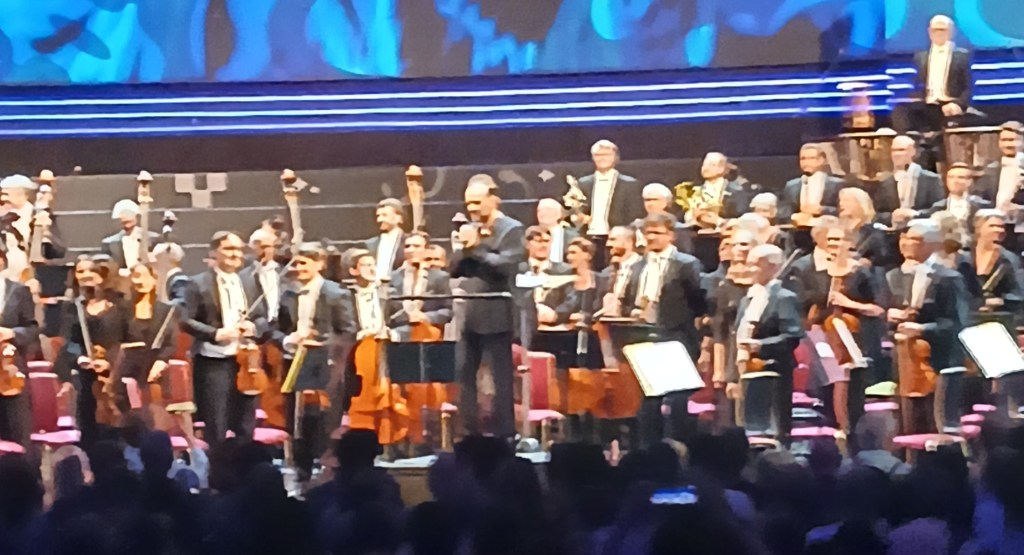
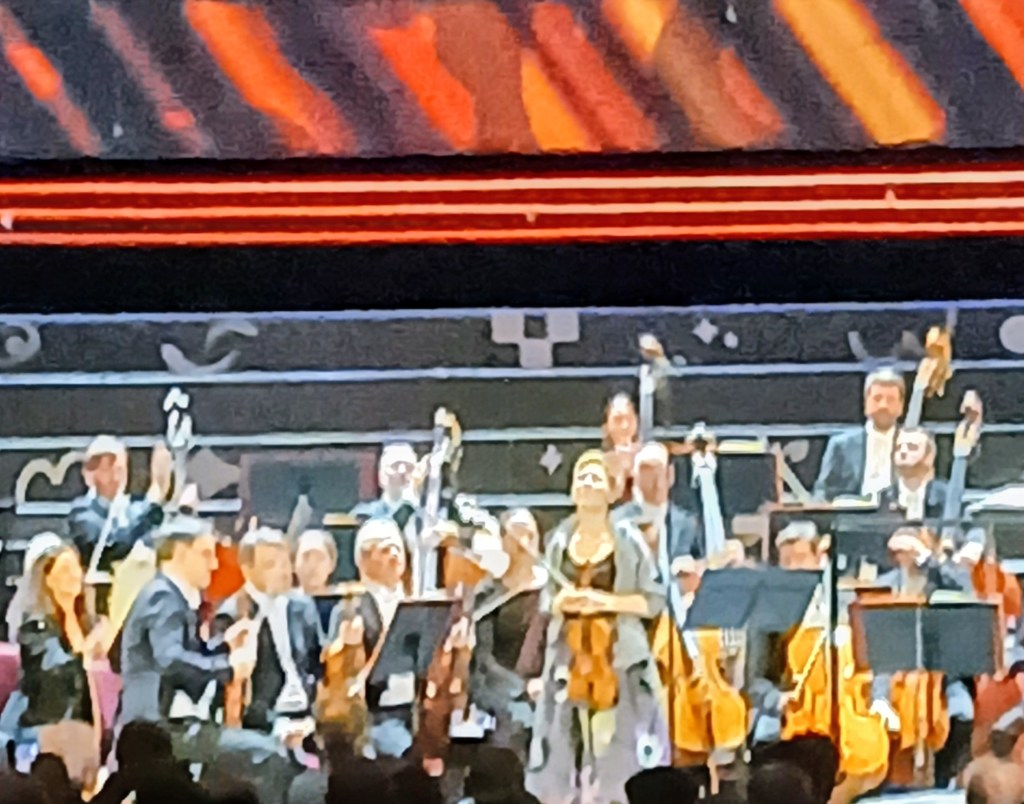
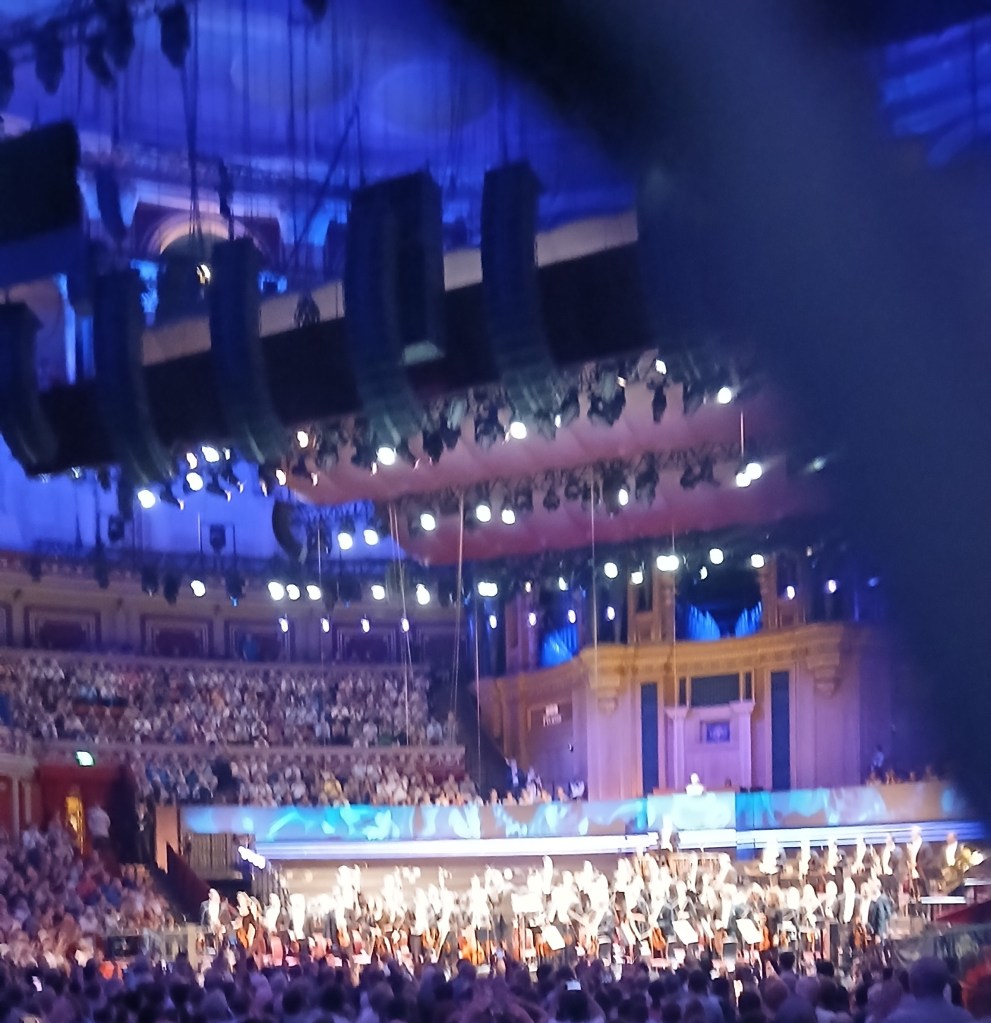
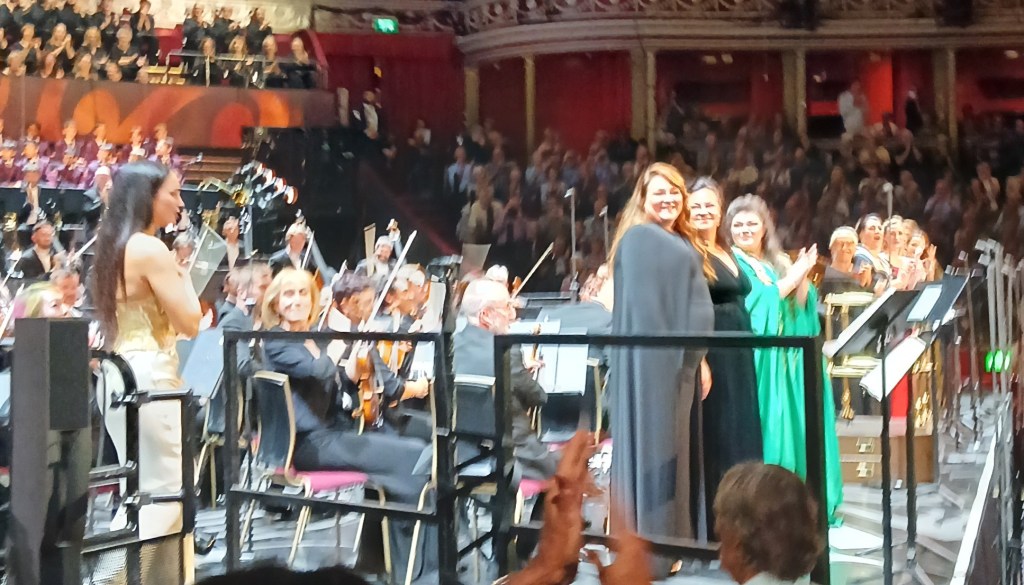
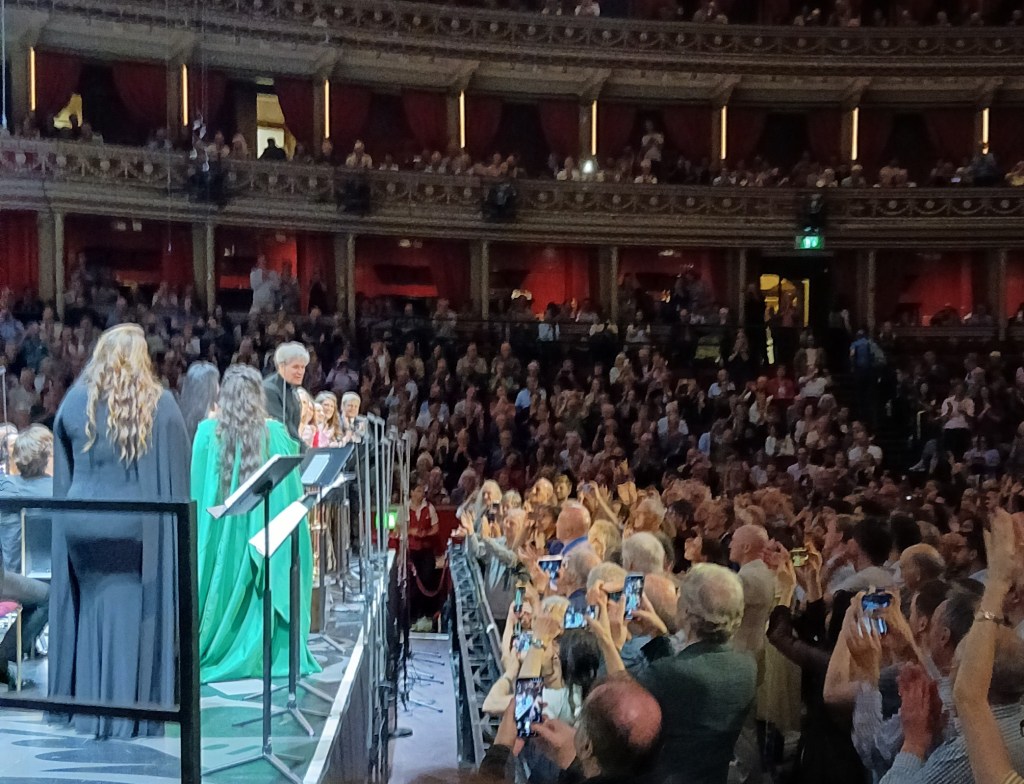
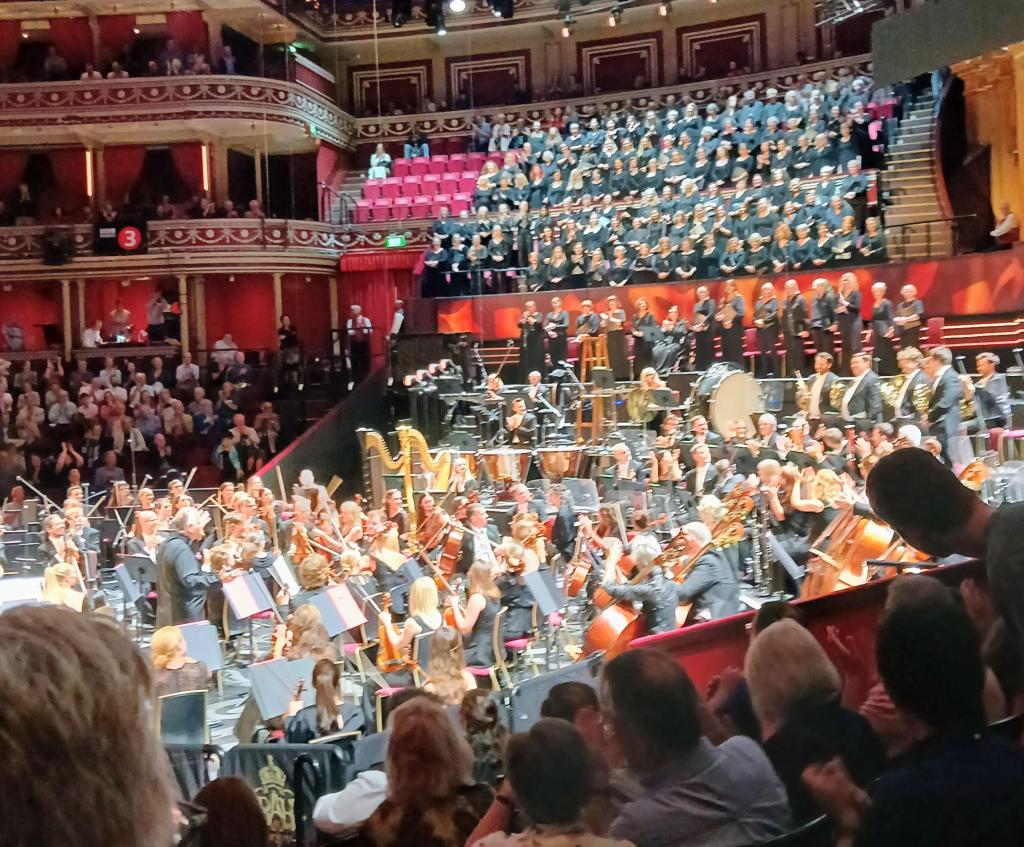
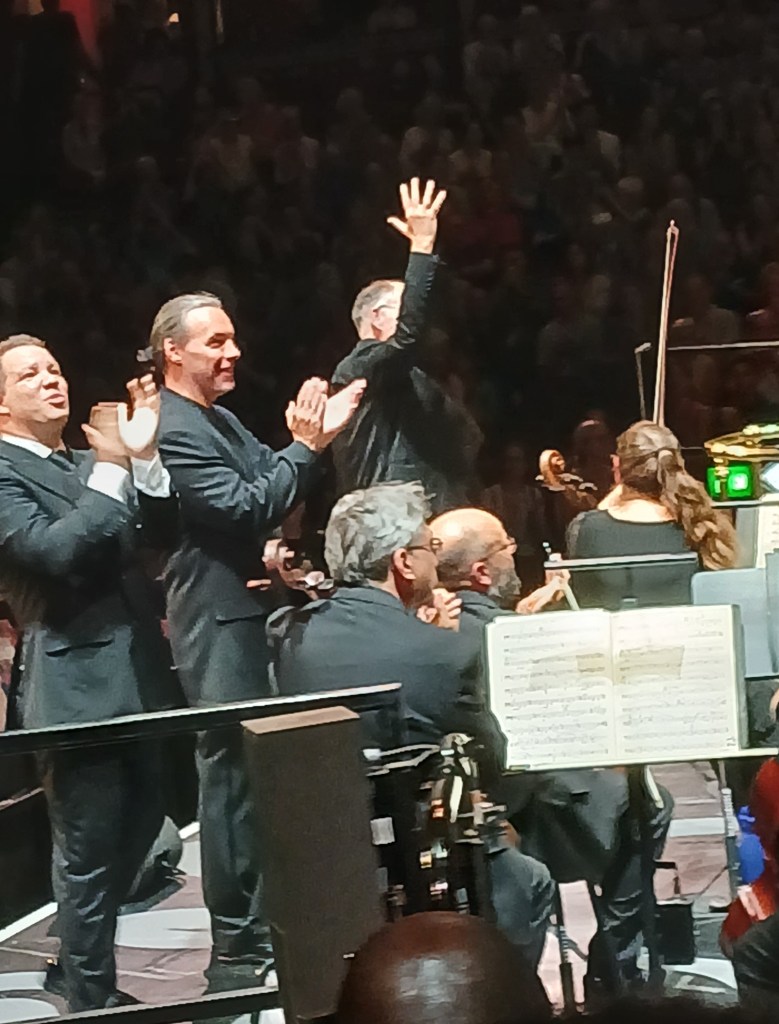
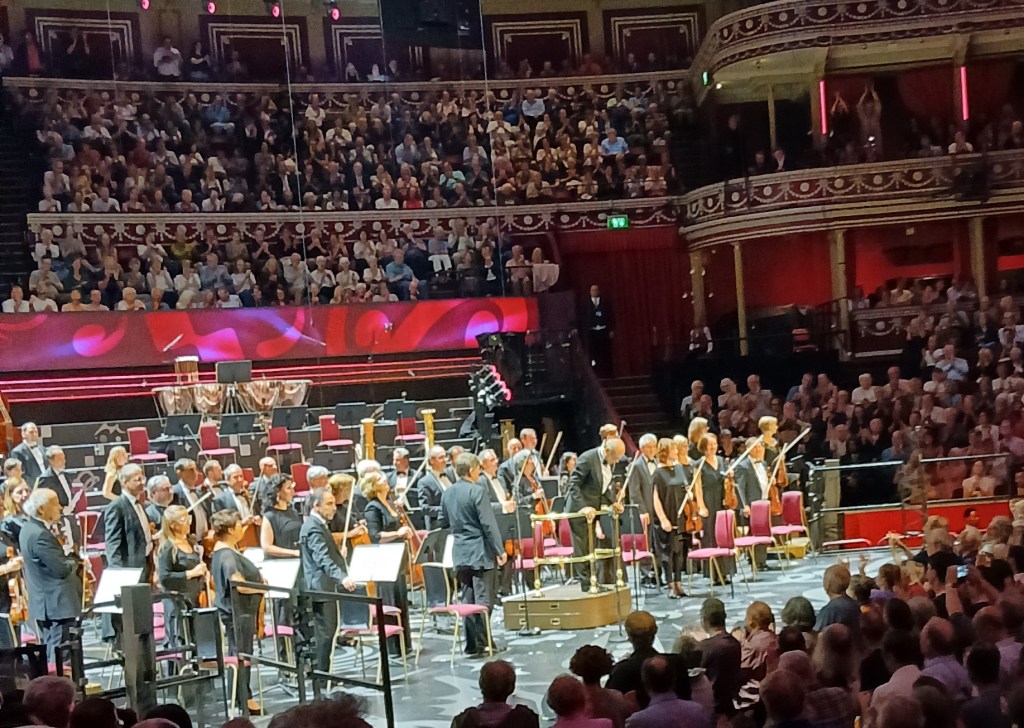
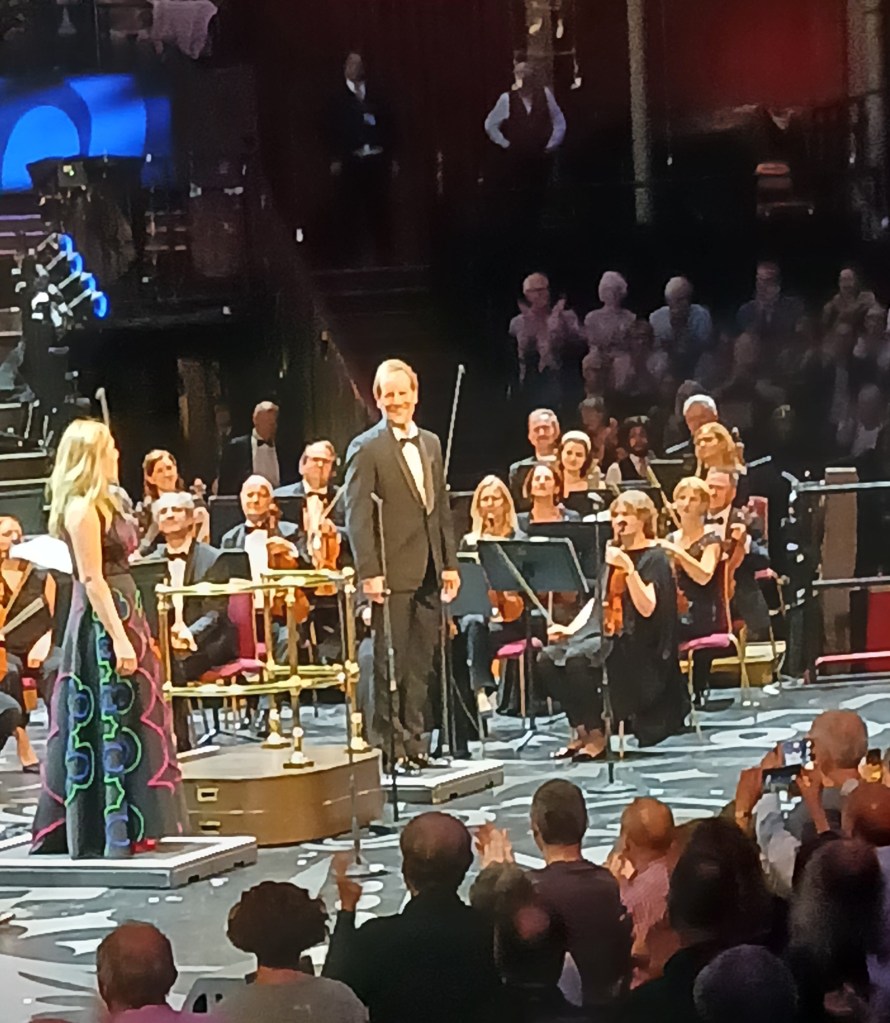
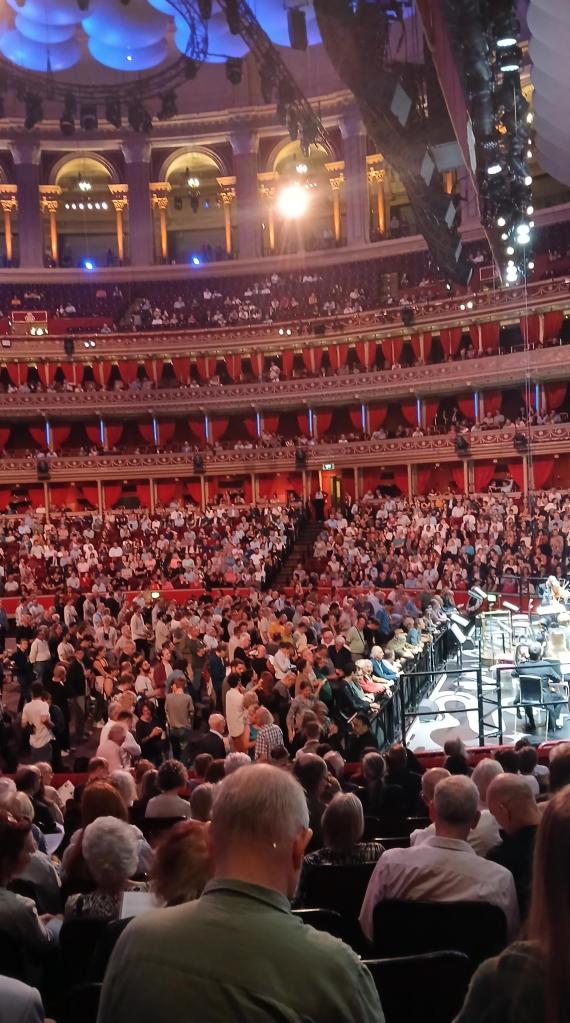
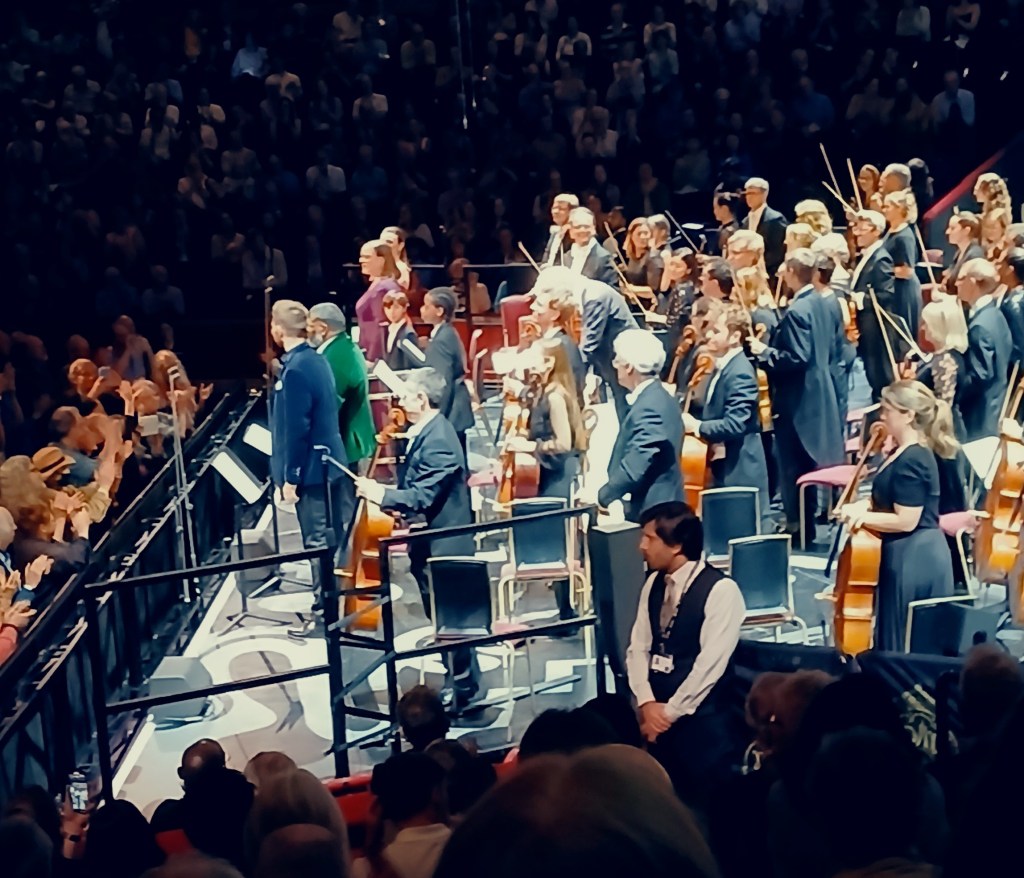
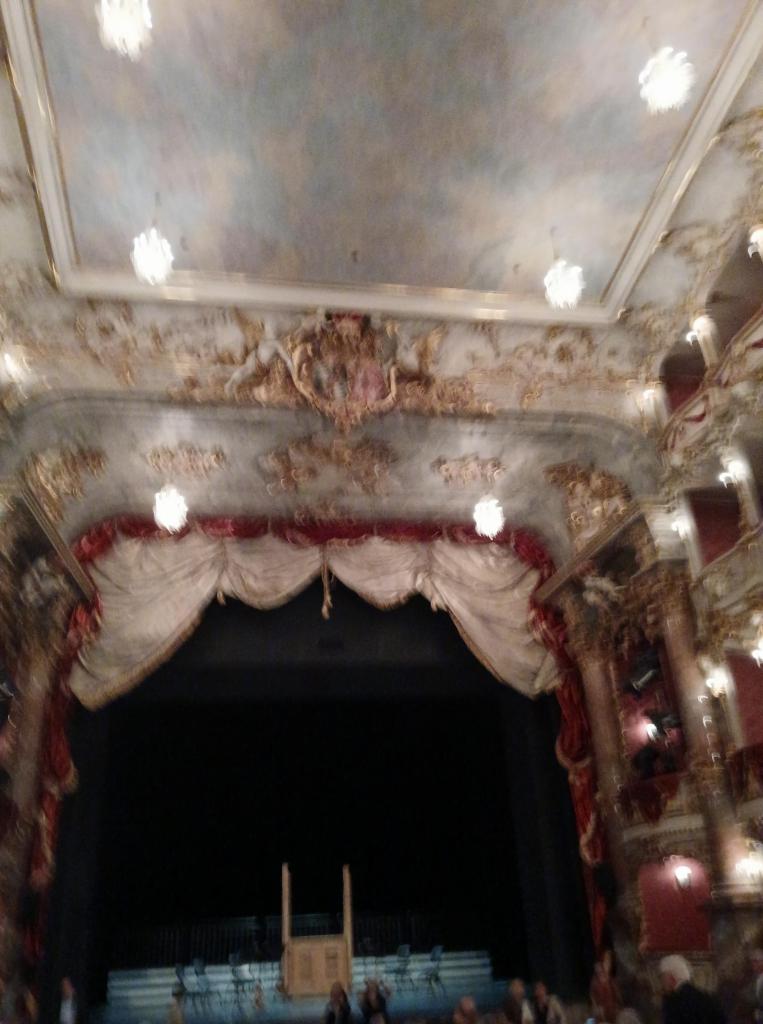
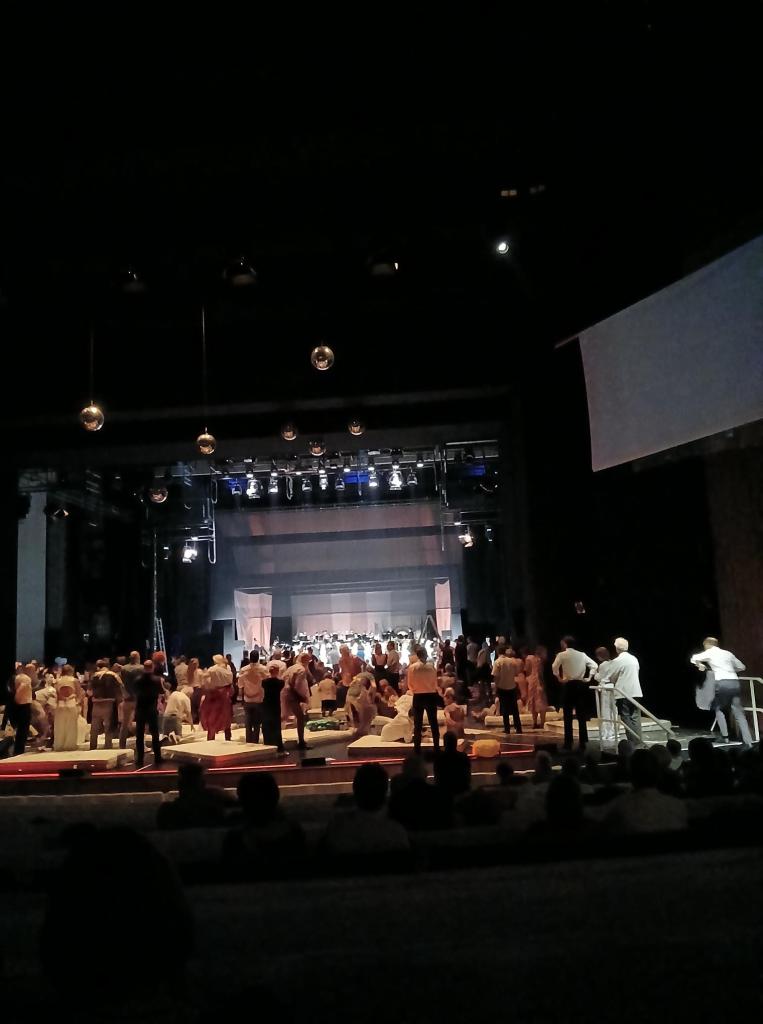
R. Strauss, Salome. LSO, Pappano. Barbican, 13/7/25

London Symphony Orchestra, Sir Antonio Pappano conductor. Asmik Grigorian, Salome; Michael Volle, Jochanaan; Violeta Urmana, Herodias; Wolfgang Ablinger-Sperrhacke, Herod; Niamh O’Sullivan, Page of Herodias; John Findon, Narraboth

This was my third Salome in 5 months, which is a bit bonkers really, even though it is a wonderful score. This had the attractions of being:

  • a concert performance, so no opportunity for directorial extravagance (like the production set in a tailor’s shop in Berlin…)
  • with star singers – e.g. Asmik Grigorian, Michael Volle – and I was pleased to see John Findon in the cast, having interviewed him a few years ago when he was Mime in the ENO Rhinegold
  • with the full throttle brilliant sound of the LSO and the excellent Tony Pappano as conductor

This was the second of two performances being given at the end of the LSO’s first season with Pappano. The Thursday performance had got rave reviews and the hall was completely packed -not an empty seat to be seen. I wondered in advance whether I had been unnecessarily penny-pinching by going for a seat in the Balcony – I realised I should have loved to have sat near to Asmik Grigorian, but the overall orchestral sound in the Balcony has a bloom you don’t get lower down.

The hot sultry London afternoon and, later, evening in Kings Cross where I was staying for this concert was very much in keeping with the sound world of ‘Salome’ – dark, unpredictable, unpleasant, decadent (there was a bloke in his 50’s on the corner of the street where I was staying urinating openly on the pavement at 5pm in the afternoon). It was also in accord with the excellent and surprisingly cheap Indian meal I had afterwards in Kings Cross, in a place I’ve been going to for years – succulent, spicy, rich, mysterious. Salome is all these things, a quite remarkable score.

This was in no way a ‘semi-staged’ performance and all the singers, apart from the arguing Pharisees and Saducees, stood resolutely behind music stands with nothing more than a glance at each other. All clearly though knew the music well and that was conveyed in the confidence with which they used gestures and held themselves. As a concert performance, the orchestra inevitably is centre stage sonically and visually in a way that is just not possible in the opera house. Tony Pappano (who never conducted it at Covent Garden in his 22-year regime) and the LSO made the most of it – the rich majestic brass sounds for Jokanaan, the snarling piercing trumpets, the swooning strings, the extraordinary percussive sounds (8 players in the section), beguiling and occasionally snide woodwinds, all were utterly memorable. There was all the rhythmic tightness needed but also an expansive approach to the big climaxes from Pappano. The music seemed to be swept along and 100 minutes of performance passed in no time; such was the concentration of conducting and playing. The powerful orchestral interlude when Jokanaan goes back into the dungeon must be the finest (and loudest) version I have ever heard live – very well structured and building to an enormous climax. The orchestral detail of the Dance of the Seven Veils was extraordinary, and I have never felt the cumulative impact to be so powerful and the links between the dances to be so inevitable.  And the climactic ending of the whole work both managed to be overwhelming and yet still allowed Salome to cut through.

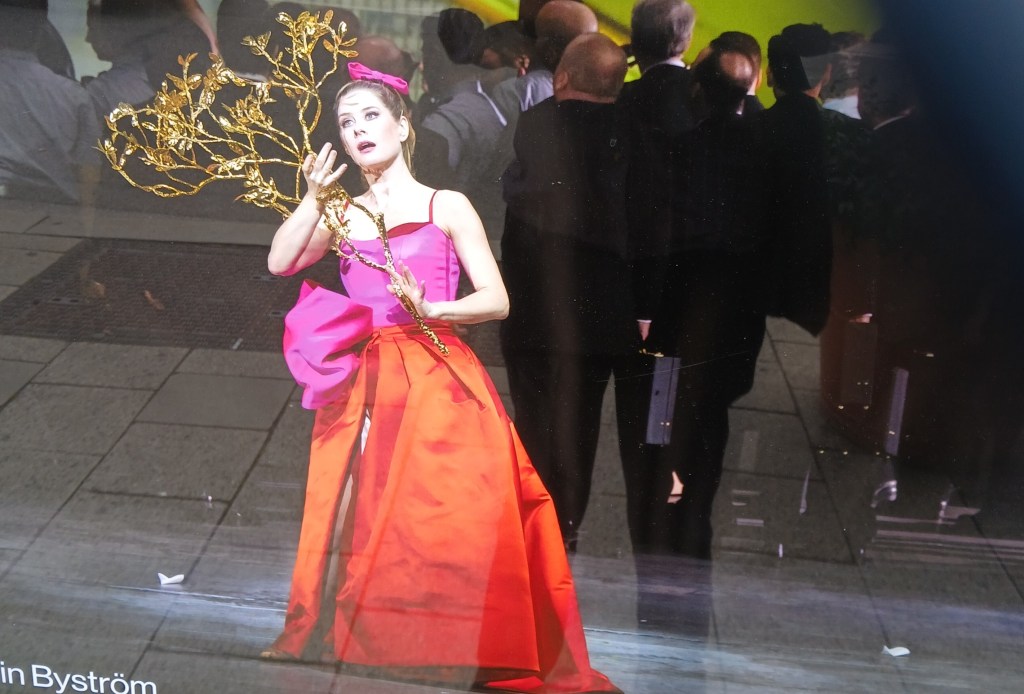
So even without super-star singers this would have been a very worthwhile event. But Asmik Grigorian is quite outstanding as Salome – easily the best I have seen live apart from Lise Davidsen. She has natural stage presence and can present both the girlish and terrifying aspects of the role very well. She can do this with small natural movements or just by being still. She absolutely looks the part – well, is at least credible in it – with striking hauteur. Her voice in this role can encompass both the quiet unearthly beauty of tone Strauss wanted at the top of the range, and an extraordinarily well-grounded lower register which displayed the eeriness and obsessive nature of Salome’s desire for Jokanaan; she also has the power to cut through the orchestra when needed, as in her final peroration. I’m treading on delicate ground here because I do believe Lise Davidsen in Paris last year was just slightly better at caressing the words, the musical phrases, but Grigorian did do this very well too and in addition is, I have to say, the better actor.

In addition, we also had one of the leading Wagner bass-baritones in the world currently, as Jokanaan. I think I have only heard Michael Volle live once before – as Sachs in 2017 at Bayreuth. His warm rich voice sounded wonderful even in the Barbican and he was, through vocal emphasis and dramatic gesture, able to convey the fanatical seriousness of the role as well as its majestic elements.  Wolfgang Ablinger-Sperrhacke as Herod was as unpleasant, nervous and as a weak character as you could want and conveyed all this without undue sprechstimme in a strong tenor voice – at the opposite extreme then to someone like Gerhard Stolze in the role. Violeta Urmana presented Herodias maybe less memorably than some, but she conveyed well enough vocally the contempt she feels for Herod (which in a sense is the most important thing she must do). I was pleased to see John Findon’s career advancing in such distinguished company through his performance of Narraboth – very well sung, much more of a heldentenor sound than one might expect in this role. It’s good Pappano has his eye on him

I suppose at the end of the day that Salome is a work that needs staging to provide some sort of explanation of why Salome is as she is – Oscar Wilde just takes the Biblical story and embellishes it. But in a performance as good as this you could just sit back and enjoy the glorious sound without worrying about character motivations.

I did ask myself afterwards – was Grigorian as good as Ljuba Welitsch, the touchstone for all Salomes?  Here is the link to the final minutes of one of Welitsch’s performances – (2) Richard Strauss Society | Facebook…….Here’s a bit of Grigorian by contrast on You Tube – Asmik Grigorian sings Salome #classicalmusic #operasinger #musician #sopranos #soprano #opera #love – YouTube.  I’m still thinking that one through…….

Handel, Semele, ROHCG. 30/6/25

Conductor, Christian Curnyn. Semele, Pretty Yende; Jupiter, Ben Bliss; Cadmus/Somnus, Brindley Sherratt; Athamas, Carlo Vistoli; Juno, Alice Coote; Ino, Niamh O’Sullivan; Iris, Marianna Hovanisyan. Director, Oliver Mears; Designer, Annemarie Woods; Lighting designer, Fabiana Piccioli; Movement Director; Sarah Fahie

This was the first night of a new production at ROHCG.  It has been my greatest musical pleasure of the last 25 years to get to know more of Handel’s and Bach’s works, as well as contemporary composers like Tom Adès and John Adams (having been introduced to noisy late Romantics and ‘the classics’ in my teens). In particular, Handel’s operas are all absolute winners – I have so far heard 17 Handel operas and staged oratorios live and I have at least 36 to go (Susanna and Giustino in October and Partenope next in December). Each opera has a core of a few hit numbers – some, like Julius Caesar, Alcina and Semele, have a whole string of them.

This co-production had premiered in Paris a few months ago, where it was much praised, and it had the same cast for its London run, though with a different conductor and of course orchestra. I have a faint memory of seeing a previous live performance at ENO in the early 70s (Valerie Masterson as Semele? – certainly conducted by Mackerras) but I’m not sure about that………..

Handel wrote the work in just over a month in 1743. It was styled as an oratorio – ‘Italian opera’ by the 1740’s being out of fashion and not good business. Because it was billed as an oratorio – and it is a story with a strong moral undertone, and with a lead character displaying notable hubris as well as being naïve – it was first performed during Lent 1744 (at Covent Garden).  What the pious middle classes of London made of it, I am not sure – whether contemporary or not, someone referred to it as a ‘bawdytorio’.  To all intent and purpose, it is an opera, without the heavy choral component other Handel oratorios have. There were only ever 6 performances in Handel’s lifetime and it then remained unheard for almost two centuries.

The story comes originally from Ovid. Semele is getting married to Athamas, but she is much more interested in Jove. Ino, her sister, on the other hand is desperately in love with Athamas.  Jove, king of the gods, is in the guise of a young man, and seduces the mortal Semele, who is only too willing to be seduced, and he takes her to a mountain top to be his mistress. Semele loves the life of luxury there. When Jupiter’s wife, Juno, learns of her husband’s adultery she is furious and thinks up a plot whereby she appears In disguise to Semele and persuades her to insist on seeing her young lover in the form of his true divinity.  Jove reluctantly agrees when she asks, but his thunderbolts destroy Semele. So,,,,a cautionary tale of hubris……

There are several aspects of both the work and the production which make it an impressive experience in the theatre. Firstly, the libretto. This was originally written, by an established playwright, William Congreve, (therefore a better than usual one) around 1705–6 and had been previously set to music in John Eccles’s opera Semele. The text was adapted for Handel by an unknown collaborator. Within the constraints and artificialities of how Baroque opera works, there are really very few portentous and unnatural asides to the audience and the action flows naturally through arias and recitatives between characters, with elegant language. The lines for the chorus (after Semele has been destroyed by Jove’s thunderbolts ) are wonderful and remarkably conveyed by Handel’s wandering, dark and unpredictable choral writing. Nature to each allots his proper sphere, But that forsaken we like meteors err: Toss’d through the void, by some rude shock we’re broke, And all our boasted fire is lost in smoke. I also love Juno’s lines Love’s a bubble, Gain’d with trouble, And in possessing dies. There are many more gems to explore in the libretto.

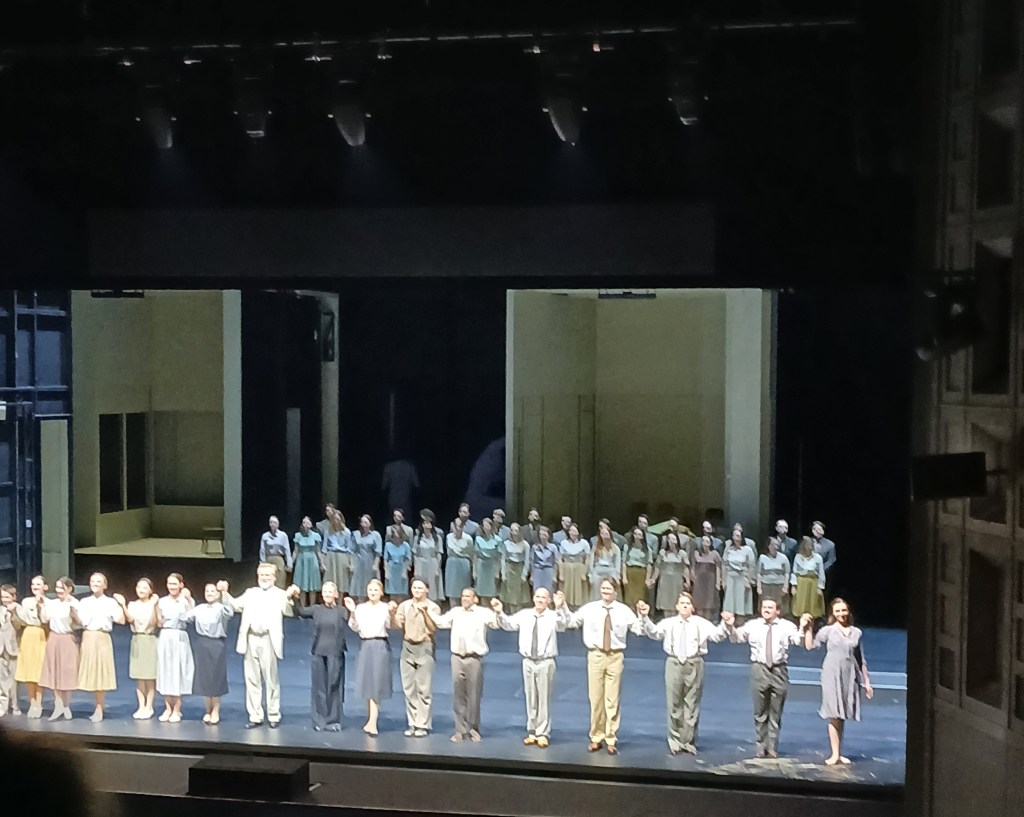
Secondly the sets/settings make sense and are well organised. Clearly how a director deals with the setting of this work is important – modern dress and set? imitation Baroque sets? bare minimalist mythic staging? All are possibilities. Oliver Mears opts for the very reasonable idea of setting the work within the 1960’s, where Jove is a wealthy lord and landowner, and Semele is a servant in the household.  There is a 3 sided set in the shape of an off kilter triangle, which represents a large sitting room or maybe apartment in Act 1, and 3, and a mountain retreat in Act 2. A plastic looking sheet with an abstract design comes down for some front of stage sessions while scenery is being changed, and there are also some scenes in a framed quickly movable box  for Juno’s boudoir and the hilarious scene in Somnus’ bedroom (of which more below). Though oddly there is no representation of the moment Semele is hit by Jove’s thunderbolts, there is a spectacular display of them in Act 1 when the wedding is disrupted by Jove and Semele carried off. Costumes and props are also of the 1960’s – i guess to give a sense of otherness to the idea of lord/servant relationships, and they are meticulously in-period authentic – lounge sofas, a satin round bed, Ino’s Marilyn Monroe-like dress. Juno’s hairdo and the fine gramophone player Semele sets in motion at the end of Act 2 for the final chorus of that act, for instance. Jove normally wears a suit except in his more intimate moments with Semele. Somnus is a trouserless old lecher when he wakes up.

Thirdly, maybe because the cast had worked together in Paris, it was all extremely well-acted and no-one looked other than supremely confident in their parts – more below on this. Everyone reacted naturally to each other, without exaggeration. The production was constantly inventive, though with darker intent than Handel and Congreve probably envisaged. Semele is definitely exploited in this production. Oliver Mears’ various ideas for filling out the ABA da capo arias were all extremely effective – eg various bits of business with bed-making at points in Act 2; Semele and Jove writhe around beneath an all-enveloping bed spread while another da capo aria is going on. The rather silly business of Juno fashioning herself as Ino to tempt Semele to ask Jove for immortality is cleverly handled, with a floppy Ino bring dragged about by Juno. Somnus in Act 3 was portrayed watching a black and white TV with a mountain of beer cans and other detritus not clearly visible from the front row of the Amphitheatre. The beautiful nymph Pasithea does the Twist for Somnus to get him in the right frame of mind to produce his spells to move the action forward as Juno wishes. Mears gives a twist to the ending too – after Semele has been zapped, it’s clear that Ino must marry Athamas  and a wedding ceremony is prepared. However, Ino shows signs of increasing agitation and at the end she suddenly abandons her prospective husband and lunges towards Jove followed by an immediate blackout – humans don’t learn very much from history and are doomed to make the same mistakes, the production is saying….All the stage action, then, is cleverly and entertaining done.

And fourthly the music is glorious. Nearly all Semele’s numbers are well known and memorable – “Endless pleasure, endless love” in Act 1, the beautiful awakening aria in Act 2, the fateful ‘Myself I shall adore’ after Juno’s visit and the spectacularly fiery “No, no, I’ll take no less” in Act 3 to Jove.  Somnus has his wonderful sleep aria too in Act 3. For Jove there’s of course ‘Where e’er you walk’, but also “Lay your doubts and fears aside”, while Juno has a great display piece at the end, “Above measure is the pleasure” and a fiery piece in Act 1.

But yet another reason for why this was so good was the individual excellence of cast members. I haven’t seen Pretty Yende live on stage before and in advance I wouldn’t have put her down to be a particularly good actor. But she threw herself into the role and believably portrayed both the character’s over- confidence and her vulnerability, running round the stage excitedly. The sheer physical energy of her portrayal was breathtaking. She’s also good at being sexy, which is not a gift all opera singers have at their command. Her voice isn’t a large one but I would describe it as crystalline – there is absolute clarity in the coloratura runs, complete security in the very high notes, and a warm lower range. Altogether she was very impressive. Ben Bliss was also very fine as Jove – a strong tenor, with a great sense of legato and a way of expressing the text which enhances its innate musicality. He had excellent diction. Alice Coote is such a familiar figure in the concert hall you (I) forget how very good she is on stage – excellent stage presence, good acting, and sensitive phrasing. Brindley Sherratt’s presence is also a familiar one on stage and he was as reliable and good as he always is. The ineffectual Athamas wrung his hands effectively in Act 3 and looked droopy in Act 1 (he also has a spectacularly florid counter-tenor aria to sing, which he did very well). The chorus – not large, maybe 20 people – filled the house with their strong singing, at least from where I was sitting, with no weak links in the individual sections. The orchestra was large, and with modern instruments, albeit including a harpsichord and two theorbos. Who knows if Handel would have approved of the size…. At times I missed the zap and zing of a smaller period instrument band, but on the other hand, a lot of the music is deeply sensuous, well suited to a lush modern string sound. I suspect Handel would have approved

So…. A really enjoyable evening.

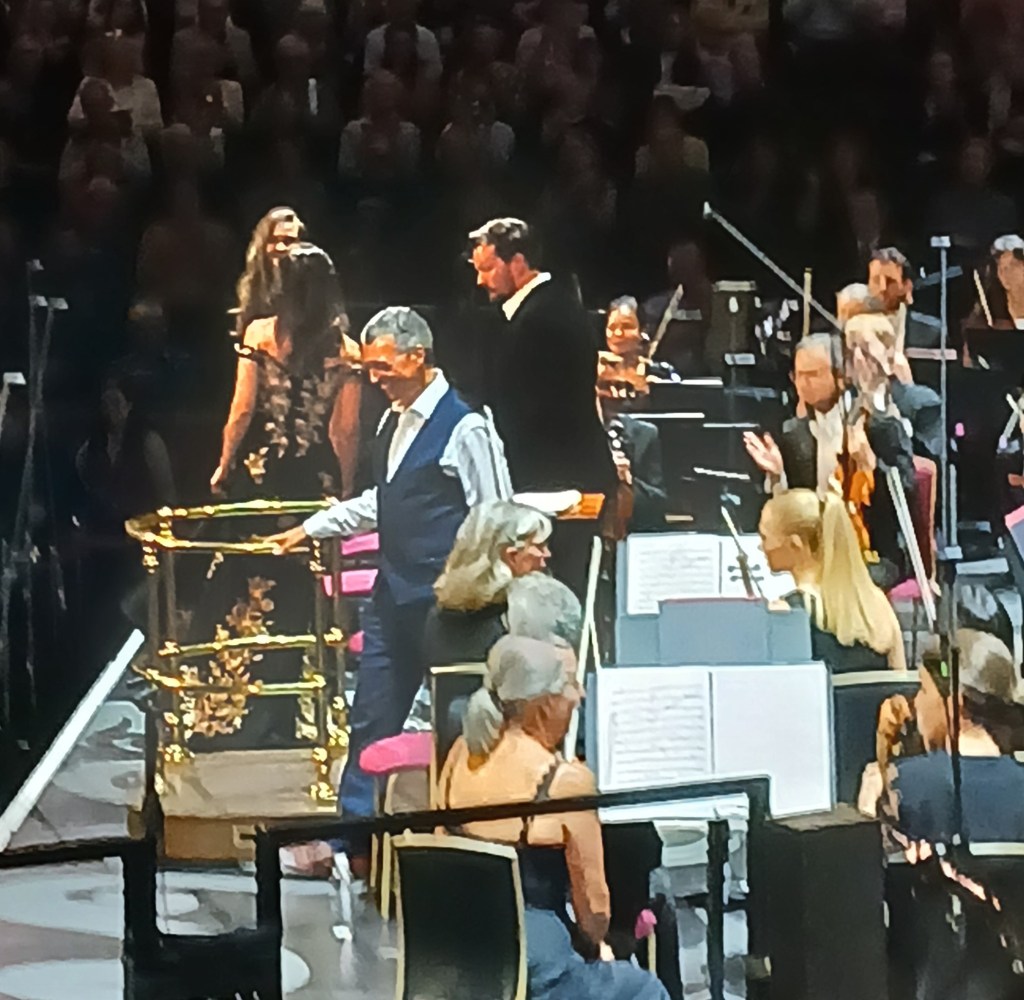
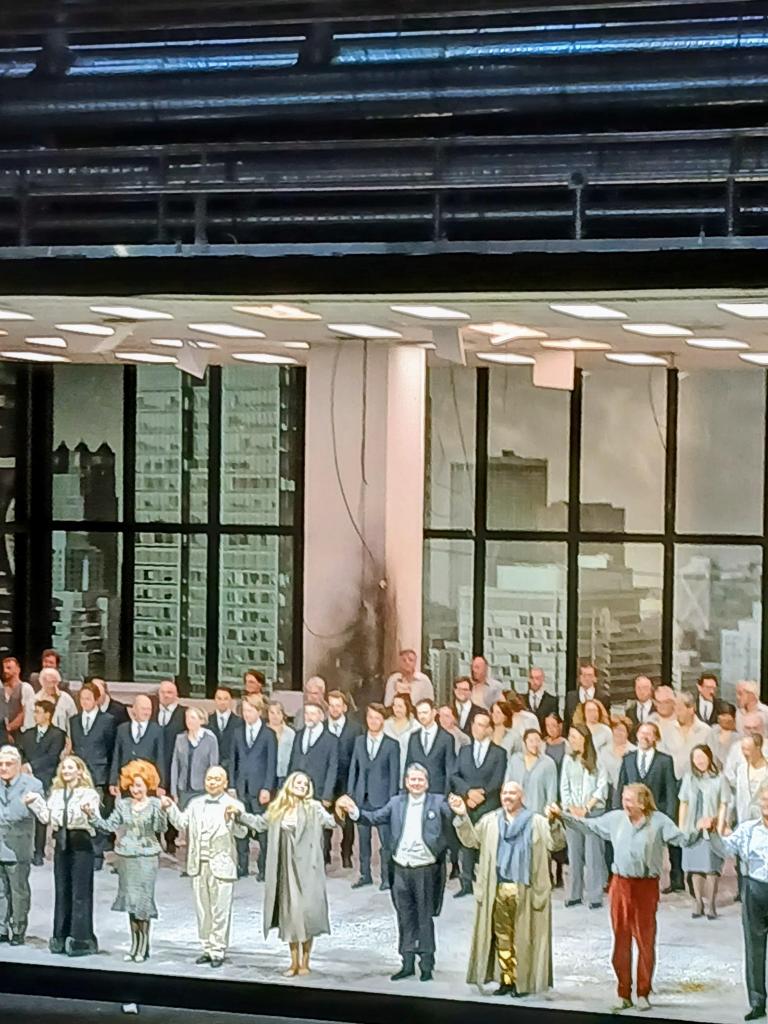
Production team takes a bow on the first night…….

Evgeny Kissin, piano. Barbican, 25/6/25

Bach Partita No 2;  Chopin Nocturne No 1, Op 27, Nocturne No 2, Op 21, Scherzo No 4. Shostakovich Piano Sonata No 2, Prelude and Fugue in D-Flat Major, Prelude and Fugue in D-Minor

I wanted to go to this recital partly because Kissin is a very significant pianist, and I was keen to hear his Bach and Shostakovich, and partly because I have never got on with Chopin, and I wanted to see and hear if he could convince me.  Somehow I have always been allergic to Chopin’s music – I never got into it as a teenager, and my children’s struggling/succeeding with it for Grade 5 or Grade 8 left me relatively unmoved .  It has to me a sense of sentimentality and smugness which I am sure is unfair, but which is how I hear it.

Evgeny Kissin was a child prodigy, a product of the extraordinarily successful musical education system of the USSR. His late teenage years coincided with his first international engagements and the collapse of the Soviet Union. He stayed overseas, ending up as an Israeli citizen with a global reputation as one of the finest pianists around. I’ve heard him as a concerto soloist before but never in a solo recital. He’s an outspoken critic of Russia’s invasion of Ukraine, incidentally, and has been dubbed a foreign agent by the Putin regime.

This programme which he has been performing widely in Europe and the US is in part a tribute to Shostakovich on the 50th anniversary of his death (the announcement of which I well remember). None of this music was familiar to me, though I have played on CD the Bach Partita. and The Shostakovich Preludes and Fugues a few times.

Kissin’s technique – insofar as I am able to judge it as a non- pianist and indeed non- performing musician – is extraordinary. Of the many star pianists I’ve heard in the past 10 years or so, only Yuja Wang has impressed me more with the utter confidence, utter clarity and the precision under speed of their playing. Some of the Bach and Shostakovich playing had a blazing brilliance you very rarely hear in the concert hall. The Barbican was packed, with a lot of Kissin groupies about, leaping to their feet at the end.

For me this was definitely a programme of two halves.  The Bach Partita sounded technically brilliant and clear, but I heard in all that dazzling sound very little variation of light and shade, no stillness, none of the quiet melancholy that pianists like Vikingur Olafsson and Andras Schiff bring to Bach, or that sense of lifting dance which radiates through so much of his music. Of course, technical brilliance is something Bach would have enjoyed, but surely he’d want emotion as well?

I am afraid, also, that the Chopin didn’t grab me either as pieces, though I could tell they were gorgeously played. There’s just too much of the perfumed salon about his music….they seemed to be miniature gems of throbbing emotion to no particular purpose, with no sense of the objective correlation of that emotion. Why don’t Schubert’s Impromptus have the same impression on me? I’m not sure – somehow there’s a sense of the pain of his imminent dissolution that’s conveyed by them which anyone listening to them understands. I never feel that with Chopin, even though he was just as doomed. The emotion is somehow generalised.  But these are personal ramblings – Kissin is a longtime Chopin specialist, and it showed in the subtlety of his playing as well as his virtuosity.

The Shostakovich second half was something quite different – it was moving, impressive and with playing that combined technical expertise and emotion perfectly. I’ve not come across the 2nd Piano Sonata before, which was a wartime piece (1943) so roughly contemporaneous with the Leningrad Symphony. It’s big – maybe 30 minutes. It has none of the sarcasm and fury that invades many of Shostakovich’s works at points – rather, it sounded throughout introspective, quiet and mournful (it was written after the death of his teacher). The first movement is quite light hearted – much like the opening of the 7th Symphony, but never breaking into anything more aggressive. The second is quite extraordinary – quiet, notes almost unconnected, intensely sad, and wandering sometimes almost aimlessly. Kissin played it wonderfully. The fourth movement, I think the longest, is a theme and variations, the former quite memorable and the latter covering a range of emotions with an ending which brings strands from all three movements together before the movement finishes solemnly.  I must get a recording of this work

The two Kissin played of Shostakovich’s 24 Preludes and Fugues, bringing us back to the start of the programme, were both enjoyable – the second, the D Minor, was particularly grand and wonderful to hear live – Kissin played it gloriously.       

Kissin’s two encores reflected elements of the programme – first a slow Bach piece – maybe one of the transcriptions by Busoni or similar – which had the melancholy missing earlier, and (though I couldn’t tell you its name) a well known and relatively upbeat Chopin piece to get the crowds cheering….

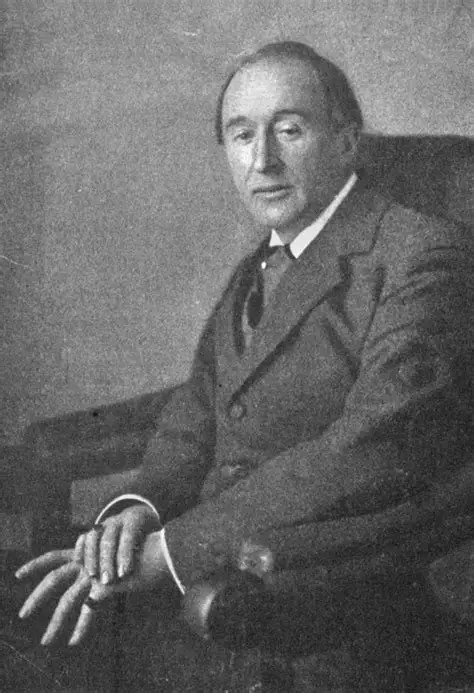
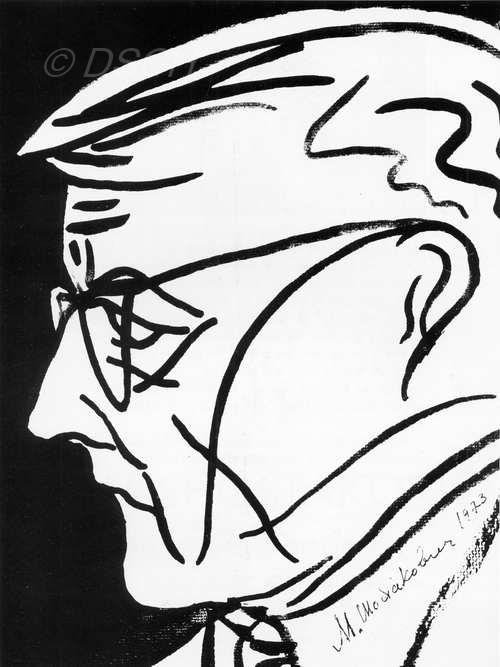
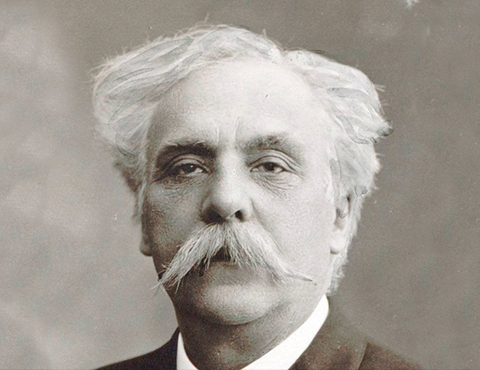
The photo on the right is Chopin in 1847

Late Night Song Recital, Wigmore Hall 20/6/25 10pm

Songs by Schumann, Britten, Copland, Dove and others, performed by Nicky Spence tenor; Clare Presland mezzo-soprano; Andrew Matthews-Owen piano; Robert Rinder presenter

This was an interesting programme, centred around songs from Schumann’s song cycle Frauenbliebe und Leben. Nicky Spence I know as an ENO Siegmund and a fine tenor in several of the Janacek operas heard in London recently. Clare Presland I thought I hadn’t heard/of before but in fact I had – she was the fine singer performing Pia in the premiere of Turnage’s Festen at ROHCG a few months ago.

This concert was a concept that looked great on paper but which didn’t quite work as well as it could have done, in practice.  The idea was to balance Schumann’s Frauenliebe und leben, with its cyclical view of how human relationships work, against songs on the same themes by LGBTQ+ composers – think Britten, Copland, Poulenc, Stephen Hough and others. That’s good, and it did introduce me to a very fine young Welsh composer called Nathan James Dearden, whose songs are quite outstanding. I was also very moved by Jonathan Dove’s AIDS song, Soon.  Nicky Spence is a well known presence on UK stages, and his voice is very much an operatic one – about three times the volume of Appl’s. But he can fine it down to a bare whisper, and his voice is capable of great beauty. In what I felt was the finest song of the whole programme, Britten’s Since she whom I loved from the Holy Sonnets of John Donne, his singing was quite outstanding, with a comparable intensity and loveliness to Appl’s.

Problems for me were as follows…..

Though I am very familiar with the songs – Janet Baker as a teenage purchase again – the texts of Frauenliebe und leben never fail to grate. They’re so cloying, so much of their time and a mid 19th century middle class view of how women are supposed to be that they are an embarrassment nearly 200 years later. Nicky Spence and Clare Presland attempted to deal with this by a partial staging around a coffee table. This was quite funny sometimes – Nicky S is a natural comedian and his reactions at times counteracted successfully the cloying sentimentality of the Schumann songs. But the range of songs emotionally was so wide that the staging  idea didn’t always work or wasn’t always used.

This was a late night recital, starting at 10pm and billed to last ‘approx’ an hour. It actually lasted 75 mins, which is a bit much when people have last trains to catch. There should have been several fewer songs. One factor which extended the evening was the use of a presenter to read poems and letters. Though he did this very well, and it did allow the LGBTQ+ aspects to be more pointed – eg the famous late letter from Pears to Britten expressing his love – on the whole we could have done without these readings.

Finally, and it pains me to say this, while Nicky Spence has a powerful voice (singing Siegmund is not for the faint-hearted ), which is also capable of refinement and subtlety, Clare Presland’s voice on this occasion had a quite distractingly wide vibrato, which also seemed to lead to less pointing and variety of phrasing than was ideal. Maybe others heard her differently – I hope so. Let me stress that hers was a perfectly competent rendering of the Schumann songs, but just not on the level of Appl or Spence

I pushed and shoved my way on to a ‘severely delayed’ Victoria line train, at Oxford Circus, afterwards feeling I had had a very worthwhile evening

Song Recital, Wigmore Hall 20/6/25 7pm

Benjamin Appl baritone; Simon Lepper piano. Songs by Schubert, Kurtag, Brahms, Liszt and Eisler

This was a recital I was looking forward to as a challenge – to explore works new to me. Appl, a much-praised young German singer, was the last student Dietrich Fischer-Dieskau took on, and so Appl has set up a European tour (maybe beyond) in his memory on his 100th birthday. This London programme is considerably more challenging than the programme Appl has offered at a couple of other UK venues – both the songs of Kurtag, the great Hungarian modernist (last of those still living from the 50’s and 60’s coming up to 100), and Eisler, 1930’s and later collaborator with Brecht and composer of the East German national anthem, seemed in prospect to be tough going, and I have never heard any songs by Liszt before.

London has never done very well for concert venues. The Barbican and the Albert Hall are acoustic disaster zones, the RFH is better but dry. The Cadogan Hall is good but I don’t find much I want to go to there. The Wigmore Hall is the place that combines superb acoustics for the sort of music it hosts combined with always interesting programming. So it was a great pleasure to be there and good they were offering two song recitals on the same evening – this one and the late night one reviewed above.

Appl has a beautiful golden baritone voice, with a wide range. It’s not hard edged but warm and with seemingly infinite flexibility, from the almost whispering to the stentorian. Like his great forebears – Fischer- Dieskau, Hotter, Schreier – his diction is superb. Every phrase is nuanced; every note counts. It’s a voice which is ideally suited to the Wigmore Hall. I see from his bio that he has done some opera but not much recently, and, as you would expect, more at the Mozart end of the spectrum – it’s not a big voice. There was one moment when he pushed his voice too far, and it cracked, but this was his only miscalculation in a long evening. His programme was called ‘Lines of Life’ and, I guess was about the big experiences of life – it comes from one of the Kurtag Hoelderlin settings “The lines of life are varied, as paths are and the mountains’ boundaries’. The hall was far from packed – Kurtag in particular and Eisler probably frighten the horses – but very appreciative.

The first half mixed Schubert bravely with Kurtag. The Kurtag songs are very interesting – two of them were unaccompanied, and that made particularly clear that Kurtag writes music for the voice which is expressive, not conventionally tuneful but well suited to accompanying the words. I was also interested to come across Hoelderlin, whose poetry I hadn’t read before. His poetry is extraordinarily advanced for the period -at least in the translation given here – and sounds 50 years later than his dates [1770 to 1830]. R. Strauss and Brahms are the main musicians who have set his poetry to music I enjoyed Kurtag’s setting of 6 Hoelderlin songs and a terrifying setting of Celan’s (a Romanian / French Holocaust survivor) ‘Tubingen, January’, which ends in shouts and vocal noise. The Schubert settings were wonderfully sung and I particularly enjoyed ‘Liebesbotschaft‘ from ‘Schwanengesang’, a song I know well. I also particularly liked a song new to me, ‘Am Tage alle Seelen’. The Brahms and Liszt settings were perhaps less interesting, though Brahms’ ‘Da unter in Tale’ was a real find. I am not that familiar with his songs other than a few favourites, like Mainacht, bought on a Janet Baker album when I was 18. Liszt is a fascinating figure – I am reading a book about him which somehow popped up on my Kindle recommendations for 0.99p by Sacheverell Sitwell. written in the 1930’s. My experience with Liszt is he normally promises more than he delivers, and so it was here, although his setting of Heine’s Lorelei gripped me. The other big and enjoyable surprise were Eisler’s songs. I have never heard a note of his music before – the nearest comparison would be Kurt Weill, and they had not dissimilar careers. A lot of the Eisler settings were of Brecht. They were easy on the ear and enjoyable though the subjects were often serious – Hitler Youth and pre-war abortions.

Simon Lepper seemed to be, to my inexperienced ears, a fine accompanist though I wondered why his pedalling of long final notes cut off so abruptly into silence.

This was a most enjoyable recital               

Baroque in the North

I had forgotten to review a short concert I went to by a group called Baroque in the North recently

I have heard them twice before. There are three players – a harpsichordist, a Baroque cello player and someone who successively plays a baroque violin, a recorder and ‘musette’, a kind of bagpipe. They offer an hour – more like an hour and a quarter – of music and then a chance to have a chat and look at the instruments.

The composers were a Baroque mix of Buxtehude, Telemann, Vivaldi, Rameau, and the unknown Daquin, Dupuits, and Finger. As always, in the long term, public appreciation is insightful. There are reasons why some of these names are unknown and why some of the known names are less familiar to some than others……the stars of the show were Vivaldi and Rameau. In an age when composers were like crafts folk, expected to turn out pieces of music in the same way a cobbler might be expected to turn out hand-made shoes, these two have just a bit more sparkle, a bit more of the memorable about their works as played here. I appreciated the solemnity and melancholy of Buxtehude (music after all composed during the Thirty Years War and its aftermath) more than the busyness of Telemann,

All in all an enjoyable hour or so, and very well played too!

Wagner, The Flying Dutchman. Opera Holland Park. 12/6/25

Paul Carey Jones, The Dutchman; Eleanor Dennis, Senta; Robert Winslade Anderson, Daland; Neal Cooper, Erik; Angharad Lyddon, Mary; Colin Judson, Steersman. Peter Selwyn, Conductor; Julia Burbach, Director; Naomi Dawson, Set Designer; Sussie Juhlin-Wallén, Costume Designer; Robert Price, Lighting Designer.

I haven’t been to the Holland Park Opera set-up since 2021 (when I saw excellent productions of L’Amico Fritz, The Cunning Little Vixen and Hansel and Gretel), and that was the first time then I’d been there. I remember enjoying the atmosphere and the way operas have to be performed there (in a tent, relaxed, little opportunity for fancy scene changes except in the interval, the uncertainty of noises off [peacocks and parakeets this time] and whether it will rain). It has what feels like a different crowd going to it from either Glyndebourne or the regular ROH/ENO-goers, and when the CEO of Opera Holland Park, in a welcome speech, asked ‘hands up those attending an opera for the first time?’, a surprising number of people put their hands up. Several people around me who had put their hands up were whooping enthusiastically after the performance, so it seems to have gone well for them. I tried to imagine hearing this work through their eyes and I could see it spoke to the mostly young couples who had put their hands up about the relationships between men and women, what love means, and so forth. Though some of the words (‘the duties of a woman to obey her father’) make me squirm, they didn’t seem so bothered

This was a straightforward production and performance of the Hollander which I enjoyed a lot. It focuses on Senta’s obsession and sheer oddness, and made the most of the specific theatrical context of Holland Park. The photos give you a particularly clear sense of the set and my memory is that all OH performances need to have the orchestra pit situated in the middle of the acting space, with a performance space behind and in front. As you can see, the area behind the pit is steeply raked, with the top representing Senta’s place of security and safety, with a bed and a lamp, and the bottom Daland’s table, but it is also used flexibly for the big choral scenes. The area in front of the orchestra is a gravelled space representing the sea shore (and other places) and is where the picture of the Dutchman is held – under a bollard or something similar. The two big staircases into the auditorium are often used by the chorus for exits and entrances – they run in and out, adding to the energy of the production. The tent area conveniently does for a general sense of sails, and then there are ladders and ropes around as well to add to the ship-like impression.  Costumes are broadly modern and all colours are muted – grey, browns, dark green and black – with the exception of Senta, who is in white or wine red. As you can see, the set is very busy, and the one drawback of it – but maybe this was intentional – is that it was sometimes quite difficult to know when the Dutchman was entering, in his all-black coat. Given the complexity of the stage area here, and extra things to take into account like the steep raking of the back stage, direction of movement was generally good, but there were one or two moments when things seem to droop back into stock operatic acting – semaphore arms and face the audience, particularly with poor old Erik, a thankless part if ever there was one. There were appropriate sound effects and occasionally the whistling of wind which came from the outside. The ghost ship was suggested by flashing lights and a fairly abstract projection.

Wagner made a range of revisions to the work throughout his life and this one had a few seconds of music I don’t recall hearing before (maybe the recent ROHCG production used them). This OH production employed the early 3 act version, with an interval after the first act, and the version which does not have the ‘redemption’ theme at the end of the overture and the conclusion of Act 3 (as with ROH). This makes for a less than wholly satisfactory ending – Senta has the spotlight on her, sings her final words about eternal fidelity and then slowly walks off up one of the staircases. It is unclear what her fate is – a problem in the production but also arising from how Wagner ends this version.

Peter Selwyn conducted the work broadly but without ever losing momentum, and with plenty of energy for the Dutchman music and the sailors’ songs. I was very impressed by the orchestra – the City of London Sinfonia – which is obviously a reduced one, given the size of the pit and the need to keep costs down, but which had all the volume, detail and bite you need in this score. The horns and trombones sounded particularly splendid, but the string sound was warm and never sounded thin or scratchy. And a shout to the timpani player,  who was thwacking away enthusiastically. And, to my ears anyway, there were very few mishaps and wrong entries.

The cast was very strong. As in so many other productions in the UK over the past few years, I am constantly coming across British singers I’ve never heard of before – Eleanor Dennis I thought was very good indeed. She’s tall and able to be still and yet have a significant stage presence and used those qualities to help portray the depth of Senta’s obsession. Her voice was powerful, top notes secure and with plenty of shading – she had all you want for an ideal Senta. I was reading an article about Lise Davidsen’s recent recording of this work where the reviewer refers to the fact that Senta as a role is deadly for singers’ vocal chords, and Davidsen herself has said she would never sing the role again after the recording and the concert performances in Norway. I hope Ms Dennis’ voice survives these performances…….I was also deeply impressed by Paul Carey-Jones, who I had previously come across as a fine Wanderer at Longborough during their recent Ring.  He has all the gravitas you need for a good Dutchman – again, confident stage presence, a strong  but warm voice easily spreading throughout the whole auditorium, and excellent diction. His approach at the beginning of Die Frist ist Um and the Act 2 duet was inward, beautifully legato – drawing you in superbly.  Robert Winslade Anderson’s Daland was a lighter, rather dry, – voiced character than you get sometimes, but conveyed well his venality and was confident on stage. Colin Judson and Angharad Lyddon did their best with Erik and Mary. The chorus sounded tremendous, and they were extremely well directed !

As I walked back towards Holland Park tube station I found myself in reactionary mode, feeling perhaps newly and freshly outraged by the Tcherniakov Bayreuth Dutchman I saw in 2022. If a publisher decided to publish a book under the title of Pride and Prejudice which took the view that Jane Austen needed expurgating and updating to reflect contemporary views, and twisted round all elements of the plot in the process into a new story, there would be outrage from all quarters if that were then published as ‘by Jane Austen’. Why is the critical framework for that Bayreuth production any different? OK, there are elements in the text which are outdated – particularly concepts of daughterly obedience- but any competent director can find a way of handling these (eg suggesting Daland is abusive). And, yes. I know about modern theories of theatre, and observers recreating the text, but still – it has to be understood as a shared experience, with understand being emphasised. As for concepts of eternal love – well, these have been around in at least the 3 main monotheistic religions for thousands of years…….And for the sake of the future of the art form any director should always be thinking- what would anyone who hadn’t seen/heard this work before make of my production? Barrie Kosky’s recent Walkure shows how a director can handle a canonic work brilliantly, offering new insights without in any way distorting what is going on, and all the while remaining faithful to Wagner.

Wigmore French Song Exchange lunchtime recital, Wigmore Hall 12/6/25

Bethan Terry, soprano; Ellen Pearson, mezzo-soprano; Harun Tekin, tenor; Anton Kirchhoff, baritone. Anna Giorgi, Francesca Lauri,Jia Ning Ng, piano

This is apparently the fifth year of the Wigmore French Song Exchange, devised by Dame Felicity Lott and François Le Roux, two great champions of the mélodie, alongside Sebastian Wybrew. The programme offers gifted singers and pianists a year of coaching from their mentors, culminating in showcase performances.

There was a soprano, mezzo, tenor and baritone presenting songs and duets at this recital, alongside their accompanists. Let me say first that all the singers were excellent and the accompanists likewise. There are two further things I think I’d like to say.

  • The songs were well chosen, in being varied in form, content and composer. Inevitably I liked some more than others. Top was a great favourite I’ve known for more than 50 years – ‘L’Invitation au voyage’ by Duparc. I also particularly enjoyed Reynaldo Hahn’s setting of Verlaine, ‘L’Heure Exquise’, and some of the Ravel and Bizet songs
  • It was interesting watching and listening to the singers. When you see a group of quite, but not massively, experienced youngish singers, you realise how important communication is – with face, eyes, hands – in the art of singing. To my mind, the best singer of the four was Bethan Terry, not because of her technical vocal expertise (as I said, they all sang very well), but because she was constantly alerting her audience to nuances of text in the song by gestures, movements, and facial expressions even (particularly in the Bizet duet) – good acting in other words, and making herself vulnerable to aid that connection with the audience. As a result she was totally absorbing to listen to

Brahms, Weinberg. CBS0, Mirga Gražinytė-Tyla. Symphony Hall, Birmingham. 11/6/25

Mirga Gražinytė-Tyla, conductor; CBSO, Stephen Waarts, violin. Brahms, Violin Concerto; Weinberg, Symphony No.5 in F Minor 

The programming of this concert seemed odd – what possible connection could Weinberg and Brahms have? Probably the simple explanation is that the CBSO needed to programme a crowd-pleaser alongside the unknown Weinberg…..

I’ve not heard of Stephen Waarts before this concert. He seems to have a good stream of European and US invitations at present so his career is obviously taking off. The last live performance I heard of the Brahms was an enervated over-subtle performance by the LSO, Isabelle Faust and Simon Rattle, so exquisite it seemed almost lifeless. By contrast this was a much more robust affair with Mirga encouraging the orchestra to offer an energetic and forceful account of the outer movements, dotted rhythms and syncopations clear and precise, with subtle rubato at times. The soloist played the work straightforwardly, caressing phrases where needed. He’d maybe not that big a sound , but he had plenty of bite as well as sweetness. The oboe solo in the second movement was beautifully done. I very much enjoyed this performance. The soloist gave an encore I found impossible to place – modern, full of subtle harmonics. It might have been by someone like Adès or John Adams, perhaps.

The Weinberg symphony, like so many of his works, I was hearing for the first time, and there is a lot to get one’s head around. It’s for a big orchestra – 7 horns, 5 trumpets, a battery of percussion, triple woodwind – and is in 4 movements – the first an allegro moderato, second an adagio sostenuto, the third an allegro, and the fourth an andantino. The programme note suggests connections between Weinberg’s 5th and Shostakovich’s 4th, but I couldn’t hear myself much evidence of this, apart from the very obvious borrowing of the very ending of Shostakovich 4, with an insistent rhythm, celesta and percussion.

I found it an impressive work though it’s not easy to follow its emotional journey. The two most immediate (to a newcomer) movements are the middle ones. The first movement starts with wavering uncertain violins and a 4-note cutting theme on the cellos broadens out into two main themes. The themes turn both threatening and mocking, and then the uncertain opening returns and the music seems to become lifeless, hopeless. There’s a faster passage, with more energy, and marching rhythms – this is quite Shostakovich-like – and then the music gradually subsides into the uncertainty with which it opened. There’s a final sudden outburst from the orchestra

The second movement starts with a meandering melody on violins (maybe violas too) and is gradually harmonised. It becomes beautiful on repetition – a sad calling out into the dark – and more emotionally intense. Its intensity gradually subsides. There’s a quicker section with an oboe solo, and flutes and other woodwinds then joining the oboe, plus high strings. The opening melody returns, with greater emotional intensity and builds to a sweeping string-led climax – there’s huge longing and sadness.  Gradually everything subsides, and the opening melody gradually breaks down into isolated phrases. My immediate thought was that this was as fine as say the slow movement of the 10th Symphony of Shostakovich

The third movement starts with a flute-led folksy, perhaps East European Jewish but not kletzmer, fast theme, and then a bustling cartoon like tune which seems to get faster and faster……… and louder, with the brass joining. The noise subsides with the clarinet and later the trumpet taking over the lead playing of the main theme. The music is both fun and threatening at the same time, a kind of perpetuum mobile. There’s a sense of the uncertain violins of the opening movement and the music gradually subsides into the final movement. Another sad violin theme with flutes weaving in and out follows (this is where I got a bit lost). The mood is sad and resigned. There’s a more agitated dance-like section which gradually subsides. Anger  – or is it something oppressive and external? – seems to take over, and the heavy brass and percussion come in with a galumphing rhythmic tune (the trombones particularly impressive). The galumphing melody becomes the mainstay of the final section, lurking behind all the notes, and the works ends in a dull repeated thumping with flute and celesta gliding over the top that is, as above, akin to Shostakovich 4.’s ending. Surrender or withdrawal ?

What does it all amount to? ‘I’m not sure’ would be an honest answer – I’d have to listen to it again (and it sounded from the programme as though DG is recording this with Mirga and the CBSO – I must buy this!) The symphony is a record of the feelings of a quiet, in many ways badly treated and under-valued, soul living in a regime which only intermittently acknowledged him (and imprisoned him in the Lubyanka at one point). The difference from Shostakovich is that the Polish Weinberg was always profoundly grateful to the Soviet Union for the entry he was given into Ukraine in 1939, while the rest of his immediate family were killed during and after the Nazi invasion. There is despair, anger and melancholy, occasionally playfulness, but also ultimately maybe more of an optimistic outlook than Shostakovich’s.’

The CBSO sounded glorious playing it – really full-bodied playing: glowing strings, some splendid flute and oboe solos, and some great timpani playing. Mirga had clearly inspired them. In addition this was the least cough-ridden most intense audience I think I have ever heard outside the Proms. It sounded from conversations in the interval that a number of people had travelled quite a distance to hear this work.

Richard Strauss and the Cello – An Afternoon with Alice Neary: Lauderdale House, London

Alice Neary (cello), Sophia Rahman (piano):  Richard Strauss Cello Sonata, Op. 6 (1881);               Franz Schmidt  Fantasy Pieces after Hungarian National Melodies (1892); Richard Strauss Don Quixote finale, Op. 35 (1898)

This was a delightful short recital to accompany a relaunching of the UK Richard Strauss Society, a meeting which included a number of prominent experts e.g. Prof Laura Tunbridge from Oxford University. I had not come across the names of these two musicians before but they both have had, and are having, notable careers. Ms Neary also works with orchestras, and in a question-and-answer session after the performance was talking about leading the cello section as a guest principal for the ROHCG orchestra under Pappano for the performances of Elektra in early 2024 ,and the enormous complexity of Strauss’ orchestral writing.

The Cello Sonata is a very early work, unfamiliar to most – it has elements of Brahms and Schumann but occasionally you can hear glimpses of the later Strauss, particularly in the work’s lighter moments. It is – well – let’s say intermittently engaging. Schmidt’s two Hungarian-folk works were very charming. The playing in the arrangement for cello and piano of the final movement of  Don Quixote was glorious and really gave light and colour to a very gloomy rain-washed afternoon in North London.