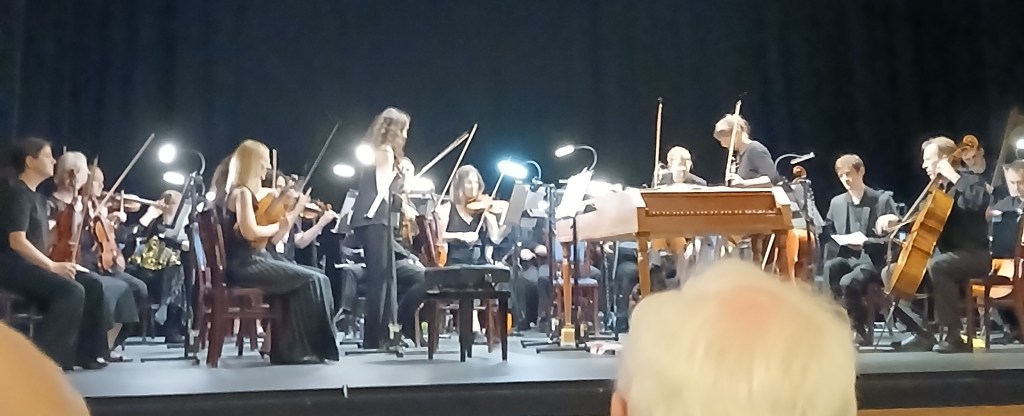
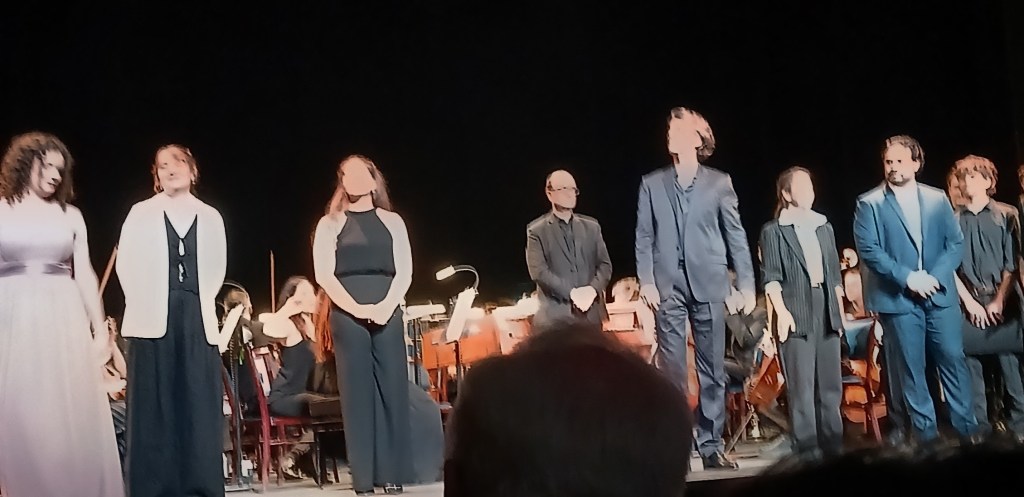
Adrian Kelly Conductor; Corina Wuersch Director; Xavier Más, Tito; Maria Stella Maurizi, Vitellia; Indyana Schneider, Sesto; Frances Gregory, Annio; Jessica Lawley, Servillia, Samson Seu, Publio. Buxton international Festival Orchestra
I hadn’t quite picked up that this was billed as a concert performance, though a director is credited as above, until just before I was about to set off for Buxton from home. The Buxton International Festival Orchestra is made up, I believe, mainly of music students and recent graduate young professionals. There was a fuss about this last year from the musicians’ union, but the issue seems to have died down this year – and in fact there were more mature faces around among the players I saw on stage.
When I last saw this work, 5 years ago at Covent Garden just after the ending of lockdown, I kept telling myself, “If this were music set to the story of Don Giovanni everyone would say how wonderful it was”. This time round it did feel a bit like a quickly written commissioned piece (Mozart is said to have written it in 18 days, and in the midst of composing the Magic Flute, with secco recitatives by Sussmayr, allegedly, requested by the Habsburg court for political reasons) which can often seem routine but which, Mozart being Mozart, has flashes of brilliance. Some of the lesser characters’ arias – Annio, Servillia – sound distinctly routine. However, at times you feel Mozart getting into his stride – the closing sequence of numbers for both Acts, and some of the big arias, which explore the characters’ feelings and motivations (e.g. “Vitellia’s (Se volto mai ti se” and “Non piu di fiori”). But it is interesting how the combination of the court poet Mazzola and Mozart slimmed down the original opera seria Metastasio libretto and changed it so that there were no long sequences of da capo arias, as there would have been 50 years earlier, but instead something much more dynamic with ensemble-singing and fluid arias that bring in other characters. There was never the sense of paralysis you get on occasion with Handel operas at their less inspired.
However, the work probably does need to be seen on stage and with a director’s vision to be fully absorbing for a modern audience – eg in the ROHCG production, Tito is in charge of what seems to be a sort of Fascist state, which gets nastier as the opera proceeds. Here in a concert version, there were simply audience giggles at the major shifts in the plot (Vitellia’s sudden reversal of the instruction to kill Tito, for instance). On the positive side, there were no scores or music stands in evidence, and no chairs, so singers came on stage and inter-acted with each other as they would have done in a staged performance, albeit in modern dress. This made for some gripping scenes, though some took more advantage of this open stage opportunity than others…….
For me, the two stand-out singing actors were Xavier Más as Tito and Maria Stella Maurizi as Vitellia. The former was an excellent personification of a Roman emperor, and used his face and hands effectively. He has a big voice – maybe a bit too big for total clarity in the coloratura elements, but the generosity of volume and warmth of tone somehow matched the character of the emperor effectively. Maria Stella Maurizi as Vitellia was stunningly vampish, again with a big voice, and one which handled all the coloratura runs with ease. Both she and Tito were completely convincing and at home in their roles. Indyana Schneider as Sesto had a bit of a hang-dog slightly embarrassed stage presence, and her voice didn’t have the ‘presence’ of the other two – it had somehow a less varied range than the two principal voices, and sometimes a slightly tremulous vibrato. All the other parts were well taken. Listening to my cherished recording from the 70’s (Colin Davis ROHCG) I was aware how swiftly Adrian Kelly took some of the numbers. His conducting had the positive sense of pushing the action forward energetically, but occasionally I wondered if singers would have appreciated a bit more expressive space in some of their arias. At any rate, the orchestra sounded well-rehearsed and there was a good balance with the singers.