City of Sheffield Youth Orchestra: Mahler Symphony no 5 in C minor
Partly because of my volunteer role as a Welcomer at Sheffield Cathedral, partly because I am a trustee of an organisation connected to CSYO, and partly because it’s not a work I would associate necessarily with the skills and experience of a youth orchestra, I wanted to hear this. I therefore arrived for my duty not really knowing what to expect. I met several people beforehand who told me how fine the orchestra’s performance had been last Saturday at the Stoller Hall in Manchester.
The orchestra was maybe 65 or so strong – less than the 100 there would be in a professional orchestra playing this work but still a very impressive number of talented young people. Though there were some tutors dotted around, and some college-level performers who were back in Sheffield for the summer holidays, at least 75%, I was told, of the performers were school-age students. There was a fair degree of diversity in the group too, in terms of heritage, and probably the orchestra has the same sort of profile as the organisation I am a trustee for, extending over many more Sheffield and South Yokshire postcodes than just those associated with the posher areas of West Sheffield
I thought the band gave a really very, very fine performance of Mahler 5. The acoustics of the cathedral – like most of its ilk – are very echoey, but perhaps luckily in my role as a volunteer event steward I was asked to be stationed to the side of the orchestra,, so in many ways had quite a clear sense of the orchestral sound. Thinking of previous experiences of school based orchestras I wondered how this band would cope – in terms of staying together, the actual execution of the notes, and the balance. Obviously from the side I couldn’t really tell what was happening with balance – there were for instance 6 horns (less than the usual professional orchestra 8/9) and at least 3, maybe 4, trumpets and trombones, capable of overpowering a relatively small string ensemble. But the execution of the notes was phenomenal….! The solo trumpet beginning of the work strikes fear, I’m told, in the hearts of all professional orchestral trumpet players – it’s solo, exposed, high notes and at the beginning of the work. I’ve heard it fluffed on a number of high profile occasions. The young woman playing it here did so fearlessly and totally accurately and powerfully. The Mahler is an extraordinarily densely scored work but everyone seemed absolutely on the ball, even in the inner parts, giving it their all. …..and they were doing so together! Not once did I hear any major mishaps with sections getting out of synch with one another. I was particularly impressed by the stylishness of the string playing and the general fearlessness of the brass!
This was both a heartening and also really enjoyable evening
Herrmann, Vertigo – Suite; Korngold, Violin Concerto; Prokofiev, Symphony No. 3 in C minor. Vadim Gluzman violin; BBC Symphony Orchestra, Gustavo Gimeno conductor
The insertion of the Korngold concerto was a fairly late one – it was originally meant to be Mason Bates’ piano concerto, with Danil Trifonov playing the solo part – he however couldn’t apparently get a visa in time…..I was in fact quite happy with the change as it fitted in well with the Hermann score, and the Korngold is a work I’ve never heard live, and wanted to. I had heard the Prokofiev once before, in Munich, with the Opera orchestra conducted by Vladimir Jurowski, in 2015, in an exciting performance, and I wanted to hear the work again. Gustavo Gimeno is a new name on me, though I see he’s currently chief conductor of the Toronto Symphony Orchestra. Interestingly – given its close connection with the thematic material of the Prokofiev piece – he conducted Madrid’s production of The Fiery Angel last year……. I see he is also about to take up the chief conductor role at the Madrid Opera – so clearly a rising star…..
It was lovely to be back at a Prom albeit one with less than full attendance, which you’d expect given that this was a far from mainstream programme – still the Stalls, Arena and Choir were pretty full.
This programme in its final form was very interesting- all three pieces had their origins in stories which the music was originally intended to accompany – the Vertigo Hitchcock film is the obvious basis of the Hermann piece and its swirling obsessive motif at the beginning very much mirrors the plot of the film. The Korngold work takes themes from 4-5 different films he wrote music for, including the ‘Prince and the Pauper’ in the finale of the concerto. The Prokofiev work uses music from the ‘Fiery Angel’ opera (I would love to see that). The question then for me is – how successful are these three pieces of music as stand-alone pieces – can they survive and on what basis?
I suggest there are three elements to a successful transition: 1. Strong melodic content; 2. Colourful interesting orchestration; 3. Some sense of structure and progression in the work as ‘absolute music’. For me only the Prokofiev ticked all 3 boxes. The Korngold piece (‘more corn than gold’ as a New York critic had it unfairly after its New York premiere), dedicated to Alma Mahler, is a last bastion of lush late Romanticism and has glittering orchestration ( I was sitting in the choir behind the percussion section so was fully immersed in some of the glorious sounds). Likewise, no-one who composed ‘Marietta’s Lied’ is going to fail on no 1, and there are some gorgeous tunes. But it’s very difficult to understand where the work is going – the tunes are announced, fiddled with (literally) and reprised: that’s it. It’s very different from Korngold’s tight, severe post-war symphony. The Hermann piece only passes on criterion 2 – it doesn’t really work without reference to the original movie plot. The Prokofiev is a very different beast (it’s interesting to note that Prokofiev was actually 6 years older than Korngold – in idiom the 4th symphony sounds like the work of a younger man – and there is a very clear distinction between different themes in the opening movement, and the alternation of machine-like frenzy, nostalgia and fear is carried through, with different emphases, in the next three movements, concluding on the opening frenzy. I found it utterly compelling to listen to as a journey, both the driving motor rhythms, the passion of some of the string-based music and the darkness of some of the instrumental solos. I must listen to the R3 recording.
The BBCSO sounded impressive throughout – of course not always easy to tell from row 1 of the Choir seats but certainly the Prokofiev was tightly played, there were some excellent wind solos – particularly by horn and oboe – and the percussion were having a whale of a time throughout! Mr Gimeno was very stylish in his beating of time and gestures and one sensed the orchestra were enjoying working with him. Vadim Guzman (Israeli but Ukrainian in origin) sounded good, though again it’s difficult to tell when he’s playing with his back to you, and played a melancholy encore by the Ukrainian Valentin Silvestrov.
The Liberata Collective apparently wants to recreate the experience of Baroque opera for modern audiences: using period instruments, providing printed libretti, and most crucially, performing according to the art of Baroque Gesture (rarely seen on stages since that period). The complex plot of Orlando is interpreted in this performance through a series of expressive movements, in a style that Handel’s own singers would have performed in. I came along to this not really knowing what to expect, and was surprised at how easy and flexible it all seemed. Baroque movement like classical ballet is based on a series of movement signs that have meaning – some obvious, some less so. Some of the gestures between individuals clearly persisted after the era to become the norms of melodramatic acting – for instance the actor who puts two hands palms outwards, one near the body, one stretched out is clearly giving a sign of aversion to another actor on stage, still in use in silent movies. How singers stand is also important- they should be standing with their “weight on one leg , with the other relaxed, giving a natural tilt across the torso and shoulders. Arms should be at different heights to create a pleasing symmetry in the silhouette….It would not be typical for singers to stand with their weight equally balanced and entirely head on.“ (quote from programme booklet). The use of the hands is important – right hand for good things, left hand for bad. Position on stage is determined by social status, based on court etiquette. And so forth…. fascinating, and very convincing. The evening was worth it alone for insights of this kind.
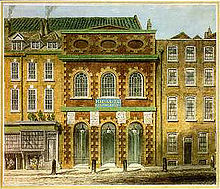
One of the three Handel operas based on Ariosto’s epic poem Orlando Furioso, Orlando opened at the King’s Theatre in London on 27 January 1722 and ran for only 10 performances. The first production since Handel’s lifetime was given at Halle, Handel’s birthplace, in 1922. For the Buxton production, the young singers of Liberata Collective were working with the musicians of Ensemble Hesperi, playing on period instruments, with Adrian Butterfield directing from the violin. I think most of the recitatives had been removed and some da capo arias shortened so that the evening came in at just over 2 hours. The plot concerns Orlando (Roland), a chief soldier in Charlemagne’s army, who falls desperately in love with the pagan princess Angelica, who is in turn in love with another man, Medoro. Orlando cannot accept this and he is driven to madness, prevented from causing absolute carnage only by the magician Zoroastro (who eventually restores his sanity). While there are no stand-out hit numbers, and the plot more than usually preposterous, this was a very enjoyable evening, with some good singing, and several very good arias – eg the aria:Verdi piante. As so often with Handel even if there are no truly memorable ear-wormy songs there is a lot of good music that makes you want to keep listening and not drop off to sleep (which can happen in some of the slower da capo numbers if they don’t strike any interest). I remained entirely alert all evening!
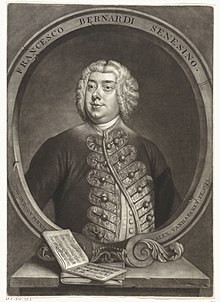
The set was basic – dark curtains and flooring and two colourful ?cherry trees in full blossom. To me the stand out singer was Olivia Doutney,, who had a beautiful voice that could easily fill a larger theatre and was able to produce exquisitely soft singing and carefully attentive phrasing; she was also a very good actor. I was also impressed by Joanna Harries’ contralto voice, and she was particularly good at the Baroque movement – exactly the image if a courtier. Susanna MacRae as Dorinda has a lot to sing in a sort of soubrette role and she sung it very well (plus she did the Baroque gestures very well and has a very expressive face)– whether her voice would carry in a larger theatre I am not sure. Christian Joel had a hard acting job in having to both keep to Baroque movement styles and act mad, and I thought he did that very well. Again he had a rather soft voice but as I was sitting in the second row that wasn’t a problem – he also had some of the toughest singing to do, in the role originally sung by the superstar castrato Senesino. Jolyon Loy did all that was required of him as Zoroastro. The 7 or so musicians stuffed in at the side of the stage were great!!
Paul Lewis (piano): Schubert – Piano Sonata No. 7 in E flat major, D568; Piano Sonata No. 14 in A minor, D784; Piano Sonata No. 17 in D major, D850; Piano Sonata No. 15 in C major, D840; Piano Sonata No. 13 in A major, D664; Piano Sonata No. 16 in A minor, D845
These were two recitals I had very much been looking forward to. I still remember the day, on a cold winter’s morning in January 1975, at a convent in Hertfordshire (we won’t go there……) when some puzzled nuns handed me a large parcel which turned out to be a complete DG LP boxed set of Schubert piano sonatas by Wilhelm Kempff. I still have it, alongside Mitsuko Uchida’s collection of sonatas in MP4 format. I have listened to them all but the ones that have always stayed in the memory have been D664, D784, D894, and then D958. 959, and D960, all with a gentle melancholy. I know very little about piano playing but there are a few pianists who can make music like this sing and create poetry from it. Among the pianists I have heard who to me have this gift are Radu Lupu, Alfred Brendel, Mitsuko Uchida and Paul Lewis.
Paul Lewis is apparently playing the Schubert sonatas not covered in these two concerts next year and, on the evidence of the 2023 offerings, they will be unmissable! Hearing Mitsuko Uchida’s recordings, she casts a dreamy melancholy veil over this music. Paul Lewis is in a way more Beethovenian, with a lot of dynamic contrasts, strong muscular playing and a clarity at the same time very much like his mentor Alfred Brendel. Perhaps the acoustics of St John’s Church sometimes meant the percussive element to some of Lewis’ plating was a bit over-emphasised, but I think what he wanted to show in these two concerts is that, while there is certainly the melancholy, Winterreise-type element to some of these sonatas, there is also tension and anger and energy of indeed a Beethovenian kind. Beyond the familiar D664 and 784 I was most struck by D845, a towering 40-minute piece that I really wasn’t familiar with and which I very much enjoyed. Again, listening to the Uchida version afterwards, Lewis’ performance was a good deal more clangourous in the first and third movements, but his is certainly a valid approach that worked for me. The only sonata I didn’t really warm to was D568, which seemed a bit conventional and ordinary.
Paul Lewis is someone who when performing seems very much in his own world, and often seems removed from the audience he is playing for – it was nice therefore that he gave an encore at the end of the second concert – revealingly of a Beethoven Bagatelle. Beethovens presence seemed very real at these two concerts
Coleridge-Taylor Piano Trio in E minor; R Clarke Lullaby and Grotesque for viola and cello; Elgar Piano Quintet in A minor, Op. 84
Kaleidoscope, I assume, is something a bit like Ensemble 360 in Sheffield, a group of musicians that can offer concerts with differing numbers and groups of instruments – here ranging from 2 – 5. The venue, St John’s Church, was not packed but comfortably full.
It was great to hear some of Coleridge-Taylor’s music. He had a terribly difficult early life and his tenaciousness to succeed must have been extraordinary. There have undoubtedly been some individual artists given less than their due and ignored because of their background, ethnicity, gender, status and so forth. and these need to be heard and re-assessed. I’m not sure Coleridge-Taylor in the end was one of them – if you look up the Proms Archive and check on performances of Scenes from ‘The Song of Hiawatha’, Op 30 you will find it regularly performed at the Proms from 1899 to 1959. Indeed I remember being rehearsed by our primary school music teacher in Hackney for months as a class to sing ‘By the shores of Gitchee Gumee’ in the late 50’s / early 60’s. I think it might have been a school musical…….Elgar thought highly of Coleridge Taylor and recommended him to The Three Choirs Festival when he was unable to undertake an offered commission. The real problem is that 1. Coleridge-Tay;or died young, and so there is a lot of unwritten music that might have raised his reputation significantly, and 2. that, as the Piano Trio in this programme shows, his music is not always very distinguished – in this case sub-Brahmsian in a pleasant sort of way, clever, well-constructed but pretty unmemorable. But it should certainly be heard and seen as being at least on a par with the Stanfords and Parrys of this world, particularly the big orchestral works like the Symphony and the violin concerto (I listened to the latter from the recent Proms telecast and much enjoyed it – and as a ‘late work’ it is much less obviously Brahms-influenced and you hear something of what Coleridge-Taylor’s own voice was like – how might things have been had he lived till his 70’s – into the 1950’s? What might have happened if he’d met Florence Price? if he’d met Gershwin?). Why his works eventually, from the early 60’s, fell out of favour as other contemporaries have done (cf Edward German) isn’t clear, but I am not sure that racial discrimination was any part of it – he was an Edwardian, I guess, and seen as a long way away from the music of the 60’s. (I am happy to be corrected if anyone thinks differently). Anyway, the Trio was well-played by the musicians
I’ve come across Rebecca Clarke (1886-1979) recently and this was a slightly spiky interesting set of pieces – slight but enjoyable (but again not something that is anything other than an occasional period piece)
The contrast between these two pieces and the Elgar is remarkable. Although I know the Elgar work from recordings (and I think I might have been organising performances of it in Egypt in 1984 with The Music Group of London, led by Hugh Bean) I haven’t heard it live for 40 years, and haven’t listened to it in a focused way for a very long time. By comparison with the other two works it is a towering masterpiece. Every bar counts and it has none of the ‘Palm Court’ overtones that to my mind the Violin Sonata sometimes has. It is tragic, joyful, unbearably moving in the slow movement and finally full of a kind of optimism which is resigned to disillusion. It is of course as every commentator mentions close in time to the composition of the Cello Concerto and to my mind equally as great a piece. The Kaleidoscope musicians played it wonderfully. There’s unease and disjuncture at the start of the first movement, followed by autumnal weariness – then a Brahmsian striding theme which is melodically strong enough not to sound too derivative, and which is then followed by a properly Elgarian melody, encompassing both yearning and jauntiness, swirling forward like some pre-War ballroom dance. The development section is passionate and troubled at the same time, and the melancholy gradually dissipates the energy – there’s an extraordinary collapse into a nothingness at the end of the first movement. The second movement has one of Elgar’s most profound melodies – absolutely gorgeous – which at first expresses a kind of resigned melancholy, very similar to the ‘cello concerto, and then moves to a series of passionate climaxes, with moments of Mahlerian negation in between. The Kaleidoscope people played it with more power and energy than the MP3 recording I’ve got by the Maggini Quartet and Peter Donohue. The third movement begins with quite an upbeat striding melody – again, very Elgarian – that gets transformed energetically at first and then subsides into the lassitude and despair of the first movement’s opening and closing. The passionate pre-war dance becomes ghostly and disembodied. Eventually the striding melody returns but somehow subdued at first – it later gathers strength, and there is a tumultuous ending. I listened to it again at home and was just as impressed. How have I missed this work’s qualities?
Beethoven String Quartet No. 16 in F, Op. 135; Britten String Quartet No. 3, Op. 94; Schubert String Quartet No. 14 in D minor, D810, ‘Death and the Maiden’
This was an interesting programme of ‘late’ (not so much the case with Schubert) string quartets. Though I have heard the Beethoven on a number of occasions over the last few years, I have never heard the Britten or Schubert live before (though I do seem to remember a Robert North ballet using the music which I saw maybe ?10 years ago somewhere
The Sacconi Quartet seemed to me to get off to a rather tentative start in the Beethoven – the first movement of Op135 sounded as though they hadn’t quite got the dynamics right and they sounded sometimes too quiet and slightly fuzzy. Things had improved by the slow movement, which was very moving, and they were more assertive than other quartets I’ve heard performing this live in the ‘question and answer’ section at the beginning of the last movement. They conveyed well the sense of humanity that comes over particularly in the last movement.
Their performance of the Britten quartet (not helped by lots of coughing and spluttering from the audience at the beginning) was riveting and I was vey glad to hear this work live for the first time. (I do think there is a direct correlation between audience boredom and coughing – the last movement was received in total silence – appropriately, as it is very moving
The Schubert performance I enjoyed, particularly the slow movement, but I did wonder whether the last movement was just a bit too long………
Lucy Crowe (soprano), Joseph Middleton (piano). Songs by: G Gershwin Summertime; A Copland Nature, the gentlest mother (from 12 Poems of Emily Dickinson); S Barber Sure on this shining night, Op. 13/3; W Walton Through gilded trellises; J Ireland The trellis; I Gurney The fields are full; B Britten Seascape (from On This Island); G Fauré Nell, Op. 18/1; La fée aux chansons, Op. 27/2; H Berlioz Villanelle (from Nuits d’Éte); H Duparc Chanson triste; C Debussy La romance d’Ariel; J Brahms Sommerabend; Mondenschein, Op. 85/2; Feldeinsamkeit, Op. 86/2; R Strauss Die Drossel; September (from Four Last Songs)
This was the first of 6 Buxton Festival events I am going to, a lovely recital by one of my favourite UK singers. It was one of 4 seasonally focused song recitals, this one dealing with summer and ending with September. Throughout, Ms Crowe’s singing was a huge delight – she has the capacity to soar without sounding under pressure, can float quiet soft notes beautifully, and altogether I like her ‘white’ almost vibrato less voice. She is also a very good communicator in a recital context. I loved her languishing Gershwin Summertime, with barely audible sighs, remarkably sensitive and idiomatic. Other songs I particularly enjoyed were
Ireland’s The Trellis, the singing of which was dedicated to her singing teacher at RAM who was in the audience
Berlioz’s Villanelle (from Nuits d’Éte) ;
Duparc’s Chanson
Brahms’ Sommerabend;
The final scheduled song was R Strauss’ September (from Four Last Songs), which was very moving though without the subtlety of a Schwarzkopf or Janowitz (or indeed Lise Davidsen’s recording with the Philharmonia of 2019). A beautiful rendition of Britten’s setting of ‘The last rose of summer’ completed the programme as an encore. The hour went by in a flash!
Director, Nicholas Hytner; Designer, Bob Crowley; Lighting Designer, Mark Henderson. Conductor, Bertrand De Billy; Don Carlos, Brian Jagde; Elizabeth of Valois, Lise Davidsen; Rodrigo, Marquis of Posa, Luca Micheletti; Princess Eboli, Yulia Matochkina; King Philip II, John Relyea; Grand Inquisitor, Taras Shtondal; Monk, Alexander Köpeczi; Tebaldo, Ella Taylor; Count of Lerma, Michael Gibson.
I suppose my main reason for going to this was my enthusiasm for Lise Davidsen’s singing. Like Janet Baker she encourages me into repertory I would not normally venture along to. I have heard this work once before – a Met screening last year, in the French version. This is the first time I’ve been to a live performance of the work. I have to say I found it gripping for the most part. I would happily go to another production if the singers looked interesting……LD’s rumoured to be learning Tosca – now there’s a thought…………
Don Carlo(s) seems to me to be a good example of a problematic piece which could do with a bit of a regie-theater makeover. It is loaded with all manner of portentous themes – love and duty, church and state, liberty and oppression – but it seems to be the personal that predominates in this production, emphasised by a 16th century setting that makes us think the wider themes of the work belong to some historical past with little relevance to us today. In this production the only fully rounded character who combines the personal and the political clearly is Phillip, and there’s no attempt really to pull together the oppression of the Inquisitorial church with the suffering of the people onto any overarching theme. In its presentation, Nicholas Hytner’s production – from my perspective of an imperfect understanding of the work – seemed a bit muddled at times. The ending, with a rather jolly Charles V wandering inconsequentially around the stage, provided a curious, less than overwhelmingly powerful, ending. The inquisition scene seemed too brightly lit and rather gave an impression that the chorus deployed seemed rather scanty for the stage. On the other hand the scene in Act 5 where the crowd breaks in and then is quashed by the Grand Inquisitor was I thought powerful and convincing The sets were stylised to no particular purpose – the opening scene was a quite effective winter scene but there was no particular stylistic connection with those which followed a view of Lombardy poplars from the Palace, prison-like walls with cell windows , while there was also a church facade and the mausoleum of Charles V which seemed realistic in design. It all seemed extravagant to no particular purpose (unless the point was to emphasise the oppression of nature alongside the oppressive buildings) , and could have been just as effectively done with a few props and good lighting. The personen-regie however seemed good enough, though – people were responding to each other effectively. Lisa Davidsen is very good at being mostly still and making her movements count.
The singing was at a completely different level to the Figaro of the previous evening. Brian Jagde as Carlos might be slightly on the can belto side but he was in great voice and filled the auditorium with his passion, if not his subtlety. John Relyea – Wotan 5 months ago at the Coliseum – was to me a very impressive King Philip. How he compared to someone from the past like Boris Christoff in this role I don’t know, but he seemed to me to give all the anger, the passion, the coldness and frustration the role demanded. Luca Micheletti as Posa sang beautifully, with a warm tone, and acted well – another impressive performance- he also had a powerful voice with the ability to phrase and shade appropriately. Lise Davidsen showed exactly what a great voice can do with a role. It’s the agility and fineness of her singing as well as her vocal power that impresses, and the intelligence with which both legato, beautifully soft, singing but also passion are deployed. Her’s was a master class in how to be a great singer and I hope the Marriage of Figaro female singers of the previous evening were listening. Yulia Matochkina as Eboli was not really on the same level as the other 4 major protagonists but was never less than good. Of the other protagonists, the Voce from Heaven of Sarah Dufresne (Canadian!) was particularly impressive and worth mentioning – she is a Jette Parker young artist. The orchestral texture, dark and glowing, was well brought out by Bertrand de Billy and the orchestra – with a particularly fine cello solo before Philips’ aria
Figaro, Mattia Olivieri; Susanna, Siobhan Stagg; Count Almaviva, Stéphane Degout;Countess Almaviva, Hrachuhí Bassénz; Cherubino, Anna Stéphany; Bartolo, Maurizio Muraro; Marcellina, Dorothea Röschmann; Don Basilio, Krystian Adam; Antonio, Jeremy White; Don Curzio, Peter Bronder; Barbarina, Sarah Dufresne. Conductor, Joana Mallwitz; Director, David Mcvicar; Designer, Tanya Mccallin; Lighting Designer; Paule Constable
The last time I saw The Marriage of Figaro on stage was mid-March 2020 (Opera North in Manchester); the audience had shrunk as people began to self-isolate; one of the volunteer stewards had a racking cough. There was an almost palpable sense of gloom over the whole production which Mozart’s music did not really dispel. Lockdown was very close………. By contrast, three and a quarter years on Covent Garden was completely packed for this performance with a very responsive audience.
I do wonder why ROHCG doesn’t feel obligated to prioritise some of the best young UK singers a little more in their casting decisions. Yes, there is the Jetta Parker scheme, but that is international also; yes, ROHCG is an international house, but I am sure there are just as capable UK singers as those we heard from playing Marcellina, Bartolo, and others Given the cuts to WNO, the likely slow demise of ENO, the slow disappearance of Scottish Opera, giving young singers experience seems to be an increasingly urgent issue.
The Marriage of Figaro is a wonderful work and it was hugely enjoyable to see it live again. Moments like the reconciliation of Figaro and Susanna in the final act unfailingly move me to tears. On this occasion, I don’t think any of the female singers erased memories of some of the great singers I have heard in the roles of Countess, Susanna and Cherubino (Kiri Te Kanawa, Ileana Cotrubas, Margaret Price for instance), but no one was less than good. Male singers in the parts of Count and Figaro I have fewer clear memories of from past performances (including Geraint Evans) and the ones in this performance were pretty impressive.
The production was straightforward – indeed a director meddles with this work at their peril … For some reason David McVicar and the design team had put everyone in Regency clothing. This makes no sense from multiple perspectives – the work was written before the French Revolution, Mozart was not contemporary with the Regency period etc. Yes, I know there was the 1830 Revolution, but why mess around? However, I suppose it did no harm. The Count at the beginning of Act 3 was fiddling with a scientific device that might have meant he was a proto-industrialist or a philosophe. Either way it gave no clarity to his personality – except maybe that he is happier dealing with things than handling people….. However,….. The basic grand house set had that massiveness one recognises from McVicar’s Met productions, but there was only one of it, it moved around in clever ways, with a moving box for Figaro and Susannah’ s proposed bedroom and was generally a good idea. Cleverly the big house set also doubled, with atmospheric lighting, as the garden in Act 4, with tables and chairs strewn around doubling as bushes and trees for people to hide behind. Someone came on at the curtain calls who (this was the first of the run) might have been McVicar himself or at any rate a staffer who had a similar beard…. whoever was involved, the handling of people was effective; above all the characters were credible, and that in opera is an achievement in itself. Interestingly the audience (impressively diverse in the Amphitheatre and including I would guess many people hearing the piece for the first time) laughed far more at the conversation on the surtitles than what was happening on stage – there were certainly no crude gags, but the characters’ various dilemmas came across very strongly and convincingly.
I had my doubts about Joana Mallwitz’s conducting, along similar lines to those expressed about some other – but not all – Mozart opera conductors in this blog. Tempi were often too fast, there were times when orchestral voices became occluded, and I was left wondering why, listening to this work from the cavernous Coliseum Balcony in the 70s, I often heard more orchestral detail then under Mackerras than I did at this performance sitting in the front row of the ROH Amphitheatre. There was some beautiful woodwind playing from the orchestra. What Mallwitz got right was the transitions between the ‘numbers’ in Acts 2 and 4 – in Act 2 Cherubino’s dressing up onwards was deftly done and without any awkward changing of gears. for instance.
Nearly all the singers decorated the reprise of their aria melodies and showed a good sense of ensemble. The Figaro, Mattia Olivieri, was, well, noisy – he flung himself around, had a stentorian voice and a temper on him – and he is of course a native Italian speaker, which counts in this work. He did the right things. I can’t say I warmed to him particularly but his was a good performance, sung strongly, and he conveyed more clearly than some the personal antagonism between Figaro and the Count – there was one point where he shouted ‘no’ to the Count which I have never noticed before. I thought the Count, Stéphane Degout, was probably the best performer of the evening on stage, along with Susanna – he had a good presence on stage, conveyed very well the frustrations with the menials outwitting him, and sang well. Susanna (Siobhan Stagg, Australian) had a very sprightly stage presence and did all that was necessary in ensemble and solos, without any really memorable phrasing, but (this is a BIG part) with intelligence and stamina. Both the Countess and Cherubino seemed to position emotion and passion over finesse in their singing. With Cherubino that’s a workable proposition and Anna Stéphany sang vigorously and passionately in a way that convinced me, while not removing from memory all the great renditions of Cherubino’s two big arias I have heard over the years. About Hrachuhí Bassénz as the Countess I was less sure. In the way she dressed and held herself she seemed more like one of the girls than I think Mozart and Da Ponte intended (? though what do I know) and to me she emoted in her arias too much – delivering power and energy rather than coolness/sadness and beauty of tone. Surely without being narrowly nationalistic there are better UK singers to sing these two roles, operating at the right international level? Sarah Dufresne sounded a very good emerging talent as Barbarina, surely to be singing Susanna somewhere soon……
As I looked down into the orchestra pit I sometimes asked myself- what if this had been Mozart bouncing about in front of the orchestra instead of Joana Mallwitz. What would he have made of his work being played more than 250 years after the first performance. I am sure he would have encouraged his players to be vigorous as they were at this performance while at the same time as being energetic also making sure all the notes he wrote got properly heard. He would have been delighted beyond measure with the sets, he would have loved the audience laughter but he would have considered the singers a bit quizzically- they would have sounded too heavy, not nimble enough, perhaps.
BBC Philharmonic, Anja Bihlmaier conductor: Brahms Hungarian Dances No. 1, 3 & 10; Bartok Concerto for Orchestra. Manchester Collective: Hannah Peel, Neon; Michael Gordon, Industry; Steve Reich, Double Sextet
I had thought at first this was something to do with the Manchester International Festival, but it wasn’t! Quote from the publicity blurb: “The orchestras and ensembles of Manchester and The Bridgewater Hall are thrilled to announce the launch of a unique collaboration. Manchester Classical will see the Hallé, BBC Philharmonic, Manchester Camerata, Manchester Collective and a host of stellar artists come together for a breath-taking weekend of music, food, crafts and free foyer entertainment, all in and around The Bridgewater Hall.”. I guess this is something akin to Classical Sheffield and their weekend, with the greater resources available in Manchester, including RNCM.
This was a nice and interesting afternoon in Manchester. I was rather wondering who would turn up for this for an hour on a Saturday afternoon, but in fact the hall was pretty full for both concerts – certainly in the stalls – and with a wider range of people there than in the standard evening concerts. It really does seem that there is an audience in Manchester for classical music that is a very price sensitive one – all tickets were £10. There were also more young people and children than there normally would be.
As you can see I went to two very different one hour concerts. The BBC Philharmonic had a very energetic conductor I had not heard of before, who’s currently the chief conductor of the Hague Residency orchestra. The Bartok I hadn’t really listened to at all since I last heard it live performed by Essa-Pekka Salonen and the Philharmonia about 4-5 years ago. I love the unexpectedness and variety of the Bartok piece and the ways in which themes glisten brightly and momentarily and then disappear. The performance had many enjoyable moments but I did feel at times that the conductor was choosing speeds at one or two points – particularly in the 2nd and 5th movements – that prevented the orchestra from articulating the music as clearly as it might have sounded at slightly slower speeds eg the big trumpet tune in the finale. The same was true of the Brahms – the wind flurries that accompany the main tune of the first dance didn’t sound quite as clear as they should have done (and as they do , say, in the Abbado Berlin Phil recording). But overall I enjoyed this concert and it was well received by the audience – plus there was much less coughing and shuffling than normal (and no errant mobile phones) than in other concerts in Manchester I have been at recently.
The Manchester Collective show focused on various forms of minimalism. The group consisted of a violinist (Rakhi Singh) who I saw in Sheffield a year or so ago, a pianist, cellist, flute and clarinet and ?xylophone/vibraphone?. It’s very interesting to read John Adams’ excellent autobiography ‘Hallelujah Junction’ and realise the dead end that modernist serialism represented to composers in the 70s in the US, and the way forward that at the time minimalism seemed to offer. In some ways of course in turn minimalism is also itself a bit of a dead end – it is part of John Adams’ genius that he uses the tools of minimalism while building a much more complex orchestral palette. To my mind the most successful piece of the three performed in this show was the first, ‘ Neon’, by Hannah Peel celebrating [I think] the art of creating coloured neon lighting patterns in Japan and a lament for the art of traditional glassmakers. It was in three movements that were clearly differentiated and, within the constraints of the minimalist idiom had a melancholy beauty – it was also atmospherically lit on stage. ‘Industry’ was a bit of a unique item – it’s for solo cello and some kind of plugged-in speaker that distorts certain notes on the instrument, and it consists basically of the same three-note – occasionally four-note – pattern getting louder and louder and more and more distorted, reflecting the grinding nature of the Industrial Revolution. It’s clearly worth hearing once but I am happy to leave it at that…… The final piece by Reich I found simply went on too long for the minimalist patterns it conveyed. Somebody had linked up a grainy black and white film of people dancing in what I assume was The Hacienda in the 1980’s, to show on a screen behind the players and this suited the music rather well, I thought. The musicians of the Collective were all very good indeed, particularly the xylophonist/vibraphone player