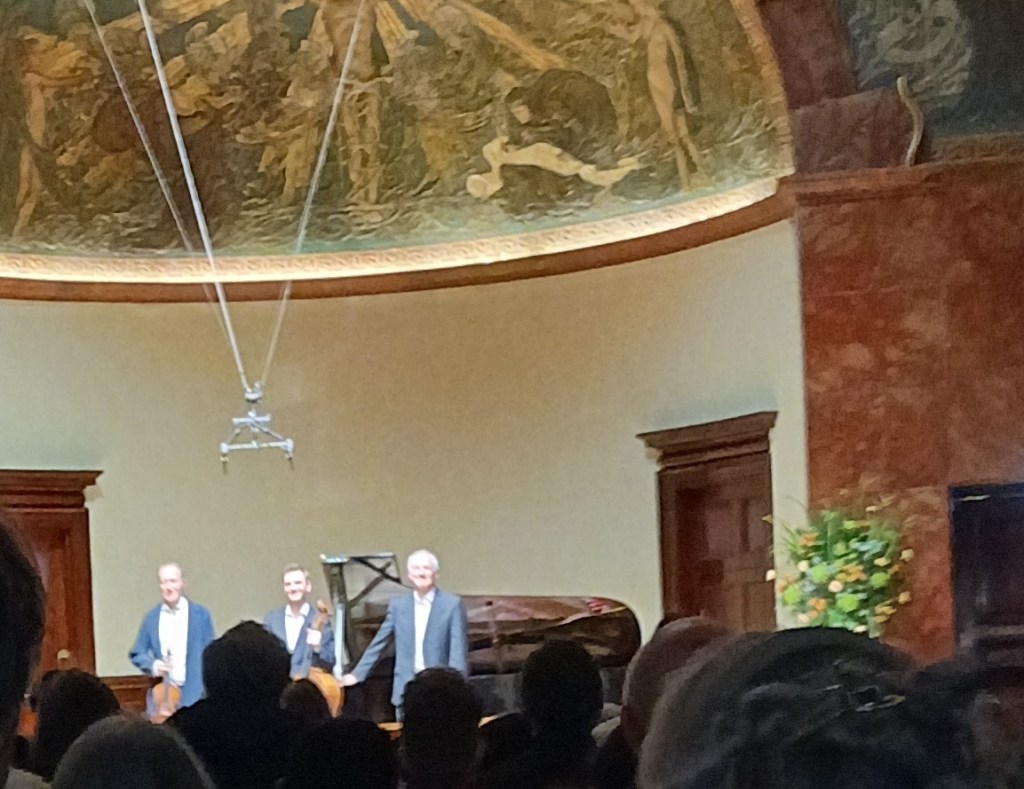
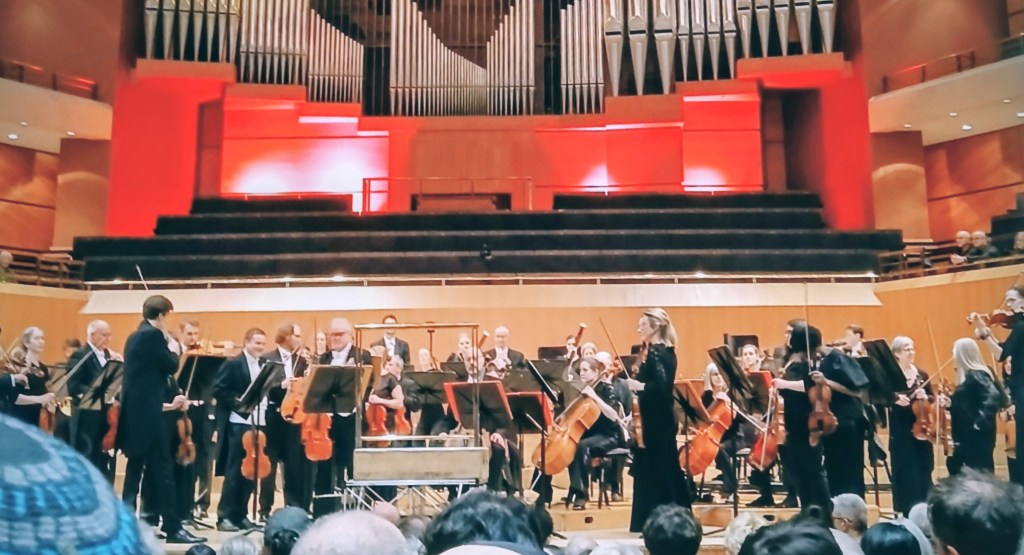
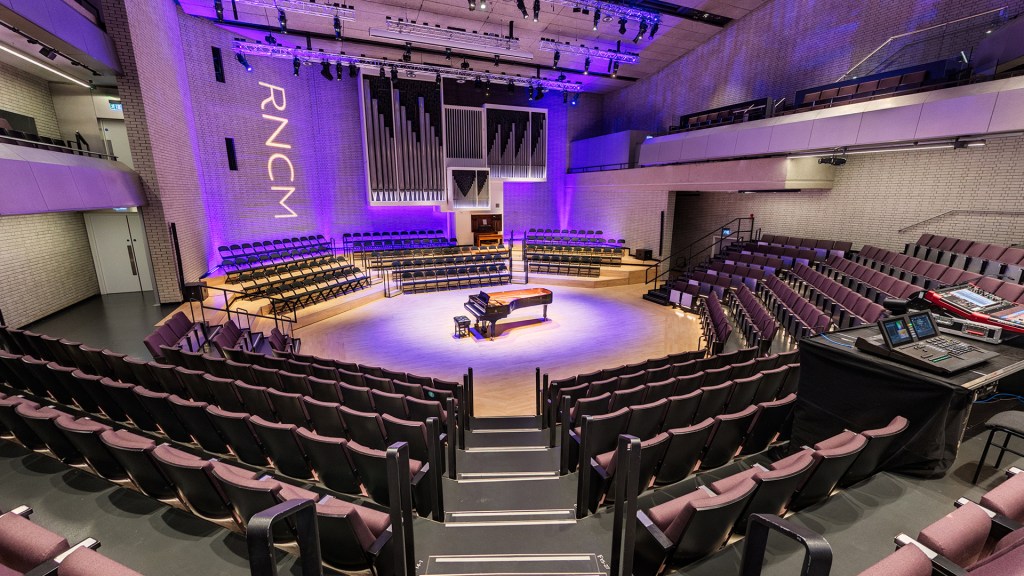
Bach and  American Minimalism: Shani Diluka, Sheffield Crucible 31/10/25  

JS BACH (arr. Alexander Siloti) Prelude in E minor BWV855; GLASS Etude 2; JS BACH Prelude in C BWV846; CPE BACH Solfeggietto H220 Wq 117; GLASS Etude 9; JS BACH Prelude in F minor BWV857 ; GLASS Mad Rush; JS BACH (arr. Alfred Cortot) Arioso from Concerto No.5 in F minor BWV1056 ; MOONDOG Canon VIII ; JS BACH Sicilienne BWV1031; MONK Railroad; JS BACH Contrapunctus from ‘The Art of Fugue’; MOONDOG Barn Dance Pastoral; GLASS Opening; JS BACH (arr. Petri Sheep) Cantata ‘Schafe können sicher weiden’ BWV208; GLASS (arr. Shani Diluka) Tyrol Concerto (mvt 2); JS BACH Prelude in C minor BWV847

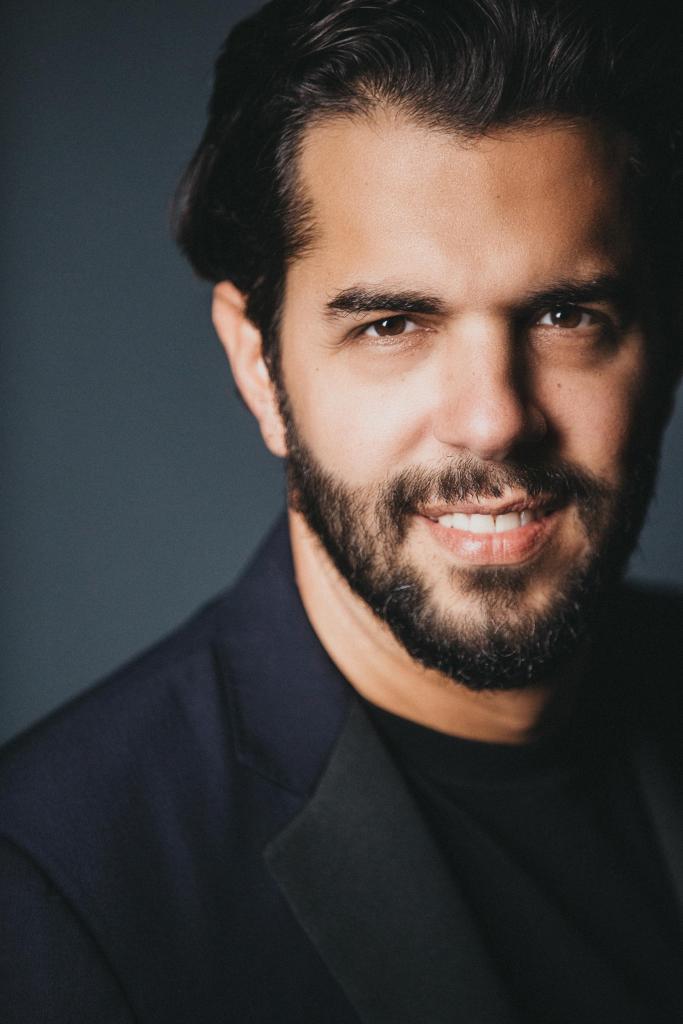
I haven’t come across the Monegasque-Sri Lankan pianist, Shani Diluka, before but she is clearly a very fine pianist with a substantial track record of appearing at prestigious  venues including the Philharmonie de Paris, the Amsterdam Concertgebouw and the  Vienna Konzerthaus.

The theme of the programme was perhaps looser than Bach & American Minimalism -more like ‘Bach and a bunch of blokes who happened to be living in New York in the 1950’s to 1970’s who all knew each other and found inspiration in their composing from Bach’. But no matter – I may know Glass’ idiom fairly well, and indeed recognised a couple of the Glass pieces (I have an excellent recording of Glass piano works by Vikingur Olafsson), but Moondog and Keith Jarrett were completely new to me, and I have never, as far as I can recall, heard much of Cage’s music before. There was quite a lot of jazzy Jarrett music which had perhaps less obvious links than the others with Bach but even then there would have been the connection of improvisation, as well as melody. Ms Diluka gave very helpful comments on the composers and their music.  As an encore she did ‘something completely different’ and played something by de Falla

All in all this was a rewarding and absorbing evening. More Glass in Sheffield next week…

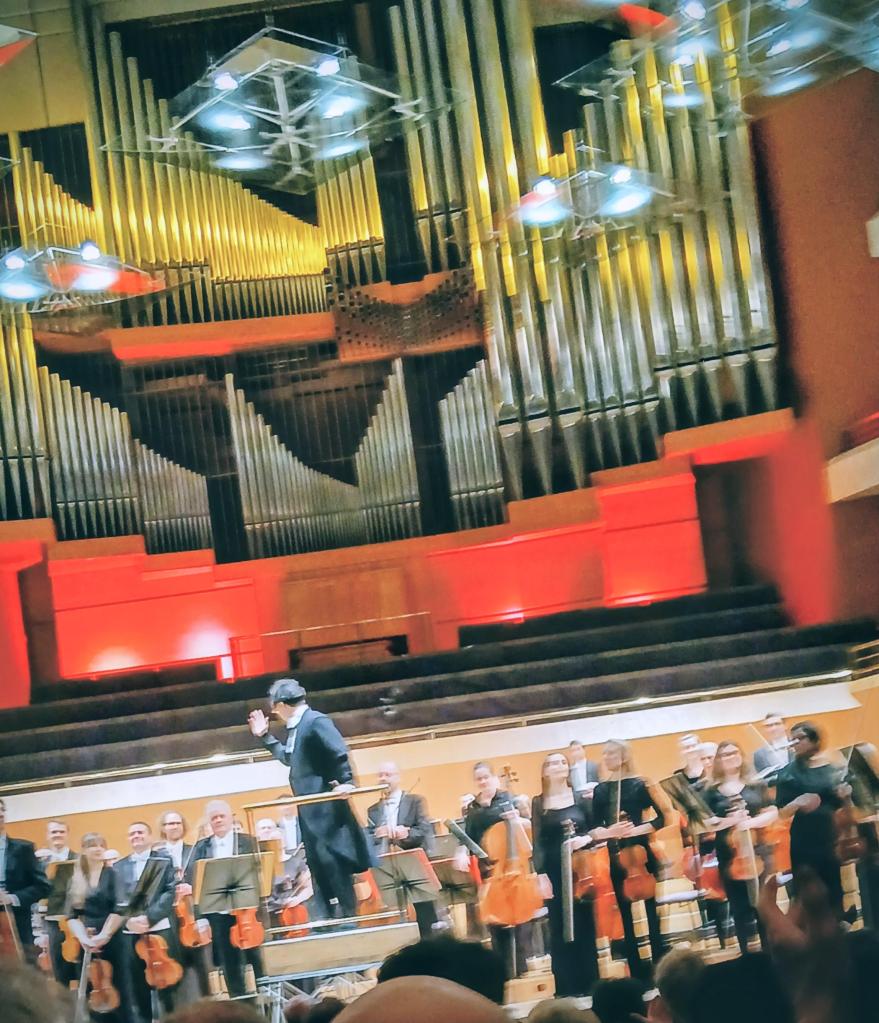
John Adams – Bridgewater Hall, Halle, Adams – 30/10/25

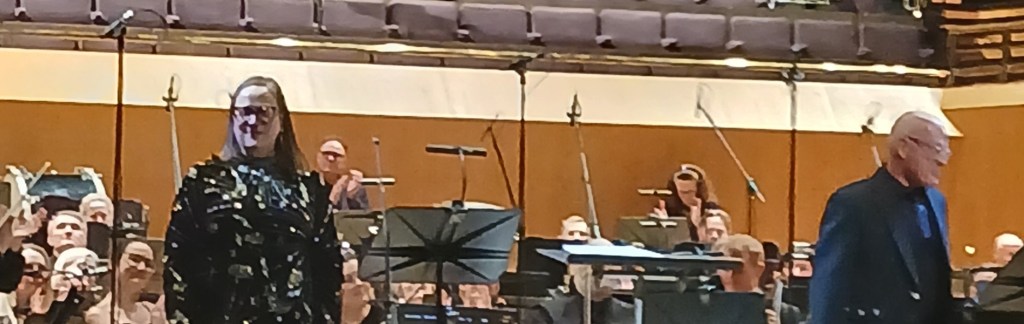
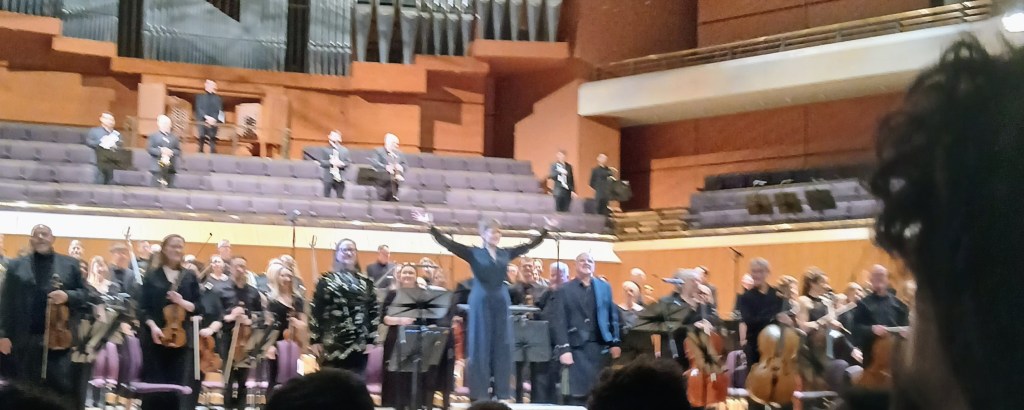
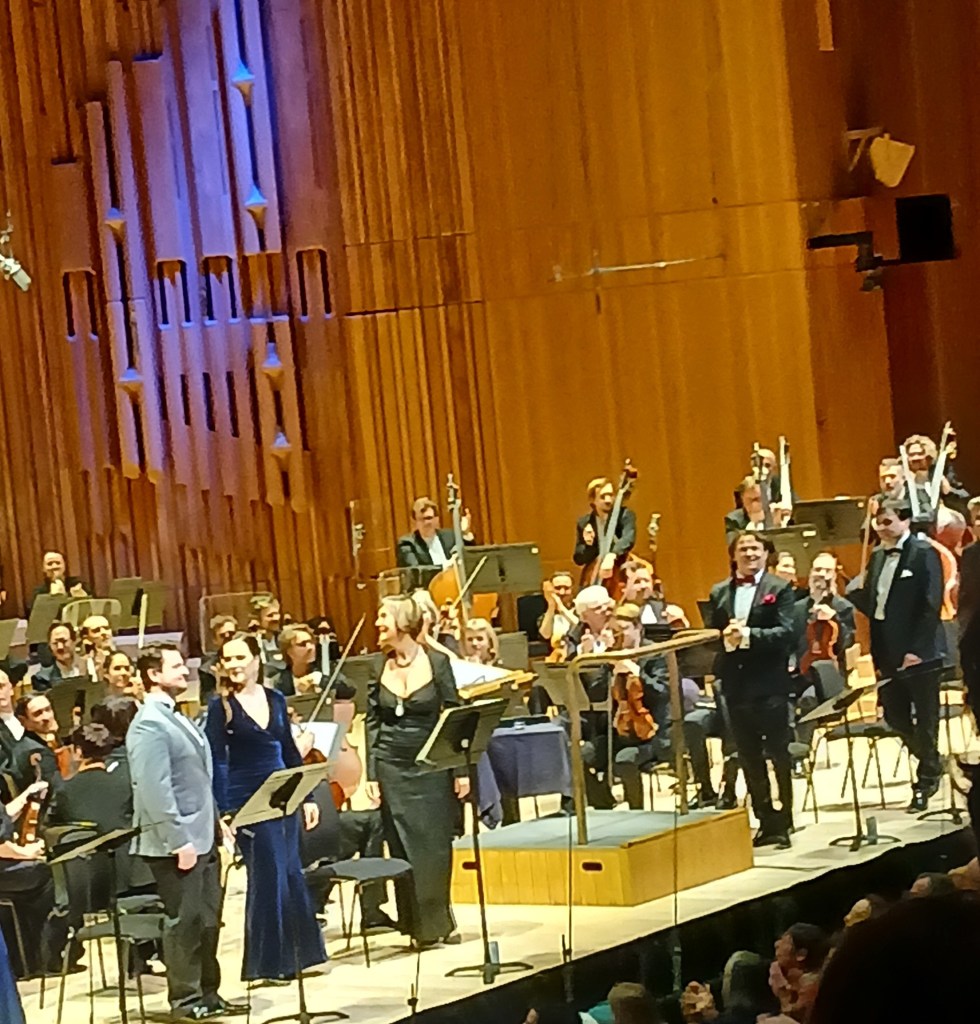
John Adams conductor; Mary Bevan soprano; Hallé Choir (Matthew Hamilton, choral director). . John Adams: Slonimsky’s Earbox; Debussy/John Adams Le Livre de Baudelaire; John Adams ‘This is prophetic!’ (Pat’s Aria from Nixon in China); Harmonium 

I have enjoyed listening to John Adams’ music for many years, and have several recordings of his music, but all the works programmed here were new to me (I am very much looking forward to seeing the Paris production of Nixon in China in February next year). I managed to listen to some parts of Harmonium before the concert and was particularly impressed by this work. And, of course, it was rather exciting to have Adams conducting these works in person (although he fairly often visits the UK, I haven’t seen him live before). It seems astonishing that he’s now 78, still lithe and energetic on the podium, and that Harmonium was composed 45 years ago. 

Slonimsky’s Earbox, the first piece on the programme, I liked very much. Although it occasionally still has the driving motor rhythms of minimalism, Adams’ music by the mid 90s had become more complex and diverse and this piece, very much a display piece (and written for the Halle almost 30 years ago during Kent Nagano’s regime) plays with all sorts of Stravinsky-like sounds, particularly the Rite of Spring. I am not quite sure what it amounted to but it was great fun. Next up was Adams’ orchestration of 4 Debussy songs. These were beautifully sung by Mary Bevan, and the orchestration sounded exquisite and fascinating, but the experience was somewhat marred by the lack of words – not even the title of the songs – neither in the programme or on the surtitles screen (which was used for Harmonium’s poems). This was disappointing.

After the interval we had Pat’s aria from Nixon in China – a rather beautiful setting of some very thoughtful and resonant lines from the clearly excellent libretto by Alice Goodman.     , again sung by Mary Bevan. Adams joked before about his problems with an American president – at which everyone laughed, thinking he meant Trump, but in fact he was referring to Nixon and Adams being drafted – or not – to Vietnam. There was warm applause when he talked about Pat’s aria’s words as intending to express something of what is good about America.

Harmonium is a most impressive work and I am amazed that I’ve never come across it before. It was written early in Adams’ career and though the motor rhythms are omni-present, the quality of the choral writing already indicates an individual voice very different from the world of Phillip Glass or Tim Riley’s In C.  It’s a setting of three poems by Donne (Negative Love) and Emily Dickinson (‘Because I could not stop for death’ and ‘Wild Nights’. I thought it a very fine piece for the following reasons:

  • The choral writing is sensitive to the words and texture of the poems. In particular the first Emily Dickinson setting in its colouring clearly evokes this mysterious dream-like journey with death. The mad ecstasy of Wild Night is extraordinarily effectively conveyed by the choral writing, and the gradually increasing tension of the Donne poem is enhanced by the way the words are tossed around the choir
  • The three chosen poems work very well together in offering 3 different kinds of quasi- mystical experience. It is a piece which creates something more than the sum of its parts
  • The orchestral music is beautifully attuned to that sense of unworldly experience – the orchestral transition from the second to the third movement is remarkable in the way it moves from the icy stunned stillness of the first Dickinson poem to the momentum gradually gathering into the explosion of energy of ‘Wild Nights’

At the end the audience gave Adams, chorus and orchestra a completely justified standing ovation. The choir sung what must be very difficult music to get your vocal chords around and coordinated with the orchestra and conductor magnificently. Some get a bit sniffy about Adams, but for me – Harmonium particularly – this is just great music. Sadly I can’t go to the other concert Adams is giving, with a world premiere. A great pity…….

Bach / Ensemble 360: Upper Chapel, Sheffield – 25/10/25 2pm

Bach:  Sonata No.3 in C; Partita No.3 in E; Benjamin Nabarro, violin

I have been reading a fascinating book by Kate Kennedy called ‘Cello’, about the passion and the closeness of the relationship between instrument and player, as exemplified by four historical/ contemporary figures. Amongst many other topics, she muses on whether, in the same way as players gain muscle memory, so might instruments gain a sort of body memory of how certain players have played certain pieces on them in the past. I wondered, as Benjamin Nabarro played the Bach pieces, what sort of relationship he had with his instrument that allowed both to produce the extraordinary multi -layered polyphonic texture of these works, pushing the violin and violinist to extremes.

The Partita is a more accessible work than the sonata   – essentially it is a dance suite, with the very famous Gavotte at its heart. Nabarro and his violin produced variation and shade in the sometimes-overwhelming spray of notes. The sonata is particularly severe, with a central fugue which sounded a nightmare to play. The sheer energy and focus needed to play these works is extraordinary, and yet at the same time performer and instrument have to convey the essential gravity and melancholy of Bach’s world, where death comes too frequently and the memories of the Thirty Years War are still strong. This performance was utterly convincing in capturing both these elements. And he has to do the same thing this evening………!!!

An hour after the performance. I went back to the Upper Chapel for an intriguing experience – Music in the Round had set up 8 speakers in the church, which seem to have programmed in some way to broadcast different strands of several of Bach’s pieces for violin, again played by Nabarro. For each movement played, we heard first a straight rendition, in surround-sound, but then, whether automatically generated by AI, or played with by someone, several of the strands in the different loudspeakers started to repeat, to be taken apart, so that what had begun as Bach began to sound like something by Philip Glass or John Adams. It was an eerie oddly compelling ¾ hour or so that I spent listening to these performances and their reworkings. This connects with next Friday’s MITR concert which indeed is precisely about Bach and American minimalism

Takacs Quartet, Timothy Ridout, Mozart Quintets – Wigmore Hall – 20/10/25

Mozart, String Quintet in C K515; String Quintet in G minor K516

This was a superb concert. I have listened to these two works a number of times but have never heard them live and therefore haven’t ever, really, given them the full, deep concentration I find I can only give at a live concert. I also don’t think I have ever heard the Takacs Quartet live before (though maybe I have a brief memory of Beethoven quartets at the RFH in the early 2000’s). I enjoyed reading Edward Dusinberre’s book about the life he has led with the Quartet so it was a bit of a thrill to hear them live, and at the Wigmore Hall – and playing Mozart!! They had also played some of the other quintets the previous evening, but as you will have seen , I was elsewhere……a great pity I wasn’t able to get to this first concert…….

There was an unusually good programme note, by Richard Bratby, which quoted at length a letter Mozart wrote to his father not long before the latter’s death. I’ll quote a bit of it here – it’s dated 4 April 1787: ‘…….. Since Death, if we think about it soberly, is the true and ultimate purpose of our life, I have formed during the last few years such close relations with this best and truest friend of mankind that its image holds nothing terrifying for me any more, but is indeed very soothing and consoling! And I thank God for graciously granting me the insight (you know what I mean) of learning that death is the key which unlocks the door to our true happiness. I never lie down at night without reflecting that perhaps, young as I am, I may not live to see another day. And yet no one who knows me could say that I am morose or dejected in company – and for this blessing I thank my creator daily.’  While you could read this as a set of messages to keep his Dad content, and make him feel Wolfgang was leading a virtuous life in Vienna, to me, as it does to Bratby, it seems a profound statement of Mozart’s sense of his own mortality, and of the depth of his faith, which makes us understand how light and shade alternate so much in his writing, and in these quartets, one in C Major and one in G minor.

What struck me so much about this current version of the Takacs Quartet was the lightness and deftness of the playing. Some of this was clearly emanating from Dusinberre, who led some wonderfully wispy (yet rhythmic, with a kick) playing in the finale of the G minor, which makes the Amadeus Quartet in the recording I have sound quite leaden by comparison, but there were moments when the same could be said of other players – such a lightness of touch…….. In addition to the lightness there was delicacy, bounce and clarity – a sense of an intricate interweaving of parts, all making a greater whole, but never mechanical, never anything other than a sensitive and musical listening to each other.  The darkness juxtaposed against the light in the first movement of the C Major, the joy of its finale, the sadness and hope of the G Minor quintet’s adagio, the passionate darkness of the opening of its finale, and the hope and energy of the rest of that finale once the prelude is passed – all were wonderfully realised.

I do hope I can hear this quartet again playing other Mozart, Beethoven (or indeed anything!)

Gotterdammerung, Wagner – London Opera Company, St John’s Smith Square, 19/10/25

Siegfried – Neal Cooper; Brünnhilde – Cara McHardy; Gunther – Pauls Putnins; Gutrune – Philippa Boyle; Hagen – Simon Wilding; Alberich – Freddie Tong; Waltraute – Harriet Williams; First Norn – Rozanna Madylus; Second Norn – Sarah Pring;  Third Norn – Katie Lowe; Woglinde – Cressida Sharp; Wellgunde – Grace Maria Wain; Flosshilde – Katie Stevenson; conductor, Peter Selwyn, augmented Sinfonia Smith Square, London Opera

I hope I will never lose the excitement and the anticipation which always hits me when I’m going to be at a live performance of any of Wagner’s Ring operas. I only got to hear that this London Opera Company performance was happening a few months ago a little before Peter Selwyn, the conductor, was giving a talk to the Manchester Wagner Society. I immediately re-organised my diary to fit it in! The LOC, according to the programme, is a company set up in the immediate post Covid lockdown period to give work to freelancers deprived of employment during the pandemic. Over the last 4 years it has performed a number of Wagner music dramas, most recently Siegfried. Gotterdammerung was being performed in association with the Sinfonia Smith Square, and the LOC orchestra thus has a core set of musicians from the Sinfonia, supplemented with music college postgraduates and known first-rate amateurs. The orchestra for Gotterdammerung was, considering, surprisingly large – not quite the numbers Covent Garden would use, but nevertheless there were 2 harps, triple woodwind, the full complement of brass, 1 timpanist, and only slightly reduced strings (though 9 cellos). It is probably a bit larger than the orchestral size the Longborough Festival would use. The cast soloists were all solid, excellent professionals, who in times past would have been members of ENO, WNO, SNO, and ROHCG companies but now have to get work where they can.

I was rather concerned about the inevitably churchy acoustics of St Johns Smith Square and how such a large orchestra would sound, as well as the balance between orchestra and soloists. From my position – about 10-11 rows back –  the sound of the LOC orchestra, and the balance between singers and that orchestra, were both ideal. I suspect that has a lot to do with the competence of Peter Selwyn and the sensitivity of the musicians and singers, and rather less to do with the inherent acoustics. The strings, particularly the lower strings, had a splendid bloom and luscious sound, the brass, right at the back of the platform and with, I suspect, some of their volume floating up to the chancel roof rather than into the nave, sounded strong but not overwhelming and the unison horns in particular (eg the recurrence of the blood brotherhood motif in Act 2) sounded glorious in some of their big moments. There was some excellent woodwind playing – the oboe and cor anglais playing stood out. It has to be said that sometimes the band sounded a bit ragged – for instance, some of the tricky violin passages – eg the Rhinemaidens’ music in Act 3 –  seemed smudged sometimes, and there were a few false/late entries at points, plus some of the horns seemed to have intonation problems now and again (Siegfried’s horn playing seemed particularly perilous). Occasionally also some sections of the orchestra seemed to get a bit over-enthusiastic and music which should have been just in the background suddenly became fore-grounded in a slightly odd way. But, even with some imperfections, the orchestra offered nearly 4 hours of thoroughly enjoyable and moving playing, and, at times, rose to great heights, particularly in the Immolation Scene.

This was essentially a concert performance with a bit of movement, and nobody was credited with any staging role in the programme. It rather looked as though it was left up to singers to decide what to do. Some stood resolutely by their music stands and registered little with their facial expressions, others, particularly Hagen, moved around the platform a lot, even leaping on a chair at one point and conducting the Vassals. In that kind of situation it tends to be the singers who leave their music stands and engage with each other who capture the audience’s attention far more effectively. Hagen, sung by Simon Wilding, I had admired in the Regents Opera Ring, where he was just as effective as he was in this performance – a dark powerful voice, and capturing the brooding menace of the character without falling into cliché, killing Gunther and Siegfried very dramatically. He dominated the stage whenever he was on it, and never looked at his score once, though he carried it around with him. There was a most impressive Waltraute – Harriet Williams, with a lovely mezzo voice and with the ability to stand still yet hold the audience’s attention. Her narration was wonderfully done. Pauls Putnins was also very good at getting across the essence of Gunther’s feebleness and indecisiveness, with facial expression, hand movements and even his looking at his score had a fidgety nervous feel that suggested the essence of the character. Alberich, Gutrune, the Three Norns and the Rhinemaidens were all good vocally and, again, were effective in using facial expressions and limited movement to enhance their performance. The two main score-reading offenders were, unfortunately, Siegfried and Brunnhilde, who, whatever the musical excellences of their performances, did very little to engage the audience, and for the most part kept their eyes on the score – so I also in response shut my eyes when they were singing. I thought Cara McHardy did very well – she has the power and the heft for the role, and was excellent in realising some of the lyrical passages as poignantly as possible – her responses to Waltraute’s narration and the Immolation scene had some lovely examples of this. She could also sing the bitter powerful music for Brunnhilde in Act 2 with the venom needed. Neal Cooper (nephew of ‘Enerey’, someone next to me said??) I realise I had heard before when he stepped in in Act 3 of Tristan at the Proms in 2021 when Simon O’Neill couldn’t carry on and also as Erik at Holland Park). He again has the power and stamina for the role – his account of the Narration was a very good example of his careful wording and craft. Perhaps sometimes he struggled slightly with some of the highest notes, but this really wasn’t important.

There had been some excellent very gripping sequences in the performance up to the end of the Funeral March – Hagen’s solos; Waltraute’s narration; the Norns scene was very compelling and clearly sung; the summoning of the Vassals (with the excellent chorus, including the Longborough Community Chorus, and some very splendid steerhorns borrowed from Covent Garden) was exciting, and so was the ‘trio’ at the end of the Act,  very well sung by all three principals. I also liked the way the Rhinemaidens’ scene went – Katie Stevenson in particular an excellent mezzo. But after the Funeral March, at least for me, something happened and the performance went on to another level – one of those moments that only happen in a live performance with an audience. Suddenly the very occasional orchestral glitches ceased, Brunnhilde was superb throughout the Immolation scene, and its aftermath was altogether very moving. After a few seconds of stunned silence the audience cheered.

I saw Anthony Negus in the audience – again, as with the Regents Opera performance, I hope he is making notes about some of these excellent singers for the Grange Park Ring

I must make it to the LOC Parsifal next year

Giustino, Handel – ROHCG Linbury Theatre, 10/10/25

Director, Joe Hill-Gibbins; Designer, Rosanna Vize;  Lighting Designer, James Farncombe. La Nuova Musica. Conductor, David Bates. Cast: Giustino, Polly Leech; Anastasio, Keri Fuge; Arianna/La Fortuna, Mireille Asselin; Leocasta, Esme Bronwen-Smith; Amanzio, Jake Arditti; Vitaliano, Benjamin Hulett; Polidarte, Jonathan Lemalu. Plus 8 person chorus

In my ongoing quest to hear as many of Handel’s operas as I can before I disappear off stage, I am lucky this Autumn – there’s Giustino, but also Susanna and Ariodante coming up, all of which are new to me.

Giustino was premiered at Covent Garden in 1737, with the castrato Domenico Annibali in the title role, and this current production is the first set of performances at that venue for nearly 300 years. Its date makes it one of Handel’s later works but it is not a familiar and often-staged opera. It concerns the early life of the Byzantine Emperor Justinian, and its plot is more than usually complicated, indeed at points daft! Suffice it to say that it concerns the military and romantic relationships involved between the young Justinian, when we see him first a peasant, and courtly figures in Constantinople. To quote the ROHCG blurb, “Giustino wakes from a dream of future glory and rescues a royal woman from a bear attack and is immediately hailed as a hero at the Byzantine court of Emperor Anastasio. When the Empress Arianna is captured by the scheming rebel Vitaliano, Giustino rescues her from a sea monster, ultimately sparking jealousy in the Emperor. Overcoming Emperor Anastasio’s jealousy and Vitaliano’s murderous ambition, Giustino returns to court, where a new enemy, Amanzio, has attempted to steal the throne. Giustino defeats Amanzio and is appointed as co-regent”.  This is helped by the fact that Vitaliano, still in prison, discovers that Giustino is his long lost brother, so Giustino releases him and  they join forces…………

The basic set concept was of a box, the entire stage bounded by walls with many doors, some chairs and suspended lamps, and appropriately for a Byzantine court, a range of dangling nooses hanging from the walls. The (I believe Guildhall School resourced) chorus is dressed in white and watches on, getting engaged at various points, acting as guards, courtiers, moving things, occasionally being a sea monster or a bear. There is a fluid approach to who is meant to be on stage when – different characters sit in on the da capo arias where their rivals are giving their thoughts about them. Excitingly the horn and trumpet players come on stage when they play their bits. The dress is modern though the princess/empress has something like an old-fashioned glittery ball dress, looking almost Victorian. Personally, I thought the staging worked very well – it pointed the action clearly enough, it meant there was always something to look at during the longer da capo arias, and the set gave a lot of space for movement.

The plot of the work is a bit lop-sided – most of the first part is really about Arianna, Anastasio and Vitaliano, and Giustino only really comes to the fore in the second half when he is leading the fight against the traitor Amanzio. But no matter……the point is that, as always with Handel, there are a superb series of varied arias and choruses to listen to. I have said before in this blog that in every Handel opera I’ve ever heard, even the less well-known ones like Giustino, there’s always at least one big hit number that lifts you up and delights, and which you immediately want to hear again. In Giustino it’s a beautiful slowish aria, with recorders in the orchestra, where Giustino compares a breeze slowly moving the grass and flowers, and poison slowly moving through a set of relationships. But there are lots of other arias as well that demand a second listening – some of Arianna’s arias near the beginning are intensely beautiful, and there’s a great triumphal aria for Giustino when he has conquered the sea monster.

As with the Irish Baroque orchestra, and the two Vivaldi operas they’ve performed in the Linbury, it is very exciting to hear a period band playing this music in that space. The strings crunch and sizzle, a number of the extended da capo arias feature oboe obbligato, specially written for the virtuoso instrumentalist Giuseppe Sammartini (also a composer), the horns and trumpets rasp, and the recorders are able to be heard clearly.  The singers, almost all of them young-ish (Jonathan Lemalu was the only ‘name’ I recognised) were superb. Pride of place probably goes to Mireille Asselin, singing Arianna, a Canadian singer who, from her website information, has done work at the Met, and is clearly a Baroque specialist. She has a ‘white’ sound, very pure, she is able to handle the coloratura element well and produced some lovely floated top notes. Polly Leech as Giustino was also impressive – a real contralto voice, large, flexible and warm.  Keri Fuge as Anastasio has less to do than these two roles  but was also very good – again, a ‘white, vibrato-less sound . All the other singers were excellent. It goes without saying that all these singers were fully ‘in’ their roles, completely committed to what they were doing on stage. The director had got them all moving purposefully, – and fast! – and they were constantly rushing round the space (a feature of the same director’s ENO Figaro). Somehow the directing style and the period band ]’s sounds worked perfectly together.

This may not be a dramatic masterpiece on the lines of Semele, but it is a very enjoyable and worthwhile evening – I never felt bored in the way I occasionally did at Cenerentola the evening before

Lunchtime recital, St.Martin’s-in-the-Fields, London – 10/10/25

Debussy Cello Sonata,  Prokofiev Cello Sonata. Piazzola  Le Grand Tango: Claudia Jablonski cello and Rustam Khanmurzin piano

Claudia Jablonski is a British-Swedish cellist and conductor from London. She was a scholarship holder at the Royal Academy of Music and has performed in various venues around Europe, though this was her first appearance at St Martin-in-the-Fields. Rustam Khanmurzin is a former Junior Fellow at Royal College of Music and he has appeared in a number of festivals with solo, chamber and concerto programmes all across Eurasia. He’s also made recordings.

The biggest work in this hour-long recital was the Prokofiev, not a work I know. I was reading a book about his first wife, who led a remarkable life – before meeting him she lived in Switzerland, Spain, the Crimea and USA, they finally married and she moved with him to Paris in the late 20’s, and then on to Moscow in the early 1930’s. They were divorced in the early 1940’s, she spent 8 years or so in a gulag, his children were estranged from him, and altogether Prokofiev comes across in the book as a self-absorbed, unsympathetic and insensitive individual. Somehow this comes across to me in this music – this was written just after the Union of Soviet Composers denunciation of him in 1948, his health was not good, and his first wife was just into her first year of the camps, yet the music moves blithely along in good humour, as though nothing had really happened. I found it difficult to like it and unmemorable. The Debussy cello sonata I found much more interesting –  alert, alive, quirky. I’d like to hear it again. The Piazolla I think I have heard in other versions for different instruments – it’s always fun to listen to, with more changes of mood and colour than you might think beforehand

The musicians were very fine – everything as it should be.

La Cenerentola, Rossini. ENO, London Coliseum, 9/10/25

Yi-Chen Lin, Conductor; Julia Burbach, Director; Herbert Murauer, Set Designer; Sussie Juhlin-Wallén, Costume Designer; Malcolm Rippeth, Lighting Designer.  Deepa Johnny, Angelina; Simon Bailey, Don Magnifico; David Ireland, Alidoro; Grace Durham, Tisbe; Aaron Godfrey-Mayes, Don Ramiro; Charles Rice, Dandini; Isabelle Peters, Clorinda

It’s over 50 years since I last saw Cenerentola, and then it was also at the Coliseum but with a very different ENO – still a full company, training young singers, building up stars, running a 9 or 10 month season with operas night after night 6 days a week. The company approach is long gone everywhere in the UK and it is remarkable that the ENO still has the resources, in its emaciated state, to put on such a good-looking show with chorus, dancers and stylish sets. But……

When i think about this work in comparison to The Barber of Seville, you can’t help feeling that the latter has the right farcical dimensions in the original play that suits Rossini’s music perfectly. The Barber fizzes along from scene to scene – it is an absolute masterpiece of its kind. Cenerentola is not a farce and the work, by comparison to the Barber, seems rather laboured at times. There are no inherent laughs to be had in the plot itself, other than the behaviour of the Ugly Sisters, and so it is very much up to the director  – and the translator – to do what they can with the work to keep the audience engaged. The director threw everything she could at it to keep it lively – the excellent -looking set, basically on two levels of a house – see first photo below – was 21st century contemporary in feel (as were the costumes) and had revolving outer stages on the ground floor at either side which could conjure up a  lounge, a library, a kitchen, a living room, while in the centre there was a lift to the upper level and several other doors; there were doors too on the upper level. So plenty of room for movement and surprises…….Just in case we were getting bored with the basic stage concept, the last scene featured a long staircase down which Cinderella walked. Alidoro was in charge of a group of mice/children running around, in his fairy god-mother role, though what exactly they were up to was unclear. There were dancers at various points – again, with unclear intent, The ballroom scene at Ramiro’s palace featured a chorus dressed in 18th century and other eras’ costumes, a fancy -dress ball I suppose, themed in red and black, and looking uncommonly fine, but again to what point? – the sisters and Cinderella were just dressed in very fetching/bizarre ball gowns. There was a chorus of be-suited reporters in the final scene, flashing their cameras, while throughout there seemed to be a Mrs Alidoro, again to no great effect. The translator produced a script in contemporary English which wasn’t altogether cringe-worthy and did get some laughs. Nevertheless, despite all the manic activity, the performance felt slow moving at times, and the production a little too desperate to engage. I think this is a problem with the work, not the production – the second half in particular drags. I’ve never seen other productions than the ENO one 50 years ago, which I have completely forgotten, so I have no real sense of whether other directors have found more laughs and wit in the work,

The main reason for rating this an enjoyable evening was Rossini’s music, the orchestral playing and the quality of the singing and acting, the believability of the characters on stage. This was a first rate cast. Deepa Johnny, a new name to me, was very good indeed as Angelina/Cinderella. She has a wonderfully creamy contralto voice, combined with some really excellent command of coloratura singing, very good diction and an effective stage presence – her plea for clemency towards the sisters and Don Magnifico was very moving. Simon Bailey, a stalwart of German opera houses for many years and now performing some of the heavy bass-baritone Wagner roles in places like Frankfurt and Cologne, was an excellent Don Magnifico, not a traditional portly comic figure but angst-ridden, a drunk, and very tetchy. His voice easily managed the cavernous Coliseum (some of the other voices were slightly small for the space and it was unfortunate that the director didn’t let them come further downstage in their movements).  Charles Rice as Dandini was another experienced artist and gave a confident performance, with an unstrained and easily flowing voice, managing the coloratura well. Aaron Godfrey-Mayes is another name entirely new to me, at the beginning of an international career and he was excellent as Ramiro, with a command of coloratura which sounded to me the equal of the American tenor I had heard singing the Barber on a Met screening earlier in the year – he seemed to move very easily on stage. All the principals were well-directed and their interplay seemed natural and clear. The two sisters and Alidoro were very good too, the former not hamming it up too much. The orchestral playing, though hard driven, was enjoyable and had plenty of excellent woodwind playing, and, from where I was sitting, was never over-dominant. And Rossini’s music is just great fun to listen to.

But at the end of the day, it seemed odd that I didn’t laugh once during the performance, and nor really did the audience, apart from at a few bits of the translation. Odd – and perhaps, as I say, it is the work itself, though various splenetic media critics seemed to blame the director – I thought that was unfair

Halle Rush Hour Concert – Bridgewater Hall, 2/10/25

Kahchun Wong conductor, Anna Lapwood organ, Sopranos and altos of the Hallé Choir, Matthew Hamilton, choral director: Max Richter, Cosmology (Hallé co-commission / Manchester premiere); Olivia Belli, Limina Luminis; Elgar, Enigma Variations

This was another packed out Halle concert, though this time in their Rush Hour series -1 hour or so at 6pm, similar to the LSOs Six o’clock Fix, from whom they have  obviously unashamedly nicked the concept.   I was wondering what Kahchun Wong’s Enigma Variations would be like. He said before the concert that one of his most loved recordings when he was a high school student was the Halle’s recording of this work with Mark Elder. To what extent would he replicate the Elder approach. The audience was quite diverse age-wise and, in response to a question from Mr Wong, it was clear quite a few people had not heard the work. Clearly though for some people the reason for going to the concert was the presence of Anna Lapwood in the first two works – she is by all accounts a major Tik Tok and Instagram star and a very considerable ambassador, in the UK anyway, for classical music. She bounced on and off stage to very enthusiastic cheers.

First up though we had Max Richter’s Cosmology.  People are very sniffy about Max Richter – ‘film music’,  ‘mindfulness/well being sort of music with no substance’: ‘BBC Nightwaves sort of music’ – you can imagine the comments.  I am not that fussed by how it sounds – it comes from the minimalist tradition, the music is very easy on the ear, it builds to enormous climaxes.  Although it is seemingly all at the same speed, its 4 movements outlining various aspects of cosmology don’t outstay their welcome. It is glutinous in texture and, oddly, it is quite difficult to hear the organ which rumbles away in the background. Ms Lapwood was sitting in the orchestra, with a keyboard wired to the main and imposing Bridgewater Hall organ. The orchestral contribution is designed to be dark, monochrome and soft-edged, and the brightness in sound is provided by the upper voices of the Halle Chorus who sing wordlessly in several of the movement. All in all I quite enjoyed yhe experience though the lack of challenge would be wearing on repeated listening. Next was a short organ only piece called Limina Luminis by Olivia Belli, about an astronaut blasting  off into space and seeing the earth for the first time from a new perspective.  This was., as Anna Lapwood herself admitted, very similar in sound and texture to the Richter piece, but, again, it was easy on the ear and offered an opportunity to hear Ms Lapwood play and put the BH organ through its paces – the moment when the astronaut sees the earth from space, flagged up to us by Ms Lapwood beforehand is lovely…..

And so to the Elgar…. As I have mentioned in this blog I heard Elder and the Halle play this twice in the last 4 years – the second time being only 17 months ago. It was a relief to hear the flashing colours and the frequent changes of speed and mood of the Elgar after the slow sameness of Richter and Olivia Belli. The Halle sounded just as impressive in Elgar for Kahchun Wong as they had for Mark Elder. And in at least one aspect- the last 4 or 5 minutes of the work- Wong moved the music along more effectively than Elder and got more energy into the closing bars. There were some beautiful violas and cellos solos and sectional work, a whispered start to Nimrod and a noble ending to the same section, the horns being given their head but without their sounding vulgar. Perhaps Wong in general set slightly quicker tempi than Elder, but the performance always sounded spacious, never rushed, and, as with the Rachmaninov last Thursday. Wong and the orchestra brought out colours and textures in the orchestration you don’t always here. This was a very, very good performance.

I can’t wait to hear Kahchun Wong conducting the Elgar symphonies in a future season……

Olivia by Ciara Mirelli

credit Jermaine Francis

Verdi, The Sicilian Vespers, ROHCG, 26/925

Director, Stefan Herheim; Set designer, Philipp Fürhofer; Costume designer, Gesine Völlm; Lighting designer, Anders Poll; Choreographer, André de Jong. Conductor, Speranza Scappucci; Hélène, Joyce El-Khoury; Henri, Vladymyr Dytiuk ; Jean Procida, Ildebrando D’Arcangelo; Guy de Montfort, Quinn Kelsey; Robert, Vartan Gabrielian; Thibault, Neal Cooper; Le Sire de Béthune, Blaise Malaba; Le Comte de Vaudemont, Thomas D Hopkinson; Ninetta, Jingwen Cai; Daniéli, Emmanuel Fonoti-Fuimaono; Mainfroid, Giorgi Guliashvili

I decided to continue my exploration of Verdi’s operas by going to the ROHCG revival of the 2013 Stefan Herheim production of The Sicilian Vespers, sung in its original French version.  I had never heard or seen the whole opera before but I have known the overture from my teenage years. I had assumed before reading up about the work that it was an early opera, maybe around the time of Macbeth. In fact it post-dates Trovatore, Rigoletto and Traviata, and was Verdi’s second, and more substantial, attempt to break into the world of French opera – a 4 hour epic, with five acts and a long ballet section, designed for the Paris audience. This production cuts the ballet music reducing the evening to about 4 hours with two 20 minute intervals. It still felt a rather long evening. This was due to three reasons, one partly inherent in the work, one partly about this production, and then some of the musical elements of the performance.

The work lacks the intensity, the good tunes, and the drive of the operas that preceded it. At times it seemed to be a progression of meditative slow arias as the characters muse on their fates. The third act has probably the most dramatic intensity, with Henri being told his father is Guy de Monfort, and the act ends with a big crowd scene, Henri seemingly betraying his Sicilian rebel friends, and the curtain falls on the shooting of a line of Sicilian conspirators. The 4th act in the prison drags a little, and the ending of the work – with everything going up in flames – seems peculiarly abrupt. Verdi took the big tunes for the overture and there is strikingly little beyond them that’s memorable.

The work is about a 13th century French-ruled Sicily (think Norman barons), and Sicilians rebelling against the dominant French. Occupation, a big country overwhelming a little one, military rule, treatment of civilians in war – these are issues being discussed and described every day at the moment in the media, and, even in 2013 were pretty hot topics. There are so many of these contemporary themes which could have been utilised to make a powerful and riveting production. I could think of other ways of directing it – Sicily at this time was famously multi-cultural, with Norman barons adopting elements of Muslim culture. You could envisage a situation where dogmatic political extremist rebels move against a tolerant multi-cultural society. Even build it around flags, and Verdi’s patriotism, which obviously is at the core of the whole work…..there are so many ways you could envisage a great production of this opera. Herheim in his wisdom chooses none of them. Instead, he sets the work at the time it was written (and OK, there was a year of revolutions in 1848) and envisages it (in ways never entirely clear) as a clash between Italians and French cultures at the time. The production sets the work in an opera house, and we see from time to time an audience in evening dress watching what’s going on from the stalls. There is an upper area which looks like a proscenium arch, and a (usually) two-sided set, sometimes with a mirrored wall, that are presumably meant to be some opulent public areas of the opera house. A team of ballerinas moves in and out of view at times, dancing impressively, but also intended to be slightly silly (they giggle a lot at times), presumably meant to be a comment on the French Grand Opera of the time. One of the many problems this approach causes is that French and Sicilians become rather undifferentiated. It does mean that there are some beautiful stage pictures – Degas-like, perhaps, at times. But on the whole, it is , frankly, a mess, which confuses rather than clarifies what’s going on on stage.

Musically and dramatically there were ups and downs. My general impression was that it looked as though some more rehearsals wouldn’t have come amiss. The most sustained ‘up’ was Quinn Kelsey’s performance as De Monfort. He has a powerful voice, resonating round the theatre, and one which has a warm tone. He gave us some beautiful singing and got the biggest cheers of the evening.  Valentyn Dytiuk as Henri clearly has the vocal power needed, and some of the high notes – both loud and soft – were exceptionally well-done. Like Kelsey, he had a good sense of line and poetry in his voice. But his acting took one back 50 years to the days when Italian opera stars just had to stand and deliver and no real acting was required – his acting, in short, was abominable (apart from Kelsey, in fact none of the principals were particularly good in this area). He looked as though he needed a personal acting coach for a 2 day study session of the role. Ildebrando D’Arcangelo as Procida sounded rather muddy. Joyce El-Khoury, a late stand-in for the scheduled singer, was very good – some lovely high soft notes, a well-handled sense of legato, a good lower register – but not all her notes were precise enough. However on the whole she had a good stage presence.  In general scenes were far too static, singers standing and delivering, and it looked as though the revival director needed more time to work with the singers to make these scenes come alive than they were given.. Speranza Scapuccio as conductor somehow didn’t give the music enough lift – it plodded along. Choral singing was ragged on occasion.

I don’t think I’ll be giving this production a return visit. It would be good to see this work in a more enlightening and engaging production