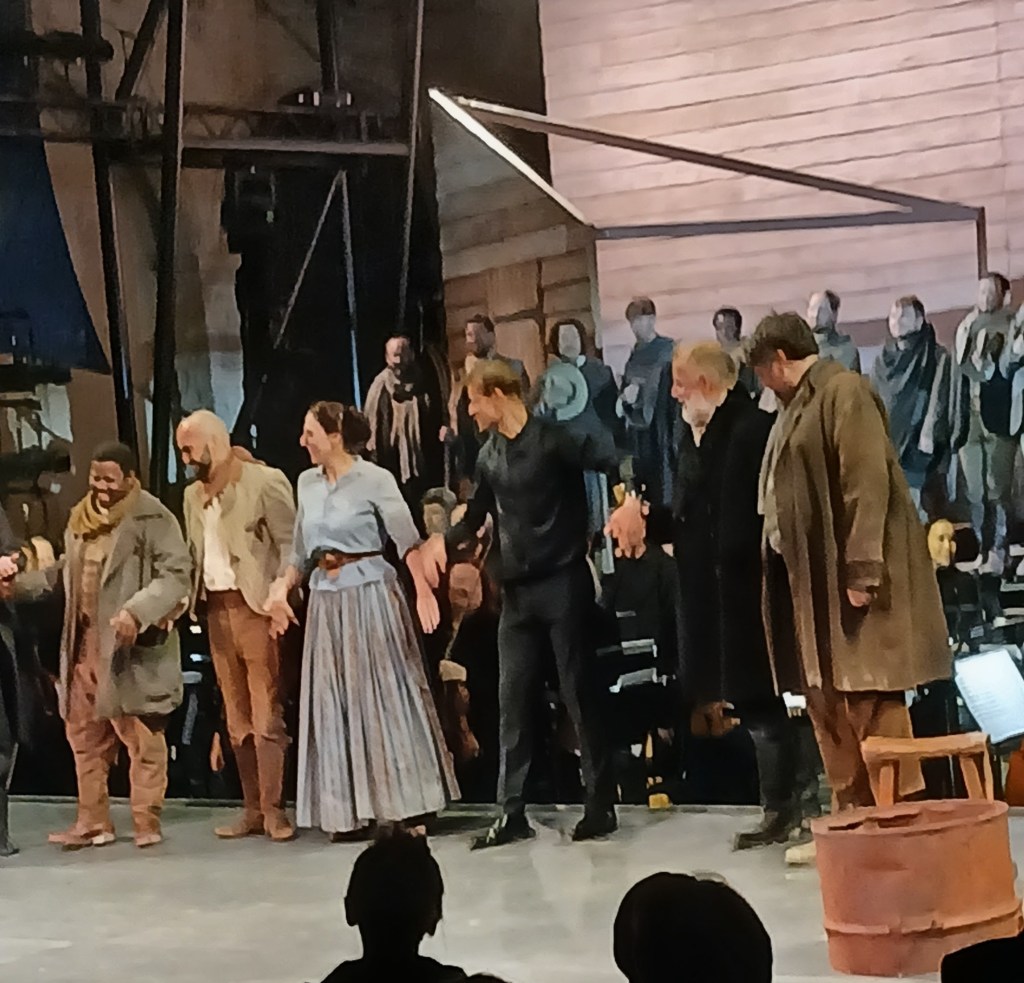
Martin Lloyd-Evans, Director; Matthew Kofi Waldren, Conductor; Anna Reid, Designer; Jamie Platt, Lighting Designer. Amanda Echalaz, Minnie; Robert Hayward, Jack Rance; Josè de Eça, Dick; Zwakele Tshabalala, Nick; Alaric Green, Ashby; Aidan Edwards; Sonora; Jamie Formoy, Trin
This is a work which has always been a favourite of mine but which I have only seen live in one production before, 49 years ago at ROHCG. This was the famous production which starred Placido Domingo, Sherrill Milnes and Carol Neblett, conducted by Zubin Mehta, which I must have been to three or four times. I just loved it…..I remember sitting in the Upper Slips and the whole row collectively leaned forward as we listened to Domingo singing at the moment when his wonderful act 1 aria broadens out.
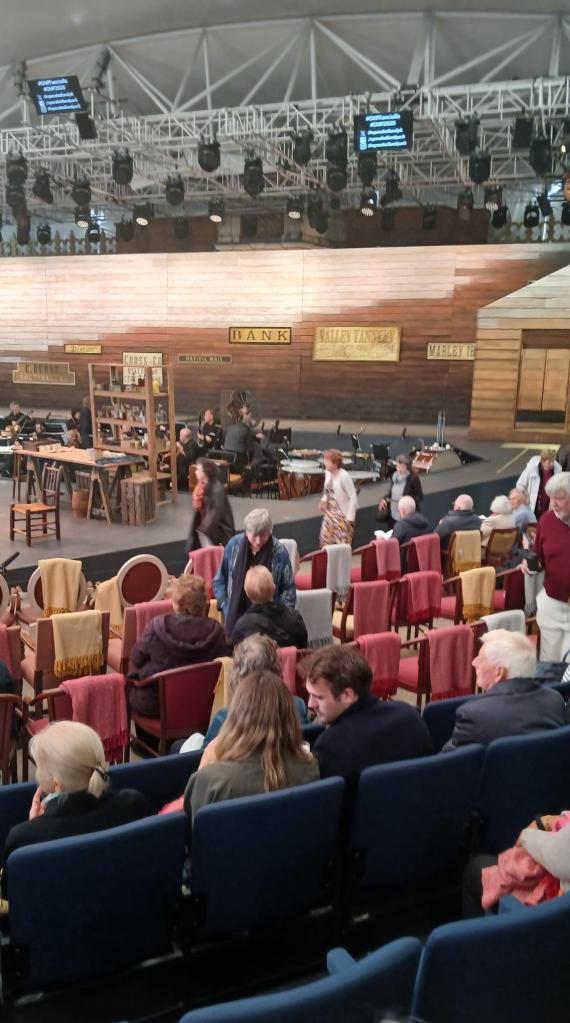
I always enjoy visiting Opera Holland Park – the ticket prices are not unreasonable, you are very near the singers and can see close-up how they are reacting to each other. The atmosphere is cheerful with a certain element of making-do – warm clothing always trumps appearing in finery. And they have put on some very good performances, of which this Fanciulla was one of the best I have seen there.
I had completely forgotten most of the plot, apart from the card game in Act 2 and Minnie riding to the rescue in Act 3 – for instance I hadn’t remembered that ‘Dick Johnson’ is really Ramirez the robber, and also what a strong part the theme of ‘redemption’ plays in the work. This gave an extra excitement to my experience of this performance – it was almost a new start with the work for me.
Fanciulla is one of those works which directors mess with at their peril, although arguably the happy ending needs a bit of directorial oomph. Here the work was directed naturalistically and unobtrusively, to great effect. Characters moved naturally, the opportunity the Holland Park space offers for multiple exits and entrances was well used, and nothing felt, in a sense, ‘staged’ – one really lived with these characters and believed in them. The interaction of the three principals in particular was outstandingly well handled. The peculiarities of the OH stage set-up – the orchestra pit fits between an upper and a lower acting area – did not at all dimmish the impact of what we saw. The antics of the miners in the bar in Act 1 could easily seem twee, but felt natural here. One thing this unassuming realism made me think about is how modern some of the themes of the work are – loneliness, and also migration – people working in a foreign country for money. And although the ending is more than slightly unbelievable (Minnie facing down a lynch mob) what she sings – about the ability of every human being to be redeemed, to be forgiven, to be able to start anew – is a fundamental of a liberal (and Christian) society, and the music there is good enough to give it emotional punch, so it doesn’t just sound like a sermon learned by rote.
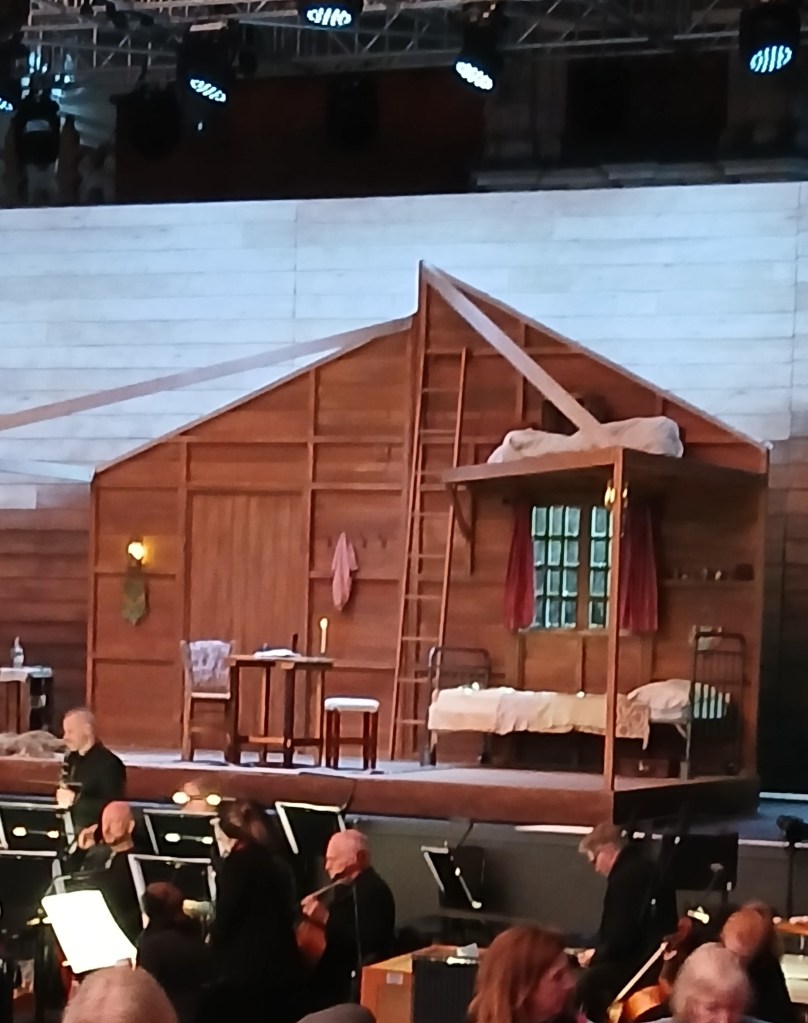
The design aspect was equally well suited to the work – brown colours, lots of wood and with a suggestion of mountains in the back drop. Pictures below show the bar in Act 1, and Minnie’s hut in Act 2. A shroud is placed over the top of Minjie’s hut in Act 3, with the first part of the act set downstairs; when Ramirez comes to be hung, the mob moves to the back, the shroud removed and the hut split up into house walls which provide a background to the hanging.
The three principals were wonderfully well-suited to their roles. In particular Amanda Echalaz, as Minnie, was very very effective. I’ve not come across her name before, though she has appeared all over the place for more than 20 years in the US and major European opera houses. She has a marvellously expressive face and her slightly sharp features, with appropriate costume and hair do, made her the perfect Minnie, and she was at all times attentive in gesture and movement to what she was singing and what was being sung around her. She managed very well the transition from prim bar owner to passionate woman desiring her man. In fact, I quite fell in love with her!! Her voice is big, with a good ability to be fined down for expressive moments. At the top and at full volume her voice had sometimes a rather raw sound, which felt appropriate to Puccini’s music. Robert Hayward as Jack Rance was also very fine – utterly ‘in’ the part and convincing, and with very good diction. His voice, matured through years of singing Wotan, sounded appropriately whisky-soaked and he was very good at conveying the sudden transitions of the character – eg when he takes on the bet in Act 2. Josè de Eça acting-wise was not in the same class as these two – he essentially looked a bit shifty throughout the evening, but he had the authentic Italianate sound, a big voice, and the ability to ping the top notes effectively. The other roles and the chorus were all very well realised and remarkably well-sung (I was amazed at how big the chorus was).
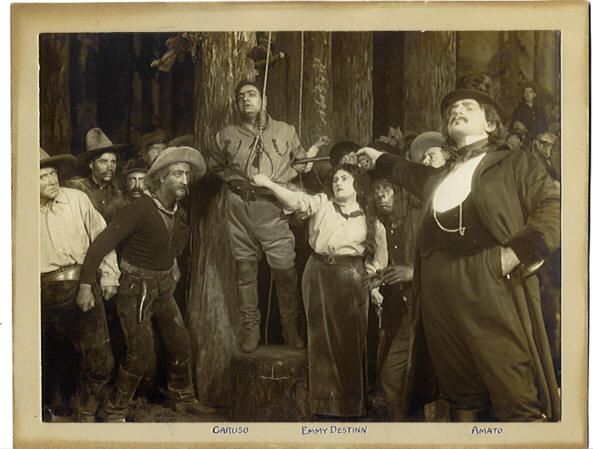
The City of London Sinfonia, scarcely 40 people, if that, sounded as though they were twice that number and made a real contribution to the evening – a particular shout to the power of the timpanist and the percussion, and the strings’ ability to project Puccini’s melodies with such richness and depth. And what a wonderful score it is – echoes of Wagner, R.Strauss and Debussy, maybe even Mahler, but all transfomed into Puccini’s very distinctive idiom. Matthew Kofi Waldren made everything sound as it should – moving, exciting, heart-breaking. At the end of it all I felt wholeheartedly that Puccini’s judgement was right – this is his finest work. How I would have loved to be taken in a time machine back to that opening night at the Met in 1910, with Toscanini conducting and Caruso and Destinn in the main roles…………..
Here’s the trailer to give you a sense of the production https://www.youtube.com/watch?v=mB_UP1nLX_Q&t=2s