Norn 1: Ingeborg Børch; Norn 2: Mae Heydorn; Norn 3: Jillian Finnamore; Siegfried: Peter Furlong; Brünnhilde: Catharine Woodward; Hagen: Simon Wilding; Gunther: Andrew Mayor; Gutrune: Justine Viani; Alberich: Oliver Gibbs; Woglinde: Jillian Finnamore; Wellgunde: Elizabeth Findon; Flosshilde: Mae Heydorn; Waltraute: Catherine Backhouse; Ben Woodward: Music Director and Conductor; Caroline Staunton: Director; CJ Heaver: Producer
Three days of sitting in close proximity to a lot of people snuffling and sneezing has produced the inevitable consequence of my beginning to do the same. Despite not feeling at my best I travelled down to London for this with high expectations – which were in very large part met. In fact I totally forgot about my cold for five and a half hours, and indeed the time spent in York Hall felt nothing like that long, so absorbing was the action.
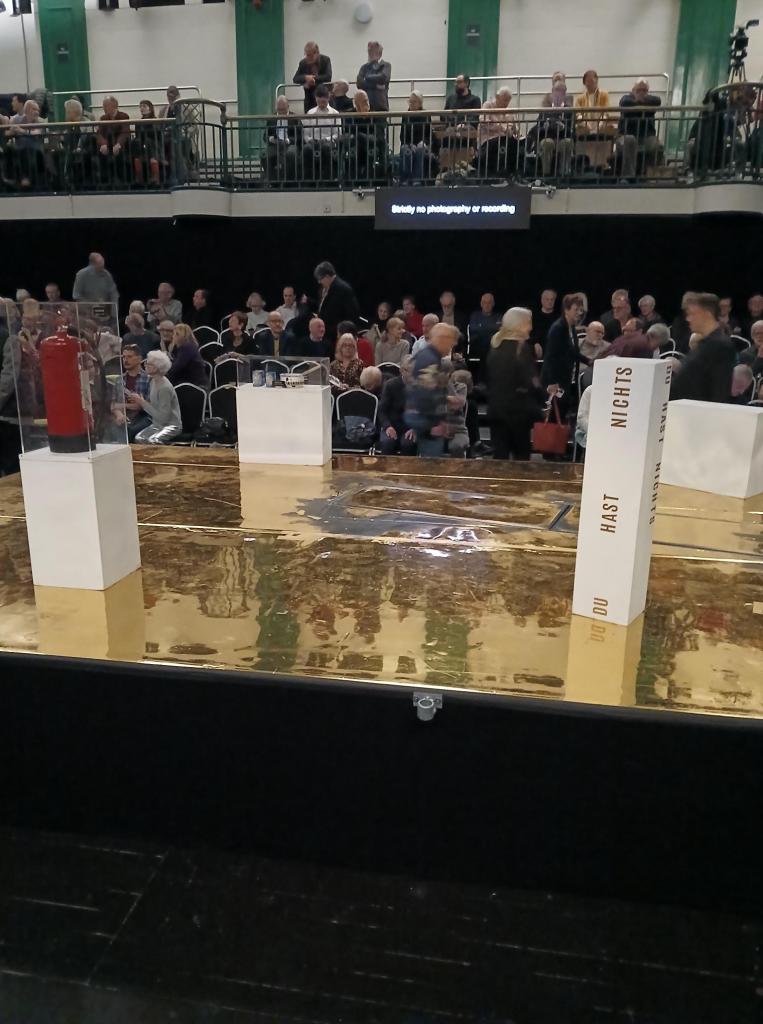
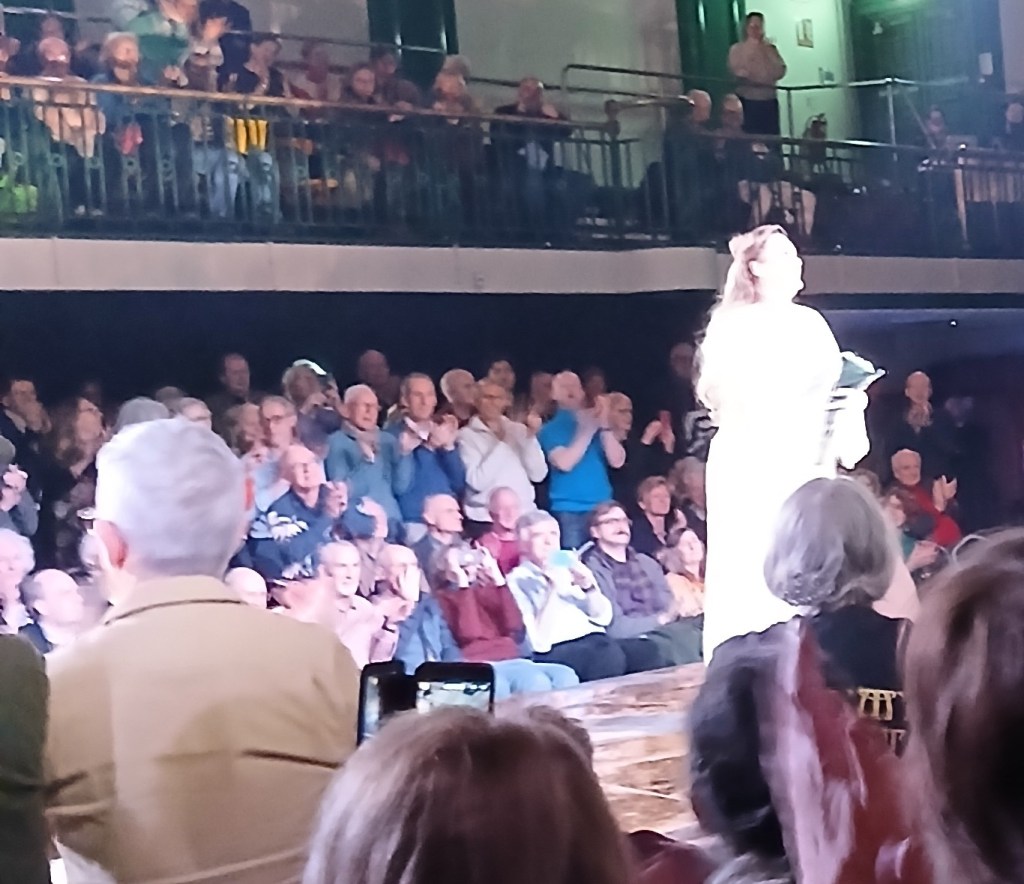
The Prelude and the first scene of Act 1 both take place within the same curtained space as the last scene of ‘Siegfried’. The Norns are appropriately black-costumed and mysterious, Mae Haydorn a particularly rich-voiced and impressive 2nd Norn (and Rhinemaiden). After the Dawn Music, Brunnhilde was still in her brilliant white bridal dress that she had worn at the end of Siegfried (though it was not the dress she went to sleep in at the end of Walkuere – oh well, that may be asking too much), which she wears throughout Gotterdammerung, while Siegfried was out of his straitjacket and into a normal white T shirt. The curtained space seems to indicate possibly a place of safety, possibly a place of imprisonment or stagnation – it’s not clear. Siegfried seemed to have another psychotic episode immediately after saying goodbye to Brunnhilde, and arrives at the Gibichung Hall in hoodie and the ‘Slayer’ T shirt he wore in Siegfried. He seems in moody adolescent form. The Gibichung Hall has a ‘curated’ exhibition of Walsung artefacts – the dummy Sieglinde caressed in Walkuere, the fire extinguisher Hunding kills Siegmund with, and Mime’s pots and pans. At a slightly later point Gutrune wears the same dress as Sieglinde of blue-ish grey colour. Siegfried scarcely needs a potion to fall for Gutrune (oddly one is prepared but never swallowed, as, in reverse, is also the case in Act 3), again suggesting his sense of disturbance. Gutrune is much feistier than is normally the case, pushing both her brother and Siegfried around physically at points. The Waltraute scene was very effective – Waltraute in the same costume she wore in Walkuere, and Brunnhilde caressing Siegfried’s strait-jacket at the beginning, with flickering lighting when she arrives. The sometimes either confusing or embarrassing scene with Gunther/Siegfried and Brunnhilde was very well handled. Various masked black clad threatening figures appeared (making use of the choristers I think), one of whom was Gunther, while Siegfried sung his lines from the wings.
In Act 2, there’s a novel ending to the Alberich/Hagen scene opening the Act, where Hagen actually kills his father (with the fire extinguisher). The Vassals scene is excitingly staged – it seems quite a relief to suddenly have all these extra people on the stage, and in this case they turn up in silly party hats and blowing whistles. The tensions between Gutrune, Gunther, Siegfried, Brunnhilde and Hagen are well-managed and never at all feel ‘operatic’ (Shaw’s big criticism of this work). There’s a striking twist at the end of the Act where Hagen and Brunnhilde seem to develop a thing for each other and grope passionately – exciting theatre, though I am not wholly sure what the point of it was, except to emphasise Brunnhilde’s passionate nature, and her contempt for Gunther.
Somehow in this production, and I am not quite sure how this was done, the Rhinemaidens in Act 3 seemed to have greater seriousness and prominence than in many productions I’ve seen – the encounter with Siegfried assumed its proper apocalyptic significance. The Rhinemaidens brought Siegfried’s teddy bear along as a sweetener (though there is in fact a reference in the text to the animal he was hunting). As elsewhere in this production, if a spear was mentioned in the text, there was a spear on stage, in this case hanging down from the ceiling ready for Hagen to grab to kill Siegfried. Gutrune, again, seemed a much gutsier figure than normal in her recriminations against Hagen. I guess it was in the last half hour or so that some of the limitations of this very special production were particularly apparent – the volume in Funeral March, particularly from the lone trumpet who was clearly getting tired, was just not enough, and at the end, although there was smoke and red flames, there was little of lighting that showed the green or blue of the enveloping Rhine, or the birth of a new world. There was a surprisingly comic moment when Hagen comes on at the end – like a pantomime villain, he is shoved by the Rhinemaidens (who also quite rightly appear to take possession of the Ring) into a pit on stage.
The audience for this was subtly different to other nights – more people coming who were new to this particular set of performances and were at Gotterdammerung because it was a new production. I saw Anthony Negus and his wife Carmen Jakobi in the bar during the interval, and it would be interesting to get their take on some of the singers new to them appearing this evening – maybe and hopefully some could be used for the Grange Park Ring Negus is conducting from 2026 – 2029……The singing and acting of the main characters were without exception excellent. Peter Furlong was every inch the troubled teenager, with a range of expressions demonstrating his bewilderment or frustrations with the adult world he found himself in. His diction was clear, his singing always memorable, with lots of shading. Catharine Woodward as Brunnhilde was once again authoritative, grand, prodigious of volume and attack, constantly in character and with some sensitive phrasing. Simon Wilding’s Hagen was extraordinarily good – he really commanded the stage whenever he was on it, acting with a rare, malevolent intensity. If his voice could deal with a larger house, he is a Hagen any major opera house would be glad to host. Gunther was generously voiced but also radiated indecision and fatuity. Justine Viani as Gutrune showed both acting talent and a lovely well controlled voice. All the Norns and Rhinemaidens not mentioned hitherto, as well as the chorus, were very good.
All in all I am so glad I saw this ‘Ring’. Perhaps Die Walkuere was the performance I responded to most, but it was all very well worthwhile seeing, and I do hope there were talent-spotters from major artist agencies or opera houses in York Hall over these two cycles who will give some of these singers a chance to excel on bigger stages. I was again sitting a few seats away from Loge and other company members – they were obviously going on to an after-party. I hope they enjoyed themselves……


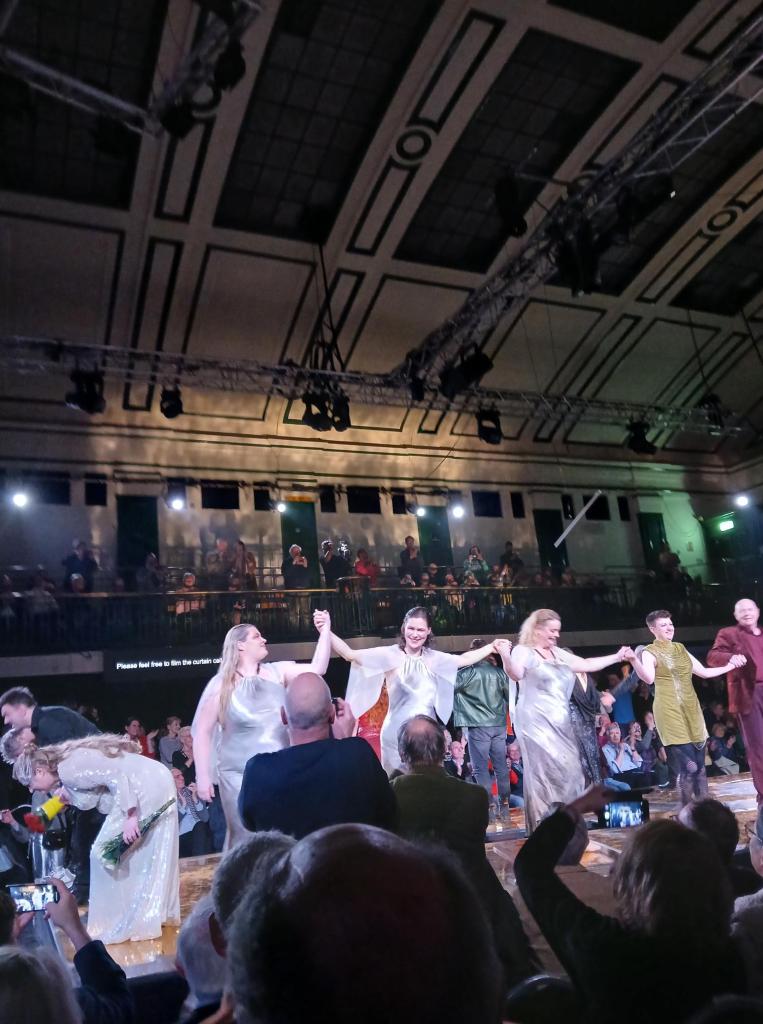
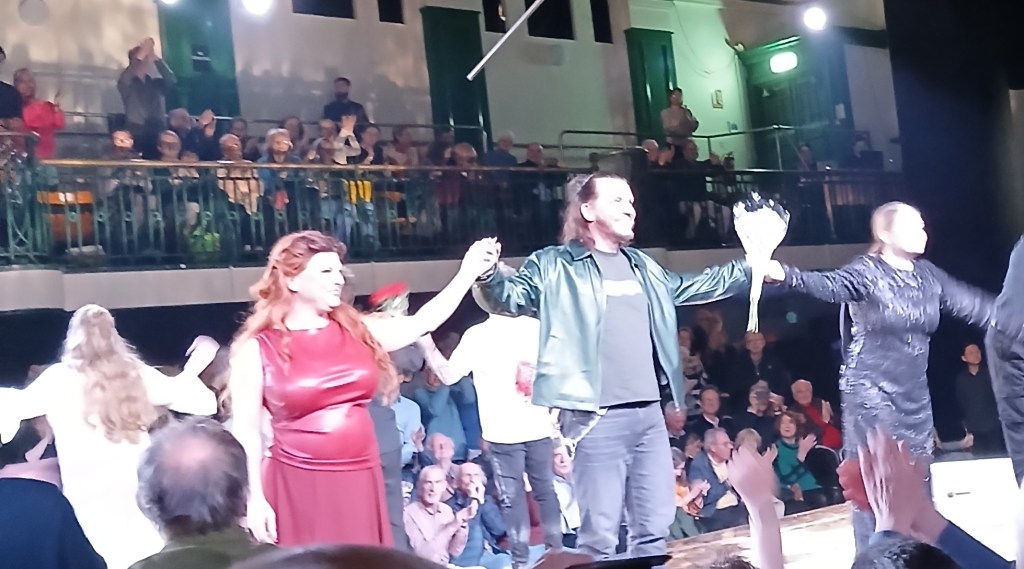
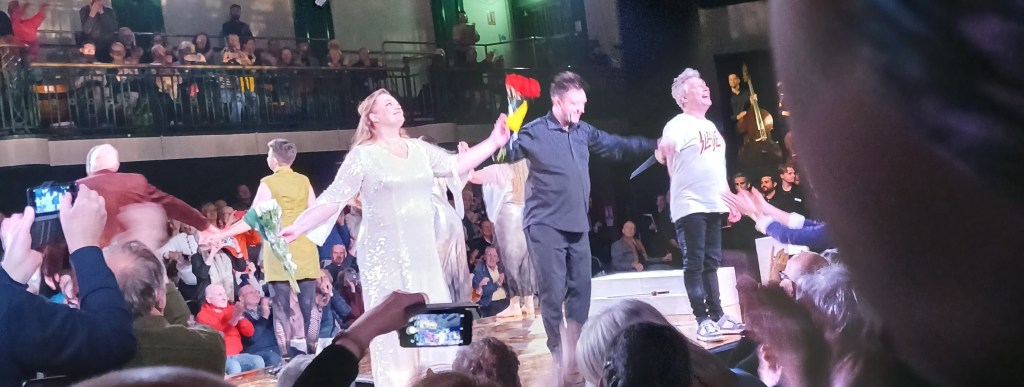
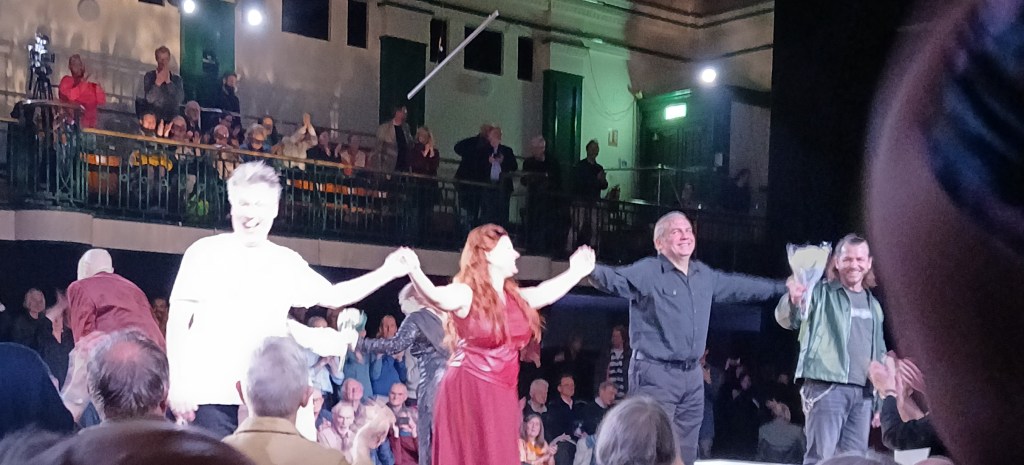
Here’s a video of the curtain calls https://www.facebook.com/share/r/1BvThW9sMT/

