Thoughts during lockdown 4 – September/October 2020 Live Music and holidays

Two holidays!!! I spent 5 days in Wales with my friend Chris. His place is very isolated, behind Barmouth, and towards the head of a valley, looking south – so that you can see, lit in the setting sun in the late afternoon, Cader Idris, one of the larger hills thereabouts. He lives without electricity, wifi, and phone connection.  it isn’t his main place of residence – he actually has two other houses he migrates between, one on Hampstead and one in Lewes. In Wales he has tended the forest around his estate well and has now sold most of it off to the Woodland Trust, who will increase the amount of deciduous ‘Celtic rain forest’ content and reduce the amount of conifers put down for commercial purposes 40-50 years ago. It is an utterly silent magical place; you can go for days without seeing anyone else, though this time we did have a chat one day to the farmer who lives further down the valley. Days there with Chris have a certain sameness – leisurely breakfast, long walk in the hills with a packed lunch (the walks can last for 7 hours!), an early evening gin and tonic, usually a barbecue, and then musing with whisky over the burning fire, indoors or out, listening to Radio 3’s evening concert on Chris’ ancient battery-powered transistor radio  (Chris is a classical music fan). 

And I went on the Pilgrims Way walk. it’s a slightly made-up walk from Winchester to Canterbury, following something called St Swithun’s Way, between Winchester and London, and there’s then a slightly dubious but possible ancient trackway between Farnham and Guildford. You follow the North Downs Way from Guildford to Otford in Kent, after which you move onto the old pilgrim route from London to Canterbury. I managed to get to Winchester Cathedral’s Choral Evensong the evening before I left – without the boys that night but still , a wonderful sound! I last went there for an exhibition 6-7 years ago – it seemed as though they are doing choral evensong every day now. A fantastic nave – longest medieval nave in the UK? Europe? I was mainly staying in B and B’s and doing about 10-12 miles a day.  One of the appealing parts of my progress was that all the churches en route have nice benches to sit on – I could almost phase each day’s walk around sitting on church benches for 10 minutes or so a time, and to have lunch on. The less appealing aspect was that because of Covid very few of them were open and by the look of it even fewer were functioning with full servicesI finished. I ended up in Canterbury going to a Choral Evensong (men only)and, the next morning, a said early Communion service at Canterbury Cathedral.

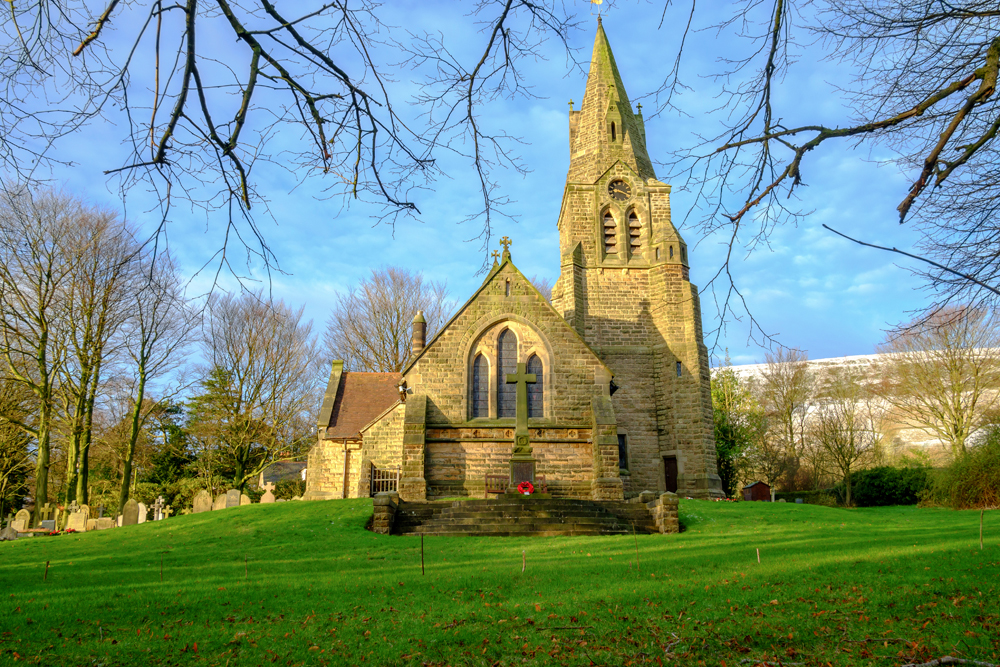
Allin all, a good thing to have done, particularly with so much time spent locally  during lockdown, and it’s something I can definitely say I have ‘achieved’ – also it’s an area, though my parents lived not too far away from Farnham after retirement, I don’t really know very well (I think I last visited Canterbury Cathedral in about 1965 or 66!). It came about through a question suddenly posed to me by my son Chris at Christmas 2019 – what are you going to in the 20’s?, he asked, I misheard and thought he’d just said 2020, but, no, he was referring to my targets for achievement over the next decade! Apart from ‘not dying’, I was a bit stumped at first for targets, but doing the Pilgrims Way was something that suddenly bubbled up from somewhere in my unconscious mind, so, having mentioned it, I was sort of committed to doing it. I have now got the bug – I might do ‘Ely to Walsingham’ next year, another pilgrim trail…..I attach a typical picture of the Way – it is quite haunting in a sense. I was reading Chaucer in the evenings, and sometimes you get a whisper of voices from the past as you walk along in the silence of the Way. Lots of Autumnal colours…..I did feel a sense of calm along the route; it is very nice to be able just to have simple targets like ‘walk 10 miles’ as opposed to think about and send 10 emails….

And I went to some LIVE MUSIC. I went to the Wigmore Hall last week and this, on two days in September for concerts at 1.00pm and 7.30pm each week. None of them were perhaps concerts I’d trek down to London for in the normal run of things – but these are not normal times…. I heard Rachel Podger playing Bach violin sonatas, string quartets playing Bach, Beethoven, Shostakovich, Haydn and two modern British composers –  a piece by Jonathan Dove – very accessible – and one by Roxanna Panufnik – a bit off the wall. The lunchtime concert – on BBC R3 I-player was by Elizabeth Llewellyn, a new name to me, who was absolutely outstanding.  The Mahler *Ruckert lieder’ I found profoundly moving. She has a voice that seems to me to be of remarkable range – billed as a soprano, and with a CV singing roles like Micaela in Carmen, which I thought was a soprano roles, she nevertheless has very deep tones, sounding more like a contralto, and she has a lovely warm tone and some beautiful half-voices.   It was fantastic to be able to focus on the music as you only can in a live performance, with time standing still and an appreciative audience, however socially distanced, around you. The whole thing was very well organised – staggered arrival times, no interval or bar, face masks throughout, and temperature testing on arrival. The Wigmore Hall’s definition of social distancing meant that it was only 10% full – I am not at all sure how they are making any money out of this, particularly as they claim to be paying the musicians their full fee, but I’m profoundly grateful to whoever’s footing the bill. It felt very safe – infinitely more so than my local pub. Tickets are allocated by ballot if you’re a WH Friend – which I am. Some of the concerts above were second choices – the likes of Andras Schiff and Sarah Connolly I haven’t been successful to get tickets for. London seemed very quiet still – I’d not been there since early February – with no crowds on the Tube and low numbers in restaurants

I went to two other concerts before ‘Lockdown 2’ in November. One was a visit to King’s Place to hear the Brodsky quartet play Beethoven Op 135 string quartet, the Grosse Fuge, and some Mendelssohn (this was about 75 mins, as it was an early evening concert – I combined it with a British Museum exhibition about Tantra, and got back home the same day). A great concert – I was amazed to read that (though quartets have a brand name, like orchestras, and often have a succession of players in them) the Brodsky quartet was founded nearly 50 years ago and that two of the original musicians are still part of the group. I thought the performance was lyrical and thoughtful – a really intense performance. Op 130 I was due to go to the following week but that was cancelled, as were several Sheffield events, including Roderick Williams singing settings of Hardy poems. I was still hoping that the events I had booked on 3rd December (a recital by Elizabeth Llewellyn, a wonderful voice – see previous) and 5th December – a piano quartet – might go ahead but it was not to be….! The Tantra exhibition I was a bit bemused by – though I know something about Kali and Durga, and indeed have seen temples in India dedicated to them, I got thoroughly confused by the heady mixture of gods’ names, yoga, philosophy and interesting practices, shall we say, and didn’t really get a great deal out of it.  I wished I’d gone instead to the British Library exhibition of Hebrew manuscripts, which would have been more assimilable……I’d booked to go the following week to that, but lockdown intervened. I also went to a Music in the Round concert in Sheffield – again effectively socially distanced – with the Ensemble 360 quartet playing a Haydn Op 77 quartet, and Beethoven Op131. I have often found it quite difficult to grapple and understand this work – it seemed much easier this time with a special focus because of the privilege of the event

In terms of music listened to at home, I really enjoyed the live Rattle / LSO Elgar/VW/Ades TV prom. I thought the programming was excellent – VW5 an inspired choice! And the appearance of the LSO – in terms of what they were wearing – would not have put off a casual viewer, who might therefore be drawn into the music – by contrast Sakari Oramo and the BBC Symphony last Friday were in full white tie and tails and female equivalents, which just looks increasingly ridiculous in this day and age.   I listened to the last few days of the Proms – an amazing archive Beethoven 9 conducted by Klaus Tennstedt in the early 90’s and a very drab Last Night. The BBC handled the whole issue of the latter very badly, I think – they could very easily have used the pandemic as a good excuse to do something entirely different – as they did for instance after 9/11. No-one would have dared complain if they said that the Last Night would not run as normal as a response to the situation and the 40-odd thousand at that time dying in the pandemic. But instead they ran straight into all the predictable issues, tried to get round them lamely and fell flat on their faces. I attended about 5 or so Last Nights myself in the 70’s and the format was the same then – when the main point of it is for those Promenaders who have been together for the best part of two months on most nights to have a party, it is ridiculous to have kept the same party format for 50 years!! It’s been a bit better in terms of the audience since they required anyone requesting a LN ticket to have been to 5 other Proms, and that’s promoted a healthy dose of ironic flag-waving, but it still brings out/attracts a lot of people with little interest in the music and a great many axes to grind.

Here’s a lovely video clip of Lennie Bernstein ‘conducting’ the VPO, https://slippedisc.com/2020/10/leonard-bernstein-it-was-30-years-ago-today

and also two fascinating piano rolls of Mahler playing his work – have you come across these before? I think I have heard the 4th Symphony final movement previously but never the first movement of the 5th!

https://www.youtube.com/watch?v=o2eOS7rKF5g

Thoughts during lockdown 3 – August 2020

In mid-August I spent 4 days in Launde Abbey on a personal rather than organised retreat. I like the monastic-type punctuation of the day with services (though it’s not a monastery, just the retreat centre for the dioceses of Peterborough and of Leicester –and going to a Compline at 9pm in the gathering darkness with flickering candles was quite moving. The whole social distancing thing was extremely well handled – dining tables 2m apart, lots of use of face masks, very clear instructions for moving around buildings so you didn’t find people coming the other way. I felt very secure there from that perspective – and of course it is a place you can sit outside a lot in at this time of year. The focus of my reading was the science of climate change, which doesn’t make for much peace of mind…….given that the current Government is highly likely to be around until Dec 2029, their managing of the process of decarbonisation is a fairly hair-raising prospect in terms of any chance of reaching only a 1.5C shift by 2050.  Currently there is largely an absence of a clear strategy and an action plan for this.

In August  the BBC 4 relay of ‘Fidelio’ recorded just prior to lockdown, was broadcast one Sunday evening  It featured Lise Davidsen – a future Brunnhilde and Isolde, she was a sensation in Tannhauser at Bayreuth last year, and she sounded amazing as Leonora. I had planned to watch this in a relay from ROHCG in mid-March which then got knocked out by lockdown – I am not sure how they got it recorded. I am reckoning they might have made a film of the dress rehearsal as a back-up for the main relay, since it was only then that the British tenor David Butt Philip rather than Kaufmann sung the role (I think(. I liked the concept of the production – 18th century first act, and modern dress with an audience in the 2nd, to show how a modern public can distance itself from political action. Maybe a bit obvious, but for me it worked. Fidelio is a difficult piece to bring off, from the very silly beginning to the amazing music at the end, but I thought this production handled it as well or better, even, than any other production I’ve seen over the years,

But I did have a sense of new impetus to listen a few weeks ago, and listened to some Haydn String Quartets – lovely! I then jumped onto I-Player and there’s been some super performances of Mahler in the Proms ‘greatest hits’ sequence going out nightly – a great Mahler 6 from the Boston Symphony and Andris Nelsons (2015), and a lovely Mahler 3 from Abbado (c.2007 or so).

The Guardian has been running a series of introductions to great composers and the one on Mahler seems to have particularly got to those feeling moved to offer comments – 278 of them; https://www.theguardian.com/music/2020/jul/29/mahler-where-to-start-with-his-music. I liked the one which said “Mahler’s music exerts an inexorable power over the listener that only Wagner can compare with. When listening to it, it seems like ‘this is the only way music should be”.

Here’s an interesting thing on the subject of Mahler – attached below is the last known picture of Mahler alive, which was only discovered recently (oddly) in a Viennese newspaper. Ermmm – not that you can see much of him, but there he is, being offloaded from the train in Vienna having travelled from New York to die, poor man……

The most moving Mahler performance I know – given its context, as well as the actual quality of the performance  – is (quite widely available and in surprisingly good sound) Bruno Walter’s Mahler 9 performed with the Vienna Phil in the Grossen Musikvereinssaal in Vienna on 16th January 1938 –  https://www.youtube.com/watch?v=uAw5b9anOhQ. Have you ever heard it? This was two months only before the Anschluss in March 1938. Astonishingly Mahler’s brother in law Arnold Rose was still the leader of the VPO at that time and was in that role for this performance. He later fled to Britain after his wife (ie Mahler’s sister) died but his daughter died in Auschwitz – https://en.wikipedia.org/wiki/Arnold_Ros%C3%A9.  All of that history seems to hang over this performance…….  

Some great music on the BBC as part of their archive Proms! There was the Lennie Bernstein Mahler 5 with the VPO from the 1987 Proms – which I thought was wonderful. So passionate…..some fantastic trumpet playing in particular from the VPO. A lot of the basic tempi were taken quite slowly, but then pushed forward where needed. I can’t imagine a better performance – the moment in the 2nd movement where the chorale that reappears at the close of the piece comes for the first time was revelatory.

Thoughts during lockdown 2 – July 2020

In July – one of the ‘pleasures’ – relatively speaking –  of lockdown has been the time to look a lot at streamed performance, and programmes on Youtube etc For instance this is a lovely and recent film about Mahler’s First Symphony https://www.youtube.com/watch?v=v5DfYcT5icY and here is a super performance by Lenny Bernstein of Das Lied von der Erde  https://www.youtube.com/watch?v=idRevTkIPts . Both these served to cheer me up – at least for a while.

The Vienna Opera site has had some amazing performances  an absolutely gripping performance of Der Rosenkavalier, for instance, with Felicity Lott as the Marschallin from Vienna in the 1990’s, with Carlos Kleiber conducting, no less, on the Vienna Opera website –  really worth watching – https://www.staatsoperlive.com/event/2/3bc640b8-f09b-4424-9068-5bf7c5587504/watch. I also saw the recent excellent Frau ohne Schatten conducted by Thielemann. Reminds me again of the 70’s and going to memorable performances of Der Rosenkavalier and Otello at Covent Garden conducted again by Carlos Kleiber and Die Frau ohne Schatten, conducted by Solti. Talking of Kleiber there’s a wonderful film clip of him conducting one of the Vienne New Year concerts in the late 80’s/ early 90’s, enjoying himself but with a very  steely glint in his eye – I am sure I have read somewhere or seen a documentary that said he was normally paralysed by stage fright before a performance and that was why he was seen so relatively rarely – at least outside Germany. I also remember hearing that, because he was so well paid as a conductor, he wasn’t keen on doing the New Year’s Day concerts in Vienna at first, and was eventually persuaded only when they offered him, in lieu of any fee, a particular sports car he’d always wanted……He was also apparently a well-known womaniser – how might he have fared in the (absolutely reasonable and needed) #MeToo era, with Levine, DuToit and Gatti all having fallen (or been pushed) on their swords? In fact I have just found the documentary I think all this was from – on Youtube: https://www.youtube.com/watch?v=Ta8Tqjn7Suo  . Do have a look – it’s quite moving. While I’m about it, on the subject of conductors, there’s also https://www.youtube.com/watch?v=-e-KWlMl1Q8, a BBC documentary on Goodall.

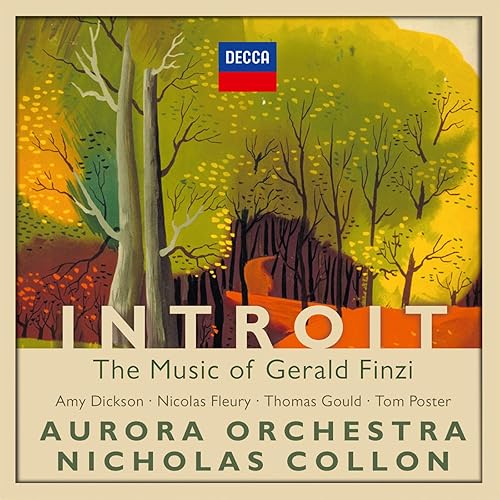
I have been enjoying hearing composers I am not familiar with, A particular find has been the Finzi cello concerto – very British in its way but a voice that sounds neither like Elgar or RVW. I have a great recording by Yo Yo Ma. The second movement is the one to listen to first – very beautiful. I believe it was about the last work he completed before he died, relatively young, in his 50’s, and it has that sort of autumnal feel. Here is a Youtube link to a recording  https://www.youtube.com/watch?v=hU4eOpFO_k8. The second movement is 16’40 into the recording, which also seems to be by Yo Yo Ma but might be a different performance to the one I’ve got. I used to know someone whose uncle was an amateur violinist who played with Finzi in the amateur orchestra he conducted in Berkshire or Surrey in the late 40’s and early 50’s – he always used to say what a nice, very humble person he was. I find the Finzi work much more satisfying than the better-known Walton one, and I’ve never really got on with Britten’s Cello Symphony. Bax is another one I’m getting to know more – the 3rd symphony is particularly fine

I came across also a wonderful bit of Tudor music I had never heard before – https://www.youtube.com/watch?v=nmLIqk9dQfM. In Media Vita (‘In the Middle of Life is Death’), by John Sheppard, I have been listening to it again and again

And then I also spent a bit of time enjoying getting to know works by Weinberg, a slightly younger contemporary of Shostakovich, who was Polish by origin, had two narrow escapes from German invasions, and finally settled in Moscow from September 1943. He was a good friend and supporter of Shostakovich – who reciprocated. You can hear the Shostakovich influence in the music but it is less spikey, less mordant, than S. The recent recording by ‘Mirga’ and the CBSO of the 21st symphony (Kaddish’) is wonderful – with Mirga herself singing a wordless lament in the final movement. A great work by any standards. I’ve also enjoyed the 20th symphony and a beautiful ‘cello concerto. Masses to discover….!!

Oh and In July I did have a day out to Lincoln , my first outing beyond the Hope Balley since March (apart from a day servicing the car in Sheffield)

At the end of June I will have spent 18 weeks without an evening outside the village. 126 days ‘in’ must be a first for me since childhood, and feels extremely odd. I have determined to do two things in the next few months: one, I will spend a few days at a retreat centre in Leicestershire I know, which is set in beautiful countryside, has a great library and does excellent food, in mid-August. It will be so good to be in a different place. Also, I am planning to do the Pilgrims’ Way walk in ?late September / early October from Winchester to Canterbury (or as much of it as I can walk within 10 days), if I can find sufficient pubs/B and B’s to stay in en route (I loathe camping), and if Covid rules permit

Thoughts during lockdown 1

And in June I began to realise the full consequences of Covid 19 and lockdown for musicians  – their well-being, livelihoods and income – and live music, and those who organise it, and love it, and began to feel despondent. Though there are various things I continue to do, with varying degrees of commitment, the buzz I have got in the last few years and which has made my life more interesting has come from live concerts and operas, live theatre, cinema, eating out and travel; none of these look remotely possible in the short to medium term. There are, I am sure, huge numbers of creative ideas around as to how to manage this situation, but not many of them seem consonant with making money – I went to a ‘Virtual Reception’ with the Halle Orchestra, on Zoom the other day, as I am in a small way a supporter, and Mark Elder was talking about the idea of hiring the Bridgewater Hall for the evening, and doing a programme of say an hour and a quarter three times over, with a distanced audience of 400 at each show. But the problem goes beyond this – outside London, classical music relies disproportionately on the over 70’s, who are highly unlikely to turn up to anything any time soon until there is a vaccine. I fear we are looking at a setting back of the clock in classical music terms to the 60’s – few touring orchestras, relatively little happening outside London, no ‘garden opera’ outside Glyndebourne – and that it will take beyond my lifetime for things to develop towards the degree of richness and depth that we were experiencing 3 months ago. But maybe I am being pessimistic – I hope so…….

I do remember also thinking about what I had learned from lockdown – in some ways depressingly little. Yes, I do feel I have slowed down in a way that’s positive. If I look back on the first week of lockdown – and let’s say that’s from Sat March 21 to Sat March 28, during that period I would have been: 

–              Going to a performance of R Strauss’ Elektra in Birmingham and staying the night there

–              Running a Teaching and Learning Committee of the School Governors locally

–              Helping as a steward in a Philosophy Café event at Sheffield Cathedral

–              Attending a ‘Leading your Governing Board’ training event in Chesterfield

–              Giving a talk to a group of Methodists in Wakefield about my experiences in Palestine

–              Going to a concert of late Beethoven piano sonatas by Steven Osborne in Sheffield

–              Facilitating a talk by Keith Warner (Director Covent Garden ‘Ring’, 2003-2018) and Barry Millington (Wagner scholar) in Manchester about staging Wagner

This is all pretty manic, and I have enjoyed myself just as much sitting in the garden reading most afternoons. But I am not sure I have had any massive spiritual experiences or vast revelations. I am probably fitter than I’ve been for a long time, and I realise I could easily combine maintaining that degree of fitness with the sort of activity outlined above. I’ve made some nettle wine, which is a new one on me

Norman Lebrecht was having a real go around the same time at the South Bank Centre https://slippedisc.com/2020/06/why-londons-south-bank-needs-to-go-bust/?. I think this is – to my regret – probably true. It is difficult to see what the South Bank is doing for its grant given that presumably orchestras and artist management companies are paying for the hall hire of specific gigs, and its multitude of food outlets are entirely commercial in nature. I went to another Halle Orchestra Virtual Reception where they were talking about the Bridgewater Hall, which operates much more commercially, grounded essentially on middle-of-the-road rock concerts; until social distancing was totally eased, the BH could not afford to be anything other than mothballed (ie even if the Halle could perform there to a socially distanced audience and at a loss, it wouldn’t be possible). Lebrecht also posted rumours about the BBC halving its orchestras from 4 (BBC Symphony, BBC Philharmonic, BBC NOW, and the BBC Scottish Symphony Orchestra). I can see the logic of this – the strength of the Halle, as it would be for the Liverpool and Birmingham Orchestras is that they have really strong local emotionally-grounded support – among the London orchestras probably the LSO only has something like that. There was sad one moment in the Virtual Reception – Joyce Kennedy, the widow of Michael, a well-known Elgar and Vaughan William scholar based in Manchester who’s in her 80’s, said she was worried she would never get to hear another live concert again…….

There were also these sorts of articles appearing in the press – both rather depressing.

https://www.theguardian.com/music/2020/jun/09/we-could-go-to-the-wall-in-12-weeks-why-isnt-classical-music-putting-up-a-fight-coronavirus

and

https://www.theguardian.com/music/2020/jun/10/orchestras-might-not-survive-after-coronavirus-pandemic-uk-conductors

And in May I remember thinking about things I’ll do when all the Covid-19 stuff has finished. I really want to do another tour of some European opera houses and concert halls. In 2015, on vacation from Pakistan I sent a glorious 8 days in Austria and Germany – two days in Vienna seeing the sights but also going to the Opera and seeing Don Giovanni (excellent and intelligent production) and then Anna Nebtreko in Eugene Onegin – I’d not seen her before and she was really fantastic as Tatiana. A memorable evening – and it certainly does no harm to have the Vienna Philharmonic in the pit. Then I went to Munich to hear two of the Munich-based orchestras playing music by Shostakovich, Beethoven, Prokofiev and Hindemith, conducted by Valery Gergiev and Vladimir Jurowski. Then to Dresden, for a competent Tosca, and a work by Lortzing called Der Wildschutz.   This is one of those things – like much of Elgar and VW – that doesn’t seem to travel well beyond its ‘native’ borders. Lortzing’s work seems to be, on the basis of what I heard, a sort of combination of Gilbert and Sullivan and someone like Weber – still tremendously popular in Germany but completely unknown in the UK. Everyone listening to it in Dresden seemed to be enjoying it a lot more than I did – not that it’s actively rebarbative, but rather just a bit boring…..But then, I tend to feel a bit the same about G&S…..although I enjoy ‘Patience’, where I understand something of the context (Wilde / Pre-Raphaelites), and some of the lines are really quite funny. And then I went to Leipzig….I’ve talked about my Bach experiences there before but I also went to a ‘family’ performance of the Leipzig Gwendhaus Orchestra and Sir Roger Norrington performing parts of Elgar 1 – a rather bizarre experience, with kids crawling around all over the place, and a measure of disruption – plus the orchestra didn’t play the whole thing. But it was still wonderful to hear that great orchestra play Elgar – as impressive as Barenboims’s Elgar 2 with the Bellin Staatskapelle at the Proms in ?2018

In April, normally the time when the Proms prospectus comes out, I remember thinking ….It would be nice if there are still some Proms this year….Although there was something like a 30 year gap when I didn’t go to them, I went to anywhere between 6 and 45 Proms each year between 1968 and 1982,  being based in London, and, as I say, have managed 6 or so a year since about 2010. I had some wonderful, wonderful evenings in the 70’s – listening to Boult conducting Elgar 1 and 2 was an experience I shall never forget – a man who heard as a student the first performance of the 1st Symphony conducted by Richter at the Halle in 190?8….. I sometimes think about this sort of experience when engaging – not that I do that often – in arguments about the text of the New Testament. Granted that it’s doctored in various ways, nevertheless when I think about a New Testament being written between 69-120 AD and Jesus dying in about 33AD, here I am in 2020 remembering vividly how Boult conducted Elgar, a work he first heard in 1908, I heard in 1969 and he was born in 1890. That’s a much longer time span of remembrance than eyewitnesses in the New Testament…………Here’s Boult conducting bits of Dream of Gerontius with Peter Pears – https://www.youtube.com/watch?time_continue=43&v=L1NG7fGX0iA&feature=emb_title.   Incidentally, at the same time as thinking about the Proms, I decided to  bought a ticket for Rattle/LSO performing the Dream of Gerontius in Jan 2021, in a spirit of optimism (misplaced as it happens) ………..

Re Elgar and oratorios –The Kingdom and The Apostles are both wonderful. The Kingdom I have known since a teenager from the Boult recording but I had never heard The Apostles live until 2012 when it was performed by Mark Elder and the Halle in Manchester. I had flown in from Dubai in the morning, wondered whether to go to the performance and was really glad I did – I was sitting in more or less the front row and was really knocked back by it – such memorable choral writing, so many glorious melodies. It took me a couple of days to recover……..

March before lockdown, 2020

March 2020 before lockdown – as doom approached, the main things I went to in March musically were the Opera North Marriage of Figaro and Kurt Weill’s Street Scene. I enjoyed the Weill piece a lot. It’s a kind of missing link between Porgy and Bess, and Bernstein/Sondheim – still with some of the Weimar Republic ‘Cabaret’ sort of sounds, but also with something more bluesy and ‘American’. Some very good singers – including Robert Hayward, who I’ve heard singing Wotan…the story was a bit silly but the staging made the best of it. The Opera North Marriage of Figaro on March 14th was my final live musical event before lockdown, and it will probably be 18 months to two years before I see anything of comparable size and scope again live. Although the audience was already thinning out  – various cautious people understandably feeling they were vulnerable and ought to stay away, and despite the fact that the volunteer attendant sitting near to me had a racking  cough and a streaming cold and indeed might have been suffering from the onset of Covid, I did enjoy this – sung in English, 70% of which was understandable, lots of laughs, good singers and also a conductor/orchestra who got the right spring into the music – fastish but not gabbled. The orchestra was  conducted by James Hendry , who I’ve never heard of and I hadn’t heard of any of the singers –  Irish soprano Máire, Flavein (Countess), Welsh soprano Fflur Wyn (Susanna), Dutch baritone Quirijin de Land (the Count), and, from New Zealand, baritone Philip Rhodes (Figaro).This had a real company feel to it. It was broadly 1920’s in décor but that seemed to work fine – with and not against the music. A great event to see and hear before embarking on the bleakness of lockdown

February 2020

February 2020 – still oblivious of the impending lockdown and of months without live music, I went to the Halle’s performance of Beethoven 9 with Mark Elder conducting. I thought the finale was super, but the slow movement was, I thought, too fast and the first two movements neither had the energy or the power they should have ideally done. But the Halle Choir etc sang brilliantly, and the orchestra played extremely well. Overall it was a good evening with some Beethoven rarities in the first half. I was listening the other day to a Beethoven 9 conducted by Furtwangler – the one that opened the Bayreuth Festival in 1951 – https://www.youtube.com/watch?v=dHDXdbSWu0E. Furtwangler is the only conductor I have EVER heard getting a slow enough tempo for the slow movement – it is marked ‘adagio molto’ but no-one seems to perform it like that. He’s an interesting case study in how art can never be ultimately divorced from politics – he tried to remain apolitical in Nazi Germany, but only succeeding in compromising himself (see https://www.youtube.com/watch?v=2itdv1aEpG4   ). Of course he was in frequent conflict with Goebbels, personally rescued from certain death a number of Jewish people by calling in favours with 3rd Reich bigwigs, and in no way was a card-carrying Nazi (unlike, famously, I read, Karajan and Schwarzkopf) but nonetheless his continuing presence was an important positive point for the regime….He was lucky in the timing of his de-Nazification trial, which was when the Cold War was beginning to bite, and the Americans needed ‘solid’ Germans in the West. Reggie Goodall, who conducted the ENO Ring in the 70’s, was of course was a member of the British Union of Fascists before the war, and I believe was briefly interned as an enemy of the state in 1939 – it seems to me that people shouldn’t be demonised for their political beliefs, but one should know where they are coming from, and what that might mean in terms of their approach to the music. In the case of Furtwangler, right-wing views combined with a tendency to arrogance and not to listen to the views of fellow musicians, perhaps, and also to idealise one particular musical tradition – Bach, Beethoven, Brahms – at the expense of others. With Reggie, I am less sure…….And, of course, that’s a whole debate in relation to Wagner himself, but that perhaps is for another time…..

On Feb 27th I had a lovely day – I saw my two grandsons in the morning in Sale, had a long lunch with an old friend in Manchester which went on till about 6pm, then went to a Halle Beethoven concert and finally, before getting the train back home, bumped into an old British Council colleague, Andrea, who’s a member of the Halle Choir, in the Briton’s Protection pub. The concert was the Halle performing Beethoven 8 with Ben Gernon conducting, and Mark Elder conducting Act 2 of Fidelio with an all-star line up of Simon O’Neill  – true heldentenor sound  0 as Florestan, Brindley Sherratt as Rocco, and Rachel Nicholls as Leonore, Rachel Nicholls, who gave us a talk a couple of years ago at the Wagner Society, was a wonderful Leonore, her powerful voice soaring across the Bridgewater Hall – it was altogether a very powerful 50 minutes or so and I rated it very highly

Late January/ early February

I had another packed weekend in London at the end of January 2020 / beginning of February with Mitsuko Uchida as pianist and director of the Gustav Mahler Chamber Orchestra performing Mozart Piano Concerto No. 17, K453, Widmann’s Choralquartett , and Mozart’s Piano Concerto No. 22, K. 482. This was just about as superlative as it gets – definitely one of my high 5 stars for the decade. Mitsuko as a player was nuanced, sensitive, made every note count and making every note both live and be placed, clear and lyrical – words fail to me. And as an encore, a superlative account of a Schubert Impromptu. It can’t get much better than this, I thought (and for the rest of the year it didn’t)…..

And – as if this was not enough – the next day was Wagner’s Siegfried, part of the projected LPO Jurowski Ring cycle, meant to have been rolled out in Feb 2021 (I had tickets, grrrrr, but which has now been abandoned because of COVID). This was very good, with a few reservations . The good bits first: – the orchestra and Jurowski were superb – fastish tempi but not too hard-driven and giving an appropriate sense both of menace in Act 2 and grandeur at the beginning of Act 3; Adrian Thompson (I found myself sitting next to him over lunch having another meeting on something else entirely and wondering who he was) was a superb Mime. Elena Pankratova , who I heard as Kundry at Bayreuth in 2017, was an outstanding Brunnhilde (with the oddity that she chose not to sing the optional High C at the end of Act 3, which was a bit offputting). Robert Hayward as Alberich and Brindley Sherratt as Fafner did all that was required of them. Some of the critics seemed to have it in for Evgeny Nikitin as the Wanderer, but, speaking personally, I loved the sonorities of his voice, even if his acting was a bit wooden. The main questionmark was over Torsten Kerl as Siegfried – his physical presence would have been less of a concern if this had been a fully concert-based performance, but, as is common these days, ‘concert performance’ seems to now mean a modicum of acting, and, let us say, acting Siegfried is not Kerl’s strong point. On the positive side I found his singing sensitive at points and – at the end of the day –  he was still there at the end of the third act, belting forth, and doing the top note that Pankratova opted opted out of – so kudos to him. I wasn’t that taken by the elements of staging or the video design.

And on the Sunday I had a reunion lunch with an old friend, in memory of another friend who died in 2013 – RIP, Mick

January 2020 before lockdown

I started the year off with an extraordinarily weekend of music in mid-January. After a meeting I had to go to in Borimingham I was able to catch the CBSO Mahler 8 with their chief conductor Mirga Gražinytė-Tyla,. I have only heard Mahler 8 infrequently over the years – Davis and Boulez at the Proms in the 70’s, and also Charles Groves at Alexandra Palace (!) – plus in Manchester Kent Nagano conducting the Halle in the late 90’s. But the CBSO/Mirga performance was the finest I’ve ever heard live – Mirga is an amazing conductor, who led a performance that was never over-blown, but always alive, hard-hitting when needed, and totally memorable. It was quite fast in the opening movement but she totally justified the approach – as ever with this work, part of the impact is the public spectacle of so many singers and the CBSO certainly achieved that  – ‘surround sound’, almost as the choir stretched right round three sides of the hall. I am not always convinced by some of the second half, but the CBSO gave it their all with total commitment

And then on to London with the last train more or less from Birmingham the same evening to an LSO Day in London. It started with Simon Rattle rehearsing Beethoven’s Christ on the Mount of Olives with the LSO – very interesting to see Rattle’s rehearsal approach; long stretches of performance and then picking up on specific points. I couldn’t help wondering whether these were points he had determined in advance, as things he knew to be tricky, or were actually prompted by specific performance issues. Anyway – I suddenly found this was a fascinating work I didn’t know at all, with real Beethovenian energy at points. The soloists were very good – particularly Else Dreisig – and one just wondered why the work wasn’t better known. Then to an LSO chamber music in the afternoon, where I heard one of Beethoven’s Op 104 cello sonatas for the first time, and then the actual performance of  Christ on the Mount of Olives, preceded by the Berg Violin Concerto. A fantastic, if exhausting weekend…………

December 2019

In mid-December 2019 I went to a keenly awaited concert  – Omer Meir Welber conducting his BBC Philharmonic in Bruckner 7 and Sofia Gubaidulina’s Triple Concerto for violin, cello and bayan. A greatly interesting programme choice, with a religious element to both of them – Gubaidulina focuses in her piece on the number 3, obviously representing the Trinity. I really liked her piece – it’s not easy listening but constantly, glitteringly, absorbing and never boring. I felt I wanted to hear it again, and indeed did so via I-Player. On the Bruckner I was less sure – particularly when I had heard the massive and – by the sound of it – overwhelming VPO Bruckner 7 with Haitink from the Proms, albeit on my inadequate alptop speakers in the South Hebron Hills on the West Bank. I thought the first movement, though fastish, was poetically and sensitively conceived, but the slow movement was too fast, particularly the rocking second theme. The third and fourth movements were bright and forward-moving. I thought the reading interesting, but it didn’t grab me.

Before Christmas, of course, there were lots of carols…. I am always struck by the contribution of Vaughan Williams to the carols’ tradition – On Christmas Night (Sussex carol), O Little Town of Bethlehem, This Endris Night, are all based on folk tunes collected by Vaughan Williams. There is an exciting tradition around where I live in the Peak District and also particularly around Sheffield – of local carols. They’re usually sung in pubs in the weeks leading up to Christmas – and, although there is a core of carols that are sung at most venues, each particular place has its own mini-tradition of carols handed down by word of mouth, and often quite competitively cherished and guarded. I have been to one or two of these in different places – the repertoire at two nearby places can vary widely -some are unaccompanied, some have a piano or organ, there is a flip chart with the words on in one place, a string quartet (quintet, sextet, septet) accompanies the singing at another, some encourage soloists, others stick to audience participation, a brass band plays at certain events, the choir takes the lead at another; but, whatever the occasion, there is always a warm welcome and a willingness to help the newcomers with words and tunes. A lot of them seem to be mainly of 18th century origin but some go back much further – e.g. the Castleton Carol, again collected by RVW – https://www.youtube.com/watch?v=T-wqg-9bJV0.  I find the continued existence of these traditions really exciting . There are quite a few places with regular weekly sing-alongs before Christmas in the area: Castleton, Hathersage, Eyam, Foolow, Bamford and Upper Denby. ….

November 2019

Once back in the UK my first live musical event was in mid-November – Opera North’s Giulio Cesare, at the Lowry. Trying to remember it 14.5 months later, the main things that stick in the mind are the excellence of the singers and the sheer fertility, variety and inventiveness of the musical numbers – almost like ’The Messiah’, every number is a ‘hit’ and a joy to listen to. I think I saw Swedish contralto Maria Sanner as Cesare and, without being Janet Baker (and I have an MP3 of JB singing extracts from this from the ENO production in the 80’s), was impressive and varied in her tones, as well as having the necessary dexterity of voice, if that’s the right word. Coloratura soprano Lucie Chartin was Cleopatra, and she, I recall, was a star, her arias delivered with power and precision. The others I don’t recall so well, nor do I remember much about the production

I had to be in London for a week at the end of November 2019 and rather gluttonously (and also anti-socially, given that I was meant to be with a group of other people debriefing on Palestine), I went to three operas in a row – Gluck’s Orpheus, Glass’ Orphee and Death in Venice  Glass’ Orphee was I recall quite a good evening but to be frank 14.5 months later I have almost totally forgotten what it was about or the details of the impact it made. Gluck’s Orpheus was more memorable – some excellent singing from Alice Coote and Sarah Tynan and above all the dance work / direction of Wayne McGregor, which made for some very striking images on stage. Having said that, it is rather a stationary work – classical unities, I suppose – and the music with the obvious exception not that memorable. Of the three Death in Venice is the undoubted masterwork. I heard it during its first London run in the early 1970’s – maybe there was a Proms performance then as well – both with Pears. This was a new production by David MacVicar which was unobtrusive and true to the work. Mark Padmore was the excellent Aschenbach and Gerard Finley the Traveller / Elderly fop / Old gondolier / Hotel manager / Hotel barber / Leader of the players. I was entranced and gripped by the different colours Britten produces in the orchestra for the different scenes, and just thought this was 5 star material – Mark Elder was the conductor.

On November 30th I went to see the CBSO performing Falla’s Three-Cornered Hat Suites and Stravinsky’s Petrushka – good vibrant performances – and a rarity Strauss  Duett-Concertino for Clarinet and Bassoon. Jaume Santonja Espinós was the conductor