Orkiestra Historyczna, Arnold Schönberg Chor. Conductor, Martyna Pastuszka. Director, Max Emanuel Cencic. Alessandro: Maayan Licht; Cleofide: Bruno de Sá; Poro: Dennis Orellana; Erissena: Jake Arditti; Gandarte: Stefan Sbonnik; Timagene: Nicholas Tamagna
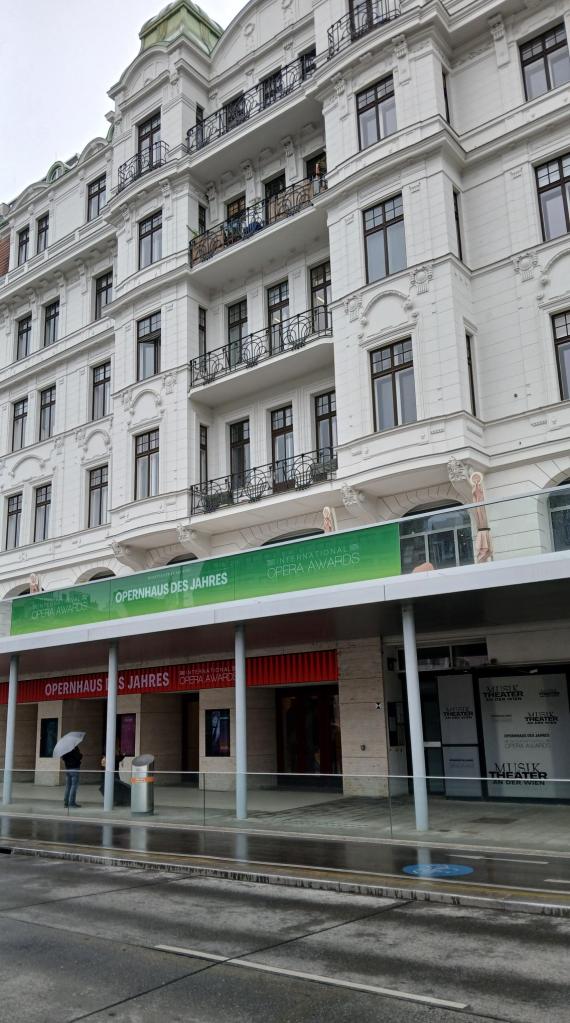
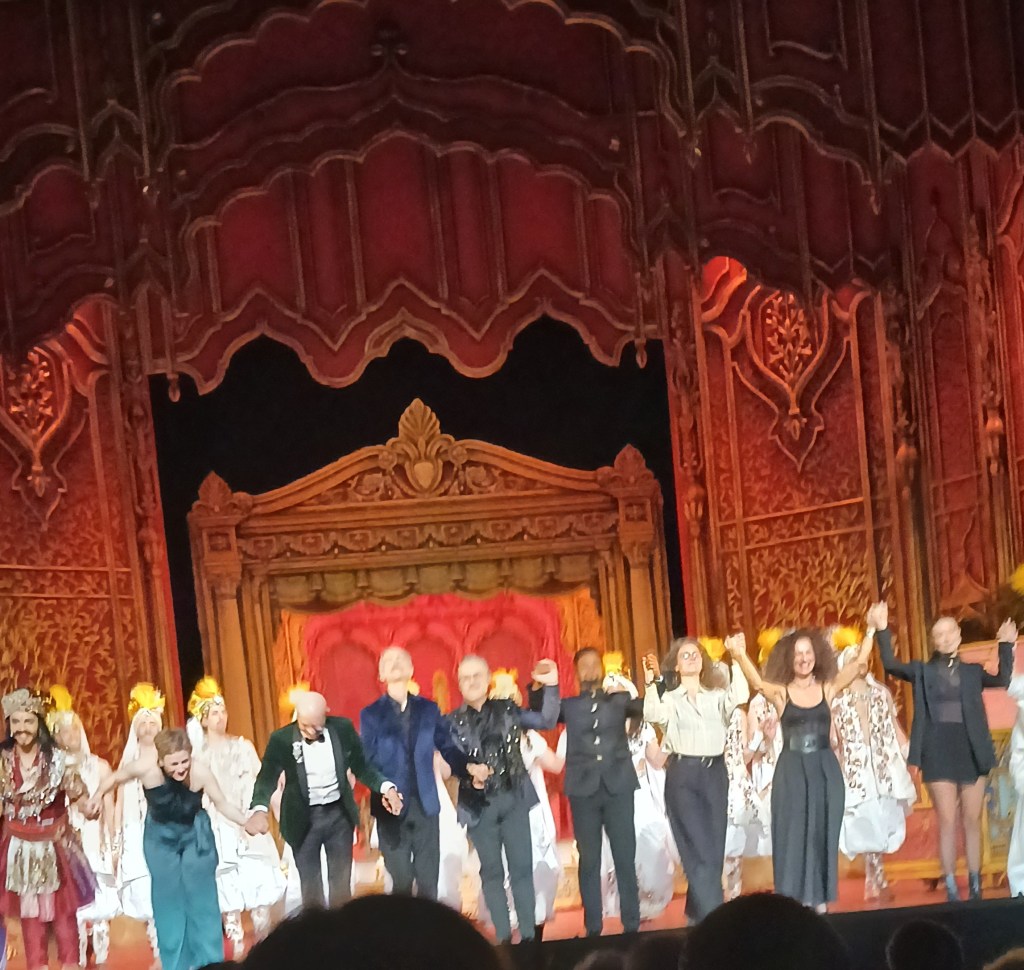
“Alessandro nell’Indie” is an opera by Leonardo Vinci, set to music around 1730. Vinci’s opera was first performed in Rome and has gained renewed attention in recent years, particularly at the Bayreuth Baroque Opera Festival. This was the first production of the work (Bayreuth 2022) since the 1730’s, astonishingly. This showing in Vienna was part of a European tour and the entire production team had turned out for this, the first night of the Vienna run. The original Bayreuth production in the Margrave’s opera house can be seen on various YouTube videos and I believe there was only one change of cast from the 2022 videos to this Vienna run. The director himself has sung as a counter-tenor – so he knows this repertoire and its glories/problems extremely well – and it shows!
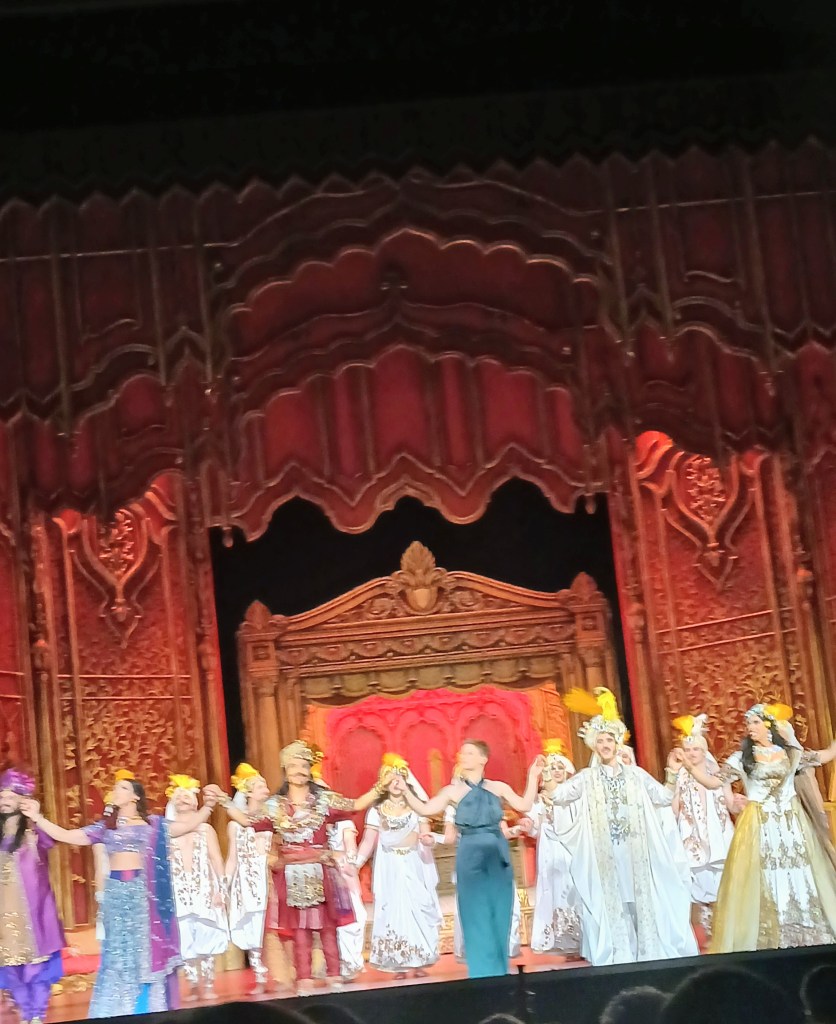
The story revolves around Alexander the Great’s love for the Indian queen Cleofide, who has been promised to King Poro, Alexander’s defeated adversary. The opera explores themes of love, intrigue, jealousy, and forgiveness, and was composed for male singers only due to the restrictions of the time. Apart from these main three characters there is also Porus’ sister Erissena, and two faithful (or not so much) servant types, Gandarte and Timagene. The main storyline is thus around Queen Cleofide’s relationships with Alessandro and Porus, and how she handles both in the ups and downs of a war situation. The Greeks wear 18th European clothes, the Indians formal Indian dress. The dancers – on them see more below – switch between the two styles of dress depending on what they are doing and who they are accompanying. There are also two commedia dell’arte types with bouffant wigs and false long noses who announce where each scene is based (unaccountably in exaggeratedly posh English) and do scene- shifting/helping out with jokes.
This is one of the best worked-through and totally engaging opera performances I have ever been to, a really life-enhancing experience and hugely enjoyable. It has the lot – some meltingly beautiful slow arias and foot-tapping fast ones. It is a long evening – the full Baroque whack, four and a half hours with intervals, and a positive blizzard of da capo arias. However, most of these are quick numbers, enlivened by dance and sometimes slapstick comedy. The general approach is to use Bollywood – based routines, emphasising spectacle and visual exuberance and to that end the 6 main singers are joined by 12 or so dancers. Certainly the singers are all male, 5 counter tenors and 1 tenor, and maybe all the dancers were, though at least some were in female dress. There is also a chorus, based in the pit, for a couple of numbers at the end as Alessandro prepares to get married. Vinci’s music sounds more like Vivaldi than Handel – more extrovert, less introspection. It would be fascinating to hear Handel’s Poro after this experience – I read that he pruned the Metastasio libretto quite a bit to bring out the drama more: with Vinci, at least in this production, it is more of a romp…..
All manner of gags are used to keep the audience engaged – Porus, Alessandro, Gandarte and Termagene travel around on camel and elephant bikes; at the end of Act 1 Queen Cleofide and Porus develop a duet into an operatic competition involving Mozart and Verdi; Porus is in competition with a trumpet at one point in an Act 1 aria. There’s an enormous and very realistic golden phallus and 2 Kama Sutra scene sculptures given as presents by Queen Cleofide to Alessandro; there are (mercifully sparely used) jokes made about false breasts by the men playing Queen Cleofide and Erissena. Various boxes are pushed on and off stage, to fly open with one of the main characters inside making a surprise appearance. There’s another gag at one point where the dancers help a not very competent Queen Cleofide execute some tricky dance positions. The dancers use soldier puppets for the battle scenes; Erissena with two of her ladies finds she hasn’t got any loo paper when she wants to use the toilet. These are just some examples – some very funny, some on the crass side – of the constant inventiveness of the production.
The sets are an important part of the overall impact of the show – there is an overarching backdrop and flies, looking like elaborately carved wooden screens. At the centre rear of the stage there is a semi-circular smaller stage which can move downstage when needed, and has painted backdrops (eg for Alessandro’s wedding), There are a few props – mainly couches and chairs. The general effect of the set is to enhance the Bollywood feel of the production, and give plenty of room for the dancers to do their stuff.
The (I think Polish) period instrument band was superlatively good – like the Irish Baroque Orchestra, they have the energy and precision playing to give character to each number. Their players include particularly zingy string players, a dynamic timpanist, and percussionists playing castanets and various kinds of cymbals – the leader of the orchestra Martyna Pastuszka helps out at one point by wielding a Lully-like stick with little jangly bells which she banged along with in one aria. She is also in fact the de facto conductor, using her bow at times to direct singers- she also comes up on to the stage to accompany an aria (another example of different forms of entertainment during the successions of arias.)
The days of hooting counter tenors I used to complain about are now a thing of the past. Counter tenors are capable of singing just as beautifully as sopranos or mezzos, and with the same superlative standard of coloratura. What singing in a countertenor range does to your voice long term I don’t know but any of the 5 counter tenors singing this evening I would happily hear again in other roles. Would it have been better to have the two female roles sung by women, I wondered? Clearly there is a historical argument for not doing so, but I suspect also the whole jokiness of the production is enhanced by having the two men playing women. All the singers had their particular merits but for me Bruno de Sa as Cleofide had it all – spectacular coloratura runs, perfectly poised high notes and great beauty of tone. Both Alessandro and Porus excelled in the agility of their voices, and Erisenna had a very beautiful lower register for some of her most memorable arias
All in all a hugely entertaining evening, fully living up to the hype around the production, and with such energy and joi-de-vivre….!.
 John's musical journey