Director, Natalie Abrahami; Costume designer, Hannah Clark; Lighting designer, Guy Hoare; Video Designer, Duncan McLean; Movement Director, Anna Morrissey; Set Designer, Michael Levine. Conductor, Bassem Akiki. Prologue/Peter Quint, Elgan Llŷr Thomas; Governess, Isabelle Peters; Mrs Grose, Claire Barnett-Jones; Miss Jessel, Kate Royal; Peter, Peter Willoughby; Cathy, Clare Kate O’Brien
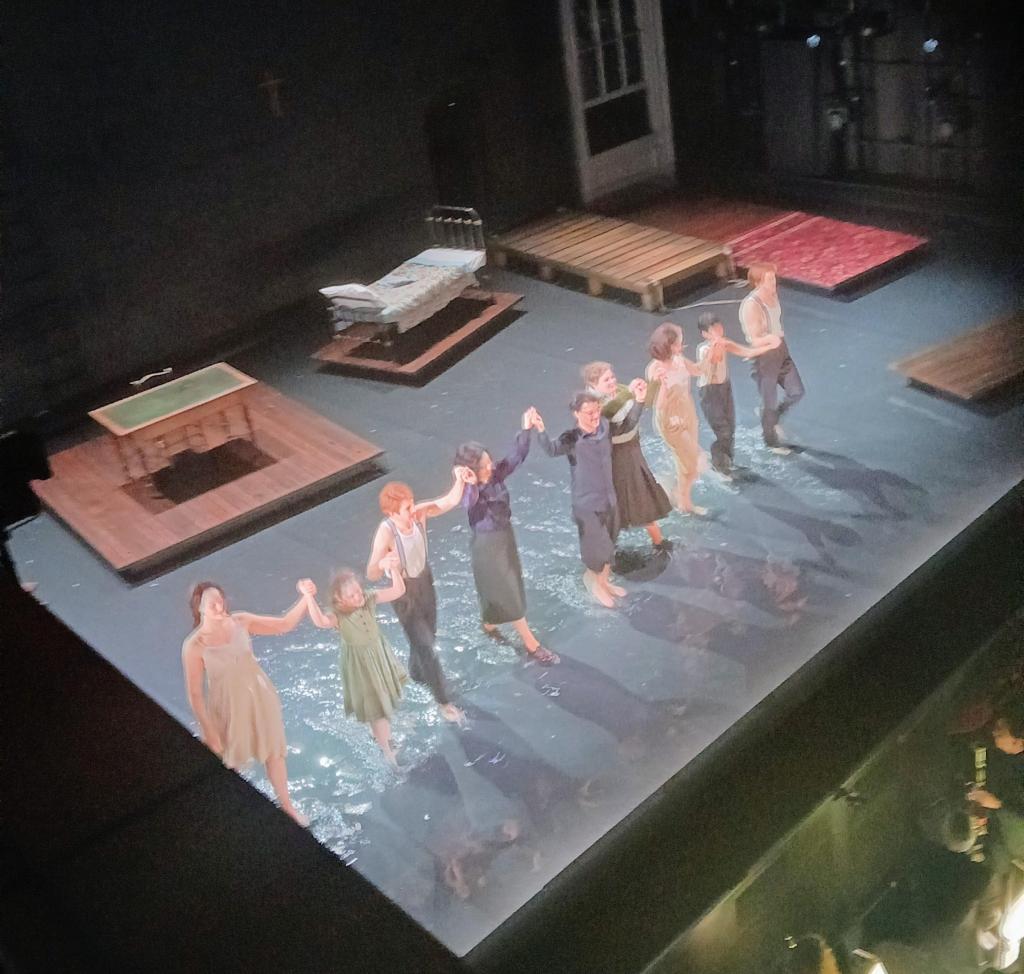
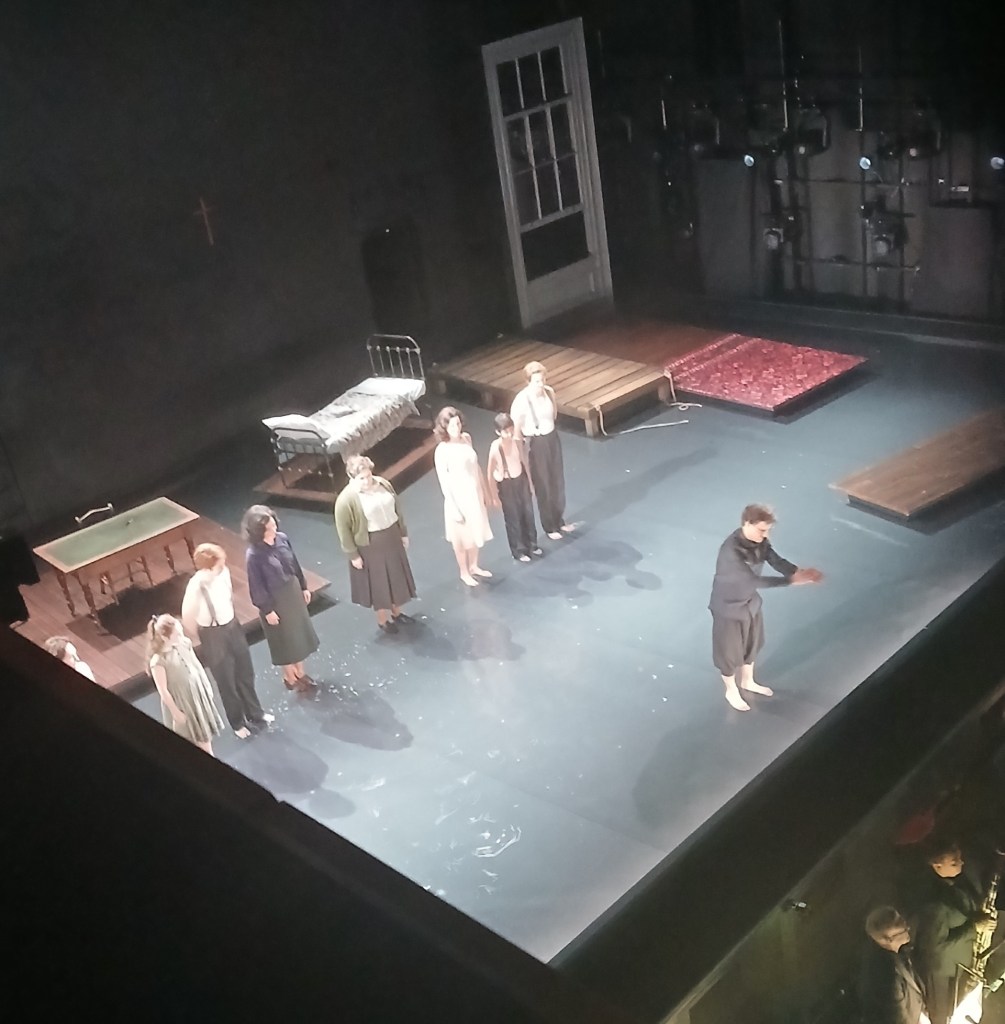
This is the third live production I have seen of this great work. There are, I guess,a number of ways a director can interpret this piece on stage: what happens can be seen as a neurotic fantasy of the Governess; one can suggest but never emphasise the reality of the ghosts and leave their presence as an unresolved mystery; a director can go all-out to focus on the sexual abuse aspect of the story; or one might weave several of these elements together.. The ENO production I saw 18 months ago emphasised the first approach and confused everyone not familiar with the plot. This production, much more straightforwardly, focused on the sexual abuse element of the story, with, on the whole, very corporeal ghosts. That’s not quite a fair or accurate description – there was a genuine creepiness at times, particularly in the first part which left you in doubt for a time about the reality of the ghosts’ presence; the unclear early appearances of Quint and Miss Jessel in the shadows, barely lit; the very effective video images of a stricken Miss Jessel and aspects of Bly House, suggesting a different perspective to everything you see on stage. However after a time the ghosts become much more clearly lit and Quint in his interactions with Miles is clearly moving beyond acceptable boundaries – moreover there are doubles for Quint and Miss Jessel who appear at points, seemingly more closely surrounding Miles and Flora, I guess the point being that perpetrators of sexual and emotional abuse are all around the victims, who can’t escape from them (plus of course doppelgangers make handy scene shifters). The only downside, I felt, to the matter-of-fact approach to the ghosts was to make Miles’ death a bit ‘ operatic’ – it is less clear why he has to die when Quint is so obviously departing as a physical presence. The other notable aspect of the production is the water – the fact that after the first scene or so in Bly House, we realise that the whole of the stage floor is covered in water, with islands for beds and a few other acting areas. This one assumes partly relates to the references in the libretto to the lake at Bly but must also references the Yeats quote in Myfanwy Piper’s libretto about ‘ the ceremony of innocence is drowned’. Maybe this is a slightly heavy-handed pointer by the director to the abuse aspect but it does allow for some very effective scenes with Flora – trying to drown her doll and being dragged into the water by Miss Jessel.
It was a huge benefit to see this work in a small auditorium properly suited to a chamber opera rather than the cavernous Coliseum – you could see every facial expression and hear all the nuances of the scoring. The cast of singing actors was very fine. Elgan Llŷr Thomas as Quint dominated the stage when he was present – forcefully voiced, domineering, insistent and tense. Both Mrs Jessel and the Governess were performed by singers – Isabelle Peters and Kate Royal – who looked the part, sang expressively and had clear diction. Claire Barnett-Jones conveyed the complexity of the character – part caring, part complicit – very well and sang beautifully. Flora had a bright clear voice and acted well, while Miles, who sounded a bit under-powered at times, conveyed effectively the burden of guilt and repression he carried.
It is a great merit of this work that it doesn’t trivialise abuse and controlling behaviour, and has nothing to say about their origins as an excuse for abusive actions. Britten’s anger at the death of innocence makes this a continually disturbing and upsetting work.
The more I listen to The Turn of the Screw the more enjoyment I find in the music. Some of it reminds me of Das Lied von der Erde. It was excellently played by the 13 instrumentalists in the pit. The picture of the conductor below wearing galoshes when he makes his stage curtain call is amusing………and his conducting was the polar opposite of wading in in an uncontrolled way – he encouraged the orchestra to expressive beauty and precision.
 John's musical journey