Beethoven String Quartet Op.18 No.1; Bartók String Quartet No.5; Schumann String Quartet No.3 in A
I heard the Fibonacci Quartet a few years ago at a City of London church lunchtime recital. They then seemed quite new and untested on the scene – but, in fact, I realise having looked at their website they have a busy international career: during the 2025/26 season the quartet is performing extensively across Europe, with highlights including performances at Vienna Musikverein, Berlin Philharmonie, Hamburg Elbphilharmonie, Frankfurt Alte Oper, Wigmore Hall, Munich Prinzregentheater and Philharmonie de Paris, as well as festival appearances at Edinburgh International Festival, Aldeburgh Festival.
Their programme for Sheffield looked to be interesting, particularly the Bartok. I have tuned in to the Bartok Quartets at various points since my teenage years but have always found them difficult to focus on. I thought this would be an excellent opportunity to engage again with one of them, listening live with the extra degree of attention which that brings.
The quartet sounded very impressive – tightly together, bows digging deeply into the strings, their playing energetic and accurate, their instruments sounding warmly blended. They sounded very good indeed in the Upper Chapel acoustics.
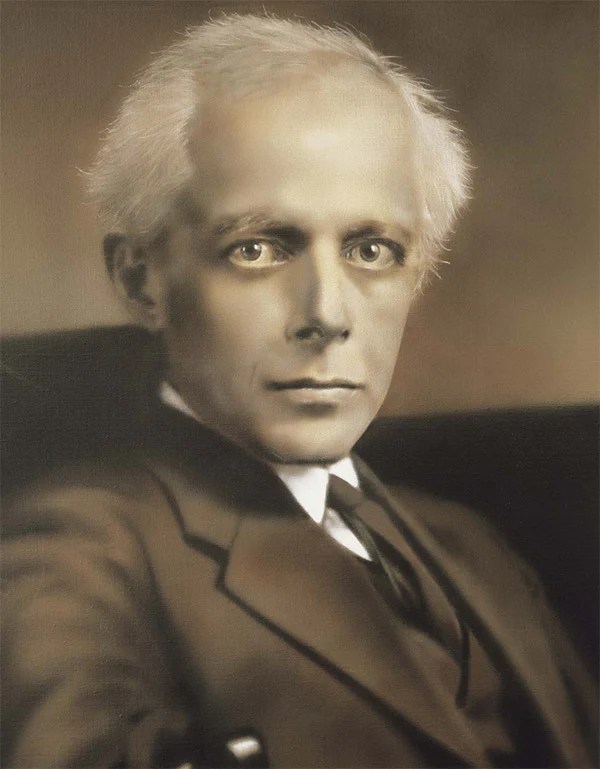
The Bartok piece, as the cellist acknowledged in his introduction to the piece, is quite a journey. I think I made more headway with it than I have done with any other listening session with Bartok quartets. Bartok’s voice in this work is utterly individual. It is not really ‘folky’ in any easily identifiable sense. Nor is it – as its date might lead one to anticipate – expressionist and angst-ridden. The first movement is almost classical, with a severe main theme and clear development and recapitulation sections (this theme also returns at the end of the work). The second and fourth movements are in Bartok’s night- music mode, with the glimmering of something hidden but only just out of reach at times. The third movement has huge jagged energy – according to Bartok like Bulgarian folk music but it only intermittently sounded like folk-music-derived to me, and even then with a phantasmagoric feel – and with again a moment of golden quiet brilliance at its heart; it is on the whole a more lyrical movement than the others. The finale is frenetic, abrupt and challenging, with some perhaps folk-inspired rhythms, and with a quirky folk song suddenly interjected before the end. I did enjoy this, and the Fibonacci’s gave the work a really gutsy performance….
I also enjoyed the performance of the Schumann which seemed a very flexible responsive reading. The first movement was understated (to my ears) at first, developing passion in the course of the movement. There was enormous energy in the second movement and an edgy unsettled yearning reading of the third. The finale set off at a hair-raisingly fast speed, but somehow never came off the rails.
By contrast the first work in the programme, the Beethoven, didn’t grab my attention in the same way as the other two pieces. I am not sure why this was – maybe the quartet feels less comfortable in the relatively more restrained Beethovenian idiom. Somehow the performers seemed politer than I think they should have been done – the slow movement looks forward to full-on Romanticism and here felt too much a throw-back to Haydn and Mozart, while the third movement wasn’t quite galumphing enough. However, perhaps I was just being unreceptive……
As an encore, the quartet played an arrangement of two Gershwin pieces – ‘i got rhythm’ and something else I didn’t catch, which was huge fun and at times, whether by intention or not, sounded a bit like Bartok…! The audience reaction – after the Beethoven, which was a bit luke-warm – was very positive, with traditional Music in the Round foot-stamping.
 John's musical journey