Halle Orchestra, Alpesh Chauhan conductor, Tine Thing Helseth trumpet. Britten Courtly Dances from Gloriana; Nico Muhly Doom Painting (Hallé co-commission / UK premiere); Walton Symphony No.1.
This was an interesting programme in prospect. I have a lot of time for Alpesh Chauhan as a conductor since I heard his RhineGold for Birmingham Opera in July 2921, which must have been a major feat of logistics given the nearness to lockdowns and the restrictions still in place for orchestras; also, I have read about but never heard any music by Nico Mulhly, so that was another attraction.
The Britten Gloriana pieces beginning the programme were all good fun, and well-played, though raising the whole question – why? – which applies to the work as a whole. Why was Britten writing cod galliards; why did he engage in this project, which really didn’t ignite the blaze of inspiration his other opera libretti produced, and the reception of which put him off ‘big’ operas for good?
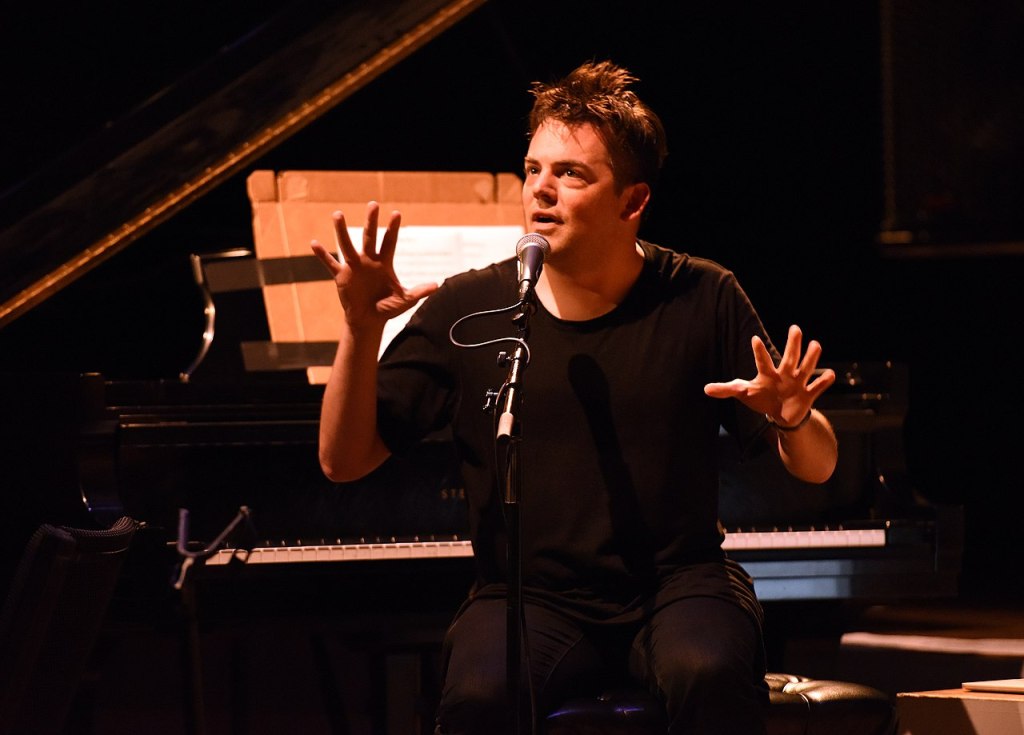
Nico Muhly is an American classical music composer and arranger who has worked and recorded with both classical and pop musicians. He apparently sees himself as ‘from’ the classical music tradition, fundamentally, but is happy to work in a range of genres. ‘Doom Painting’ is essentially a trumpet concerto. The work takes us through this instrument’s various iterations – ceremonial object for rituals and celebrations alike; harbinger of Doomsday; and jubilant instrument of the psalms. I liked the piece, in its quiet meditative way (that’s how i experienced it anyway….). Though the programme notes described a work which covered different aspects of the trumpet’s use over history, it seemed to be the trumpet ‘last posts’ that seemed to predominate over the battle calls and the last judgement scenes. There was some stunning playing by Tine Thing Hesketh. Perhaps there was a tendency to blandness and to a lack of development – I am not sure – but it is certainly a work I’d like to hear again, and is clearly from an individual voice. Much cheering from the audience for Tine…..
I had a dream the other night, in which my head had fallen off. I was trying to meet someone in a nearby house – I think a woman, so there might have been a romantic tinge to this – and I was fretting because not only had my head fallen off but I had dropped it on the floor and broken it. Attempts to put it back together hadn’t worked, it wouldn’t fit back together properly, and I was very distressed by the time I suddenly woke up, sweating. I had completely forgotten this dream, but it all came back to me as I listened to this Walton 1, which is a head-banging (or dropping) musical nightmare if ever there was one. The problem with this work is not the first three movements, which wonderfully re-create the head-banging/dropping story in 3 different guises, with reference to a clearly torrid affair Walton had with a woman in the 1930’s, but instead the ‘triumphant’ finale, which seems to want to put all this nonsense behind the composer and listener, by virtue of a lot of noise and crashing gongs, and which has often in my experience felt inflated – false or unconvincing. I found neither the Wilson/ Sinfonia of London or the Ed Gardner/Bergen Philharmonic performances I’ve heard over the last 7-8 years very persuasive in relation to the finale, and I have to go back to Previn and the LSO performing the work in the 1970’s for a truly convincing rendition of that movement (and I still remember also the late, ultra-cool, Kurt Goedicke, the then LSO timpanist, producing an almighty hammering at the end of the first movement…).
The Halle wasn’t perhaps on its top virtuoso form in the first two movements – things seemed sometimes less than razor-sharp but there was much to admire in the orchestral voices Mr Chauhan brought out and the careful balancing, the layers of different sound carefully blended, and the control of volume (this work can easily sound unrelenting) his conducting produced. Unusually – but you can see why as you hear the music – he placed the violas opposite the first violins, and brought out some of the colours that provided – including a solo viola in the first movement I’d never realised was there before. Where this performance scored was in the last two movements. I don’t think I have ever been so engaged with the tortured orchestral colours and slow, grinding changes of atmosphere in the slow movement, and there was some beautiful woodwind playing. And, praise be, the finale made more sense than it has in the past for me – something to do with the fast bits being pushed along and not too much slowing down for the gongs and the doubled up timps. I think. I was really quite moved by the bit that sounds like a crib from La Mer, and which subsides into a fulfilled silence before another bout of crashing gongs
…So a really good performance of the Walton, and altogether an enjoyable, interesting evening.
By Steven Psano
 John's musical journey