William Cole, Conductor; Christopher Alden, Director; Andrew Lieberman, Set Designer; Jon Morrell, Costume Designer; Adam Silverman, Lighting Designer. Nardus Williams, Partenope; Hugh Cutting, Arsace; Ru Charlesworth, Emilio; Jake Ingbar, Armindo; Katie Bray, Rosmira; William Thomas, Ormonte
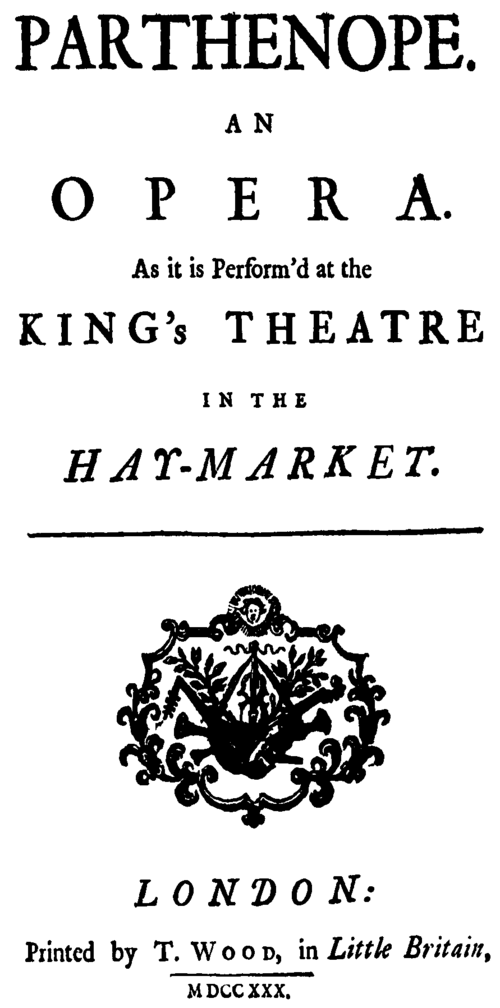
This Christopher Alden ENO production dates back to 2008 in a co-production with Opera Australia.. The production, set in a 1920s context and inspired by the surrealist images of Man Ray, was revived in 2017, and this 2025 set of performances was its third outing. The work was originally shown in London in February 1730 at the King’s Theatre, revived in December of that year and shown again in 1737. After that, there was the usual two and a third centuries of being completely forgotten before it began to be revived in the 1960’s and 70‘s. Needless to say, I’ve never heard a note of it before.
The story involves Partenope and her three suitors – Arsace, Armindo and Emilio. Arsace has dumped his previous love Rosmira, and the latter has dressed up as a an to chase and harass Arsace, pretending to be a fourth suitor to Partenope. In the end, Armindo and Partenope, Arsace and Rosmira pair off and Emilio is left laconic and resigned to his fate.
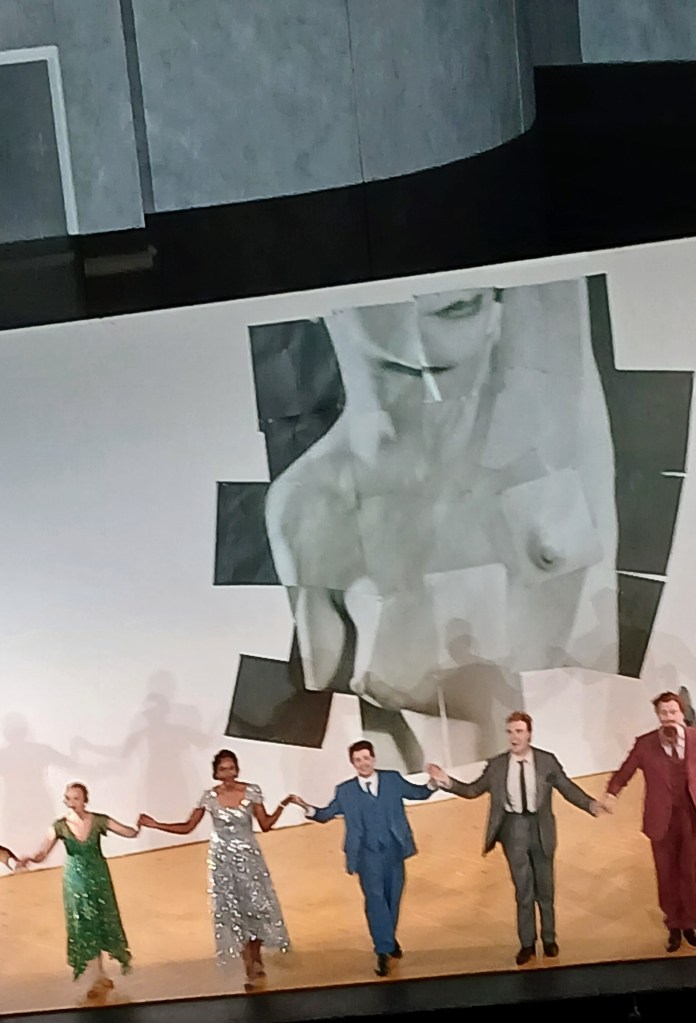
This was an exceptionally fine evening, though long and with two intervals. The production is consistently inventive and entertaining – the original director Christopher Alden returned to supervise this revival, and it showed in the degree of energy with which the singers engaged with their roles, and the snappiness of the action. The feel of the production was quite varied — at times sophisticated references to 1920’s Surrealist/Dada iconography, but then combining this with slapstick, and pantomime-like gags and routines (which you feel Handel himself might have found amusing in a Swift-like way) – although maybe the Dada-ist context is itself conducive to slapstick comedy. To give some sense of the variety of what’s going on on stage, the soldier Emilio is a Man Ray-type photographer and artist, walking around at times with a frame to capture arbitrary images; Armindo gives a tap dance routine to his last aria, complete with spotlight and top hat; Armindo is also often seen tumbling downstairs; there’s a self- propelling top hat, and a lot of jokes about toilets, toilets flushing, and toilet rolls, with various characters stuck in the loo at points ((the famous 1917 exhibition entry of a toilet bowl by Marcel Duchamp might have been an influence here). A great contribution was made by the translation which captured both a sense of 18th century rhymed verse, and sudden darts into contemporary vernacular (including ‘Oh Fxxk’ at one point, as well as a few lurches into 1920’s slang.
This opera has no chorus – only a succession of brilliant and memorable da capo arias, getting off to a fizzing start with Partenope’s opening coloratura aria “L’amor ed il destin”. There are two superb arias in Act 1 – Partenope’s call to arms (while allowing someone to command her heart) is very haunting and Rosmira’s jolly aria with the horns is equally memorable. There’s a lovely aria for Partenope in Act 2 and also Arsace’s slow aria with theorbo and strings is memorable. (in fact probably the stand out music of the whole opera). By mid-way through Act 3 I lost mental track of all the varied and moving arias i had been hearing, all for the first time. There is a huge amount of wonderful music to explore.
The set and costumes as above are 1920’s with a huge spiral staircase stage right and an upper ledge giving access to the staircase. There is also a back wall and an exit upstage. In Act 1, we have a card table and chairs off to stage left. In the other two acts the set has revolved so that we see variants of a large hall , with various rooms off and an upstairs area partly screened. In Act 2 there is a lot of play with cameras, early 1920’s filming and film lights. The trailer here gives some further sense of the visuals – Partenope | Buy Opera Tickets for 2025 | ENO
The undoubted star of the performance was Hugh Cutting, whose counter-tenor singing of Arsace was exquisite and moving – another counter tenor who doesn’t have me regretting the absence of a female voice. Ru Charlesworth as Emilio had excellent diction, and handled the coloratura aspects of his role brilliantly . Jake Ingbar as Armindo was almost as good as Cutting. Nardus Williams as Partenope handled beautifully the slow arias, with a lovely long-breathed line, though sometimes the coloratura aspects sounded a bit laboured (though always accurate). Katie Bray as Rosmira always sung warmly though perhaps her voice was a little small for the Coliseum. William Thomasas as Oronte, in this production a general artistic layabout sung resonantly.
Sadly the advertised conductor Christopher Curmyn was ill, but the ENO music staff conductor William Cole did an excellent job of pacing the music and keeping it altogether. The ENO orchestra sounded remarkably idiomatic, with some very colourful playing

 John's musical journey