Elisabeth Leonskaja, piano: Programme – Mozart, Fantasia in C minor K475; Shostakovich, Piano Sonata No. 2 in B minor Op. 61; Schubert, 3 Klavierstücke D946; Fantasy in C D760 ‘Wanderer’
After my three Proms in the Arena, my final Prom of the 25/26 season was going to be Bruckner 9 with the Vienna Philharmonic Orchestra, and Franz Welser-Möst as conductor (it was also on my birthday!). Sadly Covid got in the way – I tested positive for Covid on the morning of the concert and spent my birthday in a hotel room with an Indian take-away listening to the VPO on my lap top. A pity…. (it was an interesting performance – jagged and faster than some, but good at revealing the darkness of the music, and, of course, gloriously played)
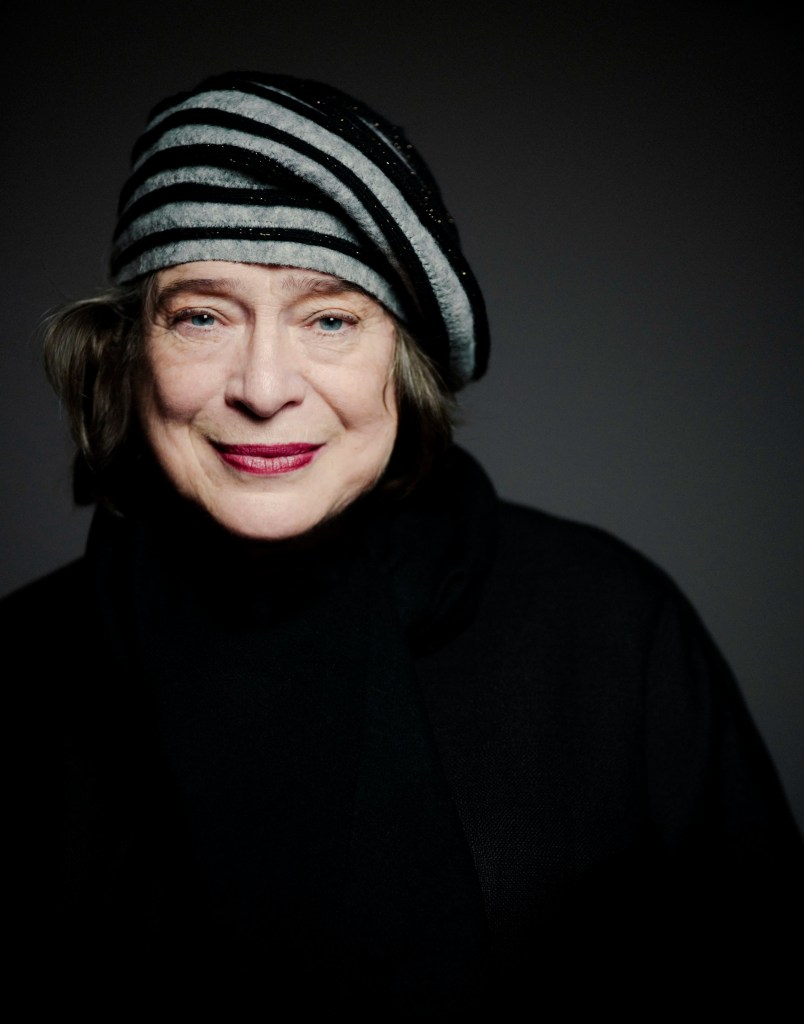
By the following Friday week I was full recovered and looking forward to this concert at the Wigmore Hall. I have never heard Leonskaja before live – and indeed had never heard of her at all until a few years ago when I started reading very enthusiastic reviews, particularly of her Schubert performances. She is nearly 80, of Polish Jewish parentage, and she was born in Georgia in the USSR. She studied at the Moscow Conservatoire, collaborating with Sviatoslav Richter on several projects and then emigrated to the West in 1978, living in Austria ever since. She has become a great favourite of the Wigmore Hall audiences, who were there in force to greet her this evening (it was a totally sold-out hall).
The programming theme was around fantasy/fantasia – that’s obviously the name of two of the big pieces in the programme, and the Shostakovich has something akin to a fantasy in the theme and variations of the third movement. I understand by the word something that is less structured, more fanciful and perhaps more episodic than a ‘theme and variations’, often using changes of key, and a recapitulation of the main theme at the end.
The revelation of the performance for me was the Wanderer Fantasy. I am, as I have said before in this blog, not a pianist and my ability to differentiate pianists’ playing is limited. But this was very clear. Leonskaja was Russian-trained as a pianist and it is startling to hear, in Schubert in particular, how different she sounds from players like Brendel and Lewis. This is a big piano sound, in the grand Russian tradition, with plenty of use of the pedals, strong bass notes and clear crisp articulation of themes. It’s definitely not a light sound – it’s heavy and serious, and Leonskaja gave the quasi-fugue theme towards the end a major pounding. What’s interesting about Leonskaja is how she combines this forceful power with the ability to ‘float’ melodies, in the slow movement of ‘the Wanderer’ for instance, to phrase beautifully and to offer a sense of inwardness in the quieter passages that is very compelling. She also made the logic of the piece’s structure very clear – I have always got a bit lost listening to this work, and Leonstaja’s is the first performance I have heard live which made this fantasy sound seamless, with one section following on somehow inevitably from another. This was a wonderful performance, and I loved too the Schubert smaller pieces – -the way she made them sound at times like something Schubert would have danced to with his friends. This mixture in her playing of grandeur and poetry is very appropriate and moving for Schubert’s music.
The Mozart is a difficult piece to listen to – quirky, going in different directions, sounding as though at times it is going to loosen up, and then returning to dark introversion. I have heard it before without warming to it and I didn’t feel Leonskaja encouraged any further enthusiasm on my part for the piece.
It’s a pity in a sense that Leonskaja played the Shostakovich 2nd piano sonata, when Yevgeny Kissin had played it in London less than 3 months earlier I really liked this piece when Kissin played it (and I was hearing it for the first time) and this performance was also very good. I thought the technical wizardry of Kissin in the first movement and aspects of the third were – from my indistinct memory – superior, but Leonskaja’s sense of inwardness in the last two movements was very moving. There were also 2 encores – one was a waltz by Tchaikovsky from Six morceaux Op. 51; the other I didn’t catch. Both were rapturously received as was ‘The Wanderer’
Altogether an excellent concert – I am glad I have finally heard this pianist

 John's musical journey