Schreker Chamber Symphony; Stravinsky The Firebird – suite; and songs/arias from: Bernstein West Side Story, Gershwin Porgy and Bess, Korngold Die tote Stadt, Stravinsky The Rake’s Progress, Weill Lost in the Stars. Golda Schultz soprano, Chamber Orchestra of Europe, Robin Ticciati conductor
The next three Proms I’m going to are all ones where I’m standing in the Arena. As I have said before in this blog, this is the best place to hear the fully rounded sound of an orchestra and I have established a place where it’s fairly easy to haul myself up and down minimising the encumbrance of my arthritic legs. It’s a joy to be part of the Arena atmosphere, which I have loved since I was 16.
This was a varied and very enjoyable Prom, which I appreciated for two principal reasons – an absolutely fabulous rendition of ‘Marietta’s Lied’ from Korngold’s Die Tote Stadt, sung by Golda Schulz, and rather surprisingly – see below – the 1945 version of the Firebird suite.
The programming here was very interesting, though goodness knows how the Firebird Suite fits into a collection of music that encompasses the links between music of the Weimar Republic and American musicals. I guess the Firebird and the Schreker book-end the concert to show how new musical experiences were being developed in the early 20th century, but, again, the Rake’s Progress aria seems an oddity in this company.
The Schreker piece immediately established the classiness of the orchestra. The Chamber Orchestra of Europe has a limited number of strings – eg 5 cellos, 4 double basses – but they play for their lives, utterly committed, while the woodwind and brass are refined, sensitive and produced some beautiful sounds in this work and the Firebird. I bought the Schreker piece on MP3 a year or so and have listened to it a couple of times – it didn’t make a great impression on me then, and I can’t say I was overwhelmed by the work in this performance, beautifully as it was played. The shimmering opening is likened by the RAH programme booklet to a kind of aural version of Klimt’s paintings, and that does make sense. The work is sensuous and impressionistic – it is also fascinating to listen to the complex harmonies and the play of different orchestral colourings. But I did lose concentration a number of times. The four movement structure is clear but I couldn’t really establish a clear narrative for myself while listening to the work. I must listen to it again (I am sure with a lot of these works that I don’t appreciate, had I listened to them and got to know them as a teenager, I would hear them as old friends and love them)
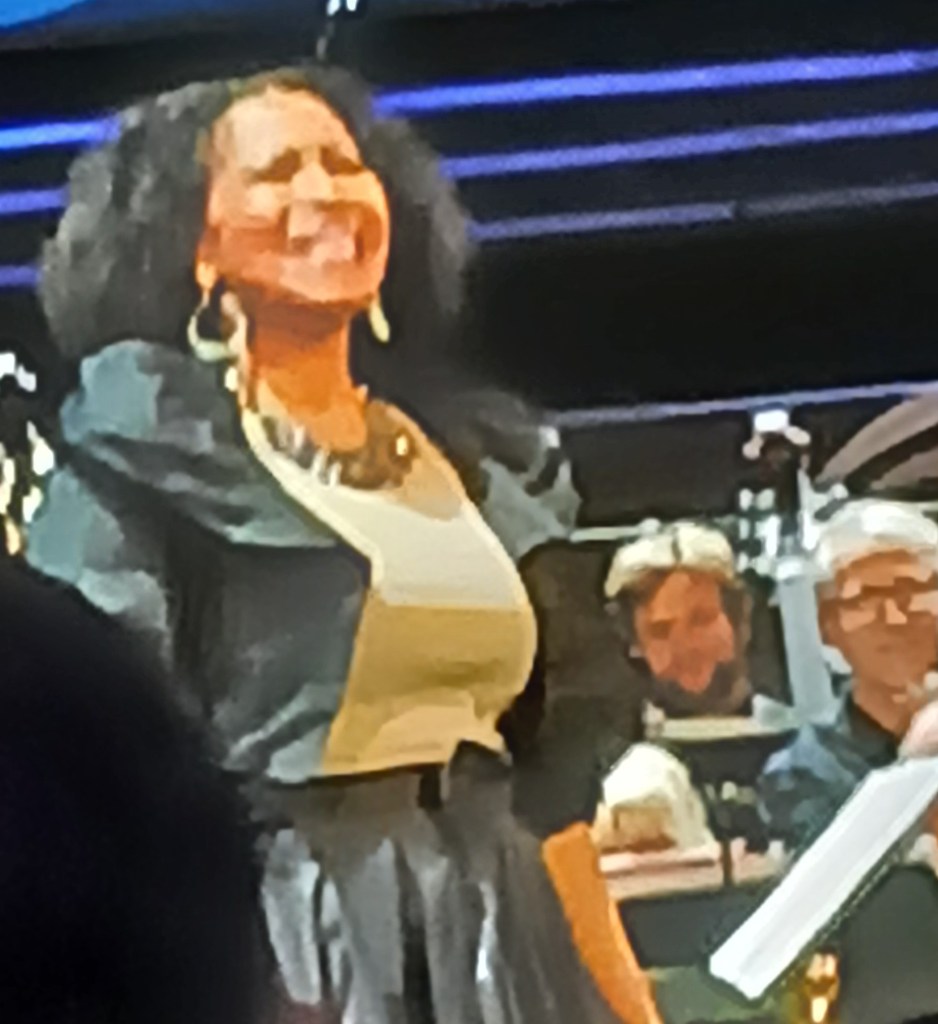
Golda Schulz, who I heard in Cosi Fan Tutte last year at ROHCG, was a great soloist, showing her range of accomplishment in Gershwin, Bernstein, Weill, Stravinsky and Korngold. To my ears, she was excellent in the musicals’ excerpts – she had the diction and the pizazz to deal with them, and she also excelled in the more operatic pieces – the Stravinsky and the Korngold. There was all the vocal flexibility needed in the Stravinsky, plus a splendid top note. The Korngold was beyond praise – beautifully floated high notes, a lovely rich and warm tone. When I heard this opera for the first time in 2023, I couldn’t stop playing this aria on my laptop……..
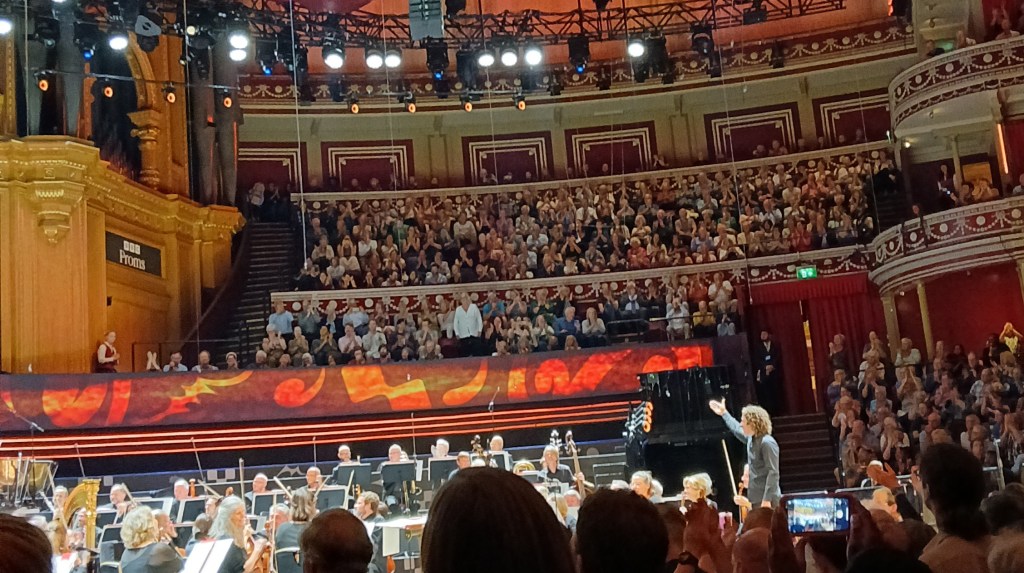
The Firebird suite has assumed in my mind the status of a instant turn off. I am not quite sure why – maybe because it is so often featured in concert programming playing it safe. If I see it on a concert listing, automatically I usually decide not to go to that concert (I have much the same reaction to the Daphnis and Chloe Suite…….). On this occasion because of the other elements in the programme I went along and thoroughly enjoyed the piece. Much of this was due to the orchestra and Ticciati. The 1945 suite is the pared back version, and the orchestra played the earlier part of the piece exquisitely. Maybe because of the orchestra, maybe because of the pared down orchestration, many different strand of the music were highlighted in ways I haven’t normally heard so clearly, and there was some most beautiful woodwind playing from, particularly, the oboe and the flute. At the same time, the Infernal Dance had all the energy and bite you could want, and Ticciati’s smallish orchestra built up to a tremendous climax at the end. There was much cheering by the (yet another) packed audience and an encore of an orchestration of Satie’s Gymnopedie no 3. Ticciati impresses me whenever I hear him conduct –Pelleas and this at the Proms, and Parsifal and Rusalka at Glyndebourne. His meticulous signalling and careful control was an important element in the evening’s success
 John's musical journey