R. Strauss Die Frau ohne Schatten – Symphonic Fantasy; Puccini, Suor Angelica. Carolina López Moreno, Sister Angelica. Kseniia Nikolaieva, Princess; Elena Zilio, Monitress. Angela Schisano, Mistress of the novices. Sarah Dufresne, Sister Genovieffa. Tiffin Choir, London Symphony Chorus, London Symphony Orchestra, Sir Antonio Pappano conductor
This promised to be an exciting concert. Pappano conducting Strauss with the LSO is always going to be a stand-out, and ditto his Puccini – his previous venture with the LSO into Puccini opera concert performances was La Rondine last December at the Barbican, which also featured a great performance from Carolina López Moreno in the lead part, as a last-minute stand-in for Nadine Sierra.
The combination of works is quite a clever piece of programming – being a mother, or wanting to be or devastated by motherhood, is central to both works and both end in hope for human beings and their future.
The Strauss symphonic fantasy I suppose in its title gives Strauss the liberty to forget about any attempt to tell the story and just run through a few disconnected parts of the opera – the Keikobad theme comes in at the beginning but then we immediately jump to the music for Barak and his wife and so on…..there’s nothing from the music for the Emperor and Empress except for the final blast at the end, no falcon, no well of life….well, most things really. Nor does it sound particularly effective in the concert hall – the orchestration’s density is fair enough in the pit with the voices riding over the top, but when the LSO is tackling it in full view it all sounds a bit messy, even with Pappano’s expert hand guiding the orchestra. I am not sure what anyone who didn’t know the opera would make of this…..
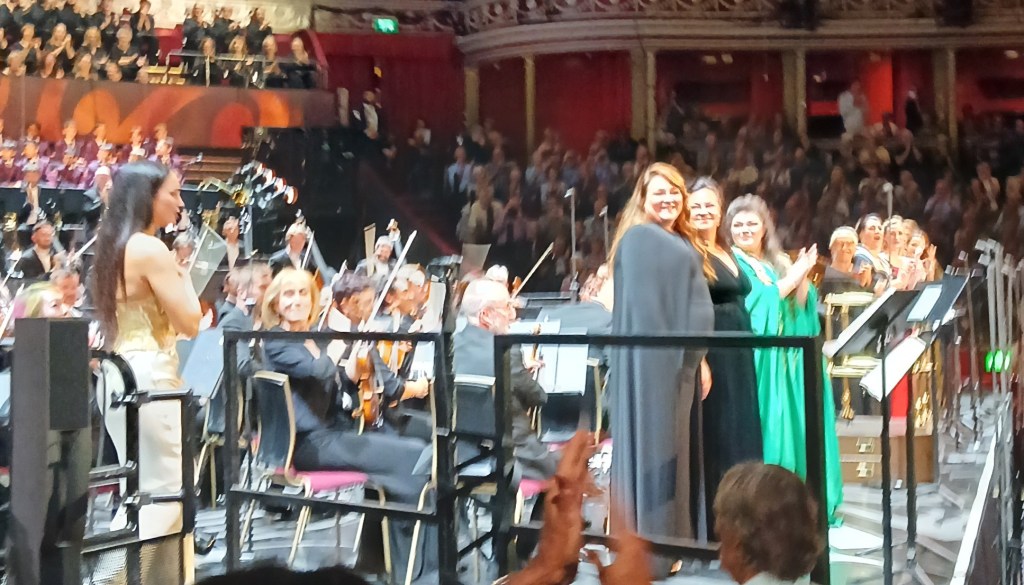
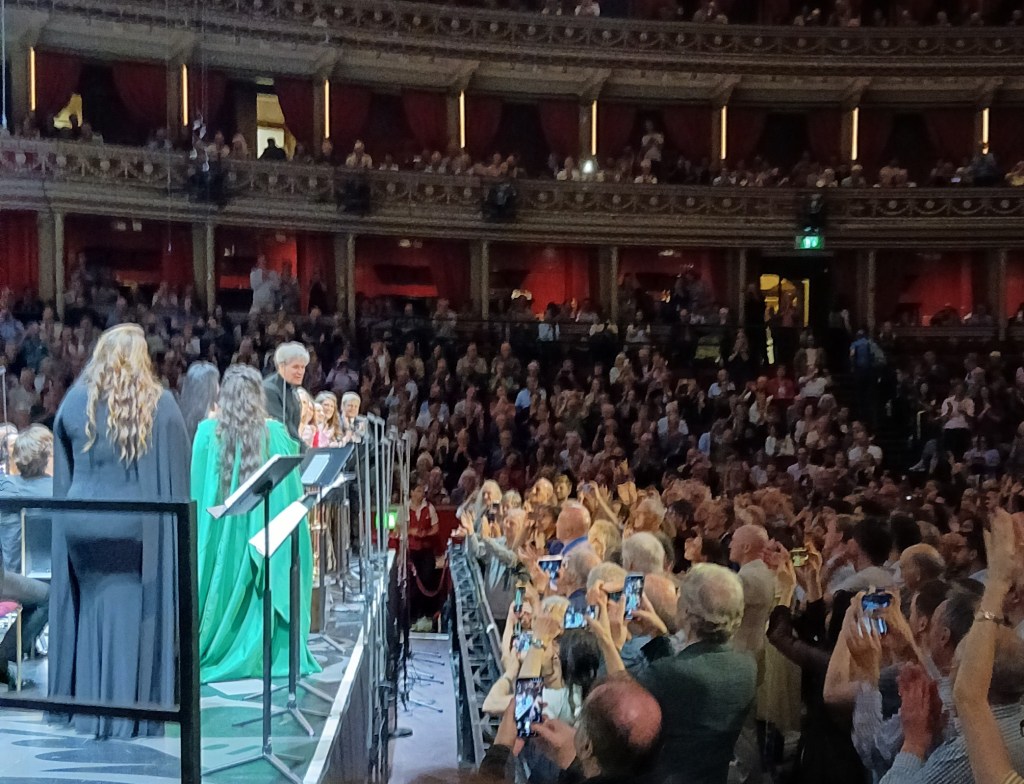
Suor Angelica I guess is something you love or loathe. Me – I love it, at least when it is sung and played as well as it was here. This is opera at its most visceral, its most compelling, and it was a quite stunning performance……. For me, although the opera is in some ways grossly sentimental (maybe cross out the ‘in some ways’) and arguably manipulative of the audience’s emotions, it reflects upon a common social issue in many societies (including Ireland till quite recently) about what attitude to take towards illegitimate children and unmarried mothers, and although the Mariolatory, convent life and fear of damnation seem far removed from 21st century British lives, these things again are still real and living for many places in the world (and, errrm, for me, actually). So it’s not an unworldly out of date fantasy that’s being described here, and although the drama is perhaps crude it is very powerful and effective in the concert hall – as long as you have great voices and a great orchestra (and surtitles which make sense). For once I got lucky with my Side Stalls position and from my row 3 seat was on the side of the stage which had the visiting Princess and Sister Angelica, so was really caught up in the action. Neither of these two were reading from scores (some of the bit part singers were) which helped a great deal in maintaining concentration – I have rarely heard the Prom audience listening so intently.
Carolina López Moreno has it all – she’ looks the part, she has an ability to present herself as fully ‘inside’ the role, and, though a slight figure she has a really powerful voice. It was utterly thrilling to hear her letting rip with her top notes, and feeling the sound waves pulsating round the RAH. Hers is also a warm, not a steely, voice, and she has the ability to fine it down to exquisite high pianissimo notes, beautifully controlled (with a blip at one point), in for instance Senza mamma. Her final scene was unbearably moving, and it was wonderful too to see the collaboration between Ms Moreno and Pappano, the latter encouraging her to linger over some phrases and carefully giving her the lead in her big moments, judging exactly when to bring the orchestra in. And all of this very near to where I was sitting….! Although with a very different acting style – much more standard operatic semaphore and externalised – Kseniia Nikolaieva was also deeply impressive as Angelica’s aunt – she has a remarkably rich and deep mezzo voice. All the other roles were well characterised and sung. And then, on top of this, we had the LSO Chorus women, the Tiffin Boys Choir, the RAH organ going full pelt at points and the LSO itself – some of their string playing was gorgeous (the long chamber music-like passages near the end when Angelica is taking the poison), and, as always with Puccini, there’s so much that’s interesting in the orchestral accompaniment of this relatively late opera, all the details of which the players brought out clearly.
The final 10 minutes brought tears to my eyes . One of the great Proms’ evenings…..one for the ages……

 John's musical journey