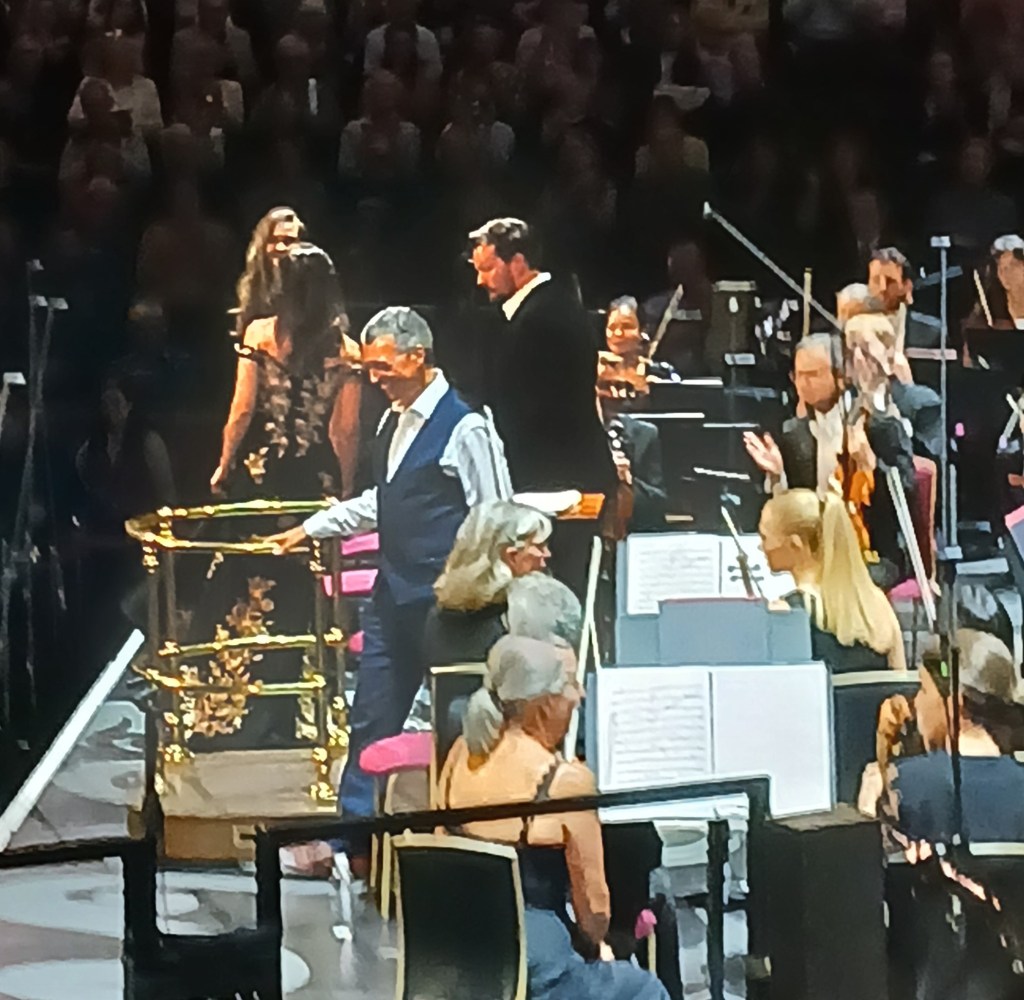
Jennifer Davis soprano, Claudia Huckle mezzo-soprano, David Butt Philip tenor, Roderick Williams baritone. BBC Symphony Chorus, London Philharmonic Choir, BBC Symphony Orchestra, Sir Mark Elder conductor
This was a work completely new to me – and so was a ‘must’ when I saw it on the Proms schedule. I have never heard it live, never heard a recording and in general have never felt the need to explore it as I have a major Delius aversion – I find myself feeling something akin to nausea after a few minutes of those Delian chromatic harmonies in Brigg Fair etc. So this was a bit of a challenge to myself, buoyed up by the very strong forces brought together for the work.
The work was completed in 1905. Part 2 was first performed in Munich in 1908, with a complete performance in London a year later. It was last performed at the Proms in 1988, but with only one or two complete performances before that.
I was reading recently in the excellent web-site ‘The Conversation” (The Conversation UK ) about recent research into people’s response to music. The research suggested about 25% of people in their sample group were intensely stimulated by music, about half were mildly affected and 25% were indifferent to it. The research then looked into why this was and concluded for the indifferent 25% that “while the brain networks underlying music perception and reward are both intact in people with music anhedonia, the communication between them is severely disrupted. There is little to no traffic between the auditory processing parts of the brain and the reward centre/” I was wondering at the time – what would it feel like to be indifferent to music (as, obviously, I am among the 25% stimulated by it)? I might not be interested much in pop and rock, but I am certainly affected by it – I just don’t feel I have the time or the energy to listen to it properly. Much the same for folk and world music – I like them, in some cases very much – though Indian classical “. music is beyond me (but would be accessible if I put time into learning its codes and structures – ditto jazz) but choose not to prioritise listening to them.
However…this was an evening of music about which I felt utterly indifferent, despite my best intentions…..!!!
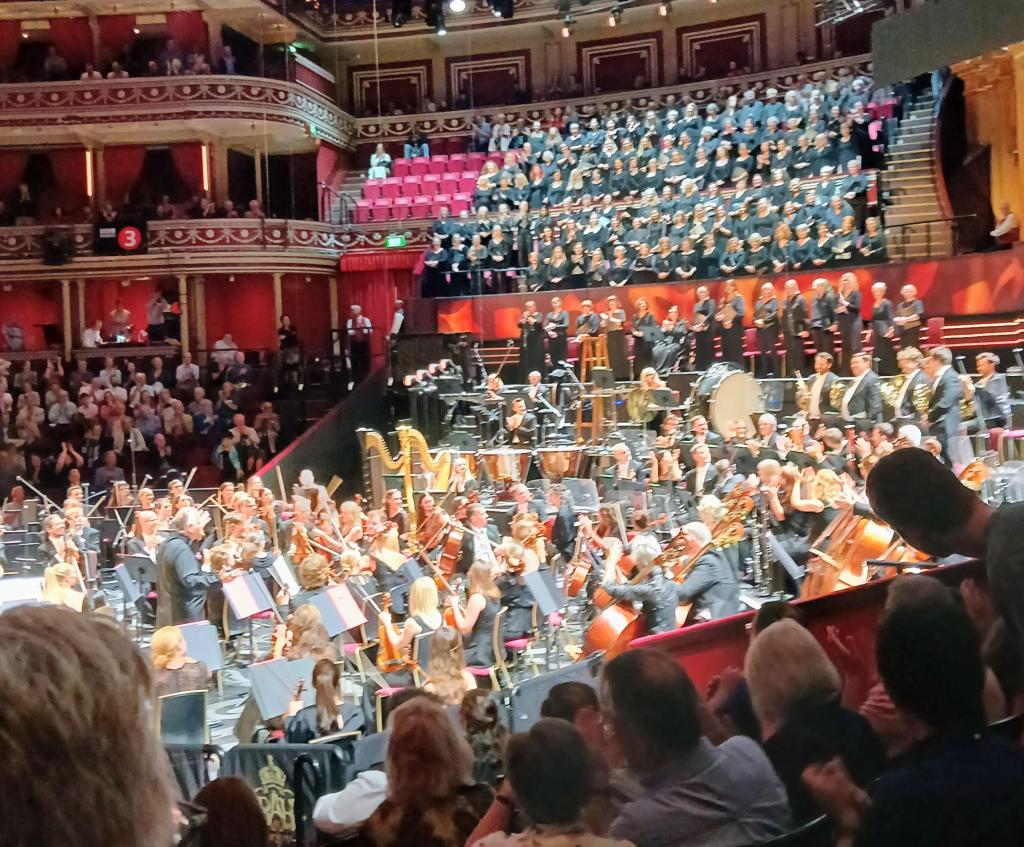
I knew it had the potential not to be very inspiring but it went below my gloomiest expectations. The first thing to be said is that this had nothing to do with the quality of the performance itself, and everything to do with the work. The combined choruses of the BBCSO and LPO in particular were most impressive – in the sort of writing Delius offers for choirs there is a lot of quite difficult close harmony writing which must take a lot of practice and care to get right. There were no ragged edges and no-one conspicuously out of tune, in the choral singing, and the choirs sounded most impressive in the solidity and weight of their singing, particularly, the final chorus (the text for which is the same words Mahler uses in his 3rd Symphony). The soloists – with Roddy Williams having the lion’s share of the singing – did, as far as I could tell, all that was required of them. My Side-Stalls position once more meant I couldn’t really tell how they were coming over in the hall but Roddy W certainly seemed to be singing with a warm and glowing tone when the words demanded this, and with clear diction.
The problems in the evening were:
- The text. Seemingly random chucks of Nietzsche were thrown together by the compiler/librettist Delius used, with little attempt at overall coherence and no proper suggestions of context. My feeling – perhaps wrongly – is that Nietzsche was so much part of the zeit-geist in the first decades of the 20th century that the public likely to be listening to this work understood the backgrounds to these disparate texts, and what Nietzsche was trying to achieve, so that they could fill in the gaps in the text and intuitively relate the concepts of the New Man, the death of Christianity and ‘life in all its fulness’ re-imagined, and the need for a new morality to Delius’ music. But to an audience 110 years later a great deal more explanation was needed as to what all the references to dance, midnight, green fields and eternity were getting at. Simply saying ‘it’s all about the beauty of nature’ is not nearly enough. The use of surtitles rather than a printed text in the programme oddly made things more confusing – pronouns swirled around without it always being clear what they referred to. In summary, then, it was very difficult to get a sense of the structure of the work and where it was heading
- Apart from the final chorus and one or two of RW’s solos up in the mountains (some rather fine horn music) the music just passed over me in a chromatic swirl, meandering over a never-ending prospect of hills of slow ascents and descents, and with too many clogged up pathways en route (it’s instructive to compare the opening chorus of the Mass with the beginning of Vaughan Williams’ Sea Symphony, both expressing similar sentiments but the latter incomparably more powerful and memorable, and also much clearer in texture – the opening of the Mass’ choral writing obscures some fine orchestral passages). Too much of the Mass moved at the same speed, too much of it sounded the same, too much of it seemed not to be going anywhere. There was, I suppose, little that was actively distasteful, just a lot of music that went on far too long and to which I felt totally indifferent
I will try again on BBC Sounds with this performance but I will have, I am sure, the same reaction,
POST SCRIPT. I did hear it the next day on BBC Sounds and got on a bit better with the work. But I still will not be rushing to the box office for another chance to hear it
 John's musical journey