Conductor, Christian Curnyn. Semele, Pretty Yende; Jupiter, Ben Bliss; Cadmus/Somnus, Brindley Sherratt; Athamas, Carlo Vistoli; Juno, Alice Coote; Ino, Niamh O’Sullivan; Iris, Marianna Hovanisyan. Director, Oliver Mears; Designer, Annemarie Woods; Lighting designer, Fabiana Piccioli; Movement Director; Sarah Fahie
This was the first night of a new production at ROHCG. It has been my greatest musical pleasure of the last 25 years to get to know more of Handel’s and Bach’s works, as well as contemporary composers like Tom Adès and John Adams (having been introduced to noisy late Romantics and ‘the classics’ in my teens). In particular, Handel’s operas are all absolute winners – I have so far heard 17 Handel operas and staged oratorios live and I have at least 36 to go (Susanna and Giustino in October and Partenope next in December). Each opera has a core of a few hit numbers – some, like Julius Caesar, Alcina and Semele, have a whole string of them.
This co-production had premiered in Paris a few months ago, where it was much praised, and it had the same cast for its London run, though with a different conductor and of course orchestra. I have a faint memory of seeing a previous live performance at ENO in the early 70s (Valerie Masterson as Semele? – certainly conducted by Mackerras) but I’m not sure about that………..
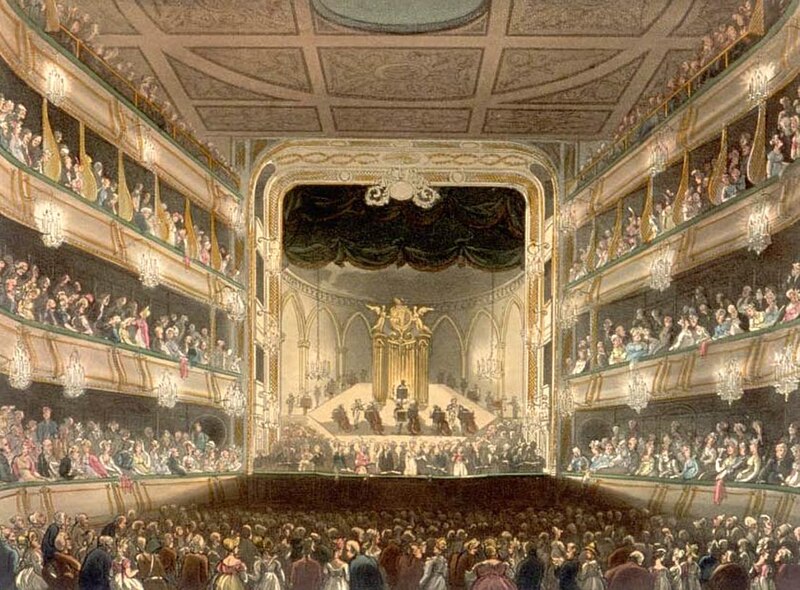
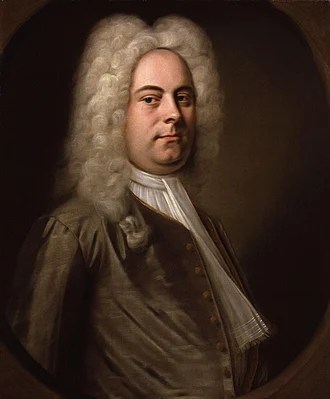
Handel wrote the work in just over a month in 1743. It was styled as an oratorio – ‘Italian opera’ by the 1740’s being out of fashion and not good business. Because it was billed as an oratorio – and it is a story with a strong moral undertone, and with a lead character displaying notable hubris as well as being naïve – it was first performed during Lent 1744 (at Covent Garden). What the pious middle classes of London made of it, I am not sure – whether contemporary or not, someone referred to it as a ‘bawdytorio’. To all intent and purpose, it is an opera, without the heavy choral component other Handel oratorios have. There were only ever 6 performances in Handel’s lifetime and it then remained unheard for almost two centuries.
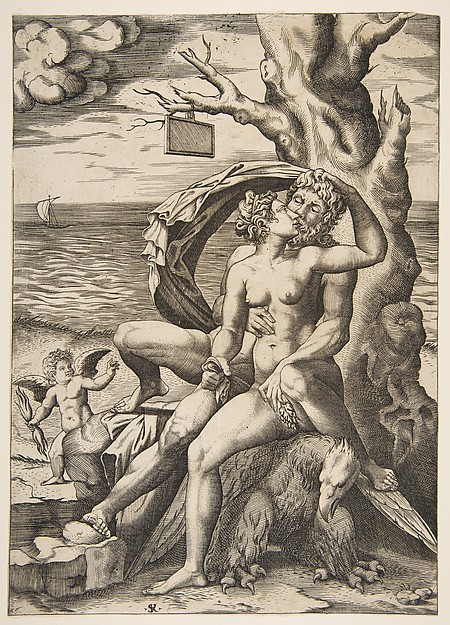
The story comes originally from Ovid. Semele is getting married to Athamas, but she is much more interested in Jove. Ino, her sister, on the other hand is desperately in love with Athamas. Jove, king of the gods, is in the guise of a young man, and seduces the mortal Semele, who is only too willing to be seduced, and he takes her to a mountain top to be his mistress. Semele loves the life of luxury there. When Jupiter’s wife, Juno, learns of her husband’s adultery she is furious and thinks up a plot whereby she appears In disguise to Semele and persuades her to insist on seeing her young lover in the form of his true divinity. Jove reluctantly agrees when she asks, but his thunderbolts destroy Semele. So,,,,a cautionary tale of hubris……
There are several aspects of both the work and the production which make it an impressive experience in the theatre. Firstly, the libretto. This was originally written, by an established playwright, William Congreve, (therefore a better than usual one) around 1705–6 and had been previously set to music in John Eccles’s opera Semele. The text was adapted for Handel by an unknown collaborator. Within the constraints and artificialities of how Baroque opera works, there are really very few portentous and unnatural asides to the audience and the action flows naturally through arias and recitatives between characters, with elegant language. The lines for the chorus (after Semele has been destroyed by Jove’s thunderbolts ) are wonderful and remarkably conveyed by Handel’s wandering, dark and unpredictable choral writing. Nature to each allots his proper sphere, But that forsaken we like meteors err: Toss’d through the void, by some rude shock we’re broke, And all our boasted fire is lost in smoke. I also love Juno’s lines Love’s a bubble, Gain’d with trouble, And in possessing dies. There are many more gems to explore in the libretto.
Secondly the sets/settings make sense and are well organised. Clearly how a director deals with the setting of this work is important – modern dress and set? imitation Baroque sets? bare minimalist mythic staging? All are possibilities. Oliver Mears opts for the very reasonable idea of setting the work within the 1960’s, where Jove is a wealthy lord and landowner, and Semele is a servant in the household. There is a 3 sided set in the shape of an off kilter triangle, which represents a large sitting room or maybe apartment in Act 1, and 3, and a mountain retreat in Act 2. A plastic looking sheet with an abstract design comes down for some front of stage sessions while scenery is being changed, and there are also some scenes in a framed quickly movable box for Juno’s boudoir and the hilarious scene in Somnus’ bedroom (of which more below). Though oddly there is no representation of the moment Semele is hit by Jove’s thunderbolts, there is a spectacular display of them in Act 1 when the wedding is disrupted by Jove and Semele carried off. Costumes and props are also of the 1960’s – i guess to give a sense of otherness to the idea of lord/servant relationships, and they are meticulously in-period authentic – lounge sofas, a satin round bed, Ino’s Marilyn Monroe-like dress. Juno’s hairdo and the fine gramophone player Semele sets in motion at the end of Act 2 for the final chorus of that act, for instance. Jove normally wears a suit except in his more intimate moments with Semele. Somnus is a trouserless old lecher when he wakes up.
Thirdly, maybe because the cast had worked together in Paris, it was all extremely well-acted and no-one looked other than supremely confident in their parts – more below on this. Everyone reacted naturally to each other, without exaggeration. The production was constantly inventive, though with darker intent than Handel and Congreve probably envisaged. Semele is definitely exploited in this production. Oliver Mears’ various ideas for filling out the ABA da capo arias were all extremely effective – eg various bits of business with bed-making at points in Act 2; Semele and Jove writhe around beneath an all-enveloping bed spread while another da capo aria is going on. The rather silly business of Juno fashioning herself as Ino to tempt Semele to ask Jove for immortality is cleverly handled, with a floppy Ino bring dragged about by Juno. Somnus in Act 3 was portrayed watching a black and white TV with a mountain of beer cans and other detritus not clearly visible from the front row of the Amphitheatre. The beautiful nymph Pasithea does the Twist for Somnus to get him in the right frame of mind to produce his spells to move the action forward as Juno wishes. Mears gives a twist to the ending too – after Semele has been zapped, it’s clear that Ino must marry Athamas and a wedding ceremony is prepared. However, Ino shows signs of increasing agitation and at the end she suddenly abandons her prospective husband and lunges towards Jove followed by an immediate blackout – humans don’t learn very much from history and are doomed to make the same mistakes, the production is saying….All the stage action, then, is cleverly and entertaining done.
And fourthly the music is glorious. Nearly all Semele’s numbers are well known and memorable – “Endless pleasure, endless love” in Act 1, the beautiful awakening aria in Act 2, the fateful ‘Myself I shall adore’ after Juno’s visit and the spectacularly fiery “No, no, I’ll take no less” in Act 3 to Jove. Somnus has his wonderful sleep aria too in Act 3. For Jove there’s of course ‘Where e’er you walk’, but also “Lay your doubts and fears aside”, while Juno has a great display piece at the end, “Above measure is the pleasure” and a fiery piece in Act 1.
But yet another reason for why this was so good was the individual excellence of cast members. I haven’t seen Pretty Yende live on stage before and in advance I wouldn’t have put her down to be a particularly good actor. But she threw herself into the role and believably portrayed both the character’s over- confidence and her vulnerability, running round the stage excitedly. The sheer physical energy of her portrayal was breathtaking. She’s also good at being sexy, which is not a gift all opera singers have at their command. Her voice isn’t a large one but I would describe it as crystalline – there is absolute clarity in the coloratura runs, complete security in the very high notes, and a warm lower range. Altogether she was very impressive. Ben Bliss was also very fine as Jove – a strong tenor, with a great sense of legato and a way of expressing the text which enhances its innate musicality. He had excellent diction. Alice Coote is such a familiar figure in the concert hall you (I) forget how very good she is on stage – excellent stage presence, good acting, and sensitive phrasing. Brindley Sherratt’s presence is also a familiar one on stage and he was as reliable and good as he always is. The ineffectual Athamas wrung his hands effectively in Act 3 and looked droopy in Act 1 (he also has a spectacularly florid counter-tenor aria to sing, which he did very well). The chorus – not large, maybe 20 people – filled the house with their strong singing, at least from where I was sitting, with no weak links in the individual sections. The orchestra was large, and with modern instruments, albeit including a harpsichord and two theorbos. Who knows if Handel would have approved of the size…. At times I missed the zap and zing of a smaller period instrument band, but on the other hand, a lot of the music is deeply sensuous, well suited to a lush modern string sound. I suspect Handel would have approved
So…. A really enjoyable evening.
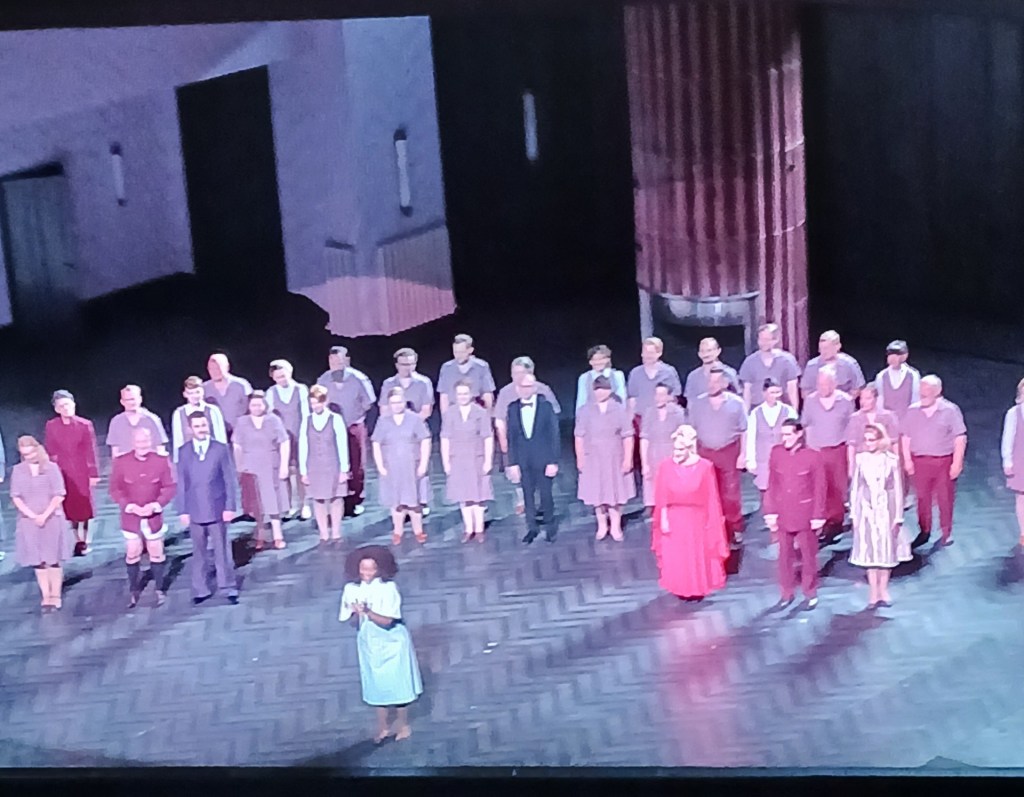
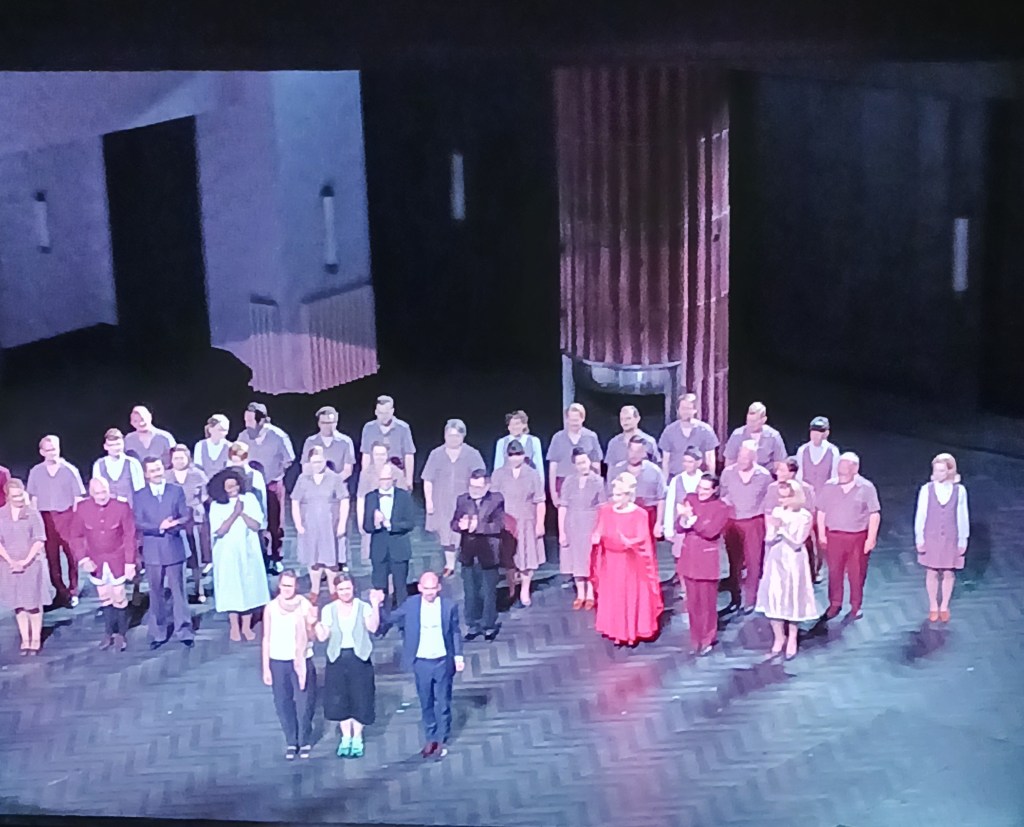
Production team takes a bow on the first night…….
 John's musical journey