Conductor, Sir Donald Runnicles; director, Tobias Kratzer; stage design and costumes, Rainer Sellmaier; lighting designer, Stefan Woinke; Graf Waldner, Albert Pesendorfer; Adelaide, Doris Soffel; Arabella, Jennifer Davis; Zdenka, Heidi Stober; Mandryka, Thomas Johannes Mayer; Matteo, Daniel O’Hearn; Graf Elemer, Thomas Cilluffo; Graf Dominik, Kyle Miller; Graf Lamoral; Gerard Farreras; Fiakermilli, Hye-Young Moon
I was surprised to learn from the programme that the first performance in Dresden of Arabella was as late as 1 July 1933.I had assumed it was a work of the 1920’s. The one ROHCG performance I can definitely recall hearing live was in 1973,with Silvio Varviso conducting and Arabella sung by Heather Harper, Zdenka by Elizabeth Robson. Matteo was Robert Tear and Mandryka was sung by someone called Raymond Wolansky. I may have gone also to a performance which featured Kiri Te Kanawa as Arabella, conducted by someone called Wolfgang Rennert a year or so later.
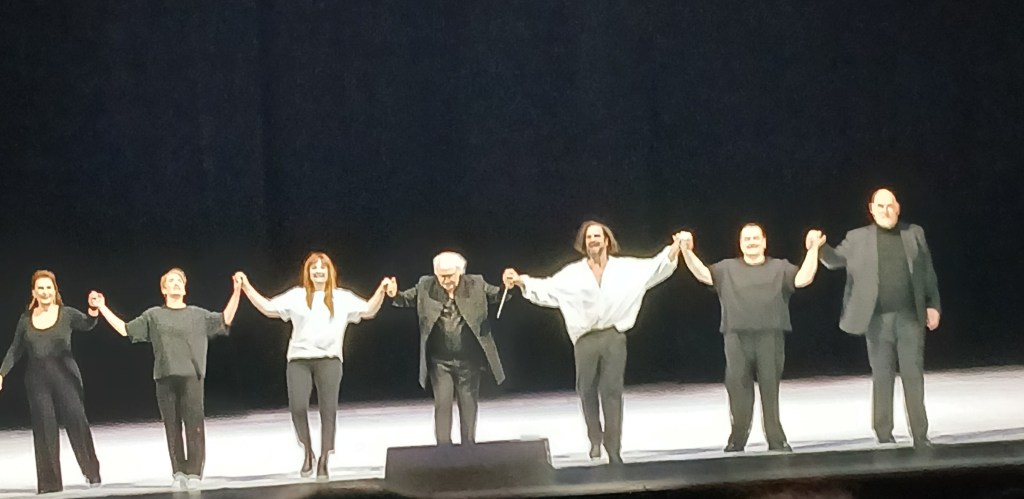
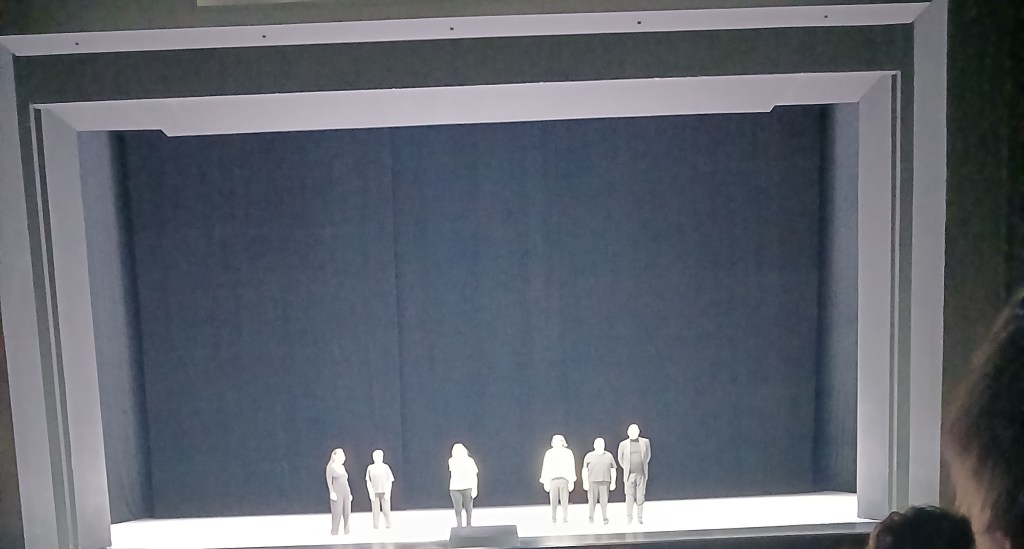
I have a wonderful recording of the work – a live performance from Munich, conducted by Keilberth, with Della Casa and Fischer-Dieskau – but have never ever really sat down to listen to it. I was staggered by the beauty of the work and wondered how I had not listened to it more over the years, Anyway, this was the first live performance I had been to for nearly 50 years…..and it was very memorable indeed. This was a quite magical production that – and I have to say straightaway that I have no clear idea of how Kratzer did it (he of the Bayreuth Tannhauser and ROHCG Fidelio) – by the end it seemed to have the humanity, the wisdom, of the great Shakespearean comedies – and that is not what you’d normally expect from a bourgeois comedy set in 1860’s Vienna. Kratzer directed Act 1 as he did Fidelio, in hyper-realistic mode. The exact look of a mid 19th century hotel was captured and I am sure immense research was done to get the clothes and fittings absolutely right. The stage was split into two, sometimes showing the family room on one side and on the other the hotel lobby. However occasionally a screen came down on one side and two video camera assistants filmed aspects of what was going on stage, hugely magnified onto the screens. For me the impact was to enhance the artificiality of this dressing up, which everyone understood was happening on stage and in a way that kept us to some extent at a distance from the characters’ emotions and feelings. Act 2 had the Brechtian trick of having the curtain open when we all filed back after the first interval, again enhancing artificiality. The Act 2 set was a large corridor with doors leading into a dance space where the ball was taking place, and it was in this act that remarkable things started to happen. As Fiakermilli started singing in the midst of the ball, everyone was suddenly in 1930’s costumes (oh no, I thought – I know what’s coming, and they did – Nazi stormtroopers cleared the rabble, but did not make a re-appearance, though given the timing of the premiere, you could easily make a case for the insensitivity of Strauss and Hoffmansthal presenting such a work at that moment in history). However within another 10 minutes or so everyone was in modern costume and stayed that way until the end of the work. The third act was simply a black box, as in the photos below. There were though videos in huge detail on a large screen centre stage – one was of Zdenka in bed with Matteo, filmed in graphic detail (whether via AI or whatever) and another of a 19th century-style duel with pistols between Matteo and Mandryka, with Zdenka running to throw herself in between the two. All the videos were in black and white incidentally. This has had the effect of enhancing the reality of what was happening on stage – which was that individuals, dressed in modern clothes (though designer-led in black and white) were singing about commitment, love and forgiveness in an entirely natural and very moving way, speaking/singing as it were for all of us. All the trappings of opera and dressing up seemed to have fallen away, and left us with something very simple but deep.
I enjoyed this hugely. Musically, too, it was very good indeed, and there were no weak links. Heidi Stober (who only a few weeks ago was at the Coliseum singing the role of Mary in the resurrected Thea Musgrave opera) was outstanding as Zdenka, hugely energetic, singing passionately and powerfully. Albert Pesendorfer (another Bayreuth regular) was a sonorous Graf Waldner, while Doris Soffel (now 77, unbelievable) was a very amusing powerfully voiced Adelaide, whose amorous exploits Kratzer has a lot of fun with). Thomas J. Mayer was an ideal Mandryka – dark-voiced, lively, passionate, good looking; very much the wild man of the woods. Matteo was sung well but looked very dumpy – this might have been deliberate on Kratzer’s part for reasons I can’t quite fathom. Jennifer Davis has a huge role to sing as Arabella and she sung it very well indeed – maybe perhaps without the shadings and creamy tones of a Schwarzkopf or a Janowitz, but by the middle of Act 2 one wasn’t really thinking in canary-fancying terms – she just had become Arabella, and was a wonderfully natural presence on stage. She seems to have gone from strength to strength in the years since I first saw her in ROHCG in 2019(?). I’ve never heard Donald Runnicles conduct anything before and this must be one of his last performances as music director of the Deutsche Oper. It was a beautifully played and paced performance, orchestrally – I had the feeling conducted quite slowly (it ended half an hour later than the scheduled time) but nothing seemed to drag.
I can’t wait for Kratzer’s take on Intermezzo tomorrow
 John's musical journey