Berliner Philharmoniker: Jakub Hrůša, conductor, Seong-Jin Cho, piano. Janáček: Fate, Suite; Beethoven: Concerto for Piano and Orchestra No. 5 in E flat major op. 73; Bartók: Concerto for Orchestra Sz 116
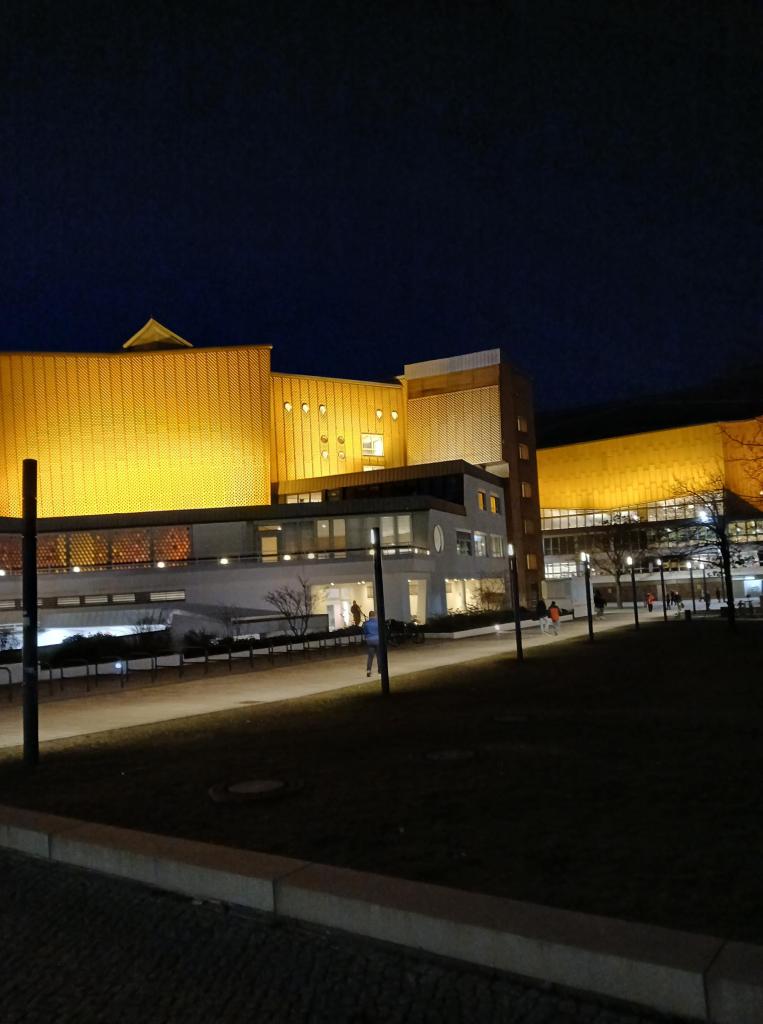
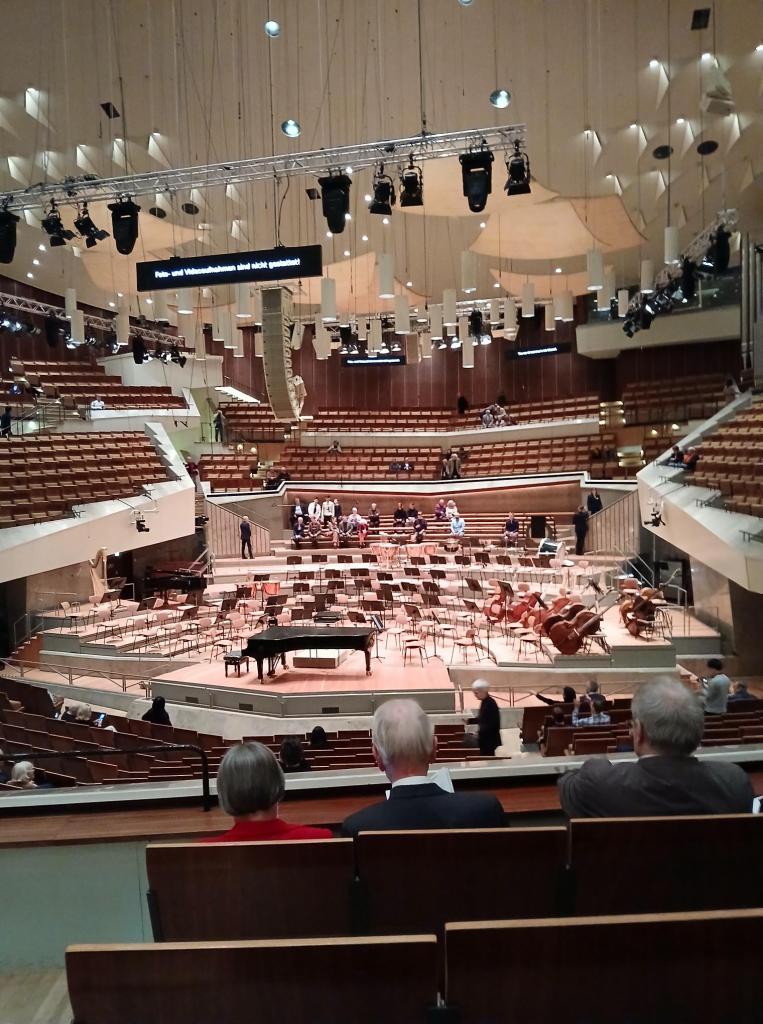
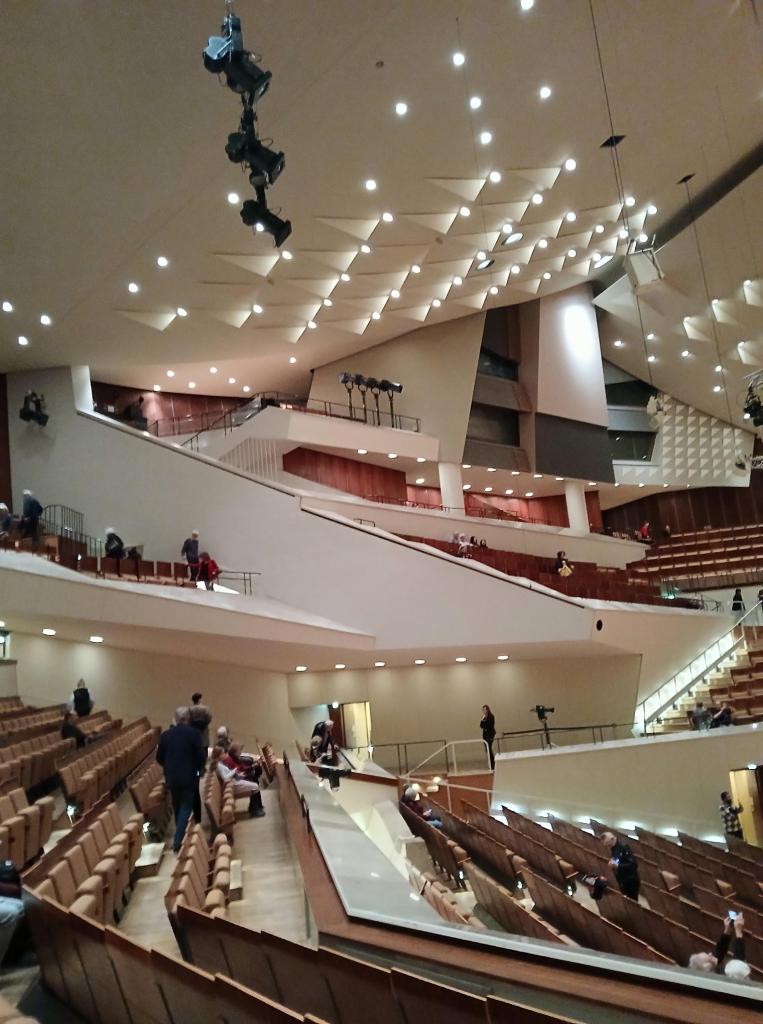
This was my first visit to the Philharmoniie in Berlin, and it’s as spectacular and impressive a building as everyone has always told me it is – imposing, even beautiful, externally, and the different geometric shapes of the interior constantly surprise and delight you. Acoustically it’s magnificent, offering both clarity and warmth, a bright sound but not overbearing.
For me (although a lot of the pianist’s fans would disagree – they were there in large numbers) the undoubted highlight of the evening was the Bartok. If you have the world’s super-orchestra before you in a concert hall, the best on the planet, what better piece to hear them in than the Concerto, which is precisely designed to show off a virtuoso orchestra. This account just put every other performance I have ever heard of this work into the shade. Whether it was the whispering strings of the first movement, the togetherness and blaze of the brass in the last, the outstanding woodwind in the second and third movement, everything was just extraordinarily well-characterised. Hrusa helped too – as was the case with Jenufa at ROHCG recently, he has a natural feel for the music of central and eastern Europe and can really energise it and give the orchestra an urgent sense of propulsive rhythm. The piece is quirky, constantly going off in different directions and in less inspired hands can get a bit irritating. Here, I just felt I was being taken on a wonderful journey and enjoyed every moment as it passed by, without fussing too much about where it was all heading – I was totally absorbed.
The Janacek piece – an orchestral suite from the opera Osud, is a pot pourri of music from the opera, not necessarily in narrative order. I have heard the work (I think) but can’t remember anything about it. On the plus side, there are great melodies in it and the Czech conductor who put the suite together in the 50’s(astonishingly the work was not heard in its entirety until 1958, despite being composed 50 years earlier) builds up tension and excitement in the extracts chosen. The problem is that there are so many highlights involving tension and excitement that the work rather exhausts itself and ends abruptly, something not even Hrusa’s energetic conducting and this amazing orchestra could disguise.
I may well have been in a minority of one in the audience, but I have to say I didn’t really enjoy the Beethoven. There were several reasons for this. One was that in this hall with such lively sound, a super-orchestra like the Berlin Phil sounded quite aggressive in Beethoven, given the resources deployed – just too big, too loud and Hrusa’s energetic approach simply compounded the problem. Perhaps it is a consequence of age, but I want a performance of Beethoven which allows one to, as it were, reflect on the spaces between the notes, to have a sense that every phrase is precious and needs to be meditated upon. That may be asking for more than is realistic but I felt the soloist rushed too much in the opening and in much of the first movement. The second was also comparatively quick. The third movement was perhaps the best for all concerned and there were some lovely moments there. The sound the pianist produces is limpid and clear but sounds more suited to Chopin than Beethoven. I felt this was a less successful performance of ‘the Emperor’ than the one I heard at the Proms by the pianist’s compatriot, Yunchan Lim. Seong-Jin Cho inevitably played an encore, which I couldn’t quite place – maybe French, maybe Russian – which was worlds away from Beethoven in its driven mechanistic sounds (though maybe not worlds away from THIS Beethoven……)


 John's musical journey