Boulez, Éclat; George Benjamin, Interludes and Aria from Lessons in Love and Violence (world premiere); Brahms Symphony No 4. London Symphony Orchestra, Sir Simon Rattle conductor; Barbara Hannigan soprano
It was nice to be back in a concert hall after 4 weeks with no live music. This was not a very generous concert, time-wise [though see below] but the content was in prospect fascinating – George Benjamin is a composer whose works, particularly his operas, have completely passed me by and which I was interested to hear, while it is years since I sat through a Boulez piece live. Rattle’s Brahms with the BPO was in my experience always a bit over-curated (I’ve heard him conduct Symphonies 2 and 3 with them) and so I was wondering how he might fare with the LSO…………
Once again – I really must remember this the next time I book at the Barbican – I found myself, though in Row D, about 5 feet from the orchestra, though more over to the left than at La Rondine, This didn’t matter so much in the Boulez piece which only features a couple of violins. I have to say I didn’t make much progress with the Boulez. I get the general principle – Eclats = splinters, so notes as it were breaking down into shards of colour, echoing and distorting. But why it should engage me for more than a minute or so I couldn’t quite make out. The piece works by splitting the 15 or so musicians into groups of blown. struck and plucked/strung instruments, but, to be frank, the sonorities were not that interesting, at least to my ears. Others in the audience seemed to be enjoying the piece more than I did, so I withdrew mentally in some bemusement.
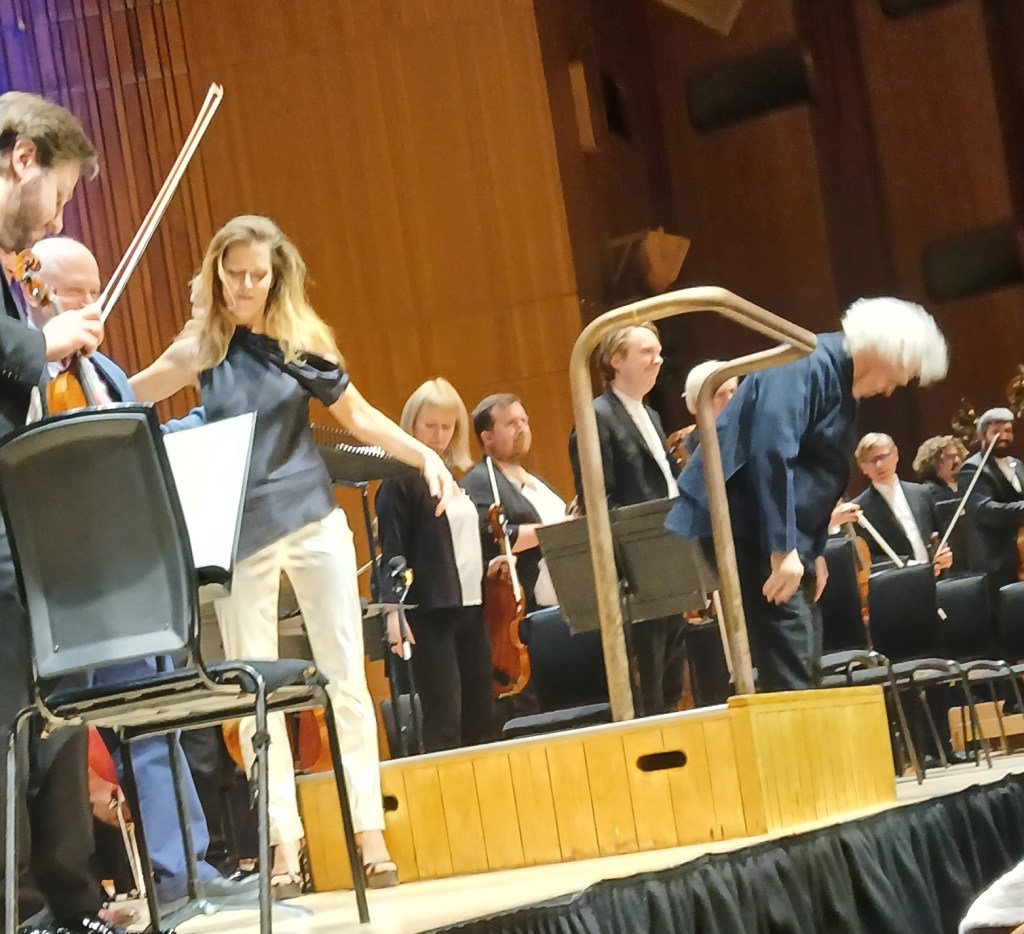
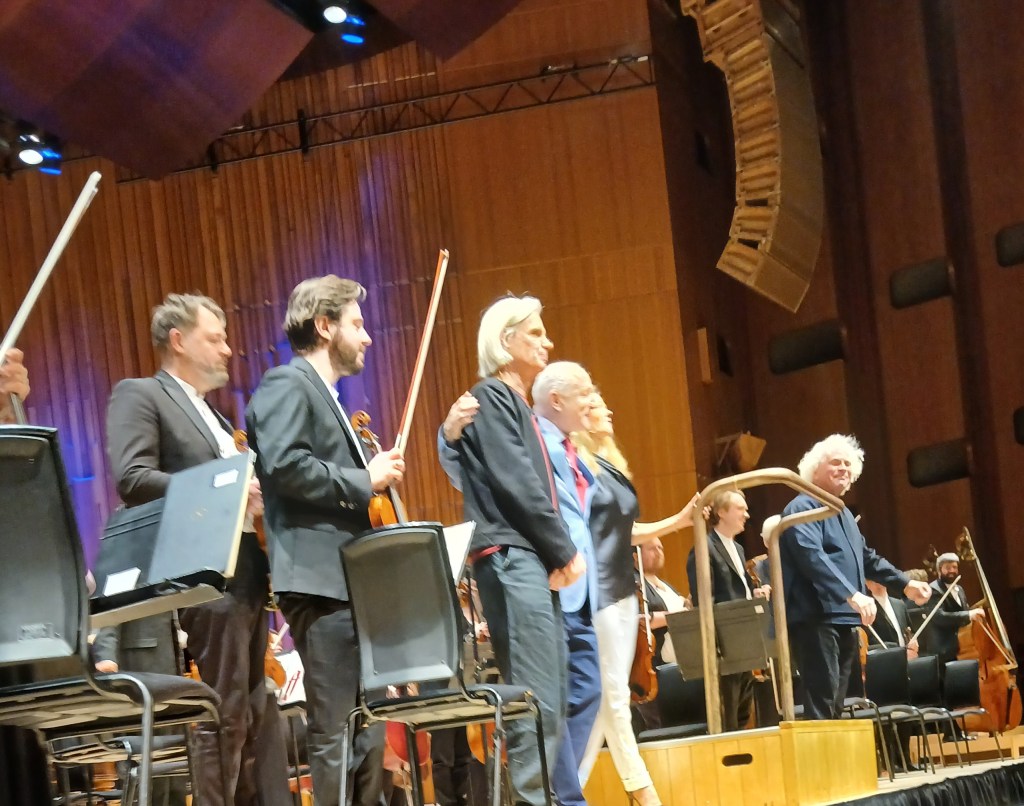
The George Benjamin piece – Interludes and Aria from ‘Lessons in Love and Violence” – was much more approachable and easier to get into, in an expressionist Wozzeck-y sort of a way. It’s an orchestral piece drawn from his latest opera (about Edward II and Isabella – or Isabel here) with an aria set in the middle. The orchestral music sounded appropriate to the fairly grim story – agonised and intense; the interludes didn’t seem that varied, but then they are primarily in the opera providing commentary on and supporting/underlining the story, so it’s unsurprising that I didn’t know always what to make of them out of context. But I found myself always attentive and never mind-wandering. The amazingly gifted Barbara Hannigan was commanding as Isabel, in an impressive, strange aria about the beauty of a pearl and its radiance being akin to music, which was gripping. I made a note to myself that I must make more of an effort to see one or more of Benjamin’s operas, which have been highly praised by critics. Composer and librettist came on stage after the performance to enthusiastic applause.
Rattle always sounds to me more committed, also more relaxed, in his LSO performances of various works than he did with the Berlin Phil, and I found the Brahms 4 impressive. In fact, I couldn’t think of another one over the years which was better performed and conducted than this one – I must have seen Sir Adrian Boult, renowned for his Brahms, conduct this work at least once at the Proms but have no memory of it .
There seemed to me to be several reasons for why this performance of Rattle/LSO was so good:
• The playing of the orchestra was superb. Sitting so near to the first violins, the unanimity, the sense of one instrument, was overwhelming. The horns and flutes in particular shone in their various big moments. The LSO sounded in this music – and this must be at least partly to do with Rattle – much more like one of the top-ranking German orchestras than British orchestras normally do
• Rattle’s reading, with the orchestra, was based on well-judged tempi that never felt they were distorting the music. The first theme of the first movement was played with light and colour, speeds subtly changing, and the three first movement’s themes all related well to each other. The beautiful second theme of the slow movement – the reprise is one of my favourite moments in the whole symphonic canon- was wonderfully warmly played yet with that Brahmsian ache , that sense of regret and unfulfillment. The third movement wasn’t taken too fast, so that it didn’t seem a rather oddly extrovert companion to the surrounding music. The finale was again well-judged in tempi so that the various elements hung together (it can feel a bit episodic) and the impact was tough, inexorable and sad. I really couldn’t think of how this work could be better performed.
There was a speech from Rattle that seemed to acknowledge the concert had offered slightly short measure and so unusually there was an encore – an F major Brahms Hungarian dance, a lovely end to the concert.
 John's musical journey