Britten The Prince of the Pagodas: Suite arranged by Colin Matthews and Kahchun Wong; Mahler Symphony No 1 ‘Titan’; Kahchun Wong conductor, Halle Orchestra
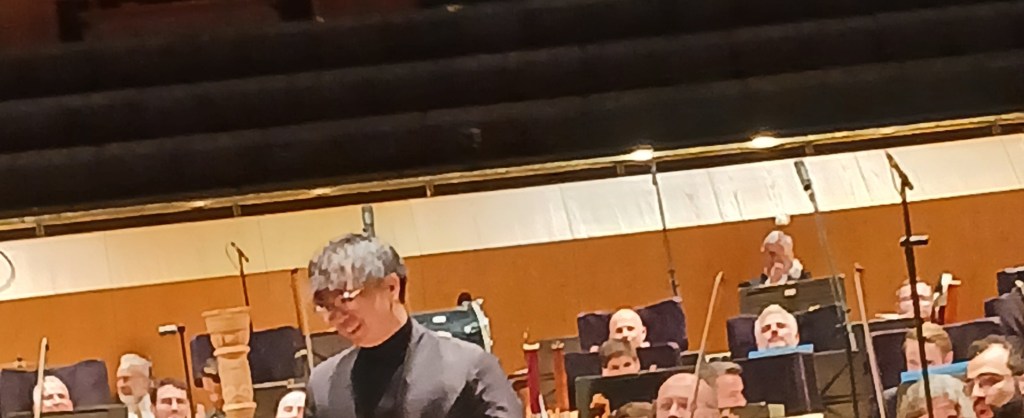
Kahchun Wong is Singaporean, aged 38 and has been chief conductor of the Nuremberg Symphony Orchestra, the Japan Philharmonic, and now the Halle, as well as being principal guest conductor of the Dresden Philharmonic. He won the Gustav Mahler conducting competition in 2016. So, a young man, making his way in the world….. This was his debut as chief conductor with the Halle. There was scurrilous blogging, possibly from trolls, last year on the ‘Slipped Disc’ blog, when the 5-year appointment was announced – was the Halle panicking, with no replacement for Mark Elder in sight, and with Wong chosen after just one concert? He has only conducted a couple of concerts with the Halle since in the UK (though he has been on tour with them to Spain and has made a recording of the complete Britten ballet). So – this was in many ways a very important concert both for him and the Halle. The Lord Mayor of Manchester and various metropolitan mayors plus key sponsors were in attendance. This concert lived up to expectations!
Kahchun Wong was interviewed before the concert and came over as modest, thoughtful, and knowledgeable. He spoke mainly about the Britten piece and his work with Colin Matthews to create a suite from the two-hour ballet. He had spent time at the Red House last year studying the original score, he said and he marvelled at the fluency of Britten’s invention – very few crossings out on the original score.
Mr Wong does not have a manic podium presence nor is he a deft stick wielder, particularly. He is in fact quite a calming figure before the orchestra, cueing in instruments clearly, with a precise beat. What he does seem to radiate is a lot of self-confidence and he clearly has the respect of the players. At the same time, he knows how to generate considerable excitement and energy within the orchestra at key moments – particularly in the Mahler – without excessive gestures, but by stretching out his arms, occasionally crouching for climaxes, and all with animation, smiles, and enthusiasm. I was pleased to see he’s maintained the split violins arrangement Sir Mark Elder had requested for the orchestra.
The Britten piece had some Mahlerian aspects -the fanfare for instance -and it is scored for a similarly sized orchestra to Mahler 1. It is also fascinating to note the gamelan-like sounds prefiguring the dances in Death on Venice. I don’t know the piece well, though I have the Knussen recording of the full ballet, but it seemed to me the orchestra played with energy and precision – some noticeably good oboe playing… . The Britten piece is fascinating to listen to but like all such suites – e.g. the Firebird – there are too many grand moments from all the goodies in too short a space of time – 30 minutes – so that it feels too rich and sweet, too much of a good thing sometimes, and with too many climaxes.
I’ve seen/heard many performances of Mahler 1 over the 58 years or so since I bought my Solti/LSO recording of the work in 1968. In recent times I have heard fine performances by Rattle/Berliners at the Proms in about 2010, and Pappano/Sta Cecilia Rome orchestra in 2018. I heard a performance I much disliked by Daniel Gatti in Leipzig last year. This performance by the Halle was exceptionally worthwhile, for the following reasons:
- The balance between blocks of instruments was very well handled so that the sound was always clear. This was particularly the case in the first movement, where I have hardly ever heard so much of the woodwind detail
- The structuring of the piece was well done – suppleness in the playing of phrases to allow each part of each movement to seem alive. Climatic moments were clear. The first statement of the triumphal ending tunes half way through the movement was quite clearly held back to emphasise the final triumph
- Tempi were always well chosen, to allow savouring of the music but without becoming self-indulgent. The first three movements in fact were all slightly on the slow side, but this allowed for some expressive phrasing and a lilt to the folky elements
- Some outstanding string playing – the cellos and basses digging in deeply at the beginning of the scherzo, and the violins sounding glorious in the finale’s big tune
Unlike the Gatti performance, nothing sounded manufactured. The music flowed inexorably and movingly. At the end, the Halle audience gave the performance a standing ovation – I’ve only ever seen that for Mark Elder before in Manchester, so that was a very good and absolutely justified sign of audience support for the new regime
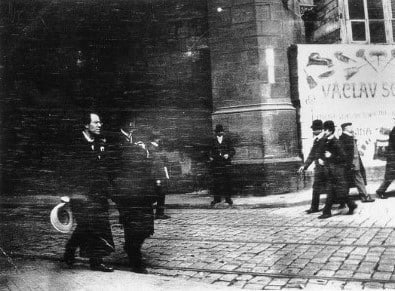
Mahler in Prague
 John's musical journey