Vítězslava Kaprálová, Military Sinfonietta; Dvořák, Piano Concerto in G minor; Janáček Glagolitic Mass. Mao Fujita, piano; Corinne Winters, soprano; Bella Adamova, mezzo-soprano; David Butt Philip, tenor; Brindley Sherratt, bass – replaced b Pavel Švingr; Christian Schmitt, organ; The City of Prague Philharmonic Choir, Czech Philharmonic, Jakub Hrůša, conductor
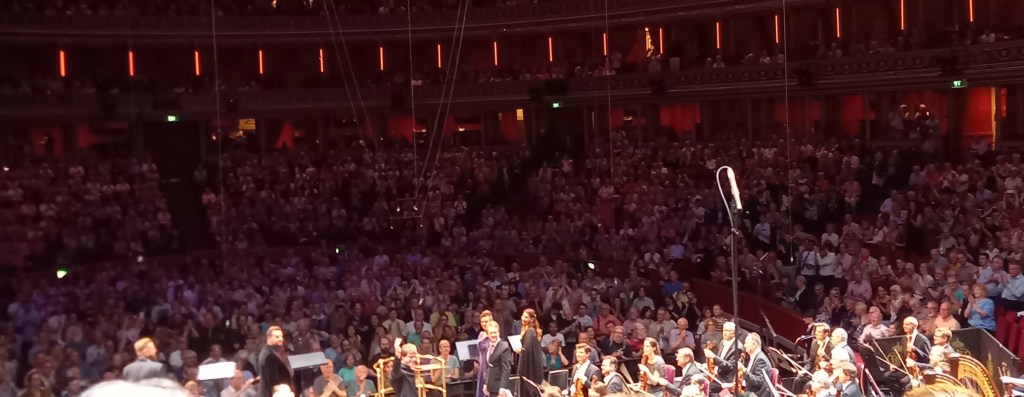
I made a fairly late decision to go to this and managed to get a front row Chor seat just in front of the organ and behind the choir – a rather spectacular seat for total immersion and a lot of noise in the Janacek piece, if less satisfactory for the Dvorak concerto.
As with the previous evening, the hall was packed out – there was a sense of real excitement in the air.
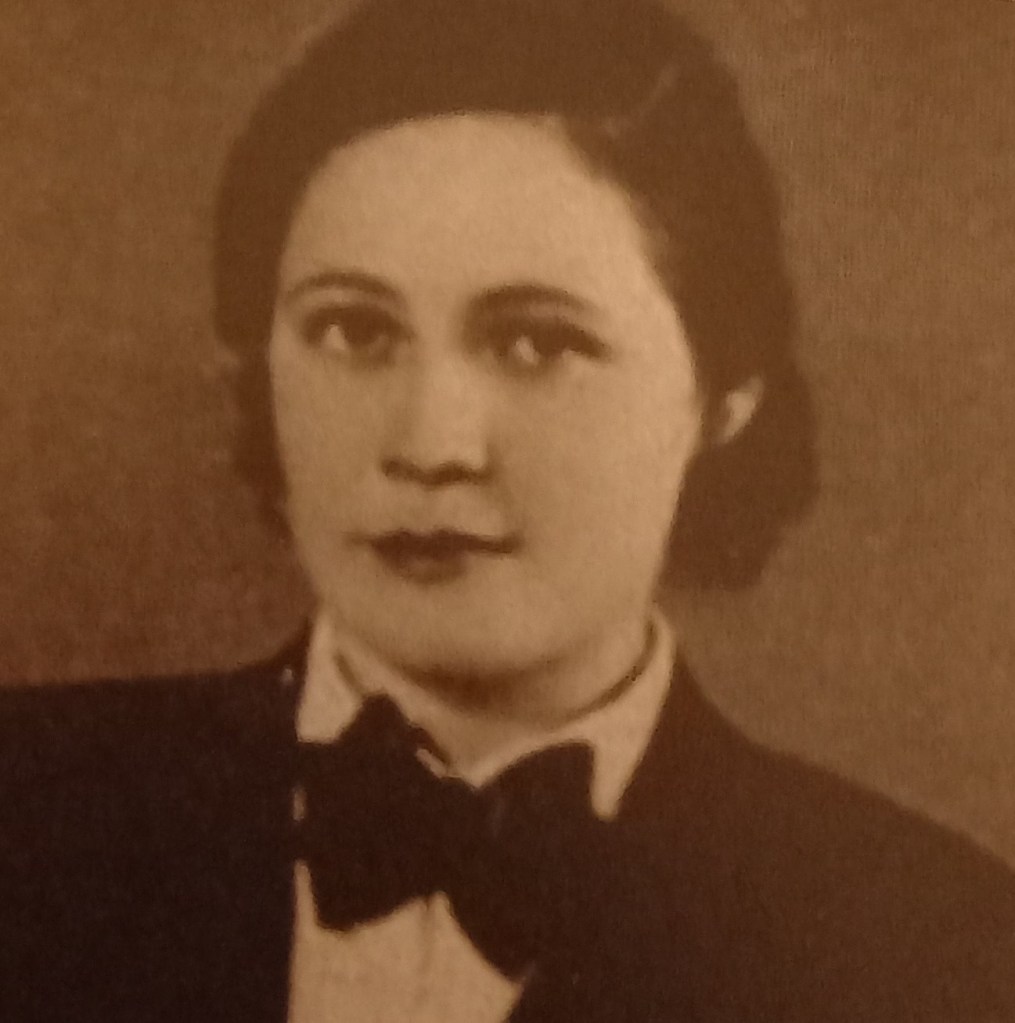
Vitezslava Kapralova (born Brno 1915- died Montpellier 1940) is a short-lived twentieth-century Czech composer, though completely unknown to me, and this Sinfonietta dates from 1936 – she apparently conducted the BBC Symphony Orchestra in it in 1938. She is as you can see from the dates roughly a contemporary of Britten. Thinking about her, it is as though all we had of Britten’s musical output was limited to what he had composed up until the late 1930’s. It is clearly a tragedy that this composer died so young. The work is bright, clever – not unlike the Britten of the piano concerto, in fact – and held me totally throughout its ? 15 minute length. Who knows what she might have achieved had she lived even as long as Britten?
While I know the Glagolitic Mass very well, and have been to some very good performances of it by the Halle in recent years, the Dvorak Piano Concerto is not a work I know at all, really. I have the famous recording with Richter and Kleiber which I have played once or twice, but the piece has not lodged itself at all in my memory. I have to say that, encountering it in this performance, I was pleasantly surprised. Though it’s not a masterpiece, and goes on for too long and probably needs to be cut back by at least 10 minutes, this performance I found to be engaging for the most part, and indeed the main themes were much more memorable than I had recalled – the slow movement is really lovely. Mao Fujita gave the best possible account of it – even from my position in the Choir you could hear that his poetic and sensitive reading, never grand standing, and always focusing on making the phrasing of passages as beautiful as possible, was of high quality. The Czech Phil accompanied him beautifully too (incidentally this orchestra must have the last surviving tradition in its horn section of the old slightly whiney vibrato-heavy sound that all the Russian (and French) orchestras used to have 50 years ago).
The Glagolitic Mass was tremendous – as how could it not be when I was sitting 6 feet away from the organ and 3 feet away from the back of the heads of the male section of the choir plus maybe 12 feet from the timps. The City of Prague Philharmonic Choir made a tremendous noise, given that there were only maybe 80 of them and of course sounded utterly authentic. Hrusa got a real swing going in the orchestral passages, and the Czech Phil brass were particularly impressive – together with a very assertive timpani player (important in this work). I think this setting of the Mass is one of the best I know, and was particularly uplifting in this performance. While Janacek himself was an agnostic, as a believer I find this work very sensitive to the Christian message, giving a radiant sense of the sacredness of creation to the words of the Mass. Hrusa didn’t go hell for leather with the rhythmic elements – there was a wonderful feeling of spaciousness, of the open evening sky, about the end of the Credo, for instance. One thing I noticed again and again, not only in the Janacek but also in the Dvorak the evening before, is that conductor and orchestra weren’t creating excitement by whipping up speed or accentuating the rhythms but giving the music the space to allow the orchestration and marked dynamics to do their work. It was impressive also to hear the Albert Hall organ put through its paces in the penultimate movement. The singers sounded, of course, with their backs to me , somewhat indistinct but as far as I could tell David Butt Phillip was dealing well with the challenging tenor role. Though no announcement was made, Brindley Sherratt definitely wasn’t singing the bass part as originally advertised…..The final minute or so was just tremendously exciting…….!
 John's musical journey