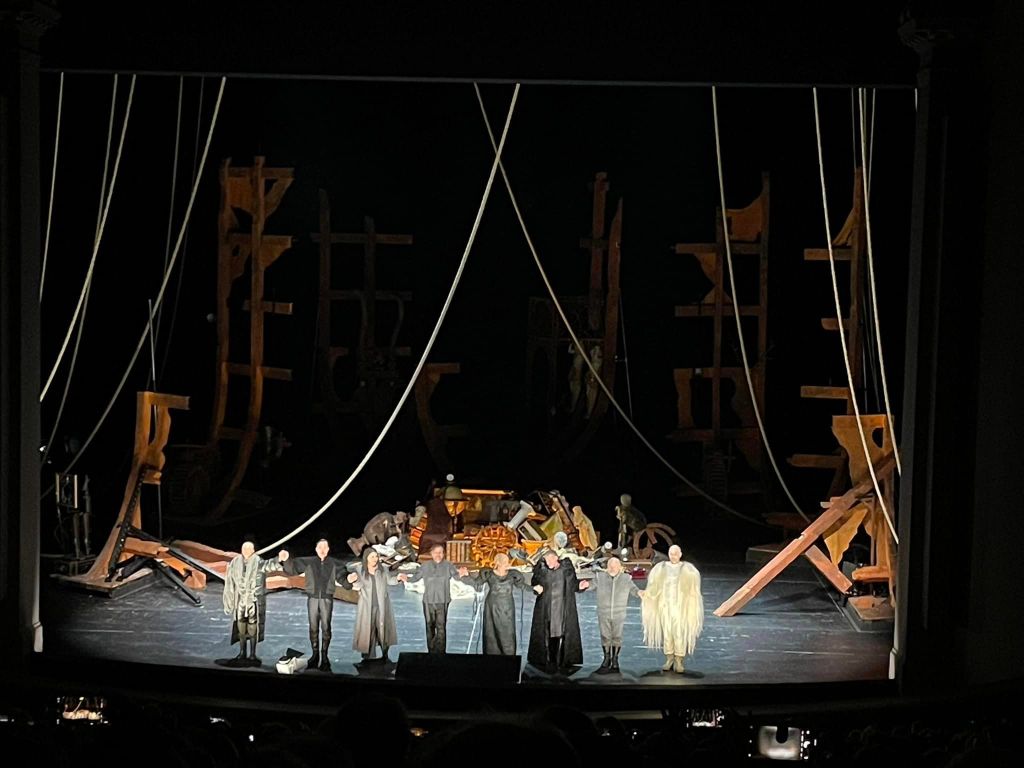
Conductor, Semyon Bychkov; Director, Thorleifur Örn Arnarsson; Stage design, Vytautas Narbutas; Costumes, Sibylle Wallum; Lighting, Sascha Zauner. Tristan, Andreas Schager; Marke, Günther Groissböck; Isolde, Camilla Nylund; Kurwenal, Olafur Sigurdarson; Melot, Birger Radde. Brangäne, Christa Mayer
Tristan is the Wagner work I have seen least in the last 7 years or so. I saw the last but one Katharina Wagner production at Bayreuth in 2017, conducted by Thielemann, which I thought was a good production, impressively conducted, with a quirky view of Marke – a domestic bully and abuser who takes Isolde back into his abusing household after the Liebestod – which is nonetheless given credence in various ways by the text and scenario (the Tristan was the late Stephen Gould and the Isolde Petra Lang). I saw a concert performance of the Glyndebourne production in 2021 at the Proms, and that’s it………There seems to have been an interim Tristan production for a couple of years at Bayreuth after the 2015 K. Wagner one – well-regarded – and now there’s this one, presumably with a run of 4-5 years. Reviews were mixed on the production in the press – enthusiastic about the musical aspect, less so about the production (inevitably, perhaps).
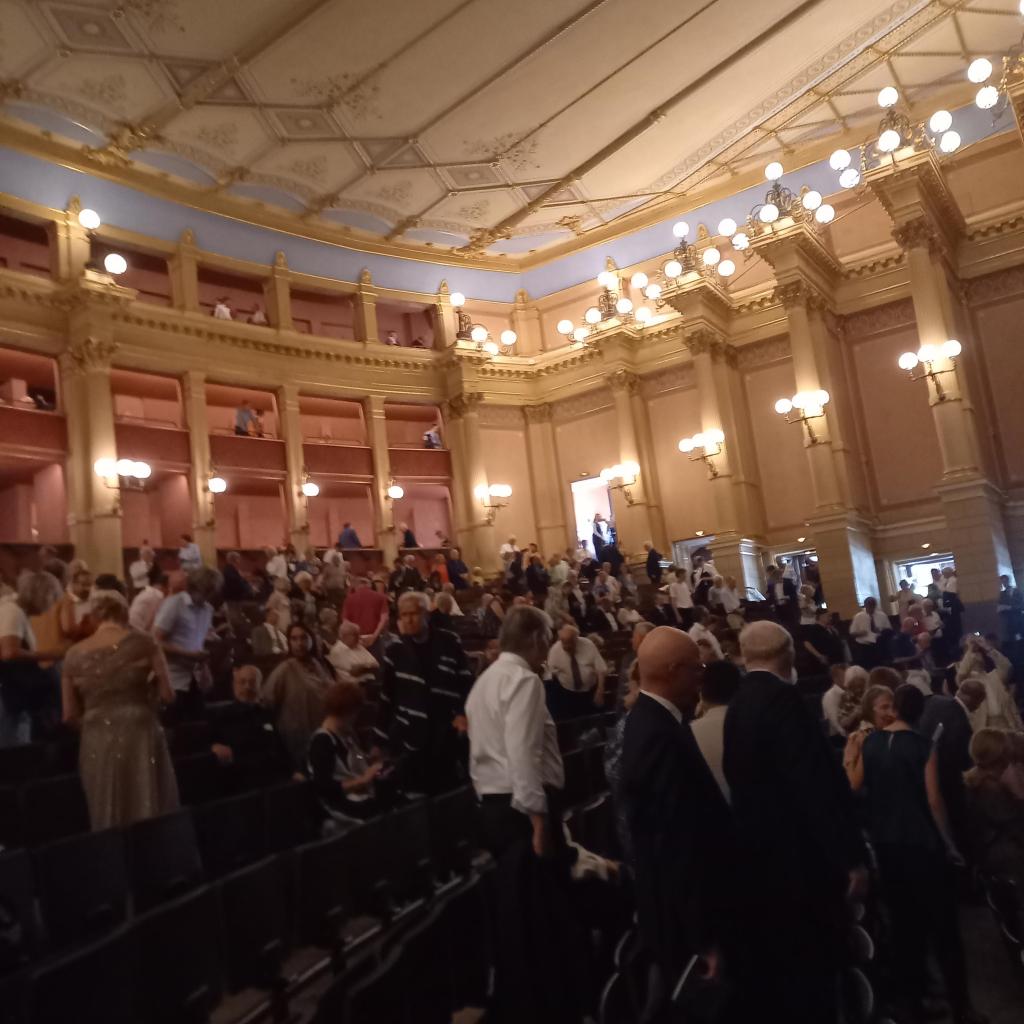
As I walked from my hotel up the ‘Green Hill’, the churches in Bayreuth were going bonkers, with multiple bongings for the Virgin Mary’s birthday. This jubilantly festal atmosphere was not replicated at the top of the hill – as I sat in a still stifling Festspielhaus, I found myself reminded of that late poem by Yeats, where he reviews some of the poetic themes he’s used in his life, and then writes:
Those masterful images because complete
Grew in pure mind but out of what began?
A mound of refuse or the sweepings of a street,
Old kettles, old bottles, and a broken can,
Old iron, old bones, old rags, that raving slut
Who keeps the till. Now that my ladder’s gone
I must lie down where all the ladders start
In the foul rag and bone shop of the heart. (‘Circus Animal’s Desertion’).
This production to me felt as though it was expounding the thought that all relationships fail before the accumulations in that ‘rag and bone shop of the heart’, and that we die alone, encumbered by our things and our memories, perhaps never having loved though we think we have. Several aspects of the production emphasised this point:
- The sets for Acts 2 and 3 resemble giant junk yards. Act 2 is particular is everyone’s version of the ultimate attic nightmare – portraits, boxes, statues, crumpled bits of paper, broken bits of machinery everywhere. Act 3 seems more like an abandoned ship yard (which might make sense for Kareol), though I did wonder whether in fact many of the strewn-around items were actually giant parts of string instruments. Anyway both seem to represent an accumulation of things which somehow block the relationship between Tristan and Isolde.. And of course it is the past in their lives that both prompts and destroys the two lovers – Tristan’s ill-fated voyage to Ireland and Isolde’s meeting him there, knowing that he had killed her lover, Morold. And Tristan retreats into his past in going back to Kareol, and of course in being reluctant to re-encounter Isolde on the boat going back to Cornwall
- In Act 1, Isolde is encumbered by an enormous dress which (apparently, though you wouldn’t know this without reading about it) has written on it words from the libretto, as though Isolde is programmed to repeat the tragedy she is clothed in. On occasion she tries to write on it, but, as far as I could see, does not succeed
- Ropes are a feature of all 3 acts – in the first, I assumed they were just part of the suggestion of a ship, but in fact I think they may suggest routes out of the junk yards which the couple don’t take (the ladders of the Yeats’ poem)
- Tristan and Isolde hardly touch throughout the work – perhaps briefly towards the end of the Act 2 love duet. Obviously there are practical reasons why opera singers can’t be too much wound around each other, but this production really emphasises the distance between the couple. And of course, while they sing about dying together, they actually do die alone in Wagner’s version of the story. Marke of course too is alone. Kurwenal doesn’t die in Act 3 but remains sadly alone on the sidelines to the end.
- Curiously Tristan and Melot don’t fight either – Tristan is unwilling to touch another even in anger
- There is no sense of elevation, of a different level of being, during the Liebestod, nor of any mystical reunion with Tristan, Isolde sings mainly on the floor, not differently lit to the rest of the stage, and at the end of the work she is just plain dead and alone, like the others
The theme of Night and Day is also prominent in the production – piercing spots lights range the audience and batteries of lights suddenly dazzle when Day makes its major appearances – the arrival in Cornwall, and Marke’s discovery of the lovers – while most of the opera is lit to be only sem-visible, particularly in Act 3, where the junk seems to be obscuring where the people on stage actually are. Again the darkness of unknowing seems to emphasise in this production separation, not union.
So, not exactly a bundle of joy and I found, perhaps in consequence, that I was unmoved at points I would normally have expected to be moved at. That’s an interesting contrast with Parsifal the previous evening – this Tristan was by far the better production (brilliantly executed, thoughtful, coherent) whereas Parsifal was, in retrospect, more than a bit muddled, but also far more moving. I found myself gripped with excitement by the Act 2 love duet in Tristan, which was wonderfully sung and played but I was only really moved by Brangaene’s two interventions, again emphasising aloneness and the danger of the illusion of unity. Or perhaps I was just too uncomfortable in the considerable heat within the Festspielhaus,,,,,,,,,,,,,,,
Musically this performance was very good indeed. Hats off to Schager for another powerful portrayal, and remaining fresh sounding even by the end of Act 3 – and being more musically varied and sensitive than most of the heldentenor breed. I hope Bayreuth have a view on who to replace him with when he finally decides he has had enough, but long may he continue………….Christa Mayer was excellent as Brangaene, a big voice but one also capable of subtlety. Gunther Groissböck, who was the subject of critical reviews after the first night, sounded ideally sonorous as King Marke, while Olafur Sigurdarson was among the best Kurwenals I have heard. About Camilla Nylund there have been various views, and who knows if she could really sustain the role so effectively in a less forgiving acoustic – however, while slightly shrill, and with an occasional wobble, she sang thoughtfully, was not over-powered by the orchestra and (though at times I kept hearing in my mind what other singers had done with certain phrases) gave a thoroughly musical account of the role.
I have been lucky with the Bayreuth Tristan conductors I have heard – Kleiber in 1974, Thielemann in 2017 and now Bychkov. The latter started the Act 1 prelude very slowly and beautifully, picking up in passion as it went along (though perhaps not with the intensity of the other two conductors). The performance seemed well paced, not hard driven, sensitive to the singers and with very effective dynamic control.
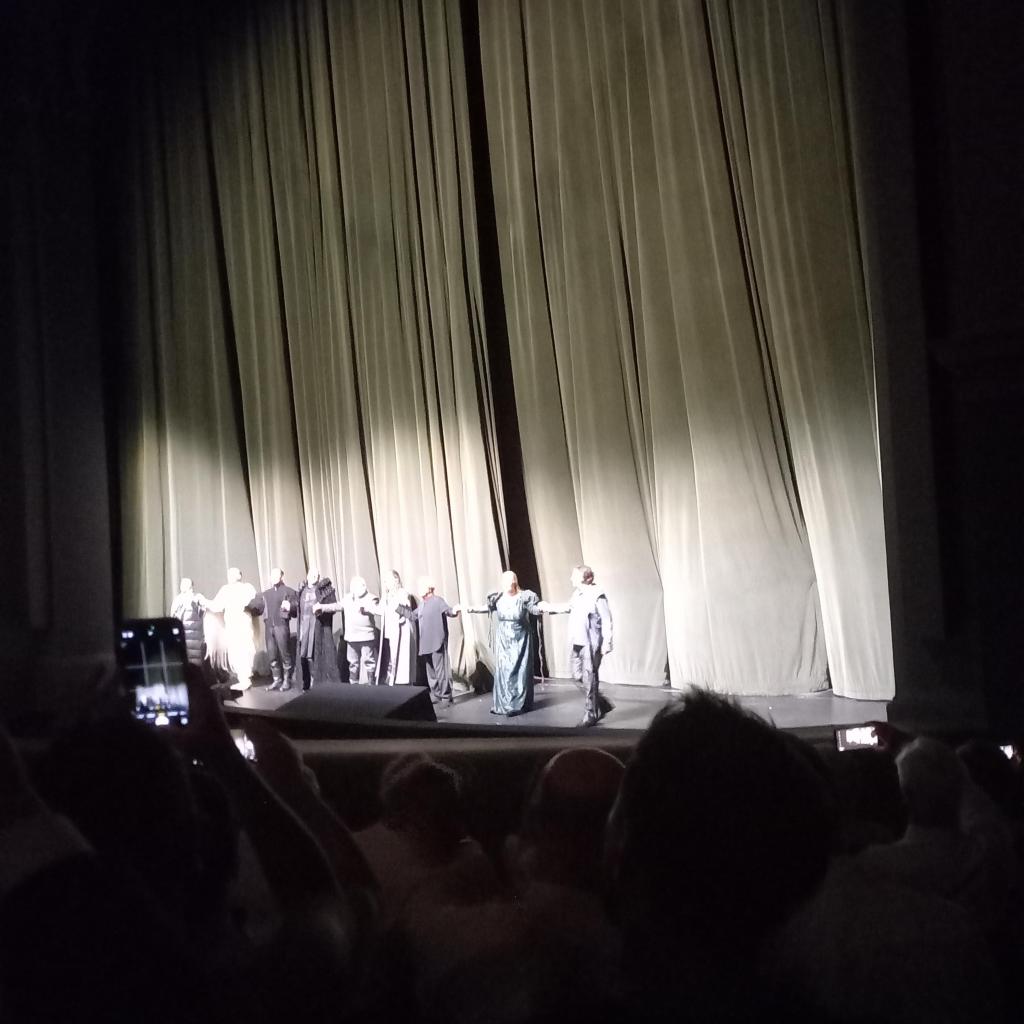
Frenetic cheering afterwards and not a boo in the house, unusually for Bayreuth (and welcome – given the history of intolerance in this place, booing always to me seems to have a particular edge and resonance)
 John's musical journey