Director, David Mcvicar; Set Designer, Robert Jones; Costume Designer, Jenny Tiramani; Lighting Designer, Adam Silverman. Andrea Chénier, Jonas Kaufmann; Maddalena Di Coigny, Sondra Radvanovsky; Carlo Gérard, Amartuvshin Enkhbat; Bersi, Katia Ledoux; The Incredibile, Alexander Kravets; Roucher, Ashley Riches; Contessa Di Coigny, Rosalind Plowright; Pietro Fléville, William Dazeley; The Abbé, Aled Hall
Since my posting about seeing Salome in Paris, general pressures on other parts of my life, particularly the General Election, and also an unexpected family visit, have meant that several concerts I had planned to go to I couldn’t make – Mark Elder’s last concert in Manchester as Music Director of the Halle, a recital by Angela Hewitt on a fortepiano, and a performance of Shostakovich and Weinberg string quartets by the Quatuor Danel. Hopefully I’ll catch up with the Mahler 5 at the Proms.
Andrea Chenier is another opera which I have not heard a note of before and doubt if I will ever again. I gather from Wikipedia that it was premiered in 1896 and so contemporary with the earlier Puccini operas. Nicholas Kenyon in The Telegraph described it in his review of this set of performances as “ a feeble, creaky opera based on events around the French Revolution, with little to recommend it except opportunities for top singers to shine at top volume.”. So there…………….
I arrived at the cinema to find that in a screen room of 100 seats, I was the only person there. My sole interaction of the evening was with a double gin and tonic, and the girl who sold it to me. This did not set me in a good frame of mind for the evening…….it led me to reflect generally on the decline of audiences and funding for classical music and the collapse of that impulse so prominent in the post WW2 era to bring “high culture” to as many people as possible. But then of course I wondered about the extent to which Andrea Chenier could be regarded as “high culture” anyway……I wonder what it’s equivalent would be today? I guess a kind of serious musical, but few would be as heart-on -sleeve as Italian verismo.
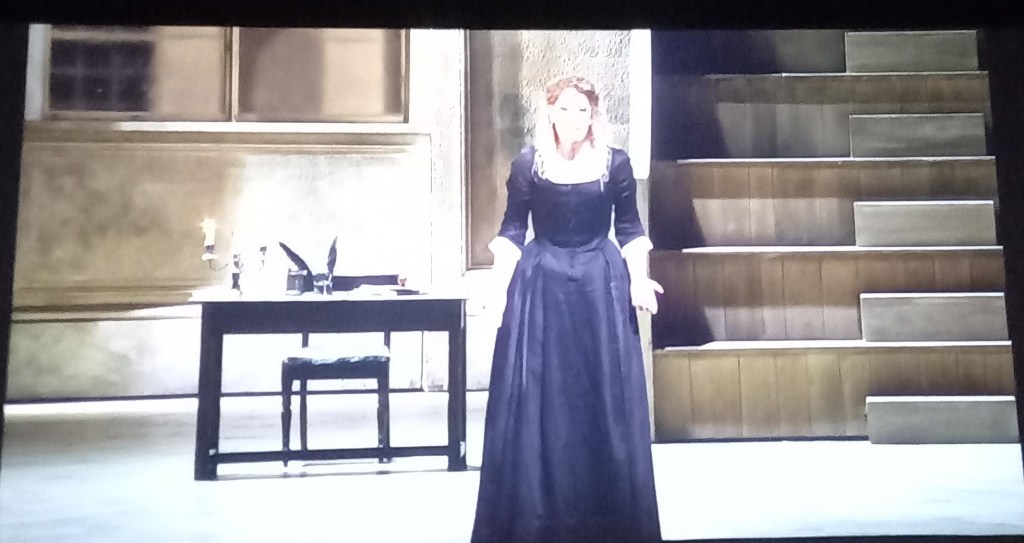
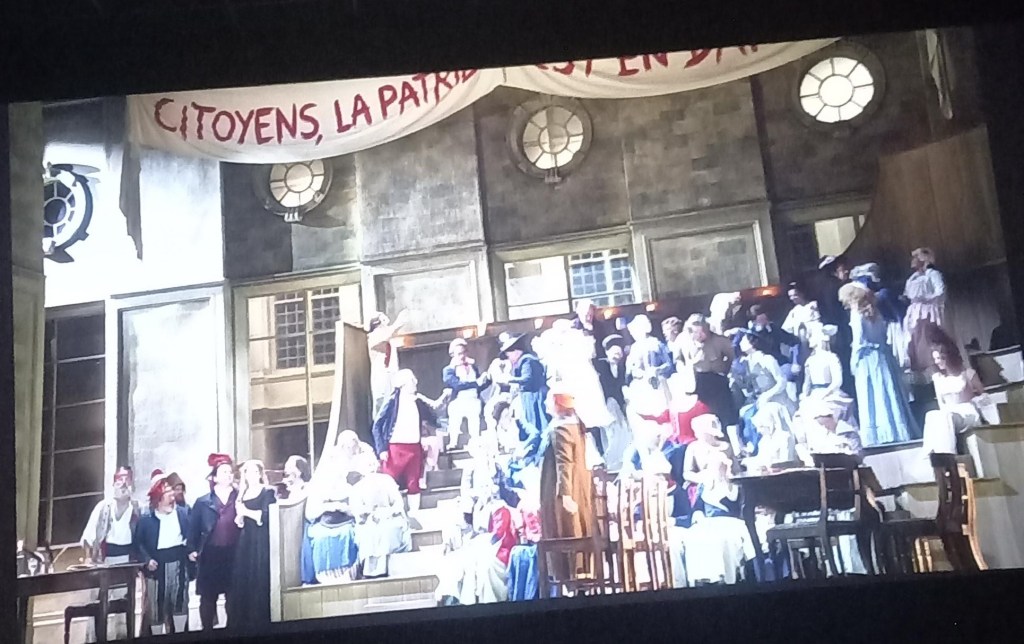
The work is about 2 hours 15 minutes long and in 4 acts. David MacVicar’s production unsurprisingly was utterly realistic in conception – specialist expertise had been hired to ensure that every detail seen on the stage – furniture, costumes, room design and props – was historically accurate. Not only the aristocratic house in Act 1 but also the various revolutionary interiors in the other acts were highly convincing. I did wonder if there was any other way you could stage this work. Had the French Revolution been anything more than a frame to hang a very traditional opera story on – soprano and tenor get together, a baritone gets in the way, soprano and tenor die together – there could be some variant staging scenarios, but, as it is, being realistic is perhaps the only way that makes sense of it.
Dramatically it is hard not to agree with Nicholas Kenyon – there’s not much about the work that’s beyond a display vehicle for star singers. The French Revolutionary elements are, as I have intimated, merely a backdrop. It’s interesting that Illica wrote the libretto for Chenier and then Tosca a few years later. There are things in common – Gerard is Scarpia, tenor and soprano get killed at the end. But Tosca, however you view it, is more engaging than Chenier – that’s partly because the characters are more clearly drawn in Tosca and partly because Puccini’s music is just so much better. In fact though much of Giordano’s music sounds sub-Puccini, there are some passages that are quite different – some decidedly Tristan-esque passages in Act 4, for instance. It is strange though how unmemorable most of the music is – I had a higher opinion of Fedora in that respect – with very little striking melodic content at a first listen. Having said that, while Acts 1 and 2 had me squirming in my seat for anyone coming to an opera for the first time, Acts 3 and 4 have more coherence and they do grip you – the orchestral explosions as Chenier and Maddalena go to their deaths are thrilling. But even then a glance at this Youtube extract from a Munich performance, again with Kaufmann but with Harteros as Maddalena demonstrates a whole dimension of visceral impact which is simply missing from the ROHCG performance – https://www.youtube.com/watch?v=U2Q4-_0ufaA
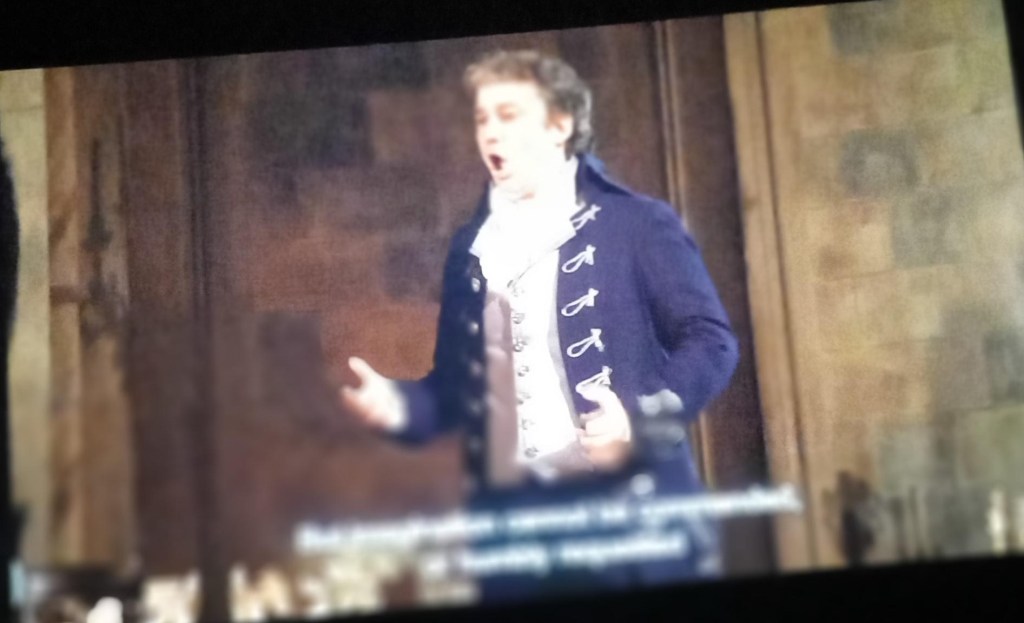
Almost everything seems to rest in this work on the relationship between Chenier and Maddalena and the chemistry in this performance just wasn’t right. Kaufmann is Kaufmann, looking much the same as he has for the last 15 years, and thoroughly credible in the role. But Sondra Radvanovsky, in the cruel close-up of film, is just NOT a teenage girl and looks faintly absurd – I am sure she would have come over better at a distance live in the theatre. But these two hardly looked at each other and both seemed unengaged.
In terms of singing and acting, the undoubted star of the performance was Amartuvshin Enkhbat as Gerard, who has a glorious voice and knows how to keep still and use his considerable presence sparingly. He was the best performer of the evening. It was wonderful too to hear Rosalind Plowright, in fantastic voice and acting with every ounce of her being, aged 75 – plus another veteran, Elena Zilio, as Madelon: equally impressive. Kaufmann was in good voice – only a bit of wavering on the ascent to top notes at time, but some lovely quiet singing with his glorious baritonal tenor. All his big arias came over well. Radvanovsky some critics were a bit sniffy about but I found her in good voice though she did less with it than Kaufmann does. The other person who was a stand-out was Ashley Riches as Roucher – I have only ever seen him in concert/oratorio-type roles, but he was very impressive here, with his deep rich bass and alert stage presence.
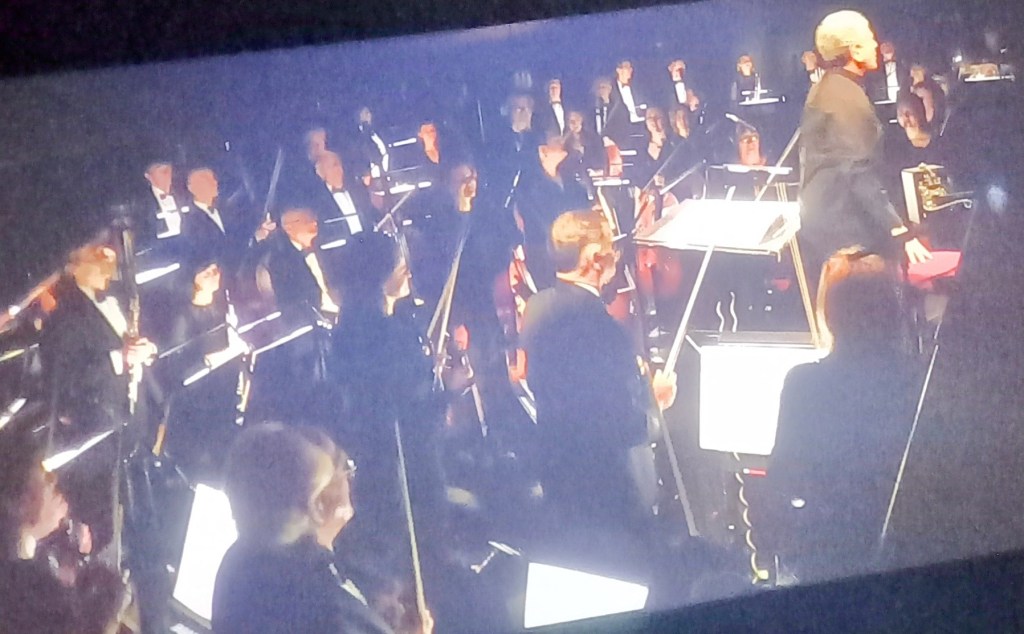
Of course, in many ways the hero of the evening was Pappano, and certainly the orchestra sounded glorious. What a pity I can’ t quite share his enthusiasm for this work
 John's musical journey