Director, Jude Christian; Designer, Charlotte Henery; Lighting, Ben Ormerod. Conductor, Gerry Cornelius. Manon, Jenny Stafford; Des Grieux, ? (cover for Gareth Dafydd Morris); Lescaut, Aidan Edwards; Geronte, Edward Hawkins; Edmondo, Brenton Spiteri
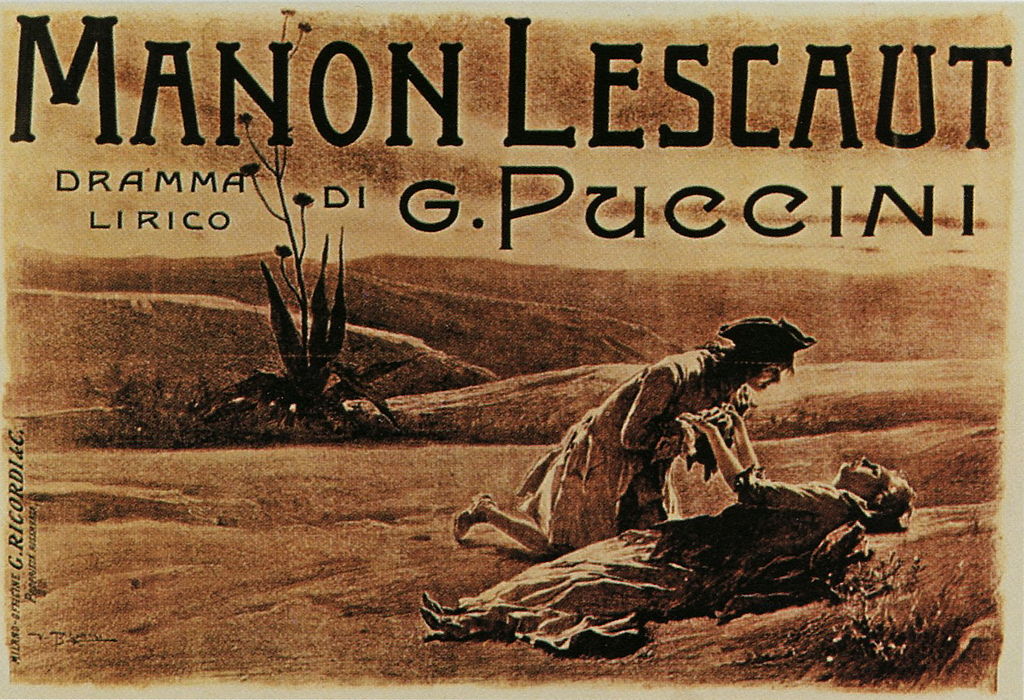
Manon Lescaut is an early work of Puccini’s, composed between 1889 and 1892 (so a very long time before, say, Turandot).This production was truly panned by the critics when it was first put on in London in late February 2024 – I’ve rarely seen such awful reviews, which focused on the incoherence of the production (two stars from the Guardian; The i – “Dump this embarrassing show. The real tragedy in this staging of Puccini’s opera is that it is going on tour” etc etc). Regie-theater, apparently, at its most objectionable and pointless. I have never heard a note of the music or seen a production of this work before, so thought it would still be interesting to go, despite the reviews. And occasionally critics can get things wrong………..However……………..
At a pre-performance talk by the conductor and the in-house staff director, we were told that the director of this production, Jude Christian, was envisaging the setting of the opera as a ‘dystopian nightmare’, dreamed by a young woman who appears sleeping at a desk with angle poise lamp and laptop in front of her at the beginning of the work and at the start of the second half’; she then sings something with a powerpoint projector and screen by her (?) and wanders about the stage for a bit before disappearing and not being seen again. I guess I would have gathered that it was ‘all a dream’, had I not known this beforehand, though of course I will never be sure. The other point that came out was that Ms Christian had not only translated the libretto but had altered some of the wording to give a more feminist perspective – to emphasise that Manon is manipulated by men, is always part of their story rather than having her own. This seems fair enough – Puccini and his librettists’ approach to women is always dubious from a modern perspective and if the opera can be made a bit more real to a contemporary audience by some updating or changing of the language that is fair enough, in my view.
As a work completely new to me, Manon Lescaut didn’t grab me as much as La Rondine had 5 months ago. It has all the Puccini hallmarks – brilliant orchestration, through-composed, plentiful tunes – but doesn’t quite have the immediate impact and the thrill of his later works, which, however manipulative they are, are always moving to see and hear.
So – looking at this from a positive perspective what were the good things about this production?
- It was sung in what was for the most part sensible contemporary English
- Three of the principals were excellent, and when the flow of the story enables them to be on their own on stage I was gripped. Jenny Stafford was excellent as Manon – she has a gleaming bright voice which reached top notes effortlessly, she could respond to the text with subtlety, she was able to sing softy and expressively, and, although in a not very flattering dress and having a daft azure/green wig, acted well. She was thoroughly believable. I hope singing this role is an important step in her career. Edward Hawkins as Geronte, tall and with an impressive sonorous bass voice was, despite wearing a completely ridiculous pink sombrero and a pink suit, and given a character (fop with rouge) which minimised his controlling nasty aspect, clearly a very good singer and did his best with the director’s mistaken view of the role. And Aidan Edwards as Lescaut sung out well, and produced an excellent cameo of this ineffective and unhelpful character, manipulating both his sister and Des Grieux for his own advantage. The singer performing Des Grieux was a cover – I think his name was ?Dominic/Desmond Walsh. He took a while to give an impression of feeling comfortable on stage, and his upper range wasn’t really reliable enough -sometimes he sounded like a true Puccini tenor but at others his voice cracked at the top or sounded strained. His acting was good and his diction clear. Edmondo, sung by Brenton Spiteri, was good, though again dressed ridiculously – in his case a bright green Mephistophelian costume with a droopy moustache.
- The small orchestra couldn’t, obviously, produce a really full rich sound given their numbers, but played well and accompanied effectively
I can see that Manon Lescaut presents a problem for directors. It’s either got to be done straight, in 18th century costume, or some other way found. It is meant to be verismo – what would verismo look like in the 21st century? A contemporary dress production could very easily work, in my view. But this production just didn’t provide an alternative to either approach. The colours were garishly technicolour – pink, gold, brilliant green. The chorus, who also played minor roles, were oddly knowing, somehow, rather arch, and were (at least some of them) dressed up in furry onesies, hopping round the stage like bunnies. There was some very clunky symbolism, relating to the fact that Manon dies of thirst in the US desert – the first act is set in an empty swimming pool, and water wasted, while Des Grieux flings around empty water cooler containers at the beginning of the third. There is some bizarre stuff about golden calves (I thought, but reviewers said dogs) being collectibles and currency in the first two acts. Des Grieux, all in white, arrives in the first act riding a statue of a dolphin. It really didn’t add up – which is fair enough I suppose if you’re envisaging it as a nightmare, but this production really didn’t illuminate the actions of the main characters and the overarching theme of men exploiting and controlling women
 John's musical journey