Director, Oliver Mears; Set Designer, Simon Lima Holdsworth; Costume Designer, Ilona Karas; Lighting Designer, Fabiana Piccioli; Movement Director, Anna Morrissey; Conductor, Laurence Cummings. Cast – Jephtha, Allan Clayton; Iphis, Jennifer France; Storgè, Alice Coote; Hamor, Cameron Shahbazi; Zebul, Brindley Sherratt
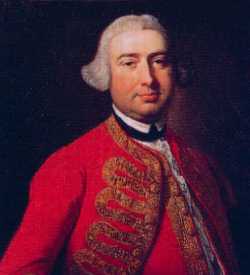
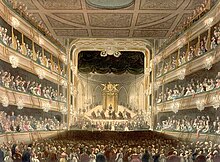
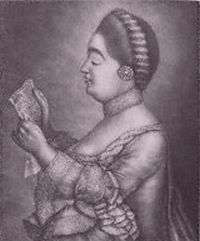
Jephtha is Handel’s last oratorio (1751). Whilst writing Jephtha, Handel was increasingly troubled by his gradual loss of sight, and in the autograph score, at the end of the chorus “How dark, O Lord, are thy decrees” in Act 2 he wrote “Reached here on 13 February 1751, unable to go on owing to weakening of the sight of my left eye”, Wikipedia tells us. The work was first performed appropriately enough at the Covent Garden Theatre on 26 February 1752, with the composer conducting, and with a cast that included John Beard as Jephtha and a diva of the opera stage, Giulia Frasi (see pictures below).
I had intended to go to a later performance but for various reasons couldn’t then make the booked date – luckily ROHCG has a relaxed approach to ticket exchange (at least for Friends) and so I swapped my original ticket for a dress rehearsal one mid-way back in the Amphitheatre – less of a drag for Baroque opera than it would be for Wagner or R.Strauss.
First, the positives. There was outstanding singing from Allan Clayton, Alice Coote and Jennifer France – although the announcement was unclear, Brindley Sherratt, singing Zebus, I think, was unwell and walked the role, with somebody singing from the wings. The knock-out number in this work is ‘Waft her, angels, to the skies’ an aria for Jephtha, which Clayton sang most beautifully and with almost no need for a ‘head voice.’ At the same time, he has a powerful voice too, able to go at full throttle but flexible enough to do the needed runs and grace notes, so his arias of victory and intention were also very impressive. Alice Coote was able to offer the arias of rage with impressive attack – you really felt quite scared for Jephtha as she spat out the notes – but she could also sing sweetly and softly in some of her earlier arias. Jennifer France had a lighter flexible voice seemingly ideally suited to Iphis, tightly controlled but warm as well as clear. The ineffectual Hamor was decently enough sung by Cameron Shahbazi, but there was not the same individuality there as with the two women and Jephtha (though maybe that’s just my prejudice against countertenors). There was also an impressive boy soprano as the Angel – this presumably is a nod to 18th century practice, but boy sopranos make me nervous – you always feel for them and are worried something will go wrong. I would be happier with a grown-up soprano, or countertenor.
The chorus – perhaps smaller than is ideal, presumably for reasons of economy– have a lot to do and sounded wonderful throughout, but particularly in their two big numbers at the end of the first and third acts. The orchestra too sounded idiomatic and lively – a tribute to the ROHCG’s band’s flexibility – it can’t be easy for the core players doing this one night and Rigoletto the next (I’d find it positively schizoid)
So – to the production. This was a production that’s difficult to summarise. In many ways one of the issues hovering around is that the work was never conceived as an operatic drama for the stage, and many of the scenes are quite static, made more so by the da capo arias, though there is more use of dramatic recitative here. Essentially there is a pretty simple plot for this opera, rather more drawn-out than it might have been – man invited to rescue his people from oppressors having been previously rejected y them; man succeeds but vows rashly to sacrifice to God the first living things he sees if he succeed; man does succeed and then his daughter is the first person he sees; his wife is understandably very angry with him; he is upset, his daughter is sweetly resigned and then an angel comes and sorts the situation out so that the daughter is allowed to live but has to be ‘dedicated to God’. It all makes for a long evening. Interestingly that last bit is not in the Bible – in ‘Judges 11’ she is allowed to wander for two months with her friends and then is executed – clearly too downbeat an ending for 18th century London, Handel and his collaborators thought
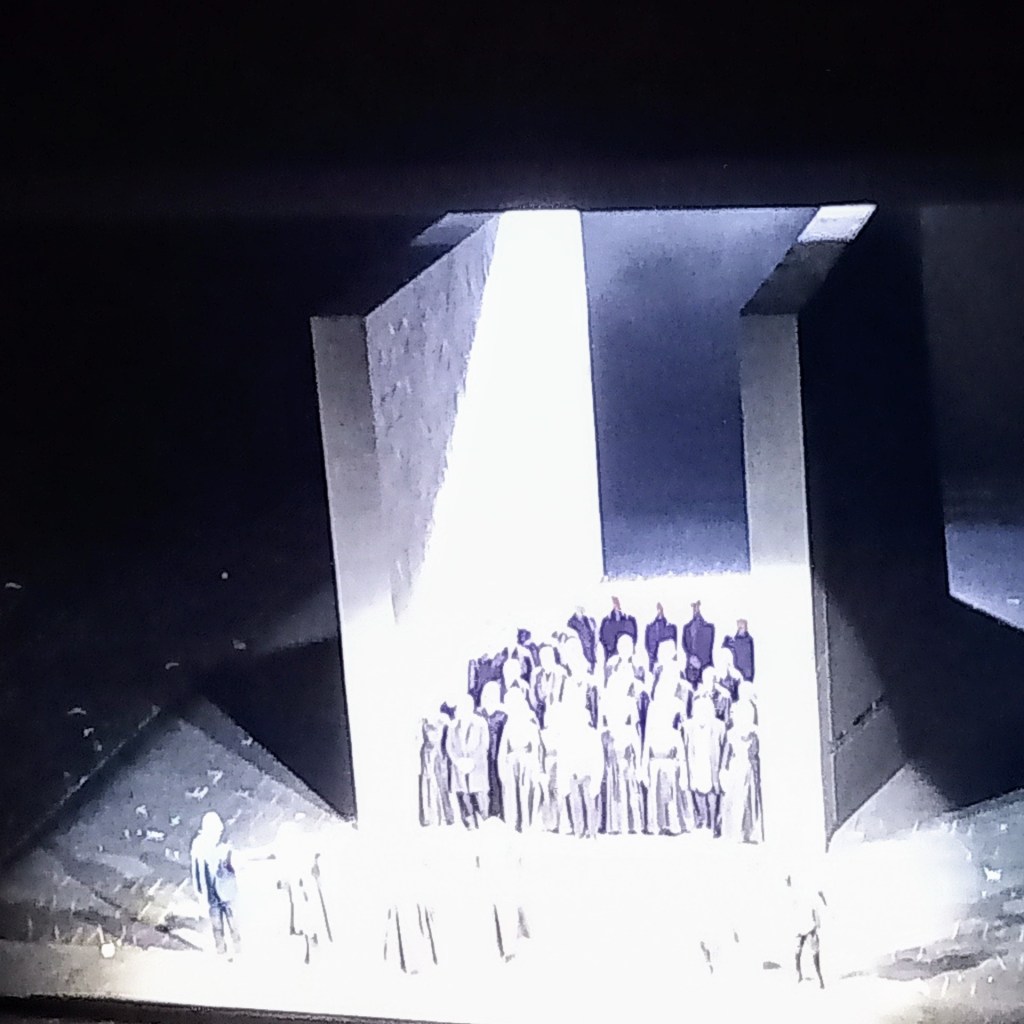
The basic set was a set of flexible tall blocks, black, grey, and white in colour, that moved around throughout the three acts and were generally serviceable and effective. When appropriately lit they could also be seen to have extracts of particularly ferocious Old Testament text on them – ‘Thus did he smite 20,000 Ammonites’, that kind of thing. A basic distinction was drawn at the beginning between the Israelites – dressed in dark clothes, vaguely Handmaidens’ Tale bonnets for the women – while their enslavers, the Ammonites, wore gaudy red and yellow colours and were seen dancing in the beginning of the first act. I thought immediately of 18th century non-conformists and London ‘society’. The Israelites continue in this dress throughout the work, while the Ammonites (having been duly smitten) disappear. There’s a clever use of the back stage screen in the chorus “How dark, O Lord, are thy decrees” when what is clearly some sort of picture of an eye is gradually eaten away from the centre by a black hole that gradually fills the whole screen, a reference to Handel’s incipient blindness as well as to the dark situation of the plot at that point. There was also a good and effective use of backlit shadows at certain points. I suppose the director’s big idea was to provide a commentary on the kind of religious psychosis that gets prophets vowing to sacrifice living things and puts Jephtha in the situation he gets into. The direction is relatively straightforward and credible / non-jarring, if static, until the last 5 minutes when Iphis, after her supposedly farewell scene with her lover, suddenly decides to break free from her imposed vows to religious isolation, and helped by three of the severe Israelite women undresses to a shift and runs off with her lover. In the final chorus the angel tears up a paper -? the Bible, 10 Commandments? – and at the same time Jephtha is seen under harsh lighting surrounded by walls, bound forever in religious orthodoxy and, indeed fanaticism and in agony. As the curtain falls, paper flutters down onto the stage and indeed from the top of the auditorium, again presumably symbolic of a new freedom found. I guess the director sees these last 5 minutes as a coup de theatre!
The problem with this is that there has been very little in what we have seen on stage hitherto that presages this final spurt to freedom. Up until this point, everything has been played straight, apart from one scene where Hamor is clearly frightened after the battle, but then launches into a confident aria. Not only are these last 5 minutes discordant with what has gone before, but they also don’t really fit Handel’s very fine last chorus, which is entirely positive in spirit, praising God for his mercies. It could only be heard as ironic if there had been a much greater build-up of the discordant elements. I don’t have any problem with the overall concept the director was trying to put across and I think it is a legitimate theme – it just hasn’t been done very well, i m h o. It would have worked better if for instance if the Ammonites had been nicer and the Israelites more obviously horrible to them (but that would have raised all sorts of issues in the current political context). It would be interesting to know if the events of the last month have had any effect on the production…..Or, again, when the chorus were singing the quote from Alexander Pope, ‘Whatever is IS RIGHT’, the chorus could have pointed towards the audience, with searchlights on them, or be ritually slaughtering some poor old Ammonites.
There is one oddity in the director’s conception I can’t explain – in fact Jephtha sees several Israelite women before meeting Iphis after his victory. Did I get that right….? It seems odd………..
So a great evening musically, not so great production-wise…….
 John's musical journey