Judith Weir: Begin Afresh; world premiere; Schumann: Symphony No. 1 in B flat major, ‘Spring’ ; Elgar: Violin Concerto in B minor. Christian Tetzlaff, violin; BBC Symphony Orchestra; Sakari Oramo, conductor
I hadn’t intended to go to this, though I thought it looked like a good Prom – however, for various reasons I can’t go to Rattle’s Mahler 9 on Sunday (not such a huge loss. I have heard him perform this with the LSO before, and it is being televised, plus I heard a superlative account of the work in Leipzig three months ago) so this concert seemed a good way to replace it at a time when I was available. I got a last minute Choir seat right at the back and near to the organ, so a bit problematic for the violin concerto in prospect…….I plan to stand for the two Boston Symphony concerts and have taken an arena seat for the late night Bach concert.
I really enjoyed this concert, and, actually, being right at the back of the Choir is probably preferable to being at the front, overwhelmed by brass, timpani and percussion.
The Weir piece was about trees, and their progression through the seasons, starting in April and ending in February, with a particular richness in October in the central part of the work (about 15 mins in all) and tougher sounds, ushered in by a piano, where the movement of the roots and the winter winds are portrayed. I am not sure the ending was successful – it seemed simply too abrupt. It was very accessible, though (or perhaps that’s an ‘and’?) reminds me of Bax, Britten and even Vaughan Williams at times. I would like to hear it again.
I am not sure I have ever heard Sakari Oramo conduct live before. Sitting in the choir, it was noticeable how clear his beat was and how energetically he encourages the orchestra. I am pretty sure this was the best performance of this work I have heard live – it was fastish, but in a way that encouraged energy, freshness and a rhythmic spring (as it were) rather than slurred phrases and gabble, and with a sure sense of dynamics. I was very impressed by the orchestra too – responsive to every gesture Oramo made, with some outstanding woodwind playing, particularly by first flute and oboe (and notably in the finale), and a very emphatic hard-sticked timpanist, which I liked. The ending of the finale was quite remarkably exciting – that’s not normally a phrase that comes to mind when I think of Schumann….The most controversial movement in terms of speed was the slow movement, which was really quite quick, but beautifully shaped by these performers (Oramo using his hands rather than baton for this movement only).
I am also not sure I have ever heard the Elgar Violin Concerto live before, which is a bit of an admission. I may be wrong – looking at the Proms Archive for 1972, when I went to the Proms most nights when in London, there was what must have been a remarkable performance by Menuhin (who of course as a teenager famously recorded the work with Elgar) and Boult – but I think I might have been on my first visit to Bayreuth then, or have totally forgotten it…….
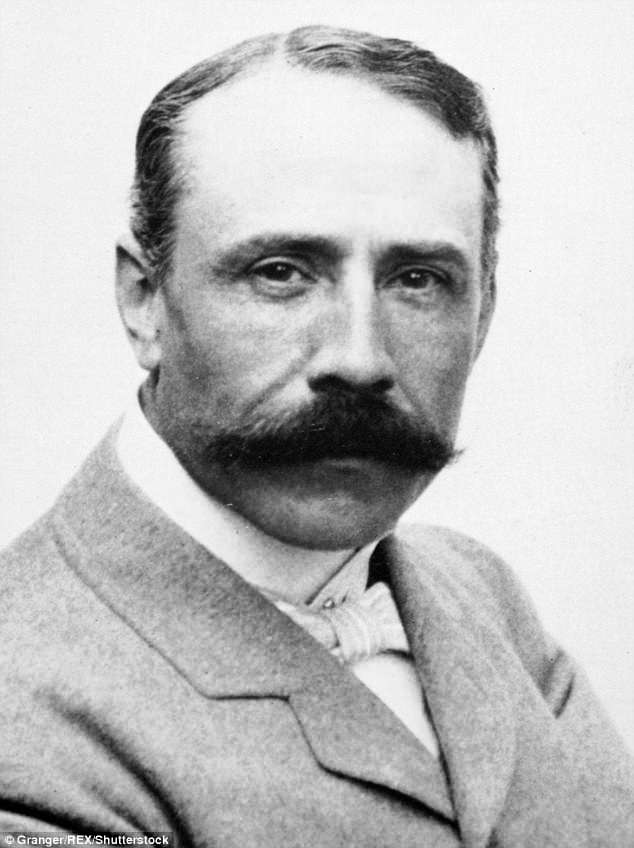
Somehow I have never quite held the Violin Concerto in the same regard as some of Elgar’s other works – I find the structure of the first movement difficult to follow, and to a lesser extent the finale. In this performance I found myself bothering less about the structure and just enjoying the glorious music. There’s a good argument for saying that the dedication in the score to the ‘soul of XXXXX’ represents a dedication to Elgar himself (also 5 letters) and the work offers us the deep feelings of a conflicted, restless soul, nevertheless able to find great beauty within himself, as well as the sadness for paths not taken.
Being at the back of the choir is indeed not a great way to hear this piece. What was notable for me was the introspection of both soloist and conductor – this was a poetic often slow-ish reading (probably less restless than Elgar’s own recording of the work), with some extraordinarily quiet meditative playing by Tetzlaff – and the extent to which Oramo reined in the dynamics so that Tetzlaff came over very clearly even when hearing him from the rear (the volume when Oramo let the orchestra off the leash was startling). Sometimes in the first movement I felt that a bit more bite and angst from the orchestra would have been a good idea, but for the most part I just succumbed to the beauty of the work. The second movement has always seemed to me to be the most accessible part of the work (i.e. with a clear structure) and this was gloriously performed, quite slowly, and deeply moving – that sense of an interior place of quiet beauty and longing always there, whatever the outward circumstances. Tetzlaff’s cadenza in the last movement was remarkable too.
Kreisler, the first performer of the work, thought that this was the finest violin concerto after Beethoven’s and Brahms’. Although there are occasional phrases in his works that sound like Brahms, R.Strauss or even a Wagnerian turn, as in this concerto, Elgar is one of those truly great composers, instantly recognisable, always himself, whose major works never fail to move and nourish me.
 John's musical journey